REVIEW · TBILISI
Borjomi – Rabati -Vardzia Private Full Day Tour from Tbilisi
Book on Viator →Operated by Travel To Georgia · Bookable on Viator
Few days pack more Georgia into one drive.
This private full day links Borjomi’s mineral springs with Rabati Castle and the cave monastery of Vardzia, all in one long southern loop. You get the main sights with context from your driver/guide, plus time to actually look—not just shuffle past statues.
What I like most is the pace and the comfort. First, it’s truly private, so you’re not stuck timing your photos around other groups. Second, you get practical boosts like A/C, bottled water, and onboard WiFi, which matters on a 13+ hour day. The one real consideration: it’s a long day and the tour asks for moderate physical fitness, especially because you’ll be exploring sites with uneven steps and changeable walking conditions.
In This Review
- Key Things to Know Before You Go
- A Private Full Day From Tbilisi’s South Corridor
- Borjomi Central Park: Mineral Waters and the Romanov Palace Detail
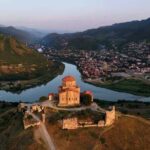
- Rabati Castle in Akhaltsikhe: Fortifications, Churches, and City Views
- Vardzia Cave Monastery: George III, Queen Tamar, and the Story Behind the Name
- Time, Comfort, and the Real Value of This Price
- How the Day Flows: Pacing From Park to Fortress to Cave City
- Who Should Book This Private Tour (and Who Might Want Something Else)
- Should You Book Borjomi, Rabati, and Vardzia in One Day?
- FAQ
- What time does the tour start, and how long is it?
- Is this tour private?
- What’s included in the price?
- Are meals included?
- Is there a physical fitness requirement?
- What if I need to cancel?
Key Things to Know Before You Go
- Private means no crowd choreography: only your group is on board and at the stops.
- Admissions are part of the deal: Borjomi Central Park, Rabati Castle, and Vardzia include tickets for the listed sites.
- A long drive with built-in comfort: the vehicle has A/C, bottled water, and WiFi onboard.
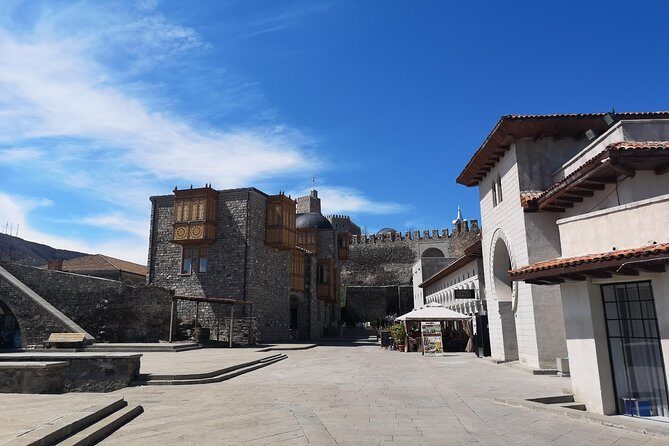
- Rabati is more than one building: you’re seeing an ensemble with a mix of fortress, churches, and palace architecture.
- Vardzia isn’t just a view: you’ll learn the George III and Queen Tamar background and the legend behind the name.
A Private Full Day From Tbilisi’s South Corridor
This tour is built for travelers who want breadth without spending days hopping between places. You start in Tbilisi in the morning (8:00 am), then you head south toward Georgia’s historic region where resorts, fortresses, and cave monasteries all sit within the same day’s route.
The value is in how the day is stitched together. Borjomi gives you a proper sense of place—mineral-water culture and a park setting—before you pivot into medieval Akhaltsikhe history at Rabati Castle. Then you finish with Vardzia, one of the country’s most unusual monuments, carved into a mountainside. Done right, that arc makes Georgia feel bigger and more connected: you see how nature, faith, and power show up side by side.
And because it’s private, you can settle into your rhythm. No waiting for a late group member in someone else’s tour, no watching other people steam through while you’re still trying to take in the details. You also get the benefit of commentary from your driver/guide, including folk stories—exactly the kind of human detail that turns stone and legends into something you remember.
Other Vardzia cave city tours we've reviewed in Tbilisi
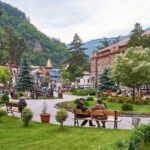
Borjomi Central Park: Mineral Waters and the Romanov Palace Detail
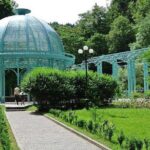
Borjomi is a resort town in central Georgia, and the tour’s first stop centers on the famous Borjomi Central Park, where mineral springs feed the area’s reputation. The key move here is that you’re not just passing through town—you’re spending time in the park environment, with around an hour for your visit.
One thing I love about this stop is the variety inside a single area. You get the mineral-water identity, sure, but the park also ties into nearby wilderness: trails run through the vast Borjomi-Kharagauli National Park area. That broader context helps you understand why Borjomi became a rest-and-recovery destination in the first place.
Then there’s the Romanov Palace component. The tour information points out its striking exterior and notes that it contains ornate furniture and even a billiards room. That detail matters because it’s a reminder that Borjomi isn’t only about health rituals—it also carries political and social history through its association with the Romanov era.
You’ll also encounter the Mtsvane Monastery, commonly called the Green Monastery, made from green-tinged stones. Even if you don’t know the background before you arrive, the color and the stonework do the talking. It’s a short stop on paper, but it’s designed to give you enough “wow” to keep the day moving in the right direction.
Practical consideration: with just an hour, you’ll want to prioritize what you care about most—mineral-water atmosphere, the Romanov Palace spaces, or the monastery stonework. The time is tight, but it’s also a smart way to keep the rest of the day from feeling rushed.
Rabati Castle in Akhaltsikhe: Fortifications, Churches, and City Views
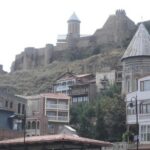
After Borjomi, you head toward Akhaltsikhe and the Rabati fortress area. Rabati sits in the center of Akhaltsikhe, and it’s a long way from Tbilisi—about 207 km—so this part of the day comes after real driving time. The payoff is that Rabati feels like a compact history lesson you can walk through.
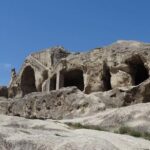
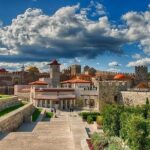
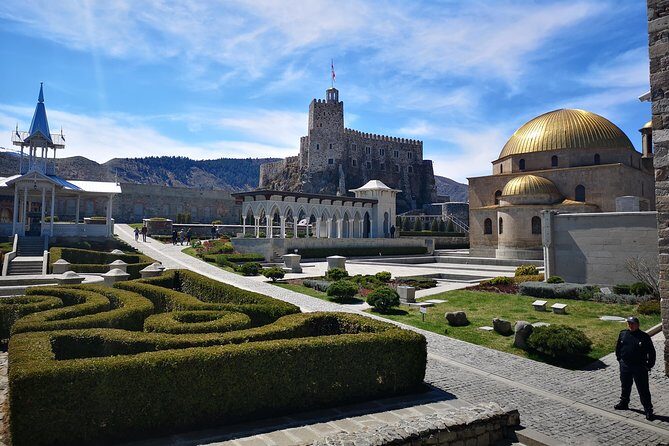
You get roughly two hours here, which is the right amount for an ensemble like this. Rabati isn’t a single ruin; it’s made of multiple buildings and phases. The tour description highlights the Sargis Jakeli castle of the 14th century, which gives you the fortress backbone of the complex.
From there, you’re not only looking at stone walls. The tour points out a Fortress Church from the late Middle Ages, plus an 18th-century palace element and the Church of Saint Marine (1865), notable for built-in relief works. That combination helps you “read” the site. Instead of thinking of Rabati as one era, you start noticing how different periods layered power, worship, and prestige into the same space.
The location detail also matters: Rabati is described as being situated on the rocky inn, and the complex includes viewpoints through the castle’s spiral staircases. Even without knowing the exact climb beforehand, the idea is clear: Rabati is built to reward you with changing angles—up close on the architecture, then out toward the surrounding area.
What I like here is the contrast with Vardzia later. Rabati prepares you for medieval Georgia’s scale of ambition—just in a more visible, fortification style. You get fortified walls and city presence, then you switch to a monastery carved into rock.
One consideration: Rabati is a great stop for photos, but it’s also a place where you’ll likely spend time looking up as much as out. If you’re the kind of person who wants long, slow museum-style reading, two hours might feel short. If you want the big picture and clear takeaways, two hours is a solid target.
Vardzia Cave Monastery: George III, Queen Tamar, and the Story Behind the Name
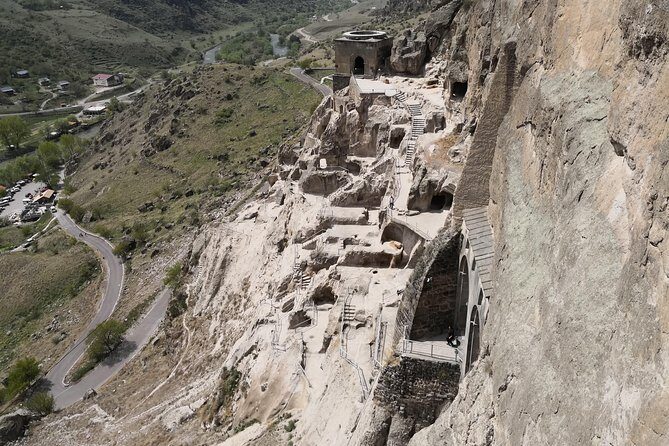
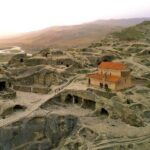
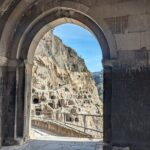
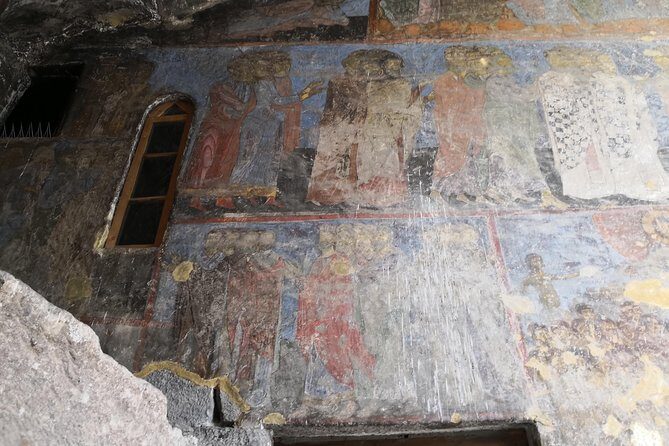
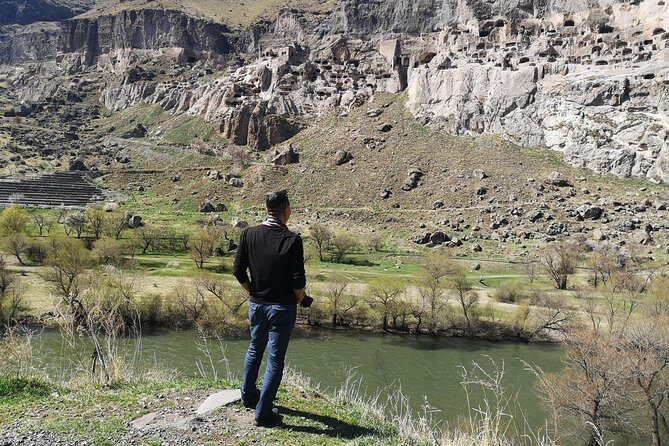
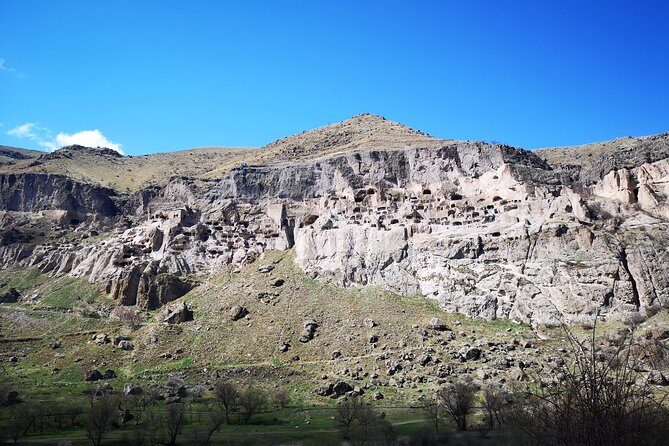
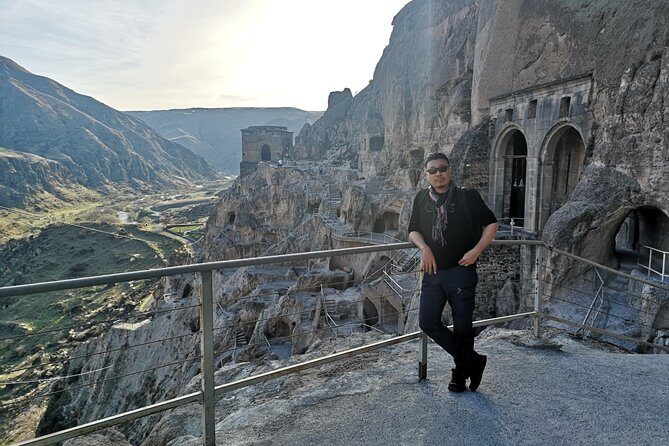
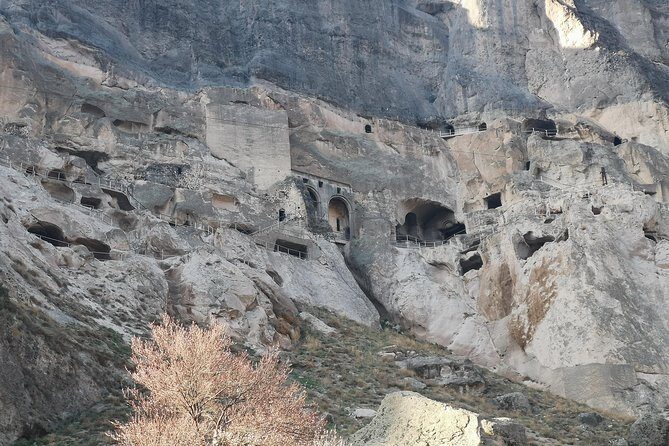
Vardzia is the kind of sight that makes Georgia feel different the second you see it. The cave monastery complex was built during the reign of King George III and his daughter, Queen Tamar. That royal connection gives the monument immediate weight: this wasn’t an accidental cave dwelling—it was an intentional, high-stakes project tied to leadership and faith.
The tour includes about three hours at Vardzia, which is generous enough to take in the cave-city layout without feeling like you’re sprinting. The whole site is known as a complex of caves carved into the mountain side, and the walking and exploring can feel more physical than the palace-and-park vibe of Borjomi.
Here’s the detail I’m glad the tour includes: the origin legend of the name Vardzia. According to the story, young Queen Tamar played in what was then an unfinished cave town. One day, her uncle lost sight of her in the maze of passages, and she shouted something that echoed through the complex—“Ak var dzia!” The phrase is said to translate to I am here, uncle. King George III heard the words and ordered the complex to be called Vardzia after that moment.
That legend does two useful things for your visit. First, it gives you a human scale for a massive site. Second, it helps you picture the cave monastery not just as architecture, but as a lived space with voices bouncing through stone corridors.
You’ll also appreciate the timeframe. Knowing this is tied to the reign of George III and Queen Tamar changes how you interpret the site. It’s not only a cool natural-looking monastery—it’s a medieval statement of engineering and endurance.
Moderation note: the tour calls for moderate physical fitness. That’s your clue to wear comfortable shoes and keep your pace steady. Three hours at a cave complex is not about speed; it’s about staying comfortable while you explore.
Time, Comfort, and the Real Value of This Price
Let’s talk money in a practical way. The tour price is listed at $131.58 per person, and it’s typically booked about 14 days in advance. For a day that stretches to roughly 13 hours and 14 minutes, it’s not a “quick tour deal.” It’s closer to paying for a private transport day plus guided coverage of three major destinations.
What makes it feel like value is that several costs are already handled:
- Air-conditioned vehicle
- Bottled water
- WiFi onboard
- Private transportation
- And importantly, admission tickets for the listed sites are included
That last point can quietly save you. When you start adding entrance fees and local guide time separately, the math often shifts. Here, the tour is structured so you spend less time figuring out paperwork and more time in front of the sights.
The onboard WiFi and A/C sound like small comforts until you’ve done long Georgian drives. After a morning departure, that kind of comfort keeps you from arriving to Rabati or Vardzia feeling fried. Bottled water also helps you keep your energy steady without hunting for snacks immediately.
One more value factor: the tour is private. Even if you love meeting people, sometimes a private format is a gift. You can pause, step aside, and ask follow-up questions when something clicks—especially at places like Rabati where multiple historical layers show up in the same view.
About meals: lunch and dinner are not included. That’s normal for day tours, but it does mean you should plan your eating rhythm. If you’re prone to getting hungry fast during drives, pack a small snack in your day bag so you’re not stuck waiting for the next stop.
Other Borjomi and Rabati tours we've reviewed in Tbilisi
How the Day Flows: Pacing From Park to Fortress to Cave City
The itinerary is built around three different “moods” of Georgia, and that pacing is exactly what makes this tour work for limited time.
- Borjomi Central Park (about 1 hour): quick taste of mineral-water culture plus palace-and-monastery highlights.
- Rabati Castle (about 2 hours): architecture and layered medieval-to-later periods with stairs and viewpoints.
- Vardzia (about 3 hours): cave monastery complex with royal backstory and a strong legend to tie it all together.
Then there’s the real-world part: you’ll spend time on the road between each site. That’s where the A/C and WiFi do more than make you comfortable—they help you stay mentally present. It’s easier to enjoy Rabati if you’ve had a chance to cool down and reset during the drive rather than arriving overheated and distracted.
I also like that the stops are spaced so the day doesn’t turn into one long blur of ruins. Borjomi gives you a softer, restorative starting note. Rabati adds fortress intensity. Vardzia closes with a signature spectacle that feels like Georgia’s medieval identity at its most imaginative.
If you’re the type who likes to return with a set of clear “takeaways,” this format supports that. You can tell a story afterward: mineral springs and resort history, then Akhaltsikhe’s fortress architecture, then the cave-world of Queen Tamar and George III.
Who Should Book This Private Tour (and Who Might Want Something Else)
This tour fits best if you want:
- A short-on-time way to cover multiple southern highlights without doing the logistics yourself.
- A private format where you can ask questions and move at your own pace inside each stop.
- The combination of nature + architecture + legend, all in one day.
It’s also a strong option for couples, small groups, and anyone who hates the stress of coordinating transportation between sites. With pickup offered and private transport included, you’re not stuck planning connections across the region.
You might think twice if:
- You dislike long days. This is roughly 13 hours plus travel time.
- You want a slower, museum-heavy experience. The stop times are designed for breadth, not deep study.
- You need a very leisurely walking pace. The tour asks for moderate physical fitness, and cave/fortress exploration typically involves more effort than a flat city stroll.
But if you’re okay with a day that’s full and a little intense—in a good way—this tour is exactly the kind of itinerary that gives you a lot of “Georgia contrast” in one shot.
Should You Book Borjomi, Rabati, and Vardzia in One Day?
I’d book this if you want maximum impact with minimal hassle. The private setup removes the most annoying parts of sightseeing, the vehicle comforts make the long drive manageable, and the included admission tickets keep the day from turning into a cost-and-carry headache.
This is also a smart choice if you care about stories. The way the tour ties sites to Georgia’s rulers and legends—like Queen Tamar and the shout of Ak var dzia—helps you feel like you’re learning something real, not just ticking off landmarks.
But if you want a relaxed pace and lots of free time, you’ll probably feel compressed. In that case, consider a multi-day approach to the region instead.
FAQ
What time does the tour start, and how long is it?
The tour starts at 8:00 am and runs for about 13 hours 14 minutes.
Is this tour private?
Yes. It’s a private tour/activity, and only your group will participate.
What’s included in the price?
Included are air-conditioned vehicle, bottled water, private transportation, WiFi on board, and admission tickets for the stops listed.
Are meals included?
Lunch and dinner are not included.
Is there a physical fitness requirement?
The tour notes a moderate physical fitness level. That’s a good guide to expect some walking and exploring.
What if I need to cancel?
You can cancel up to 24 hours in advance for a full refund.