REVIEW · TBILISI
Tbilisi Walking Tour Including Cable Car and Traditional Bakery
Book on Viator →Operated by Gamarjoba Georgia Tours · Bookable on Viator
Tbilisi feels clearer after this four-hour walk. I like how this tour stitches together big city symbols and old-town streets at an easy pace, with one standout add-on: a cable car ride up toward the Mother of Georgia. You’ll get the kind of orientation that makes your next days in Tbilisi feel less confusing.
The food stop is simple and satisfying, too. At Tone bakery, you’ll taste a traditional Georgian pie and wash it down with lemonade. One drawback to plan for: church stops come with a dress code, so skip shorts and bring something to cover your head if you’re a woman.
In This Review
- Key things I’d actually plan around
- Starting at Avlabari: a mellow meetup and an easy route rhythm
- Metekhi Cathedral and Vakhtang Gorgasali: cliff churches and origin myths
- Europe Square to Rike Park: where modern Georgia talks to the present
- The cable car to Kartlis Deda: big views with a classic symbol
- Bridge of Peace: the river view that lights up before sunset
- Anchiskhati Basilica, Patriarchate Seminary, and Sioni Cathedral
- Rezo Gabriadze’s clock tower: angels, puppets, and hourly theatre
- Tone bakery pie and lemonade: your fuel stop in Georgian style
- Shardeni Street, Tamada statue, Abanotubani baths, and Leghvtakhevi waterfall
- Pace, group size, and how you’ll feel after four hours
- Price and value: what $19 buys you in practical terms
- Should you book this Tbilisi walking tour?
- FAQ
- How long is the Tbilisi Walking Tour Including Cable Car and Traditional Bakery?
- How much does the tour cost?
- Is the tour offered in English?
- What’s included in the tour price?
- Where do we meet, and where does the tour end?
- What sights are included beyond the walking?
- Is there a minimum age?
- What should I wear for church stops?
- Will the cable car always operate?
- Can I cancel for a refund?
Key things I’d actually plan around
- Cable car up to the Mother of Georgia area: quick lift, huge views, and a classic Tbilisi photo moment.
- Peace Bridge details matter: glass-and-steel design over the Mtkvari, plus the LED lights that turn on before sunset.
- Real old-town church stops: Metekhi, Anchiskhati, and Sioni bring architecture and stories—just mind the dress rules.
- Rezo Gabriadze clock tower and angel bell: small-time magic, with a puppet show at 12:00 and 19:00.
- Traditional bakery break: Tone bakery pie plus Georgian lemonade keeps the walk from feeling like pure sightseeing.
- Small-ish group size: up to 100 people, so you’re not swallowed by a sea of bodies.
Starting at Avlabari: a mellow meetup and an easy route rhythm
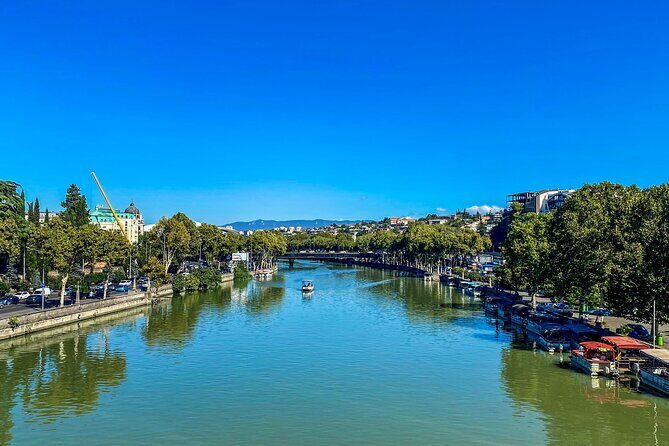
The tour kicks off at M/S Avlabari, then ends in the center of the old city near Meidan Bazar. That matters because you’re not stuck crisscrossing Tbilisi after the tour. Once you finish, you’re already where most people want to be: near the action, still within walking distance of the next sights.
I also like the vibe at the first meeting point. It’s a free space where you can meet other people, play board games, listen to music, or even grab a glass of wine while you wait. That sets the tone: this doesn’t feel like a strict, stop-watch march.
This is also a good setup for first-timers because the route mixes major viewpoints with old-school streets. You get enough variety to build a mental map fast—river, hilltop, and old quarter all show up in one afternoon.
Practical tip: wear shoes you can walk in on uneven old-town pavement. The walking is spread across multiple short stops, but Tbilisi adds up quickly if your feet aren’t ready.
Other Tbilisi walking tours we've reviewed in Tbilisi


Metekhi Cathedral and Vakhtang Gorgasali: cliff churches and origin myths
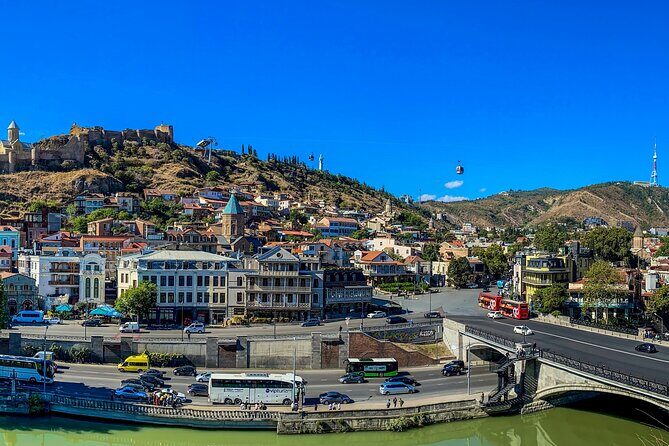
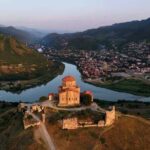
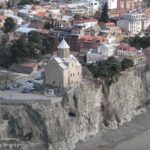
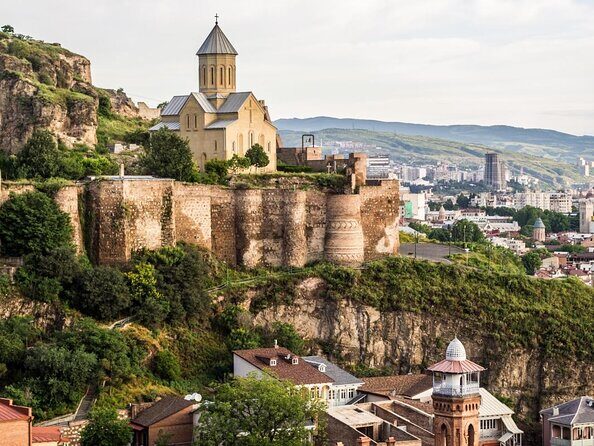
Early on, you head to Metekhi Cathedral on the left bank of the river Mtkvari. The spot is dramatic: it sits on a cliff plateau above the water. The guide explains legend-heavy layers tied to early Georgian Christianity, including how earlier church history on this exact site is often linked to Vakhtang Gorgasali’s era.
Then you move to the Monument of King Vakhtang Gorgasali. It’s not just a statue moment. The story behind it helps explain why Tbilisi’s identity is so connected to early power shifts and religious organization. If you’ve ever wondered why people in Georgia talk about the past like it’s still alive, these stops give you the clues.
Time-wise, these are short visits, so don’t expect long museum-style detail. Instead, think of them as context shots. You’re building a framework for the rest of the walk—churches, kings, then modern civic spaces.
Consideration: since you’ll also hit other churches later, dress with church rules in mind early. It saves you from changing mid-route.
Europe Square to Rike Park: where modern Georgia talks to the present
From Metekhi and the king’s monument, you cross over toward Europe Square. Here, you’ll get a quick explanation of Georgia’s relationship with the European Union—kept brief, but it’s a smart add-on. Even if politics isn’t your thing, this helps you understand why certain messages and symbols show up in city spaces.
Next is Rike Park, a newer riverside area on the left bank of the Kura (Mtkvari). This part of town is more relaxed and family-friendly. You’ll notice the mix of modern public fun—singing and dancing fountains, mega-chess boards, climbing features for kids, and open paths that are easy to wander.
Rike Park is also the key gateway to the cable car start point. That’s why this stop feels practical, not random. You’re not just passing through a park—you’re lining up your view angle for what comes next.
If you’re traveling in warm weather, this is a decent moment to rest your legs. It’s flat-ish compared to the hilltop areas, and it breaks up the walking before the climb.
The cable car to Kartlis Deda: big views with a classic symbol
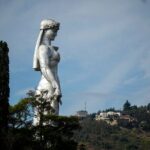
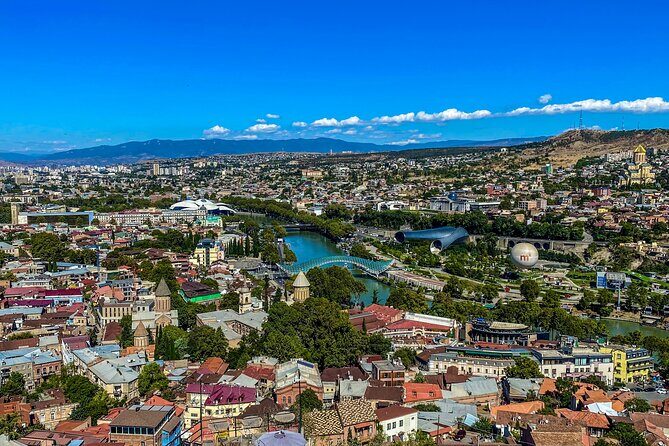
The main move is the Rike–Narikala cable car ride. It’s about 10 minutes, and it’s built for views rather than efficiency. Once you’re up, the Mother of Georgia statue (Kartlis Deda) is the moment.
Here’s what you’re looking at: the statue is a 20-meter aluminum figure designed by sculptor Elguja Amashukeli for Tbilisi’s 1500th anniversary in 1958. The symbolism is clear even from a distance. In her left hand she holds a bowl of wine to welcome friends; in her right hand she carries a sword for enemies. It’s Georgia’s national character in one body-shaped message.
The best part is the framing. Tbilisi spreads out below you, and the river curves become easier to understand. Even if you’ve seen photos, the scale lands differently in person.
Important weather note: the cable cars won’t be operating during windy weather. The tour still runs in all weather, so in those conditions you may not get this exact ride. It’s worth keeping that in mind when you pick travel days.
Bridge of Peace: the river view that lights up before sunset

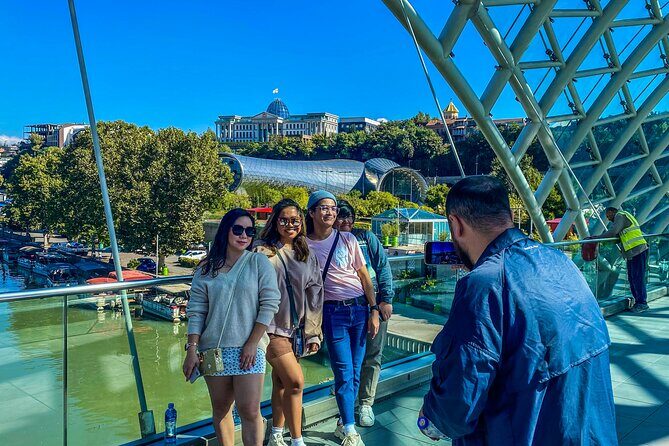
After the viewpoint, you’ll pass along to the Bridge of Peace. This is the attraction that many people don’t want to miss in Tbilisi, and it’s easy to see why.
It’s a pedestrian bridge made of glass and steel, with a bow-shaped design over the Mtkvari river. It opened in May 2010. One cool detail: the bridge was brought to Georgia from Italy in 200 unassembled components. So this isn’t just modern architecture; it’s modern architecture with a built-in backstory.
Also, it has more than 10,000 LED bulbs. Those lights switch on daily about 90 minutes before sunset. If you’re timing photos, that’s your cue—watch the sky, then come back to the bridge look.
This stop is short, but it changes how you see the river. Once you understand where the bridge sits, many of the other sights make more sense because they relate to the river’s bend and the city’s layers.
Practical tip: bring your phone camera strap or small towel. Even short river breezes can feel colder at certain times.
Other cable car tours we've reviewed in Tbilisi




Anchiskhati Basilica, Patriarchate Seminary, and Sioni Cathedral
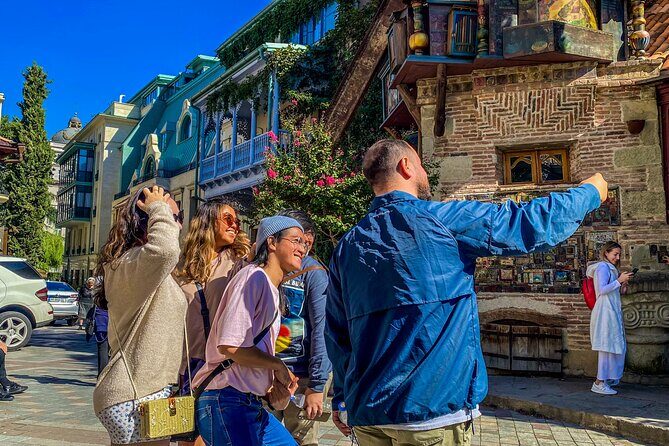
Old Tbilisi gets more spiritual and more textured here. You’ll make a stop at the Patriarchate of Georgia’s spiritual seminary to hear facts about the place. Then you’ll continue to Anchiskhati Basilica in upper Kala on Shavteli street. The church dates back to the 6th century, and you’ll hear how it’s tied to early Marian devotion and later naming.
Next comes Sioni Cathedral Church. You get another Vakhtang Gorgasali connection in the explanation, keeping the theme of continuity between early Georgian legends and what stands today.
Dress code reality check (not optional): when you enter churches, shorts aren’t allowed, and women need to cover their heads. So pack a scarf that fits in your day bag. If you’re traveling in hot weather, that’s the one part of the tour that can feel like it interferes—because it’s a rule, not a suggestion.
Why this cluster is worth it: these church stops don’t just show buildings. The guide’s stories help you connect the city’s hilltop religion to its street-level life.
Rezo Gabriadze’s clock tower: angels, puppets, and hourly theatre
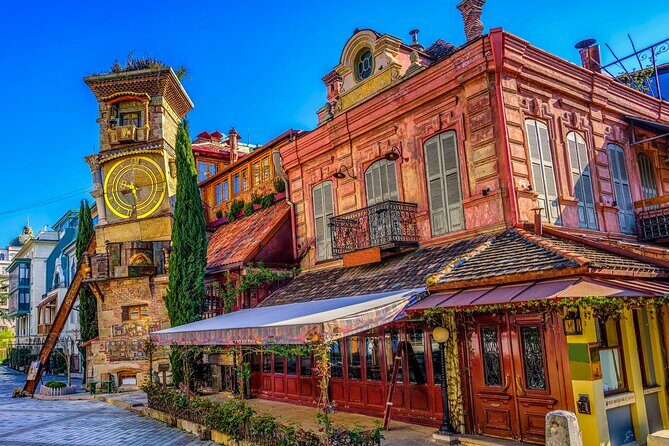
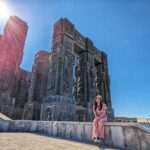
The Rezo Gabriadze Marionette Theater area is one of those Tbilisi stops that feels playful without trying too hard. In 2010, Rezo built a unique clock tower next to the marionette theatre in the old town.
Every hour, an angel comes out with a small hammer to ring the bell. The detail is mechanical and theatrical at once—small enough that you can still enjoy it even if you’re busy taking in the surrounding architecture.
Inside the tower is a small puppet theatre. There are shows twice a day at 12:00 and 19:00 called The Circle of Life. If your timing lines up, you’ll get an extra layer of entertainment. Even if you miss the show, the tower itself is still a great photo and story stop.
People often remember this as the moment the tour shifts from monuments to character. It’s not just a viewpoint. It’s a piece of living street art that happens to be built into a clock.
Tip: if you care about being on time, watch the clock yourself as you walk. The tour moves at a good pace, and this stop works best when you’re ready to look up.
Tone bakery pie and lemonade: your fuel stop in Georgian style
You end up at Tone bakery for traditional Georgian pie and lemonade. The time is about 15 minutes, which is perfect for a breather. This is also a smart design choice for a walking tour: you don’t want a food stop to turn into an hour-long detour.
What I like about this stop is how it supports the tour’s theme. Tbilisi isn’t only churches and bridges; it’s also what people eat and drink in the middle of the day. The pie is usually the kind of Georgian comfort food that keeps well in a short break, and the lemonade gives you something bright and cooling after walking.
You’ll likely leave with a stronger sense of Georgian flavors than if you had only read about them. And you won’t feel like you have to hunt for a bakery later, because it’s built into your route.
If you’re sensitive to spice or have dietary limits, use this stop to ask questions. The tour data doesn’t list ingredients, so you’ll want to confirm what’s inside before you take a big bite.
Shardeni Street, Tamada statue, Abanotubani baths, and Leghvtakhevi waterfall
The end stretches into classic old-town texture.
You’ll stop at the Tamada (toastmaster) statue, then shift to Jan Shardeni Street. Shardeni Street is pedestrian and known for being one of Tbilisi’s most popular and beautiful strolls. Even with only a short stop, you’ll get the vibe: lively street life in a compact area.
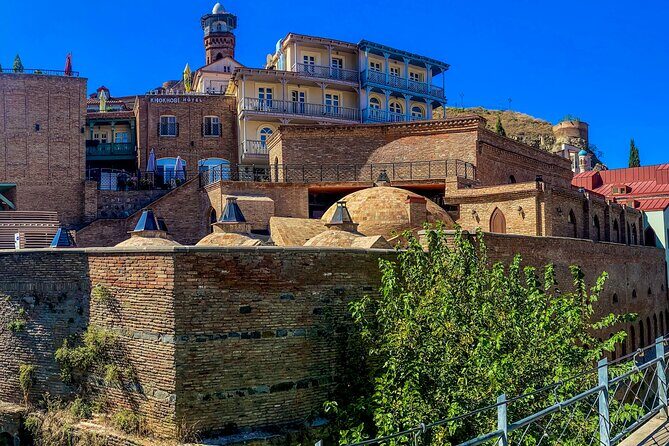
Then comes Abanotubani, the bathhouse district in the old town. This is where sulfur hot springs feed public bathhouses. The idea here is simple: people still use the hot water culture, so you’re not just sightseeing a building. You’re stepping into a living local tradition.
Finally, there’s Leghvtakhevi Waterfall, a place that’s popular for chilling on hot days. It’s brief but refreshing. It adds a green, cooling note to a route that otherwise leans on stone churches and viewpoints.
Why this ending works: the tour closes with variety instead of dumping you right back at a single landmark. By the time you leave, you’ve seen the river, the hilltop symbol, the old churches, the quirky tower, the food, and then two nature-ish moments: bathhouse steam culture and a waterfall break.
Pace, group size, and how you’ll feel after four hours
This is designed as an introduction, not a deep-hunt. The total time is about 4 hours, with many stops lasting 5 to 15 minutes. That means you’ll spend more time looking and less time waiting.
The tour keeps things workable for most people, with a minimum age of 5 and a maximum group size of 100. That size is big enough to feel social, but small enough that your guide can still manage the flow between churches, river views, and walking segments.
One practical point: church rules can make your pace feel different than the rest of the tour if you didn’t plan clothing. If you follow the rules, it’s smooth. If you don’t, it turns into a scramble.
Guides are a big part of the experience here. In feedback, names like Tota, Ana, Soso, Nika, Elle, Mika, Nini, Iva, Dimitri, Elena, Toko, Shoti, and Luca show up with praise for clear explanations and friendly engagement. Translation for you: this is the kind of tour where the guide can make the stories click.
If you prefer a slower pace, it’s worth knowing that a small number of people felt certain stops lingered longer than they wanted. So if you hate sitting in one place, pick shoes and camera settings to keep yourself moving during transitions.
Price and value: what $19 buys you in practical terms
At $19 per person, the value comes from the mix of built-in extras.
You’re not only paying for walking and stories. You also get:
- a cable car ride
- traditional Georgian pie
- traditional lemonade
The cable car alone is the kind of attraction that can cost more if you pay separately. Add food, and suddenly you’re not thinking about meal planning mid-trip. You’re also guided through a cluster of sights that would take longer to string together on your own, especially if it’s your first day and you want a clean route.
This tour also saves you mental energy. Instead of deciding which order to see churches, bridges, and Old Town streets, you follow a path that puts viewpoint, story, and break time together.
If you’re watching your budget, $19 is a low-stress way to get oriented. If you’re short on time, it’s also a reliable way to hit several key areas without committing to a full-day plan.
One more note: the tour uses a mobile ticket and includes online support. Confirmation comes at booking time, so you’re not stuck guessing.
Should you book this Tbilisi walking tour?
Book it if you want a fast, friendly introduction to Tbilisi that includes a lift to the Mother of Georgia and a real food stop.
Skip it or at least plan carefully if:
- you know you won’t be able to follow church dress rules
- you’re traveling on a windy day and really want the cable car ride (it may not run)
If your goal is to get your bearings and come away with enough stories and sights to plan the next steps, this tour is a strong fit—especially if it’s one of your first stops in the city.
FAQ
How long is the Tbilisi Walking Tour Including Cable Car and Traditional Bakery?
It lasts about 4 hours.
How much does the tour cost?
The price is $19.00 per person.
Is the tour offered in English?
Yes, it’s offered in English.
What’s included in the tour price?
It includes a professional guide, the cable car ride, traditional Georgian pie, traditional Georgian lemonade, and online support.
Where do we meet, and where does the tour end?
You start at M/S Avlabari, Tbilisi, Georgia, and the tour ends in the center of the old city near Meidan Bazar (MRQ5+VJQ).
What sights are included beyond the walking?
The tour includes a cable car ride to see the Mother of Georgia statue, plus stops at places like Metekhi Cathedral, the Bridge of Peace, and multiple old-town churches and sites.
Is there a minimum age?
Yes, the minimum age is 5.
What should I wear for church stops?
Shorts aren’t allowed for entering churches, and women need to cover their heads.
Will the cable car always operate?
No. The cable cars won’t be operating during windy weather.
Can I cancel for a refund?
Yes. You can cancel for free up to 24 hours in advance for a full refund.