REVIEW · TBILISI
One Day Kakheti Tour With Love in The Air
Book on Viator →Operated by Roniner Tours · Bookable on Viator
A monastery day, but make it romantic. I love the strange, semi-desert setting of Davit Gareja and the old-town mood of Sighnaghi, all in one smooth loop. You also get a guided run through Bodbe’s religious center and a hands-on stop in Badiauri, so the day feels more like learning real Kakheti than just checking boxes.
This tour’s strength is how it balances big sights with lived-in culture. You’ll go from cliffside monasteries and frescoed churches to a town where wine and carpets still shape daily life. One thing to keep in mind: the schedule is busy, and with a 5 to 7 hour total day, travel time is part of the deal.
If you want an organized day with pickup and drop-off from your Tbilisi accommodation, this fits. It’s private for your group, and meals and water are handled, so you can focus on the places instead of logistics.
In This Review
- Key things that make this Kakheti day trip work
- A 9:30 Tbilisi pickup that sets the whole tone
- Davit Gareja: monasteries on the border and a lunar semi-desert feel
- Sighnaghi: small-town romance with wine and carpet traditions
- Bodbe: St. Nino’s tomb, monastery life, and the Mother Mary of Iveria
- Badiauri bread-making: a hands-on Kakheti taste with old-school methods
- Dinner, snacks, and water: small inclusions that reduce stress
- Price and value: why $145 feels fair for a private Kakheti loop
- Who should book this day trip (and who might not love it)
- Should you book One Day Kakheti Tour With Love in the Air?
- FAQ
- How long is the One Day Kakheti Tour With Love in the Air?
- What time does the tour start in Tbilisi?
- Is this a private tour?
- What stops are included in the day?
- Is dinner included?
- Is there a mobile ticket?
- What should I expect to do at Badiauri?
- Can I cancel for a full refund?
Key things that make this Kakheti day trip work
- Davit Gareja’s monastery contrast: you typically see Lavra and Udabno, with frescoes and living monks.
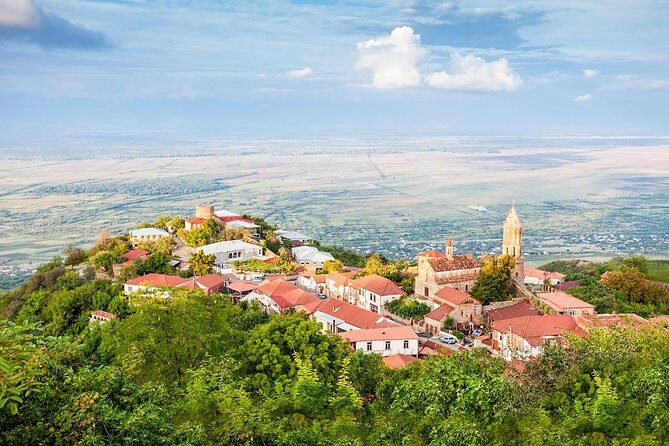
- Sighnaghi for the walkable vibe: small-town views, historic-looking facades, and a strong wine-and-carpets rhythm.
- Bodbe connects faith and craft: St. Nino’s story, plus icon-painting and needlework shops under the monastery.
- Badiauri bread experience: you taste local bread baked by old traditions, and you may even bake some yourself.
- Dinner and snacks included: less budgeting stress after a long day on the road.
A 9:30 Tbilisi pickup that sets the whole tone
The day starts in the morning from your Tbilisi accommodation, with pickup arranged around 9:30 am. That early start matters here because the Kakheti region stretches your time fast. If you’re the type who hates rushing on vacation, you’ll still be fine, but you’ll want comfortable shoes and patience for roads.
Because it’s private, you’re not sharing the car and pace with strangers. That makes a difference at stops like Davit Gareja, where the walking and viewpoints can feel different depending on your group. Your guide can also adjust how long you linger in each place, which helps you avoid the classic see-everything-but-remember-nothing day.
The total time is about 5 to 7 hours, so think of this as a full, concentrated day. You’ll come back to Tbilisi with your evening mostly intact, but you won’t have the luxury of slow sightseeing between far-flung points.
Other Kakheti wine region tours we've reviewed in Tbilisi

Davit Gareja: monasteries on the border and a lunar semi-desert feel
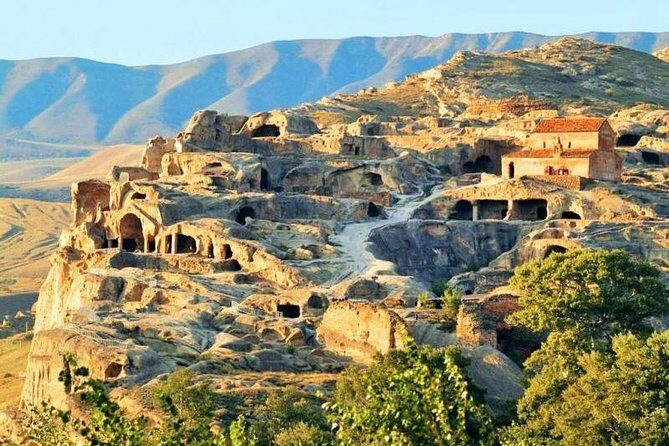
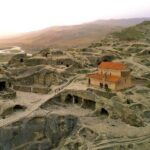
Davit Gareja, also called Gareji, is one of Georgia’s most dramatic historic settings, and it’s not subtle about it. You’re near the border with Azerbaijan, and the monasteries sit in a lunar-like semi-desert environment. Even before you reach the churches, the setting changes how you understand the place. It feels remote, shaped by distance and weather.
You usually don’t try to cover all the monasteries here. Davit Gareja includes about 15 monasteries spread across a remote area, but most visits focus on two: Lavra and Udabno.
- Lavra: this is the section that’s been restored since Soviet times and is now inhabited by monks again. It gives the site a living feel rather than pure museum energy.
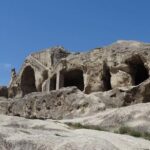
- Udabno: you’ll visit the hill above Lavra, known for beautiful frescoes. This is where your eyes do a lot of work, because you’ll want time to look closely instead of snapping quick photos and moving on.
A practical note: the terrain and viewpoints can mean uneven ground and stairs. If your feet don’t love hills, bring supportive footwear. If you’re traveling in early summer, the setting can also shift with blooming flowers, which makes Davit Gareja feel less harsh and more alive than you might expect from the semi-desert reputation.
The big value here is perspective. Kakheti isn’t just vineyards and wine labels. This stop shows a Georgia where spirituality grew in places that were hard to reach, and where art like frescoes still has a pulse.
Sighnaghi: small-town romance with wine and carpet traditions
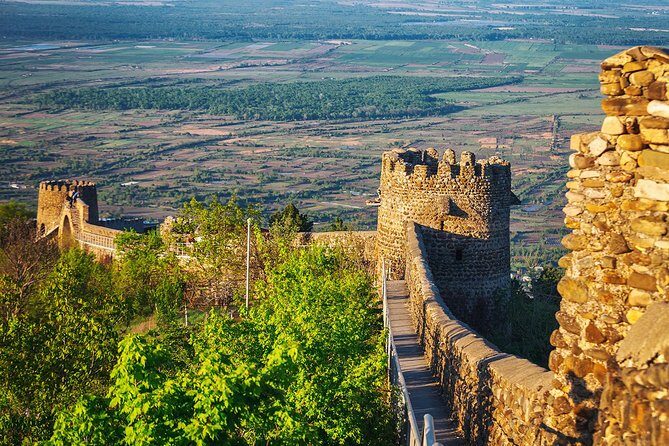
After Davit Gareja, you’ll spend time in Sighnaghi, a small town in eastern Georgia that’s famous for its love-and-romance vibe. It’s also genuinely scenic, tucked between green trees and wide-open views. The town atmosphere is part old-world, part quietly working today.
What I like about Sighnaghi is the way it doesn’t try to be one thing. You’ll see plenty of historic-looking facades and churches, so it feels like parts of the town are frozen in a different era. But at the same time, traditions are still very much alive. The local economy leans heavily on wine and traditional Georgian carpets, so your visit isn’t just scenic—it’s tied to how people earn a living.
In practical terms, Sighnaghi gives you the easiest change of pace in the day. It’s where you can slow down, walk, and enjoy views without the same level of religious or architectural intensity as the monastery stops. If you’re traveling with someone who wants both beauty and culture, this is the middle-ground stop.
One consideration: because the day is private and the schedule is tight, you might not have hours to roam endlessly. You’ll get a meaningful taste, though. If you know you want a long sit-down lunch or a long photo walk, plan to arrive with energy and ask your guide how much time you’ll have for wandering.
Bodbe: St. Nino’s tomb, monastery life, and the Mother Mary of Iveria
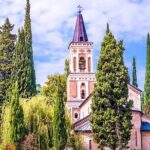
Next comes Bodbe, also referred to as Qiziki, an ecclesiastical center near Sighnaghi. This place is packed with layers, starting with an anchor story from Christianity’s early arrival in Georgia.
The cathedral here was constructed in the 4th century AD, on the tomb of St. Nino, who introduced Christianity to Georgia. That alone gives the site weight, but Bodbe is also shaped by royal support. The monastery was renovated many times by Georgian kings, which helped preserve and reinforce its importance over centuries.
Another detail that I find interesting is the monastery’s connection to governance and defense. From the end of the 15th century, the bishop of Bodbe served as a commander of the Kakheti kingdom’s military and administrative authority. That means Bodbe wasn’t only spiritual—it was part of how the region organized power.
In modern times, monastery life was restored in 1991, so you’re not just visiting ruins. You’re stepping into a functioning religious community again.
You’ll also see one of the monastery’s biggest shrines: a miraculous icon of Mother Mary of Iveria. And beneath that, the monastery environment includes practical, creative work. There are large shops focused on icon painting and needlework, and nuns are involved in preparing religious service books based on manuscripts. It’s a reminder that faith here is not only ceremony—it’s also craft, memory, and careful reproduction of texts.
If you enjoy details, Bodbe is where your guide’s explanation can really make the visit click. Don’t treat it like a quick stop. Take a moment to look at the icons and shop activity if your timing allows, because the center is as much about the living work around the church as it is about the building itself.
Badiauri bread-making: a hands-on Kakheti taste with old-school methods
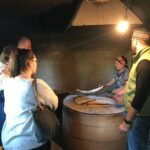
Badiauri is a village stop that works well because it’s sensory. You’ll visit the village of Badiauri to taste local bread baked using old traditions. If your travel style leans toward food moments and real everyday culture, this part is a highlight.
The experience is described as not only tasting the bread but also baking some yourself. Even if you end up doing less than you hope, the point is that you’re connecting to how locals do something basic and meaningful, not just sampling a dish for five minutes and moving on.
Badiauri is also described as one of the best places for wine-degustation activities in Kakheti. The tour data here doesn’t spell out exactly how much wine tasting is included, so I recommend planning to ask your guide on the day what’s included with your dinner and tastings schedule. In many Kakheti experiences, wine can be either part of the meal or an optional add-on, depending on the exact arrangement.
Either way, the value of the Badiauri stop is the texture of Kakheti culture. You see the region’s food tradition, and you get placed in a wine-producing mindset without the day becoming only about vineyards and sales pitches.
A few more Tbilisi tours and experiences worth a look


Dinner, snacks, and water: small inclusions that reduce stress
Meals are included, which is a quiet win on a day tour like this. You’ll have dinner, plus snacks and bottled water. After visiting monasteries and walking around scenic areas, that kind of support matters. It means you don’t have to hunt for food between stops or worry about your budget in the middle of the day.
What dinner does for the experience is pacing. You can enjoy Sighnaghi and the religious sites without calculating when you’ll finally eat. And because the tour includes snacks, you’ll be less likely to feel the energy dip that can hit during longer drives.
A practical tip: eat the snack before you get too hungry. It helps keep your mood steady when the drive time stretches.
Price and value: why $145 feels fair for a private Kakheti loop
At $145.00 per person, this is not a bargain-basement excursion. But it also isn’t the kind of private day trip that tries to hide costs in extras.
You’re paying for:
- A professional guide
- Hotel pickup and drop-off
- Transport in a private vehicle
- Dinner, snacks, and bottled water
- The tour being private for your group
For me, the value question comes down to time. If you try to assemble this day on your own, the cost of a car, fuel, parking, and a guide—or the time lost navigating—can climb fast. This tour turns a messy logistics day into a single set plan, with someone explaining what you’re seeing.
Also, Kakheti’s driving distances can add up. A private vehicle lets you take the day as a whole, not as a set of separate solo missions.
One more note: the tour mentions group discounts. If you’re traveling with friends or family, ask about how pricing changes with group size. Private tours can sometimes become much better value the more people you add.
Who should book this day trip (and who might not love it)
This tour makes the most sense if you want:
- A focused taste of Kakheti without committing to multiple days
- A balance of monasteries, a historic-looking town, and a food-and-tradition stop
- A guide-led day where you can ask questions and understand why places matter
It’s especially well suited for couples and anyone chasing that mix of beauty and culture. Sighnaghi’s love-town atmosphere gives you that lighter, romantic contrast to the spiritual gravity of Davit Gareja and Bodbe.
Who might want to think twice?
- If you dislike car time, the 5 to 7 hour format may feel tight.
- If you’re the type who wants hours of free time in one location, this day is more about curated highlights than deep independent wandering.
- If your priority is only wine estates, you’ll still get the regional vibe, but the bread and monastery focus means it’s not strictly a winery tour.
Should you book One Day Kakheti Tour With Love in the Air?
I’d book it if you’re staying in Tbilisi and want a meaningful Kakheti day that goes beyond one theme. The strongest pull for me is the combination: Davit Gareja’s remote monastery atmosphere, Sighnaghi’s old-town charm, and Bodbe’s deep spiritual and cultural craft details, then finishing with a practical local food stop in Badiauri.
If you’re flexible about pacing and happy to spend some time in transit, you’ll likely enjoy how the day fits together. Just go in with the right expectations: it’s a concentrated tour, not a slow, unhurried stay in one town.
One last practical move: confirm what’s included for wine at the Badiauri stop when you check in with your guide. That way you can plan your preferences and still enjoy the day without surprises.
FAQ
How long is the One Day Kakheti Tour With Love in the Air?
The tour lasts about 5 to 7 hours.
What time does the tour start in Tbilisi?
The start time is listed as 9:30 am, with pickup from your accommodation.
Is this a private tour?
Yes. It’s a private tour/activity, and only your group will participate.
What stops are included in the day?
You’ll visit Davit Gareja (Lavra and Udabno), Sighnaghi, Bodbe (Qiziki), and the village of Badiauri.
Is dinner included?
Yes. Dinner is included, along with snacks and bottled water.
Is there a mobile ticket?
Yes, the tour includes a mobile ticket.
What should I expect to do at Badiauri?
You’ll taste local bread baked using old traditions, and the experience includes baking some of your own.
Can I cancel for a full refund?
Yes. Free cancellation is available up to 24 hours in advance for a full refund.