REVIEW · TBILISI
Tbilisi ‘Dive into the Past’
Book on Viator →Operated by Travellers Club 'SAIT' · Bookable on Viator
Tbilisi surprises even locals. This four-hour old-town walk strings together sulphur-soaked places, hilltop fort views, and tiny cultural moments that feel lived-in. I like that the route includes admission tickets at every main stop, so you spend your time looking instead of buying. I also enjoy the mix: oldest sulphur bathing history, the chance to catch marionettes at Rezo Gabriadze Marionette Theater, and the calm weight of Anchiskhati Basilica.
One key consideration: it is a walking tour with a lot of stairs and a long up-and-down stretch on Betlemi Street Stairs. If your legs tire easily, plan for slow breaks and wear shoes you trust.
In This Review
- Key highlights you’ll notice right away
- Price and logistics: why this $25 tour feels fair
- Meeting at Sayat Nova and the rhythm of a 10:00 start
- Stop 1: Tbilisi Antique Archaeological Museum and the oldest sulphur baths
- Stop 2: Narikala Fortress—main fortress energy, right above the streets
- Stop 3: Betlemi Street Stairs—where the old town gets real
- Stop 4 and 5: Dzveli Tbilisi Sulphur Waterfall + Rezo Gabriadze Marionette Theater
- Dzveli Tbilisi Sulphur Waterfall (about 15 minutes)
- Rezo Gabriadze Marionette Theater (about 10 minutes)
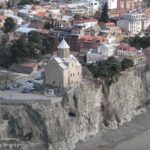
- Stop 6: Anchiskhati Basilica—oldest in Tbilisi, with a quiet weight
- Stop 7: Tbilisi Wall Ruins from the 5th century
- Pace, shoes, and how to enjoy the stairs without suffering
- Value check: what you’re really buying with this tour
- Who this tour suits best (and who should think twice)
- Should you book this Tbilisi past walk?
- FAQ
- How long is the tour?
- What does the tour cost?
- Is the tour private?
- Where does the tour start?
- What language is the tour offered in?
- Is the tour difficult because of stairs?
- What if the weather is bad or I need to cancel?
Key highlights you’ll notice right away

- Mobile ticket + English guide setup, made simple for visitors
- Private tour means only your group, not a shuffle with strangers
- Every major stop has admission included, so the price feels “all-in”
- Oldest sulphur-bath story starts at Tbilisi Antique Archaeological Museum
- Narikala Fortress connects the old town to centuries of defense
- Rezo Gabriadze Marionette Theater offers a small, high-sparkle moment when marionettes appear
Price and logistics: why this $25 tour feels fair
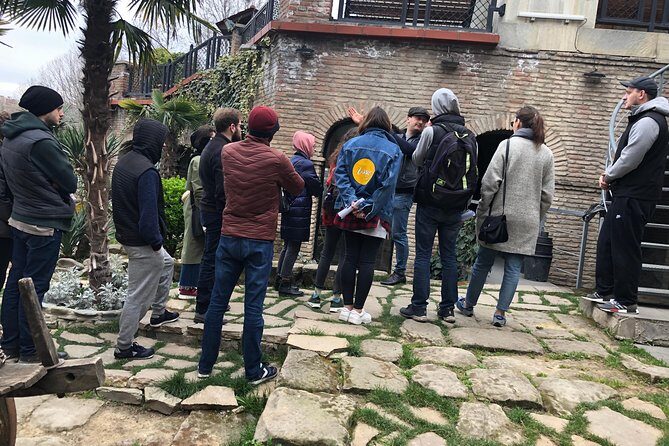
At $25 per person, this tour works because it’s built like a package rather than a “guide-only” walk. You get a set route of major sites and you’re not expected to pay extra at each one—the experience includes admission tickets for the stops.
The tour runs about 4 hours and starts at 10:00 am, with a set meeting point at the Sayat Nova Sculpture area in central Tbilisi (MRQ5+WHF). It ends back at the same meeting point, which is handy when you’re trying to fit this into a day with other plans.
You’ll also appreciate the practical touches: it uses a mobile ticket, it’s offered in English, and it’s designed to be doable with “most travelers can participate.” That wording matters. It’s not a hard-core trek, but it is not a stroll either.
Finally, the private setup is a quiet win. Only your group participates, so you’re not competing for attention or getting rushed through photos.
If you're still narrowing it down, here are other tours in Tbilisi we've reviewed.


Meeting at Sayat Nova and the rhythm of a 10:00 start
Your day begins at the Sayat Nova Sculpture at MRQ5+WHF. That’s central enough to be easy to find, and the tour is noted as being near public transportation, so you’re not forced into complicated directions.
A 10:00 am start also helps the pacing. You’ll catch the first stops while the city still feels a bit more relaxed, then you’ll move through the old lanes and viewpoints with enough daylight to enjoy the elevation changes.
Because it ends where it starts, you can plan the rest of your day without guessing how you’ll get back across town. This matters more than people think, especially in an old city where streets can look close on a map but feel like a maze on foot.
Stop 1: Tbilisi Antique Archaeological Museum and the oldest sulphur baths
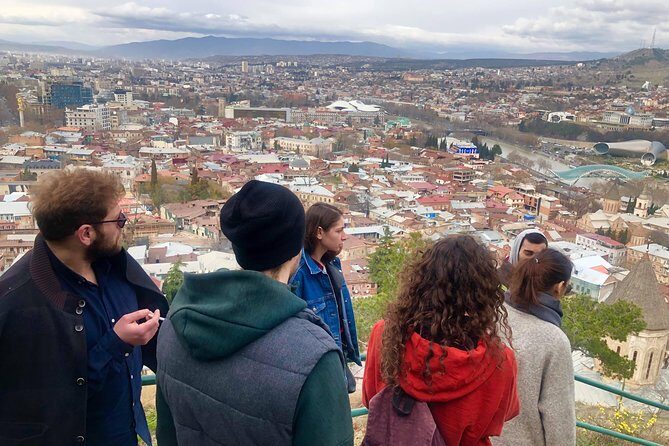
The tour kicks off at the Tbilisi Antique Archaeological Museum, where you’ll see the oldest sulphur baths discovered in the center of the old town. Even if you think you know Tbilisi, this first stop can reset your idea of what the city is.
Why this matters: sulphur baths aren’t just a tourist detail here. They’re a clue to how people lived in Tbilisi for a long time—how locals used natural resources, how the old town developed, and how something practical became part of identity. Starting with the baths gives context for what you’ll see later, including the sulphur-related stops deeper in the route.
You’ll spend about 30 minutes here with admission included. That timing is long enough to actually look, but short enough to keep energy for the fortress climb and the stairs later.
Possible consideration: this stop is mostly about looking and learning, so if you prefer very hands-on experiences, you may want to pace your attention and save your most curious energy for the places where you can see a view or a performance.
Stop 2: Narikala Fortress—main fortress energy, right above the streets
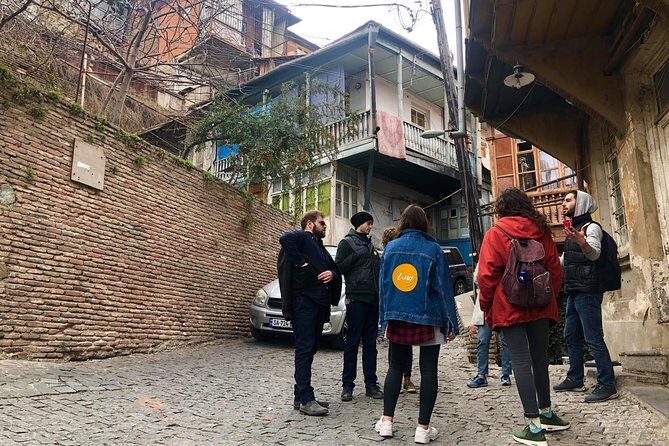
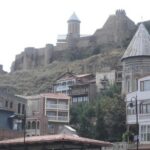
Next up is Narikala Fortress, described as the main fortress for many centuries. If the museum teaches you the “why” of Tbilisi’s old core, Narikala gives you the “where.” You’re stepping into the logic of defense: controlling high ground, watching routes, and shaping the city’s survival.
This stop is also about 30 minutes, and the value comes from how the fortress changes your perspective. You’ll connect the old lanes to the bigger idea of the city’s structure. Even if you’re not a “fortress person,” it’s hard to ignore the sense of scale and the way the old town sits around it.
I like this kind of stop because it makes the rest of your walking feel meaningful. After Narikala, the streets don’t feel random. They feel like they were built around survival, not convenience.
One practical note: Narikala can bring you into uneven ground and stair-adjacent terrain. The tour is still manageable, but this is where comfort footwear pays off.
Stop 3: Betlemi Street Stairs—where the old town gets real
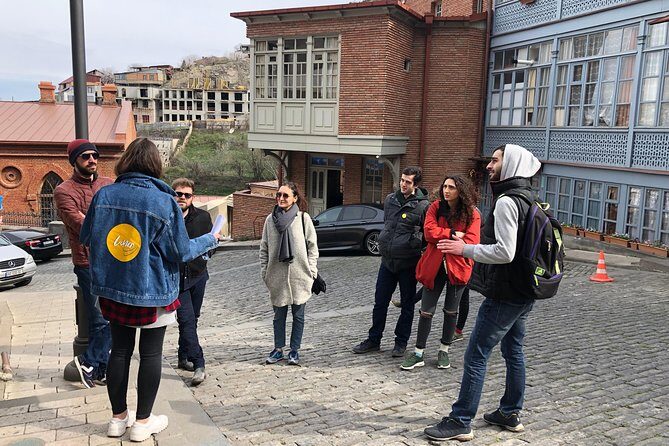
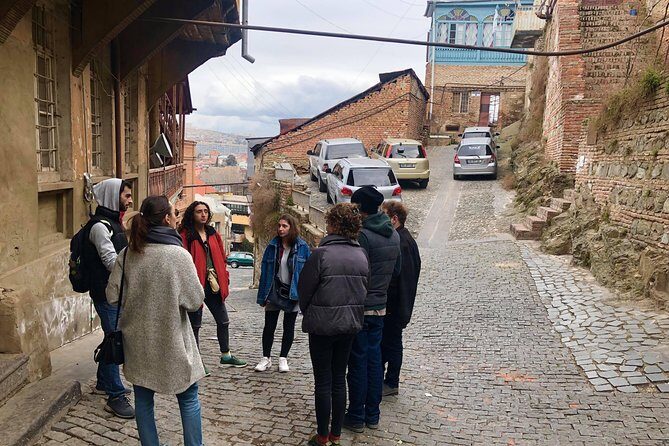
Now comes the part that can make or break your enjoyment: Betlemi Street Stairs. The description is clear—expect a long walk up and down in the old town, with about 1 hour allocated for this segment.
This is the stretch where you feel the city’s vertical nature. It’s also where you get that classic Tbilisi experience: small side streets, changing angles, and the sense that you’re moving through layers rather than just passing a sight.
I like this stop because it slows you down in the best way. The city stops being a list and becomes a route you can actually follow with your senses: sounds from doorways, glimpses between buildings, and the constant up-and-down rhythm.
The drawback is obvious: it’s stairs and it’s long. If you’re prone to knee pain, bring a realistic pace. Take the breaks you need. This tour is structured enough that you don’t have to sprint.

Stop 4 and 5: Dzveli Tbilisi Sulphur Waterfall + Rezo Gabriadze Marionette Theater
After the stairs, the route offers two high-reward contrast stops.
Dzveli Tbilisi Sulphur Waterfall (about 15 minutes)
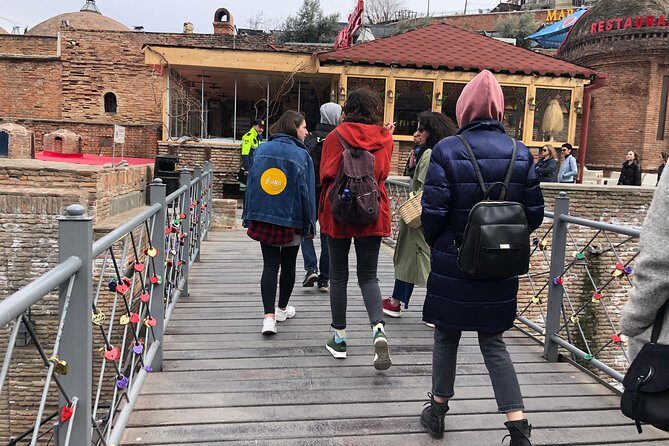
At Dzveli Tbilisi Sulphur Waterfall, the experience is described as a place where people get so fresh and clean even just stopping by. That’s a big claim in a short time window, but it hints at the attraction: sulphur, water, and the sensory vibe of a place locals treat as normal—something you can walk to and spend a few quiet minutes with.
Even if you don’t plan to bathe, this stop works as a reset. You’re shifting from “climb and look” to “pause and feel.” It also ties back to where the tour started, reinforcing the sulphur theme instead of making it feel random.
Rezo Gabriadze Marionette Theater (about 10 minutes)
Then you’re at Rezo Gabriadze Marionette Theater, where the fun is tied to chance. If you get lucky, you’ll see Georgian marionettes coming out from their tiny windows.
This is short—10 minutes—but it’s the kind of moment that sticks because it’s unexpected. It doesn’t require you to study for hours or stand in a museum for long. It’s small theatre energy inserted right into a walking route.
If you like culture that feels local instead of staged, this is a great pocket stop. I also find puppet stops easier to enjoy when you’re tired, because the visuals do the work for you.
Practical consideration: since the marionette appearance is described as luck-based, keep your expectations flexible. Treat it as a bonus moment, not a must-see guarantee.
Stop 6: Anchiskhati Basilica—oldest in Tbilisi, with a quiet weight
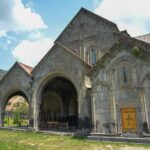
Next is Anchiskhati Basilica, noted as the oldest Basilica in Tbilisi. At about 10 minutes, this isn’t a long church visit, but it gives you a grounding point: faith, age, and continuity.
This stop matters because it widens the tour beyond baths and fortifications. It’s also a chance to slow your pace after the more active earlier segments. Even if you’re not the type who reads every inscription, being in an older religious space tends to change your posture. You stand differently, you look at details longer, and the noise of the streets feels farther away.
I appreciate how the tour designers don’t keep you in one theme. After Narikala and sulphur stops, the basilica adds structure to the story of the city.
Consideration: it’s only 10 minutes, so if you want longer quiet time inside, you may need to plan your own extra visit later.
Stop 7: Tbilisi Wall Ruins from the 5th century
The final stop is Tbilisi Wall Ruins, described as V century wall ruins, with about 10 minutes. This kind of site can be easy to rush past on your own, but here it lands as a satisfying closing piece.
Why it works: you’ve already seen the idea of defense at Narikala. Now you’re looking at the evidence of older fortification life in the form of ruins. It’s not a full reconstruction. It’s a reminder that cities change, then change again, leaving traces behind.
At the end of the walk, ruins feel especially appropriate. The tour is about layers—what’s still standing, what’s been uncovered, and what you can still read if you know where to look.
Pace, shoes, and how to enjoy the stairs without suffering
This is a walking tour with a lot of stairs, plus a long up-and-down portion at Betlemi Street Stairs. Most travelers can participate, but you’ll get more out of it if you match the route with your body.
My practical advice:
- Wear comfortable, grippy shoes. You’ll be moving on uneven old-town terrain.
- Keep a water bottle handy. The tour duration is about 4 hours, with breaks built into stops, but you’re still on foot most of the time.
- If it’s hot or crowded in your personal experience, slow down at transitions. The museum-to-fort-to-stairs pattern can build fatigue fast.
Also note the tour is described as requiring good weather. That means if the city is rainy or too harsh, don’t count on the route running as planned. In that case, expect a date change or a refund.
Value check: what you’re really buying with this tour
You’re not buying a “highlight photo” route. You’re buying a guided connection between seven stops that all share a theme: how Tbilisi grew, defended itself, worshipped, and developed its sulphur tradition.
The $25 price becomes fair because:
- Admission is included at each main site stop.
- The route is timed tightly enough to fit into one morning, yet long enough to feel like you’re walking the old town with purpose.
- It’s private for your group, which improves the experience quality even if you’re only visiting for the first time.
The strongest praise for this kind of tour tends to come from people who thought they knew the city already. This route has that “you can still find more” energy because it starts at a sulphur-bath discovery site, then moves through fortification, stair lanes, and a puppet theatre break. That mix often makes even repeat visitors say, wait, we never saw that.
Who this tour suits best (and who should think twice)
This is a great fit if you want:
- A guided old-town route in English
- A city experience where admission tickets are included
- A mix of architecture, fortification, sulphur culture, and a quick performance moment
It’s also ideal for you if you like walking with a plan. The “short at each place” timing keeps things moving, and the total 4 hours is manageable for a morning.
Think twice if:
- You have knee or mobility issues and stairs are a big problem for you
- You prefer very relaxed flat walks rather than elevation and stair segments
Should you book this Tbilisi past walk?
I’d book this tour if you want a compact, story-driven walk that hits the city’s main “identity pieces” without ballooning your day. The price-to-inclusions ratio is strong, and the private format makes it feel personal instead of rushed.
I would not book it if you’re hoping for an easy, flat sightseeing stroll. The stairs are real, and the Betlemi Street segment is the point where you feel it most.
If you’re comfortable on your feet and you like your Tbilisi with both sulphur and surprises, this one is a solid choice.
FAQ
How long is the tour?
The tour lasts about 4 hours.
What does the tour cost?
It’s $25.00 per person.
Is the tour private?
Yes. It’s a private tour/activity, so only your group participates.
Where does the tour start?
You meet at the Sayat Nova Sculpture area in Tbilisi (MRQ5+WHF). The tour ends back at the meeting point.
What language is the tour offered in?
The tour is offered in English.
Is the tour difficult because of stairs?
It’s a walking tour and includes a lot of stairs. Betlemi Street Stairs involves a long walk up and down in the old town. Most travelers can participate, and service animals are allowed.
What if the weather is bad or I need to cancel?
The experience requires good weather. If it’s canceled due to poor weather, you’ll be offered a different date or a full refund. You can cancel for a full refund up to 24 hours in advance of the start time.