REVIEW · TBILISI
3 Days in Georgia: Private Tour with Wine, Mountains & Culture
Book on Viator →Operated by BB Georgia Travel · Bookable on Viator
You can see Georgia’s big ideas fast.
This private 3-day route stitches together Tbilisi, UNESCO monasteries in Mtskheta, Kakheti wine country, and the Kazbegi mountains—so you’re not just sightseeing, you’re moving through Georgia’s different worlds in a sensible order. You get a car and an English-speaking driver-guide, plus the freedom to tweak what matters most to your group.
What I like most is the way the tour balances set-piece landmarks with everyday culture. You’ll taste Georgian flavors with an included wine tasting and the bread-and-cheese stop for shoti, not just stand near statues. The other big win is that you’re not left to figure out logistics between cities, viewpoints, and short walks on your own.
One consideration: meals and drinks are on you, and the itinerary includes a lot of stops. If you’re the type who needs long sit-down lunches or lots of free time to wander without moving, you may feel a little scheduled—especially on mountain day.
In This Review
- Key things that make this 3-day tour work well
- The Georgia version you can actually do in 3 days
- Private driver-guide value: reliability plus real local context
- Day 1 in Tbilisi and Mtskheta: monasteries, viewpoints, and sulfur baths
- Chronicles of Georgia: a dramatic opener with killer hilltop views
- Jvari Church: cruciform architecture and the St. Nino story
- Svetitskhoveli Cathedral: the cathedral where legends have weight
- Back to Tbilisi: cable car, Narikala Fortress, and the old city looking new
- Kartlis Deda and Jumah Mosque: Georgia’s identity in two silhouettes
- Leghvtakhevi Waterfall and Abanotubani: when the city turns into a pocket of calm
- Old Town stroll: Meidan Bazaar, Shardeni Street, Tamada, and the Bridge of Peace
- Day 2 in Kakheti: shoti, St. Nino’s spring, Sighnaghi walls, and long views
- Badiauri: shoti bread and cheese tasting
- Bodbe Monastery of St. Nino: a steep path to holy spring water
- Sighnaghi: a hill town with defensive walls and big Alazani views
- Giant Plane Tree in Telavi area: an old symbol you can measure with your eyes
- The Gombori mountains: scenic road filler with context
- Day 3 on the Military Highway: reservoirs, Ananuri, and Gergeti under Kazbek
- Zhinvali Reservoir: first big scenery hit
- Ananuri Fortress Ensemble: 16th-century defense by the Aragvi
- Pasanauri: black and white Aragvi meeting point
- Russia–Georgia Friendship Monument: a Soviet-era marker on the route
- Stepantsminda and Gergeti: Kazbegi views that feel like the main event
- Price and value: what $244 covers and how to budget smartly
- Who this tour suits best (and who should reconsider)
- Should you book this 3-day Georgia private tour?
- FAQ
- What is the duration of the tour?
- What time does the tour start?
- Is pickup and drop-off included?
- Is this a private tour or a shared group?
- Is wine tasting included?
- Is shoti bread and cheese tasting included?
- Are tickets or entrance fees included?
- What about lunch and drinks?
- Does the price include transportation?
- Is free cancellation available?
Key things that make this 3-day tour work well
- Private driver-guide for smooth handoffs between sights instead of hunting for connections
- Wine tasting plus shoti bread and cheese for real food moments, not just photos
- UNESCO-class monastery views at Jvari and Svetitskhoveli with plenty of cultural context
- Tbilisi viewpoint mix from cable car to Narikala Fortress, then down into Old Town
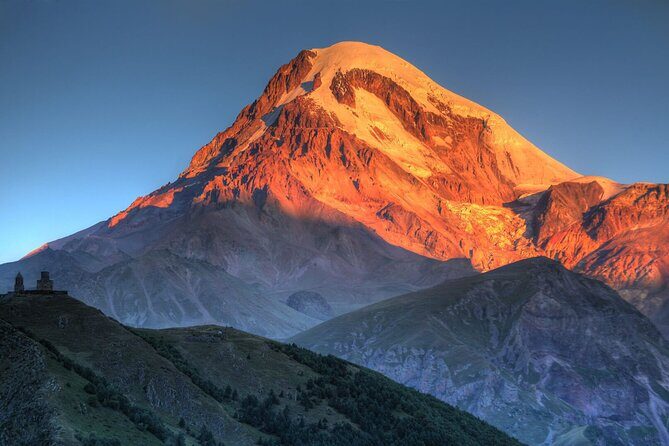
- Kazbegi payoff day with Reservoirs, Ananuri, and the Gergeti Trinity Church view
- Customizable itinerary so you can shift priorities without breaking the whole plan
The Georgia version you can actually do in 3 days
Georgia is huge in both geography and culture. In three days, this tour keeps you moving, but not in a chaotic way. The flow is built around the big clusters: Tbilisi and Old Town culture first, then Mtskheta’s Christian landmarks, then Kakheti’s food and wine rhythm, and finally the Georgian Military Highway toward Kazbegi.
If you’re short on time, this kind of routing is the difference between seeing highlights and seeing the same highlight twice because you got stuck in traffic. The private car helps you cover ground while still getting out at the right moments.
Other multi-day Georgia tours we've reviewed in Tbilisi

Private driver-guide value: reliability plus real local context
The tour is private, with a dedicated English-speaking driver-guide and hotel pickup/drop-off each day. That matters because Georgia’s main sights are spread out, and a guide saves you from two common headaches: unnecessary detours and not understanding what you’re looking at once you arrive.
The driver-guide quality is one of the most praised parts of this experience. People highlight guides like David and Irakli for being on time, reliable, and helpful with problems that pop up (like sorting out practical lodging issues when plans change). That kind of support turns a sightseeing day into a smoother trip.
You’ll also get a built-in translator for history and religious sites. Places like Jvari and Svetitskhoveli aren’t just pretty buildings; you’ll understand the symbols, legends, and why they matter in Georgian identity.
Day 1 in Tbilisi and Mtskheta: monasteries, viewpoints, and sulfur baths
Day 1 is the culture spine of the trip. You start with a sweeping monument, then you move into sacred sites in Mtskheta, and you end back in Tbilisi with a mix of Old Town textures and modern city views.
Chronicles of Georgia: a dramatic opener with killer hilltop views
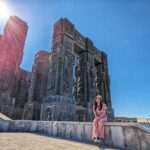
The Chronicles of Georgia is a monumental stone structure on a hill near Tbilisi. It’s a sculpted timeline of Georgia’s 3,000-year history and Christianity’s adoption over 2,000 years ago, with 16 massive columns and detailed carvings of kings, queens, and biblical scenes. Even though it’s unfinished, it still hits hard, and the views over the Tbilisi Sea area make it a strong first stop.
This one is listed as free admission, and it takes about an hour—enough time to walk around and read what’s there.
Jvari Church: cruciform architecture and the St. Nino story
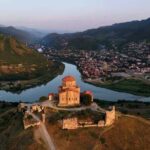
Next comes Jvari Church, a 6th-century Georgian Orthodox monastery sitting above the confluence of the Mtkvari and Aragvi rivers near Mtskheta. It’s UNESCO-listed and built around early Christian cruciform design—simple, but powerful. The legend says it marks the spot where St. Nino erected a cross to symbolize Georgia’s conversion to Christianity in the 4th century.
It’s a shorter stop, around 30 minutes, but the view from the hill is part of the experience. If you like places where the setting matters, this is one to linger at.
Other private tours in Tbilisi


Svetitskhoveli Cathedral: the cathedral where legends have weight
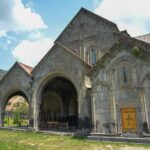
Then you reach Svetitskhoveli Cathedral in Mtskheta, an 11th-century UNESCO World Heritage site. This cathedral is known for intricate stone carvings and frescoes, and it carries a very specific sacred tradition: it’s traditionally believed to house Christ’s mantle brought to Georgia in ancient times. Svetitskhoveli also served as a coronation and burial site for Georgian kings, which is why it feels more than decorative.
The time on this stop is about an hour. That’s enough to appreciate the carvings and absorb the scale without feeling rushed.
Back to Tbilisi: cable car, Narikala Fortress, and the old city looking new
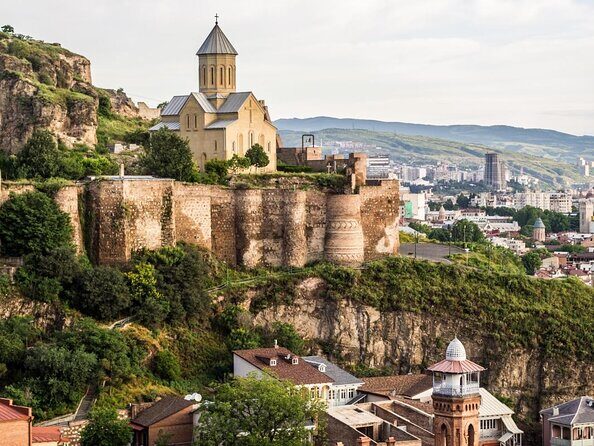
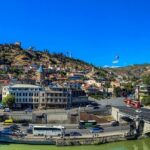
After Mtskheta, you pivot back to Tbilisi with a modern-to-old-town rhythm. You’ll stop at Rike Park by the river, then take the Rike-Narikala cable car (listed as included). The ride is short, but it’s the easiest way to get aerial views of Tbilisi’s historic Old Town and Narikala Fortress above.
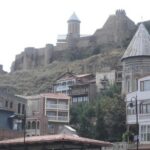
Narikala Fortress is next, with a history reaching back to the 4th century. Even if you don’t read every layer of fortification history, the payoff is the panoramic look down at the city and the Mtkvari River below.
Kartlis Deda and Jumah Mosque: Georgia’s identity in two silhouettes
You’ll also see Kartlis Deda (Mother of Georgia), a tall statue overlooking Tbilisi on Sololaki Hill. It symbolizes hospitality and strength, and it’s one of those monuments that helps you understand the country’s self-image without needing a lecture.
Then you’ll pass Jumah Mosque, a historic 19th-century mosque at the heart of the city. Seeing it in the same day as the Christian monasteries gives you a quick sense of Georgia as a crossroads, not a single-note destination.
Leghvtakhevi Waterfall and Abanotubani: when the city turns into a pocket of calm
Old Tbilisi has a way of surprising you, and Day 1 leans into that. The Leghvtakhevi Waterfall is small but scenic, tucked near the Old Town area in a gorge-like setting.
After that, you enter Abanotubani, famous for its sulfur baths. The district’s domed bathhouse buildings and the idea of natural hot springs used for centuries make this an atmospheric stop. Even if you don’t book a bath session, the area is worth walking through for the architecture and the sense of how locals treat wellness as part of daily life.
Old Town stroll: Meidan Bazaar, Shardeni Street, Tamada, and the Bridge of Peace
Day 1 closes with the human-scale details of Tbilisi. You’ll spend time around Meidan Bazaar for Georgian handicrafts, textiles, ceramics, and local artwork. Then comes Shardeni Street, a pedestrian-friendly street with cafés, restaurants, galleries, and shops—perfect for a slow stroll after a busy day.
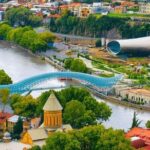
You’ll also see the Tamada (Toastmaster) Statue, which nods to the Georgian tradition of toasts and feasting culture. The day ends at the Bridge of Peace, a modern bow-shaped pedestrian bridge designed by Michele De Lucchi and opened in 2010. If you’re there later in the day, it’s especially striking because it’s known for LED lighting at night.
Day 2 in Kakheti: shoti, St. Nino’s spring, Sighnaghi walls, and long views
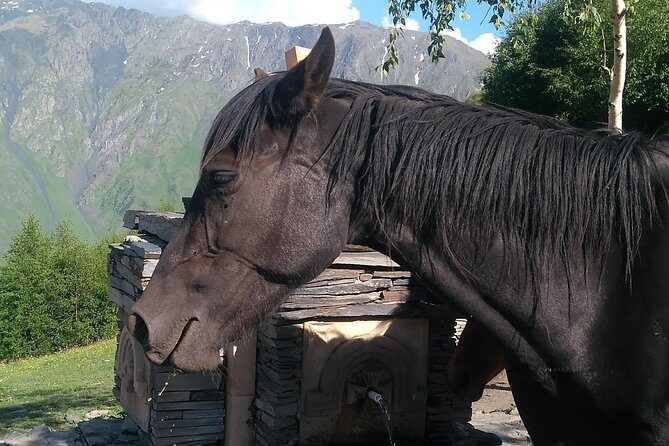
Day 2 shifts from religious landmarks into food, wine country energy, and hilltop towns. It’s also where the tour feels most like a “Georgia experience” and less like a checklist.
Badiauri: shoti bread and cheese tasting
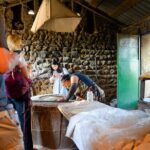
In the morning, you stop in Badiauri, known for shoti, the traditional Georgian bread. You’ll do a bread-and-cheese tasting that’s simple but memorable because it’s one of the country’s core flavors. It takes about 30 minutes, and it’s a great way to start a day that includes churches and viewpoints later.
If you’re picky about what counts as a tasting, this is one of the more meaningful stops: it’s a food you can only really understand by eating it fresh.
Bodbe Monastery of St. Nino: a steep path to holy spring water
Next is Bodbe Monastery of St. Nino, one of Georgia’s key religious sites. The walk down toward the chapel is steep (about an 800m descent), built over St. Nino’s Spring, where the legend says the spring burst forth after her prayer. People queue to drink and splash themselves with the holy water, described as having healing power.
The stop is listed as about 30 minutes. That’s enough time for the viewpoint and the spring tradition, but it’s not meant to turn into a long pilgrimage day.
Sighnaghi: a hill town with defensive walls and big Alazani views
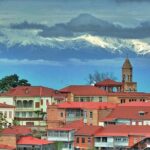
Then comes Sighnaghi, often called the City of Love, set at the heart of Georgia’s wine-growing regions. The town is known for pastel-colored houses, narrow cobblestone streets, and a dramatic position overlooking the Alazani Valley with the Caucasus Mountains visible in the distance.
You’ll also get time with Sighnaghi’s wall, which circles the city with 4 kilometers of defenses, towers, and gates. Even if you don’t go wall-to-wall, the fact that the town is built around protection tells you a lot about why it developed where it did.
Giant Plane Tree in Telavi area: an old symbol you can measure with your eyes
You’ll also stop at the Giant Plane Tree in the Telavi area. It’s over 900 years old, about 46 meters tall, and a natural monument and symbol of Telavi. It’s a quick stop (around 30 minutes), but it works well after Sighnaghi because it connects the human story to a living landmark.
The Gombori mountains: scenic road filler with context
You’ll pass through the Gombori mountain range area in Kakheti. Even when you’re not stepping out for a hike, getting that mountain backdrop helps the day feel cohesive. Kakheti isn’t just wine cellars—it’s also the hills that shape farming and viewpoints.
Day 3 on the Military Highway: reservoirs, Ananuri, and Gergeti under Kazbek
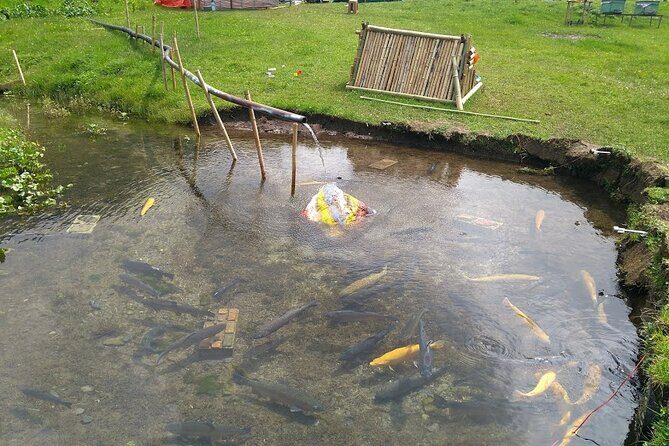
Day 3 is the one most people remember. It’s the mountain day, built around places along the Georgian Military Highway and the path toward Mount Kazbek.
Zhinvali Reservoir: first big scenery hit
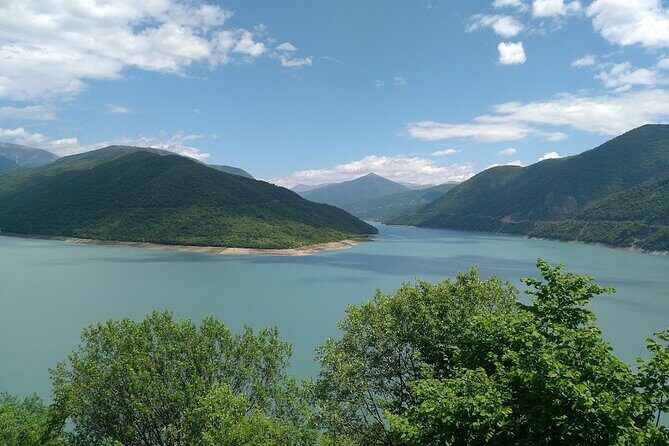
You start at Zhinvali Water Reservoir, described as a hydroelectric dam on the Aragvi River. It’s about 30 minutes and functions as your first dramatic mountain scenery marker. This is a nice buffer stop before you start stacking iconic fortresses and churches.
Ananuri Fortress Ensemble: 16th-century defense by the Aragvi
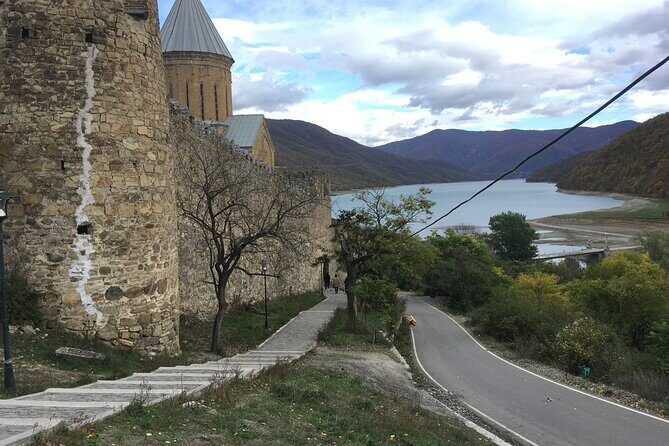
Next is the Ananuri Fortified Castle Ensemble, a complex on the Aragvi River dating to the 16th century. The fortification feel is clear, and the river setting adds motion to the scenery. It’s listed as about 30 minutes.
If you like places where architecture feels built for survival, Ananuri gives you that sense instantly.
Pasanauri: black and white Aragvi meeting point
Then you reach Pasanauri, known for the confluence of the Aragvi rivers: Black and White Aragvi. The color difference is part of the spectacle, and it’s the kind of detail that makes a stop feel more than “another viewpoint.” This is a shorter stop at about 15 minutes, so it’s mostly a quick look and photo moment.
Russia–Georgia Friendship Monument: a Soviet-era marker on the route
The Russia–Georgia Friendship Monument sits on the highway between Gudauri and the Jvari pass, built in 1983 for the bicentennial of the Treaty of Georgievsk and friendship between Soviet Georgia and Soviet Russia. It’s about 30 minutes.
This stop can be a head-scratcher if you’re not expecting political history on a scenery day. But it’s also a reminder that travel in Georgia often means encountering the layers left by different eras.
Stepantsminda and Gergeti: Kazbegi views that feel like the main event
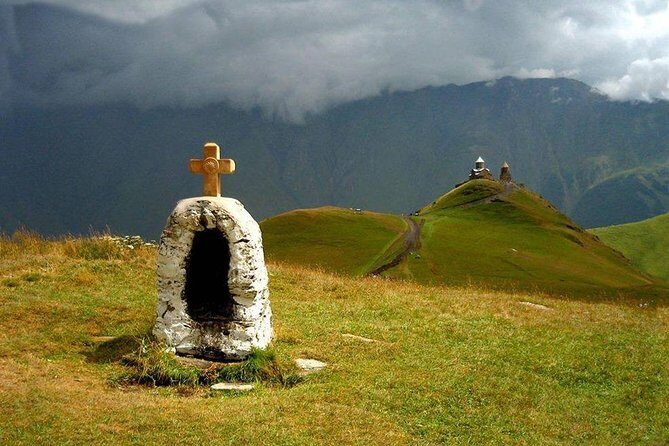
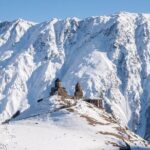
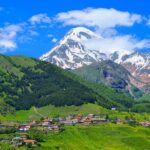
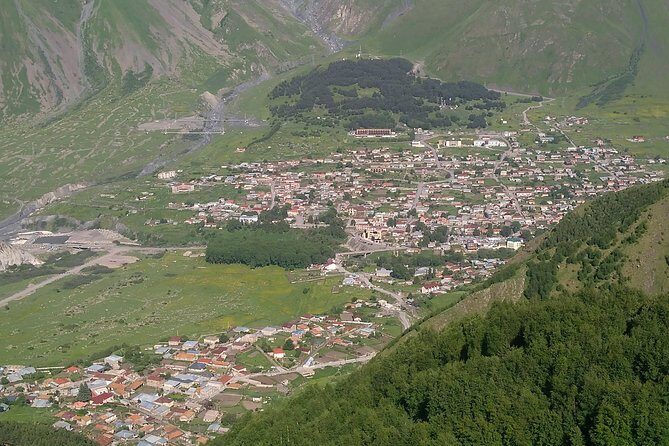
You’ll arrive in Stepantsminda, a valley village with attention focused on the hilltop Gergeti Trinity Church in the background. It’s about 15 minutes at Stepantsminda, then you go to the church area.
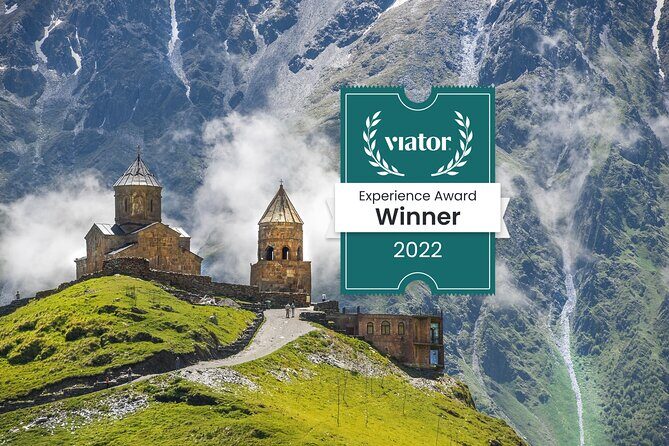
Gergeti Trinity Church is at an elevation of 2,170 meters and was built in the 14th century. It’s set under Mount Kazbek, with Kazbek reaching 5,047 meters. This is the photo moment, and it also helps you understand why people call Kazbegi the diamond of the Caucasus region. The stop is about 30 minutes.
Practical tip: at higher elevations, you’ll likely feel cooler than in the low city. If you run warm, that’s good; if you get cold easily, bring a layer.
Price and value: what $244 covers and how to budget smartly
The tour price is $244 per person for about three days with private transportation and a driver-guide. The value comes from what’s included: hotel pickup and drop-off each day, the private car, and the driver-guide time. Most trips at this level are about logistics, and here the structure is built to reduce wasted hours.
You also get two food moments included: wine tasting (one tasting) and the shoti bread-and-cheese tasting. That’s the kind of “real Georgia” value that doesn’t rely on you finding the right place on your own.
What’s not included is straightforward: food and drinks, lunch, and optional activities like horse riding, paragliding, and river rafting. So if you’re planning to eat well and drink more wine than the tasting, budget extra. The tour helps you with the core experiences; it doesn’t cover your whole day of meals.
Also note: many listed sights are free, and the cable car ride is included. That reduces friction and small ticket costs that can add up in independent travel.
Who this tour suits best (and who should reconsider)
This is a strong fit if you want a structured route but still value flexibility. It works well for couples, small groups, and people who like seeing a mix of architecture, food, and views without worrying about where the next car should be coming from.
It’s also a good choice if you care about the cultural side. The Mtskheta stops are not just “pretty churches.” They connect Christianity’s stories to Georgian identity, and the day order helps it make sense.
You might reconsider if you need very long breaks, or if you hate being on the move. The itinerary stacks many short stops, and even though most are manageable, it’s still three days of driving and getting in and out.
Should you book this 3-day Georgia private tour?
If your goal is to see Tbilisi, Mtskheta, Kakheti wine country, and Kazbegi without turning the trip into a transportation puzzle, I’d book it. The private guide setup and the included tastings give you the biggest return on a short time window.
Book it especially if you want the mountain payoff at Gergeti Trinity Church with a plan for the in-between stops like Ananuri and Pasanauri. This tour is built to get you there.
If you prefer total freedom with no fixed order, then you might find the schedule tight. But if you like having a competent driver-guide handle the route and interpret what you’re seeing, this one is an efficient, high-reward way to experience Georgia.
FAQ
What is the duration of the tour?
It’s listed as 3 days (approx.).
What time does the tour start?
The start time is 9:00 am.
Is pickup and drop-off included?
Yes. Hotel pick-up and drop-off are included each day.
Is this a private tour or a shared group?
This is private. Only your group participates.
Is wine tasting included?
Yes. Wine tasting is included (1 tasting).
Is shoti bread and cheese tasting included?
Yes. Shoti bread and cheese tasting is included.
Are tickets or entrance fees included?
Many stops are listed as admission free, and the Rike-Narikala cable car ride is included. Other extra tickets or entrance fees are not included.
What about lunch and drinks?
Food and drinks are not included, and lunch is not included.
Does the price include transportation?
Yes. Private transportation in an A/C car or van is included.
Is free cancellation available?
Yes. You can cancel up to 24 hours in advance for a full refund.