REVIEW · TBILISI
Ancient Mtskheta and Chronicle of Georgia half day tour
Book on Viator →Operated by Friendly.ge: Transfers & Tours in Georgia · Bookable on Viator
Monasteries and legends with real views start here. This half-day outing from Tbilisi takes you to Mtskheta’s UNESCO churches and the Chronicle of Georgia monument, where a guide turns faith and history into an easy-to-follow route. You get hilltop panoramas, quick cultural stops, and enough time to still enjoy the rest of your day.
I love the pacing: the main sights are long enough for photos and quiet moments, but the whole tour still fits a true half-day window. I also like the human side—guides named in feedback (Aleksi, Khato, Tamar, Oksana, Khatuna) often share context and practical ideas, like what to look for and where to eat afterward.
One thing to plan for: places of worship have a strict dress code. You’ll need covered knees and shoulders, and you’ll also do short walks where vehicles can’t enter the church areas.
In This Review
- Key things you’ll notice on this tour
- Mtskheta’s hill views begin at Jvari
- Svetitskhoveli Cathedral: why the robe legend still matters
- Antioquia Church adds early Georgia depth in 20 minutes
- The Chronicle of Georgia monument: 16 pillars, huge storytelling, city views
- Price and time: what $65 buys you (and why it’s fair)
- Getting there smoothly from Europe Square to your hotel
- The guides make the difference: names you’ll hear often
- What to wear and how to prep for worship sites
- Who this tour suits best (and who should consider alternatives)
- Should you book the Ancient Mtskheta and Chronicle of Georgia half-day tour?
- FAQ
- How long is the Ancient Mtskheta and Chronicle of Georgia half-day tour?
- How much does the tour cost?
- Is hotel pickup included?
- Where do we meet, and where does the tour end?
- Are admission tickets included for the stops?
- What sites are included in the route?
- What dress code is required?
- Are vehicles allowed into the church and monument areas?
- What happens if the tour is canceled due to weather?
Key things you’ll notice on this tour
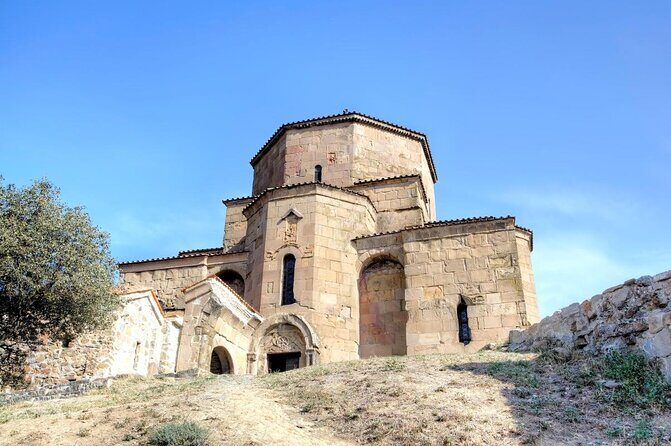
- Jvari Monastery’s hilltop viewpoint gives you an instant sense of where Mtskheta sits in the landscape (and why people built churches there)
- Svetitskhoveli Cathedral’s robe legend adds meaning to the architecture, not just dates on a sign
- A quick stop for Antioquia Church (V–VI century) keeps early Georgia history in the mix without dragging the schedule
- Chronicles of Georgia’s 16 pillars show rulers and Bible scenes, plus a wide view back toward the city and beyond
- Pickup + bottled water keeps the start easy, so you spend your energy on the sites
Mtskheta’s hill views begin at Jvari
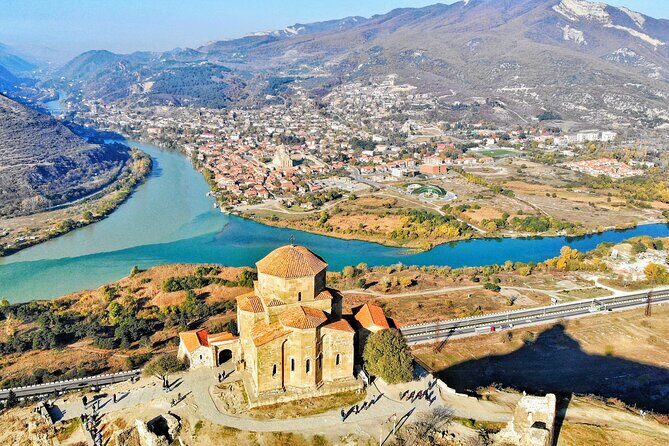
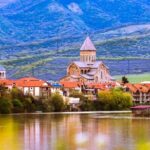
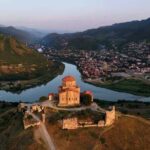
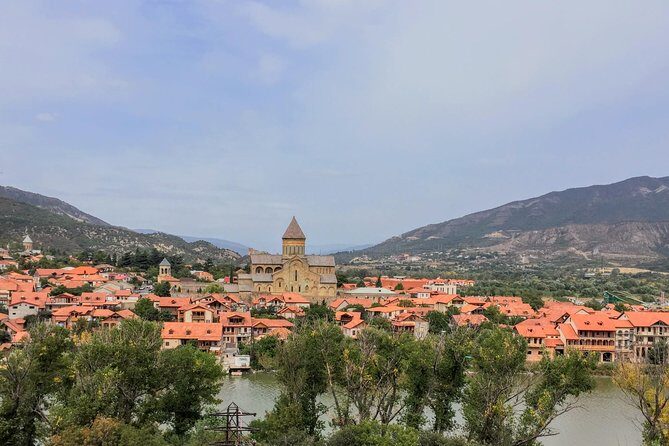
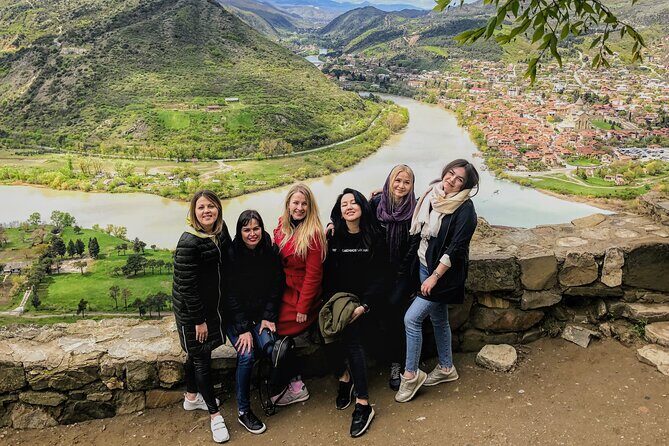
Most Mtskheta tours start with the same big idea: see the city from above first. Here, you begin at Jvari Monastery (also known as the Mtskheta Cross, or Mtskheta Cross Monastery – Jvari). It’s on a hill, so even with a short visit, you get those sweeping angles that make Mtskheta feel like a living map.
The visit is about 30 minutes, and admission is free. That short window matters. You can look for the lines of the churches on the slopes, take photos without racing, and then head down with a better sense of the route you’ll follow for the rest of the morning or afternoon.
Keep in mind the practical part: church zones are pedestrian-only. Even when you’re with transport, you’ll still walk in these areas. It’s not an all-day hike, but it’s enough that comfy shoes are a good idea.
Other Mtskheta tours we've reviewed in Tbilisi

Svetitskhoveli Cathedral: why the robe legend still matters
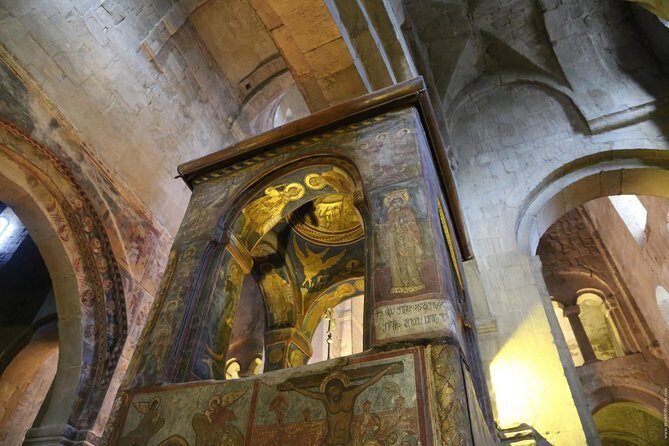
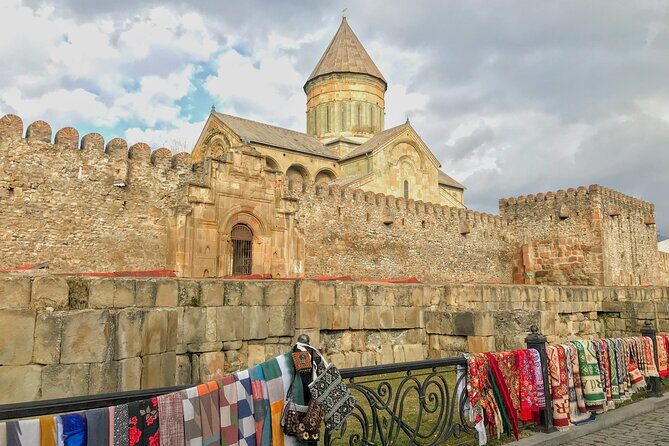
Svetitskhoveli Cathedral is an 11th-century heavyweight in Mtskheta, and it gets attention for good reason. The tour includes a full hour here, also with free admission. More than that, the guide focuses your eyes on what the building means, including the legend that the robe of Jesus is buried at the site where Svetitskhoveli was built.
That legend isn’t just storytelling. It helps you understand why Georgian Christianity attaches such emotional weight to place. When you’re standing near the cathedral, the structure stops being only architecture and starts feeling like a point on a much bigger timeline.
Also, expect a church environment. Dress rules apply: knees and shoulders covered for both men and women, no shorts or sleeveless tops. If you show up borderline dressed, you can risk being refused entry, so I’d pack a light layer you’re comfortable wearing outdoors.
And yes, timing helps. A one-hour stop gives you the chance to look around slowly, not just snap a few wide shots and move on.
Antioquia Church adds early Georgia depth in 20 minutes
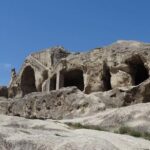
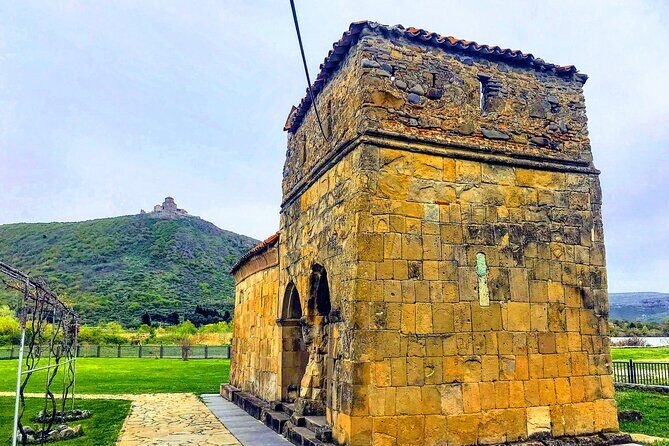
Then you’ll move on to Antioquia Church, described as the oldest basilica from the V–VI centuries. The time here is short—about 20 minutes—but that’s the point. This is the quick dose stop that keeps your half-day from feeling like only “medieval and later.”
Even in a brief visit, it helps to come with a simple goal: look for how early Christian design shows up in Georgia’s religious buildings. Your guide’s job is to connect this basilica to what you’ll see at the cathedral and to the broader story of the region.
Because admission is free and the schedule is tight, this stop is good for people who want variety without sacrificing views or time. If you prefer walking at a calm pace and you like your history compact, Antioquia is a nice fit.
The Chronicle of Georgia monument: 16 pillars, huge storytelling, city views
If you want one stop that gives you both art and perspective, it’s the Chronicles of Georgia. This is a highlight that packs a lot into 45 minutes.
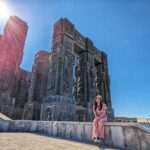
What you’re looking at is 16 massive pillars telling Georgia’s story through scenes from the Bible and depictions of rulers. It’s the kind of monument where the scale hits first—then meaning comes as you start following the narrative. A guide’s explanation really helps here, because it turns the “wow” into something you can actually read.
From the monument, you also get a great view back over the city and even toward the Tbilisi sea. That mix is a big reason people love it. You’re not just staring at stone figures; you’re looking at the wider geography that these stories claim as home.
Photo tip: treat this as both a viewpoint and an outdoor museum. Move a little, change your angle, and don’t only shoot from one spot. The monument’s design is meant to be read from different lines, and the view behind it rewards that.
Price and time: what $65 buys you (and why it’s fair)
At $65 per person for a 3 to 5 hour half-day, you’re paying for more than transport. You’re getting:
- hotel pickup and drop-off (for private tours)
- bottled water
- guided interpretation through multiple major sites
- free admission at each stop included in the route
When you break it down, the value is in the fact that the tour strings together several big-name places that would be harder to connect on your own without spending time figuring out logistics. Also, because it’s a half-day format, you don’t lose your whole day to travel.
If you already plan to see Mtskheta and want the Chronicle too, this price starts to look very reasonable. If you’re the kind of traveler who enjoys “I understand what I’m looking at” moments, the guided part is where your money shows up.


Getting there smoothly from Europe Square to your hotel
The meeting point is Europe Square in Tbilisi, and the tour ends back there. If you book a private tour, pickup from your hotel or apartment within Tbilisi is included. On the evening before the trip, you should get the guide’s phone number and the car number, so you know exactly who to look for.
Departure times are flexible, which matters in Tbilisi because the light can change fast through the day. If you want the most comfortable photo conditions, choose a slot when sun isn’t beating down at full intensity.
Once you arrive in the Mtskheta area, the key thing is that church access is pedestrian-only. Vehicles can’t enter those areas, so plan for short walks. This tour isn’t a strenuous trek, but it is not fully door-to-door once you’re near the churches.
Most people can participate, and the schedule is built for a typical half-day. If you have mobility limitations, you’ll want to take the walking portion seriously and consider whether covered-entry rules and stairless expectations are realistic for you.
The guides make the difference: names you’ll hear often

This is one of those tours where the guide turns the day into something you can remember. Feedback repeatedly highlights guides like Aleksi, Khato, Tamar, Oksana, and Khatuna, with praise focused on energy, strong English (and sometimes Russian), and storytelling that helps you connect sites instead of treating them like separate stops.
You’ll also notice practical kindness in the details. Some guide pairs are praised not just for narration, but for smooth timing and safe driving—one big theme is arriving on time and getting you back without stress. A few reviews mention guides going further than the tour script with restaurant recommendations, and at least one mention includes traditional Georgian sweets at a local market.
That’s the kind of added value that makes a half-day feel bigger. You don’t just leave with photos. You leave with a clearer picture of Georgian life and what these places mean.
What to wear and how to prep for worship sites
This tour includes multiple religious sites, so dress rules aren’t optional. To enter places of worship, you need covered knees and shoulders for both men and women. That means no shorts and no sleeveless tops. If you don’t comply, entry can be refused.
So, I recommend packing a simple fix: a lightweight cardigan, wrap, or long pants that you can put on quickly. Even in warm weather, breathable layers work.
Also, bring sunscreen and a hat if you’re going when the sun is strong. You’ll be outside between stops, and because you’re visiting churches and monument viewpoints, you’ll likely linger for photos.
Who this tour suits best (and who should consider alternatives)
This is a great fit if you want:
- UNESCO church sights near Tbilisi without long-distance day planning
- a guided route that makes legends and history feel connected
- a half-day activity that still leaves time for lunch and evening plans
It’s also a strong choice for families and mixed-age groups, since the stops are short and focused rather than a long hike.
If you’re mainly chasing off-the-beaten-track scenes and you hate crowds, you might find some church areas busy at times. That’s normal here. The upside is that with a guide, you can focus on what to look for and where to stand for the best perspective.
If you’re very strict about low-walking tours, keep in mind the pedestrian-only church access. You’ll have short walk sections no matter what.
Should you book the Ancient Mtskheta and Chronicle of Georgia half-day tour?
If your goal is to see Mtskheta properly in a half-day, with a guide who explains why these places matter, I think this is an easy yes. The schedule is tight, admission at the stops is free, and the best parts of the experience tend to be the storytelling and the views from key points like Jvari and the Chronicles monument.
Book it when you want maximum meaning per hour. Skip it only if your top priority is a fully self-paced tour with minimal walking and zero dress constraints—because this route is built around worship sites and short pedestrian access.
FAQ
How long is the Ancient Mtskheta and Chronicle of Georgia half-day tour?
It runs about 3 to 5 hours.
How much does the tour cost?
The price is $65.00 per person.
Is hotel pickup included?
Hotel pickup and drop-off are included for private tours.
Where do we meet, and where does the tour end?
The tour starts at Europe Square in Tbilisi and ends back at the same meeting point.
Are admission tickets included for the stops?
Admission tickets are free for the listed stops.
What sites are included in the route?
Jvari Monastery, Svetitskhoveli Cathedral, Antioquia Church, and the Chronicles of Georgia monument.
What dress code is required?
You must cover knees and shoulders. No shorts or sleeveless tops are allowed for both men and women.
Are vehicles allowed into the church and monument areas?
No. Access to churches, temples, and monuments is pedestrian-only, so expect short walks.
What happens if the tour is canceled due to weather?
The experience requires good weather. If it’s canceled due to poor weather, you’ll be offered a different date or a full refund.