REVIEW · TBILISI
Private 4-Day Tours & Transfers from Tbilisi to Top Georgia Spots
Book on Viator →Operated by Visit Georgia with George · Bookable on Viator
Tucked between old streets and big mountain views, this private 4-day route is a smooth way to see a lot of Georgia. I like the private car with a friendly driver/guide and the fact that you get both Tbilisi sights and the big regional hits like Kakheti and Kazbegi without juggling buses. One thing to consider: in winter, weather can force changes, and hilltop church stops (like the Kazbegi area) may be closed for safety.
You’ll spend long days in a comfortable air-conditioned vehicle, with hotel pickup and drop-off plus airport arrival and departure transfers. I also like that the plan leaves room for real stops, not just drive-by photo moments. Still, entrance fees and a cable ride are extra, so you’ll want to budget for that before you go.
In This Review
- Key highlights you’ll actually care about
- How this private 4-day Tbilisi tour really works
- Getting oriented in Tbilisi: Meidan, Bridge of Peace, and Old Town
- Mtatsminda views and Tbilisi nightlife streets
- Narikala fortress, sulfur-bath district Abanotubani, and Metekhi
- A practical note on the city day
- Kakheti wine day: Gremi, Khareba tunnel winery, and Sighnaghi walls
- Mtskheta and Uplistsikhe: old capital sights plus cave city at Gori
- Kazbegi north side: Jinvali, Ananuri, and Gergeti Trinity (weather permitting)
- The one big reality check: winter closures
- Entrance fees, cable ride costs, and why $430 can still make sense
- Guides can make or break it: Nicholas and Gio as the proof
- Who should book this private 4-day plan
- Should you book this tour?
- FAQ
- What’s included in the private tour?
- Do I need to pay extra for entrance fees?
- How long is each day of touring?
- Is this tour only for my group?
- What language is the tour guide?
- Are airport transfers included?
- Is cancellation free?
- What about winter weather?
- What are the biggest regions this covers?
- How should I plan for walking and comfort?
Key highlights you’ll actually care about
- Private guiding that adapts to weather: your driver/guide may shift timing to improve the day (and avoid stress).
- Tbilisi in one focused sweep: Bridge of Peace, Old Town, Narikala fortress views, and Mtatsminda funicular ride.
- Kakheti beyond wine labels: Gremi, Bodbe Monastery, Sighnaghi walls, plus the tunnel-style Khareba winery experience.
- North Georgia scenery staples: Jinvali reservoir, Ananuri fortified castle ensemble, and the iconic Gudauri monument viewpoint.
- Old capital + cave city + museum: Mtskheta UNESCO sites, Uplistsikhe rock-hewn town, and the Gori Stalin museum stop.
- 8 to 14 hours per day: great coverage, but it’s an active schedule—bring layers.
How this private 4-day Tbilisi tour really works
This is a true private format: your group only, with a dedicated professional driver and guide. You’ll usually start with pickup (hotel or airport depending on the day), then spend about 8 to 14 hours moving through multiple regions.
The route is built around four “clusters”:
- A Tbilisi city day with the classic downtown and viewpoints
- A full day in Kakheti wine country (Gremi, Sighnaghi, Bodbe, and Khareba)
- A historic cultural day tying together Mtskheta + Uplistsikhe + Gori
- A long mountain day on the Kazbegi/Gudauri side with the best-known photo stops
The big value is simple: you trade the hassle of planning and transfers for a guided, door-to-door day. The tradeoff is also simple: if you hate long drives, this plan may feel like work.
Other multi-day Georgia tours we've reviewed in Tbilisi

Getting oriented in Tbilisi: Meidan, Bridge of Peace, and Old Town
Most Tbilisi tours start at the center, but this one also gives you quick context for how the city layers its identities. You begin around the Meidan Bazaar area, a place where shopping isn’t the main goal—people come for proof they visited, from postcards and magnets to wine, brandy, handmade toys, and local hats.
Then you hit the Bridge of Peace over the Kura River. It’s one of those modern Tbilisi moments that helps you understand the city isn’t stuck in the past—it’s building forward too. Walking it also helps you orient your bearings fast before you climb into viewpoints.
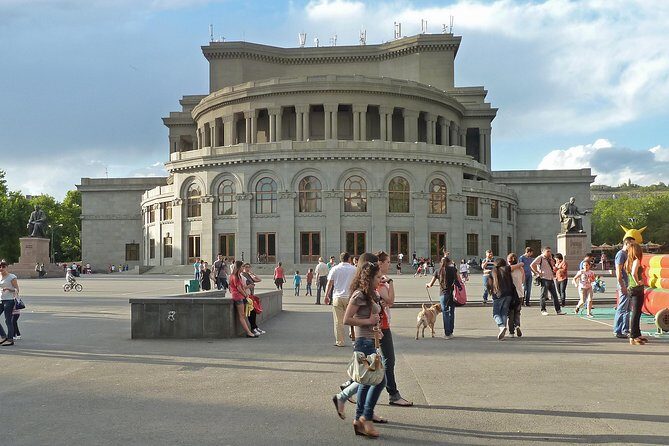
After that, you move into the “walkable feeling” of old downtown: Old Tbilisi and streets that connect the city’s historic core to its more modern center. You’ll also pass by or stop near major named stretches like Rustaveli Avenue, which runs from Freedom Square in the direction of many central sights.
What you’ll like here: the stops are short, but the mix is smart. You’re not stuck in one neighborhood for hours. You’re building a mental map of where everything sits.
Mtatsminda views and Tbilisi nightlife streets
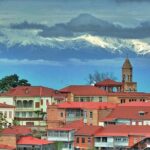
Tbilisi climbs hard. One way you’ll feel that is with the Mtatsminda Amusement Park and its funicular ride up the mountain. The funicular is a practical choice: you don’t spend the whole day fighting traffic. You get cooler air up top and those classic Tbilisi “from above” views.
Mtatsminda is also where you see a different side of the city—carousels, slides, a roller-coaster, and a big Ferris wheel near the edge. If you’re traveling with someone who likes lighthearted breaks (or you just want a scenic pause), this is a good one.
You’ll also spend time near areas like Jan Shardeni Street, known for nightlife. Even if you’re not out drinking and dancing, it’s helpful to see how lively the central streets feel at street level. You can also use these blocks to time your meals: plan one proper sit-down lunch, then keep dinner flexible.
Narikala fortress, sulfur-bath district Abanotubani, and Metekhi
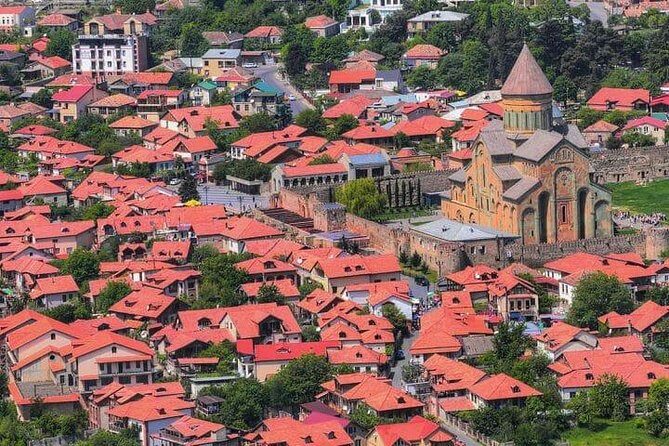
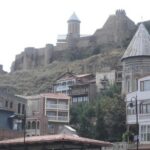
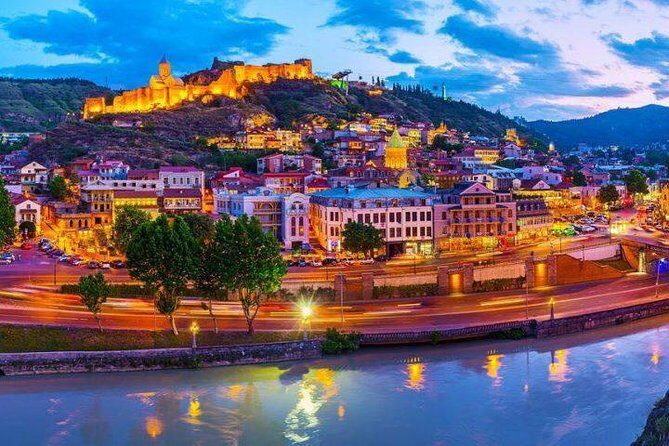
If you want that “Tbilisi postcard angle,” you’ll get it from Narikala Fortress. The fortress overlooks both the city and the Mtkvari River, with the steep hillside energy that makes Tbilisi look like it’s stacked. You’ll also see the recently restored St Nicholas church on the lower court—an easy stop that adds a spiritual note to all the urban scenery.
Then you head into Abanotubani, the sulfur-baths district. This area is special because it’s compact and layered: you’ll find not just Georgian Orthodox churches, but also Armenian and Catholic churches, a mosque, a synagogue, and the Ateshga-Zoroastrian fire temple. It’s a reminder that Tbilisi has always been a crossroads.
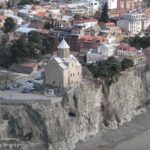
From there, Metekhi Cathedral sits on a cliff by the Mtkvari River. It’s a quick stop, but the placement is the point: this is the kind of view you remember because the church is anchored to the rock above the water.
A practical note on the city day
This day packs a lot of “visual categories” into short stops—bazaar, river walk, old core, nightlife street, fortress, baths district, cliff church. That’s a feature. But it does mean you’ll want sturdy shoes and a flexible pace. If you’re the type who likes to linger at just one place, tell your guide you want slightly more time for your top two picks.
Other private tours in Tbilisi


Kakheti wine day: Gremi, Khareba tunnel winery, and Sighnaghi walls
Kakheti is where this tour starts to feel like a full-on region trip, not just sightseeing. You’ll include stops that cover both the “old stone” side and the “wine country” side.
One of the best early anchors is Gremi Citadel and Church of the Archangels. It’s a 16th-century royal citadel and church complex. Even when you’re not a medieval-architecture obsessive, this stop works because it gives you height and scale, not just museum walls.
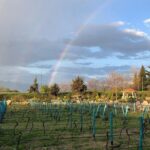
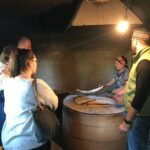
Then comes one of the most memorable experiences on the schedule: Tunnel Winery Khareba. The attraction here is that the tour and tastings are conducted inside long manmade tunnels lined with wine. It’s not just tasting for flavor—it’s tasting for atmosphere. You also get a sense of how production and tradition share space, since qvevri (traditional Georgian wine vessels) are used as decorative elements around the area.
After the winery, you shift to Bodbe Monastery of St. Nino near Sighnaghi. It’s a monastic complex with roots in the 9th century and significant remodeling later. This stop balances the day: after the wine tunnels and citadel stone, the monastery atmosphere slows things down.
Then you end with Sighnaghi, often called the City of Love, where couples visit and where you’ll see the second largest wall in the world. The key value of Sighnaghi in this tour is timing and pacing: you’re not stuck driving all day without breaks. You get a town experience, not only rural stops.
Mtskheta and Uplistsikhe: old capital sights plus cave city at Gori
This day is built for people who like “layers of time.” You start with Mtskheta, Georgia’s former capital, located about 20 km north of Tbilisi at the confluence of the Mtkvari and Aragvi rivers. It’s an easy place to understand why Georgians hold this area close—because it feels like the country’s story is still being told there.
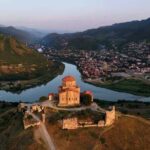
You’ll stop at Jvari Church, a 6th-century monastery church near Mtskheta and recognized as a World Heritage site (along with other historic structures in the area). The reason Jvari works is that it survives as a rare case of a very old church that still looks remarkably intact.
Then you’ll hit Svetitskhoveli Cathedral, also UNESCO-listed. This is one of those cathedral stops where even quick visits feel meaningful because the building is the main event, not the added explanation.
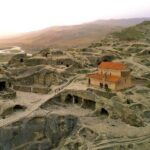
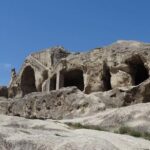
Next up is the “wow, that’s different” part: Uplistsiche Cave Town. It’s a rock-hewn ancient town, and it gives you a totally different kind of Georgian history than the churches do. If you’ve only seen Georgia through monasteries and cities, this is a strong corrective.
Finally, the day includes Joseph Stalin’s birthplace museum in Gori. You’ll get about 45 minutes there. This stop can be emotionally heavy for some people, but it is historically specific to this region, and having it on the same day as Mtskheta and Uplistsikhe helps you understand how Georgia’s past includes both deep spiritual traditions and 20th-century political history.
Kazbegi north side: Jinvali, Ananuri, and Gergeti Trinity (weather permitting)
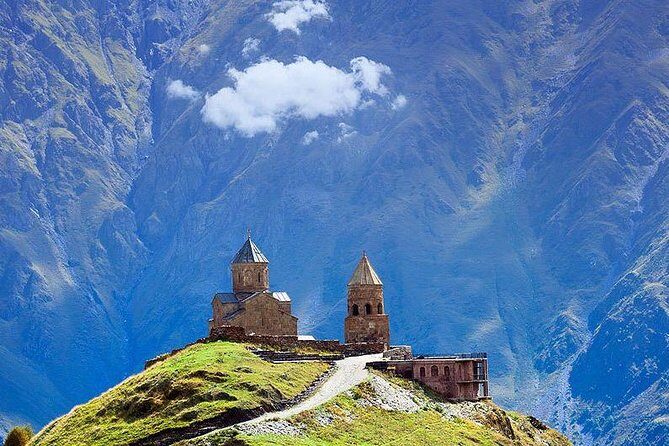
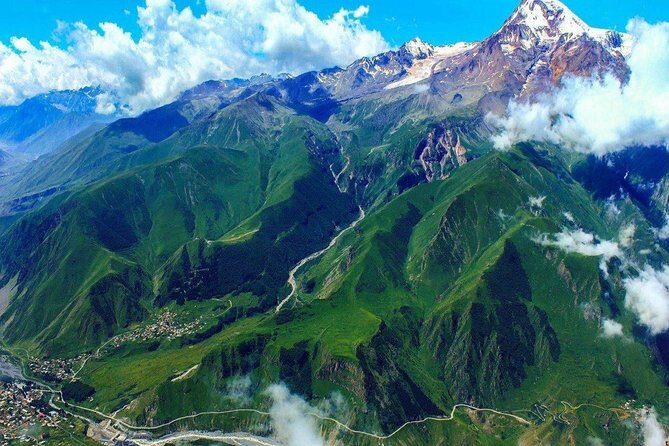
This is the day most people picture when they imagine northern Georgia: water views, fortress ruins, and the mountain-crowned church silhouette.
The tour typically starts with Zhinvali (Jinvali) Water Reservoir, a perfect blue-surface lake formed by a hydroelectric dam. It’s a quick stop, but it’s a good one because it sets the mood for the drive toward Gudauri and the Kazbegi region.
Then you reach Ananuri Fortified Castle Ensemble, a fortress on the Aragvi River. The earliest parts date back to the 13th century, so even at a quick visit length you’re not just looking at a pretty viewpoint—you’re looking at a long timeline of regional power.
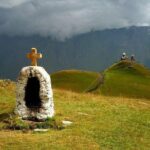
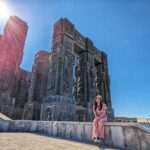
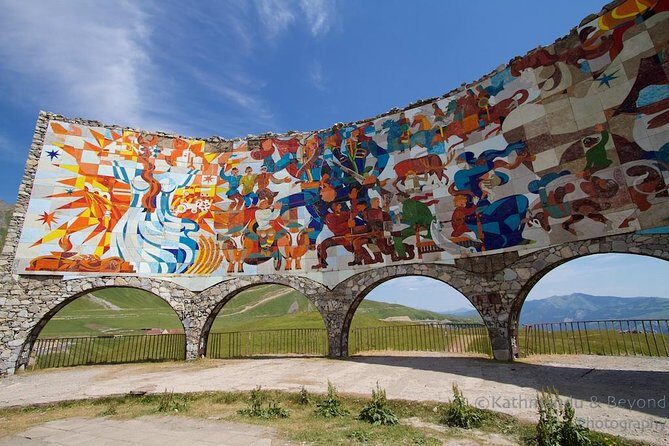
You’ll also stop at the Russian Georgian Friendship Monument on the Georgian Military Highway between Gudauri and Jvari pass. Inside, there’s a tile mural that wraps around the structure, depicting scenes from Georgian and Russian history. It’s not everyone’s favorite stop, but it’s a strong reminder that this highway has meaning beyond scenery.
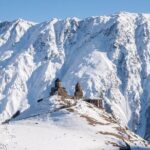
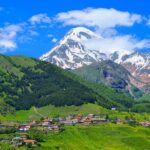
The drive continues to Stepantsminda (Mkinvartsveri) and then to Gergeti Trinity Church near the village of Gergeti, perched at about 2170 meters under Mount Kazbek. This is the stop people go out of their way to see.
The one big reality check: winter closures
If you travel in winter, be prepared for changes. One recent experience included a situation where access to the Gergeti Trinity Church area was blocked due to road closure from snowstorm risk, so the plan had to adjust for safety. If the Kazbegi church stop is your must-see, ask your guide how conditions typically affect it and be flexible about substitutions.
Entrance fees, cable ride costs, and why $430 can still make sense
The price is listed at $430.00 per person for the tour, but it’s smart to think of it as a “private service package,” not only as transport. You’re paying for hotel pickup and drop-off, airport arrival/departure transfers, an air-conditioned car, and a professional driver and guide—plus the time and organization of moving between regions.
Then there’s the extra cost: entrance fees for mandatory tourist destinations and the cable ride are listed as $50.00 per person. That means your true total depends on whether you’re doing those sites as planned each day, but you can plan confidently around that extra budget.
Also consider the day length. If you’re used to short half-day tours, an 8–14 hour schedule can feel like a lot. For me, that’s where private guiding pays off: it reduces the “where do we go next?” stress and helps keep the day moving.
Guides can make or break it: Nicholas and Gio as the proof
This tour’s biggest variable isn’t the route—it’s how your guide manages the day. In one experience, Nicholas earned solid praise for being professional and adding insights and good suggestions, even though the overall city coverage felt incomplete for that specific group.
In another standout review, Gio was praised for going above and beyond to personalize the day, optimizing visits based on weather and time of day to reduce crowd pressure. The practical takeaway: a great guide doesn’t just recite facts. They manage timing, adjust on the fly, and help you get better moments from the same itinerary.
If you can request or match with a guide you’ve heard good things about, that’s a win. And regardless, the best move is to start day one by telling your guide what you care about most—church views, wine tunnels, cave city, city viewpoints—so they can steer priorities if something changes.
Who should book this private 4-day plan
This is a great fit if:
- You want a private format and hate the friction of transfers
- You’re excited by a mix: city icons, wine region stops, cave history, and mountain viewpoints
- You’re okay with long days and want maximum coverage in limited time
It’s less ideal if:
- You want a slower pace with long stays at fewer places
- You dislike driving time between regions
- You’re traveling during winter and need one specific church stop no matter what (because safety closures can happen)
Should you book this tour?
I’d book it if you want a guided, door-to-door way to cover Tbilisi + Kakheti + Mtskheta/Uplistsikhe/Stalin + Kazbegi without building the logistics yourself. The best part is not any single site—it’s the way the trip strings together the city’s identity and Georgia’s regional moods, with a real guide managing your day.
If you’re concerned about winter access, send a message before you go and ask how your day might change if roads close. If you do that, and you budget the $50 per person for entrance fees and the cable ride, you’ll be in a strong position for a rewarding trip.
FAQ
What’s included in the private tour?
It includes hotel pickup and drop-off, private transportation in an air-conditioned vehicle, professional driver and guide, fuel surcharge, and Tbilisi airport arrival and departure transfers.
Do I need to pay extra for entrance fees?
Yes. Entrance fees for mandatory tourist destinations and the cable ride are listed as $50.00 per person.
How long is each day of touring?
Each day is approximate 8 to 14 hours depending on the route and conditions.
Is this tour only for my group?
Yes. It’s a private tour/activity, so only your group participates.
What language is the tour guide?
The tour is offered in English.
Are airport transfers included?
Yes. Airport arrival and departure transfers from Tbilisi are included.
Is cancellation free?
Free cancellation is listed. You can cancel up to 24 hours in advance for a full refund.
What about winter weather?
Bring warm jackets. Road access in the Kazbegi area can be affected by snowstorm risks, and your guide may need to adjust for safety.
What are the biggest regions this covers?
You’ll cover Tbilisi, Kakheti (including Sighnaghi, Bodbe, and the Khareba tunnel winery), Mtskheta + Uplistsikhe + Gori, and Kazbegi/Gudauri (including Ananuri, Jinvali, and the Gergeti Trinity Church area when accessible).
How should I plan for walking and comfort?
Wear comfortable shoes and dress for temperature changes. The itinerary includes viewpoints like Narikala and Mtatsminda, plus longer travel days between regions.