REVIEW · TBILISI
1-Day Trip to David Gareja Monastery with Rainbow Hills & Sighnaghi from Tbilisi
Book on Viator →Operated by Taste of Georgia · Bookable on Viator
David Gareja feels like another planet. In one day you’ll see cave monastery art at Natlismtsemeli and then walk among the Rainbow Hills near Gareja. You also get a real guide who ties the stones and stories together, instead of just handing you a map.
I like that the tour is built for your time: hotel pickup and drop-off in Tbilisi, air-conditioned transport, plus an off-road 4×4 leg for reaching the monasteries. The one possible drawback is that it’s a long day (about 9 to 11 hours) and includes a 30–40 minute hike on uneven ground.
In This Review
- Key highlights worth prioritizing
- Why David Gareja and Sighnaghi are easier with a guide
- Starting in Tbilisi: pickup, schedule, and the ride style
- Natlismtsemeli Monastery: cave art and 6th-century ascetic life
- David Gareja complex stops: the monastery views and St. David’s tomb
- Rainbow Hills hike: where the colors come from
- Udabno: a Soviet project, relocation history, and Polish hospitality
- Badiauri and Georgian bread: the bread masterclass moment
- Sighnaghi (Sighnaghi Wall): narrow streets, walls, amber wine, and the Marriage Palace
- Bodbe Monastery of St. Nino: pilgrimage, architecture, and Alazani views
- Price and value: is $167.08 a fair deal?
- Who should book this tour (and who might rethink it)
- Should you book this tour?
- FAQ
- FAQ
- What time does the tour start?
- Where is the meeting point in Tbilisi?
- How long is the trip?
- Is hotel pickup and drop-off included?
- How much hiking is involved?
- Is Georgian bread making included?
- Is wine tasting included in the price?
Key highlights worth prioritizing
- Natlismtsemeli cave monasteries: 6th-century origins and cave paintings in a semi-desert setting
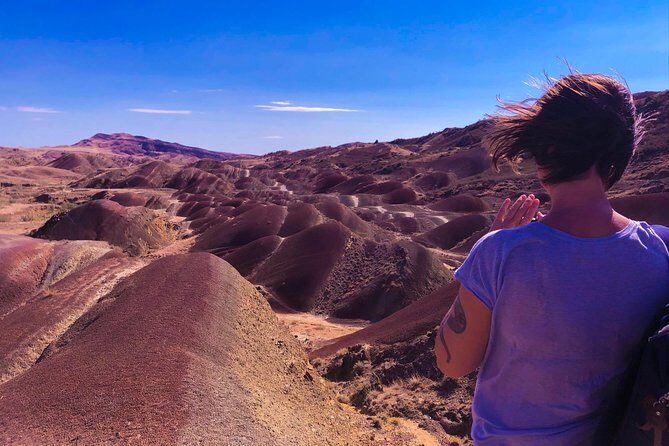
- A short hike with Rainbow Hills views: volcanic sandstone and minerals create the color bands
- Two David Gareja complexes: Lavra and Natlismtsemeli give you different angles on the monastic tradition
- Udabno, a Soviet-era ghost of a town turned into something human-sized again
- Sighnaghi’s walls and romance of the streets plus amber wine culture and the Marriage Palace
- Bodbe Monastery of St. Nino: 7th–9th century roots with sweeping Alazani Valley views
Why David Gareja and Sighnaghi are easier with a guide
Kakheti is famous for wine and views, but a self-led plan can get messy fast. David Gareja is far from the city, and the monasteries are spread out in a rugged, semi-desert zone. Add in Sighnaghi and Bodbe, and you’re staring at long drives and uncertain timing.
This tour solves the main problem: you’re not trying to stitch together transport, meeting points, and driving routes across eastern Georgia. You ride with a local guide and a driver who already know how to move you between the sites—first by paved roads, then by off-road 4×4 to the monastery areas. For a one-day schedule, that matters.
Other Kakheti wine region tours we've reviewed in Tbilisi
Starting in Tbilisi: pickup, schedule, and the ride style

The day begins at 8:30 am with a meeting point at the Giant Bicycle monument on Rose Revolution Square. If you’re using hotel pickup, you’ll be collected from your accommodation and returned there at the end of the day.
You’ll travel in a comfortable vehicle with air-conditioning, and the route includes a Jeep 4×4 segment when you head toward the David Gareja monastery complexes. This is not just scenic driving. It’s the kind of transport you want when roads get rough and the monastery zone sits in a more remote terrain.
If you’re sensitive to timing, plan to be ready early and stay flexible. The itinerary moves between multiple stops, and the day runs long.
Natlismtsemeli Monastery: cave art and 6th-century ascetic life
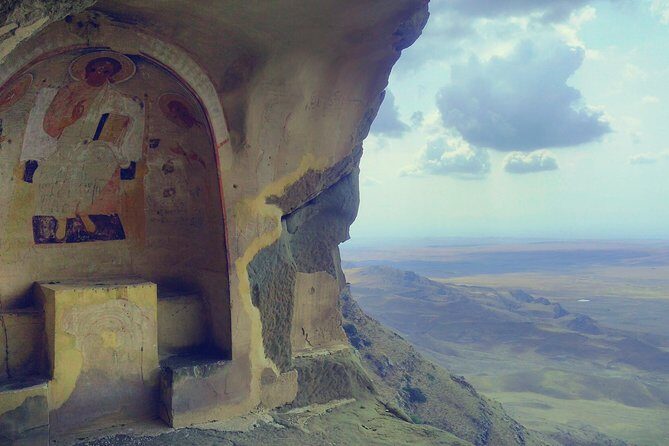
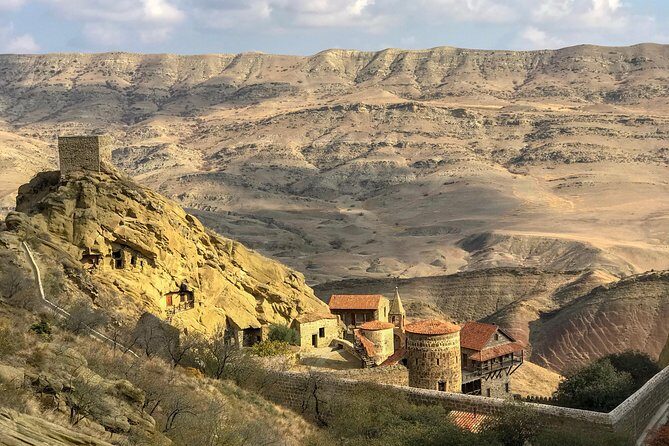
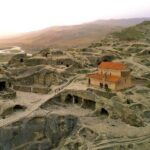
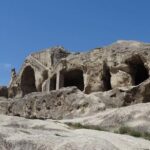
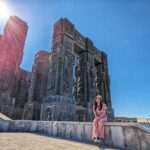
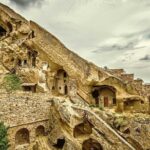
Natlismtsemeli (Joan Baptist) is your first big cultural hit, and it’s a strong start. The monastery dates to the 6th century, and it’s known for examples of ascetic monastery life—less about comfort, more about faith, routine, and the way people shaped religion into landscape.
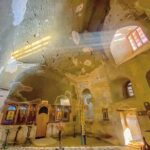
What makes it stand out is the cave setting. You’ll see monumental paintings inside cave structures, and the atmosphere is built for slow looking. Your guide helps you connect what you’re seeing to the bigger story of Christian monasticism in Georgia.
A key detail your guide should explain (and you’ll want to listen for) is the link to St. David Garejeli. He’s described here as one of the Thirteen Assyrian Fathers who arrived from Mesopotamia to strengthen Christianity in the country. Hearing that background changes the way you read the site. Instead of just “old caves,” you get a sense of how networks of faith traveled and settled.
Practical note: there’s also a short area before reaching the main monastery complex where you can spot the Chichkhituri tower, an early medieval living place for the head of the monastery Lavra. It’s quick, but it adds depth to the architecture story.
David Gareja complex stops: the monastery views and St. David’s tomb
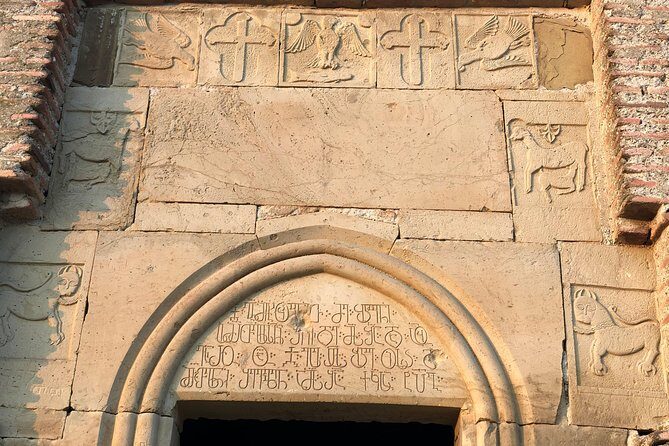
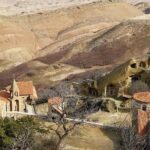
After Natlismtsemeli, you shift into the main David Gareja complex experience. This is the zone where the day’s religious significance becomes very clear. At the main complex, you’ll see the tomb of St. David Gareji and the spiritual center role it played for Georgians and Orthodox communities.
Architecturally, the monasteries here are a lesson in patience. Stonework, cave integration, and the way buildings fit into the terrain make the whole site feel intentional rather than accidental. Your guide’s job is to help you see that design logic, not just list facts.
Also, you’ll get more than one stop in the David Gareja area. One point includes a drive and then a short hike into the Rainbow Hills zone, and another includes time at the Lavra monastery complex. That structure helps you experience the story from different angles: caves first, then the broader viewlines that make this region feel so exposed.
Rainbow Hills hike: where the colors come from
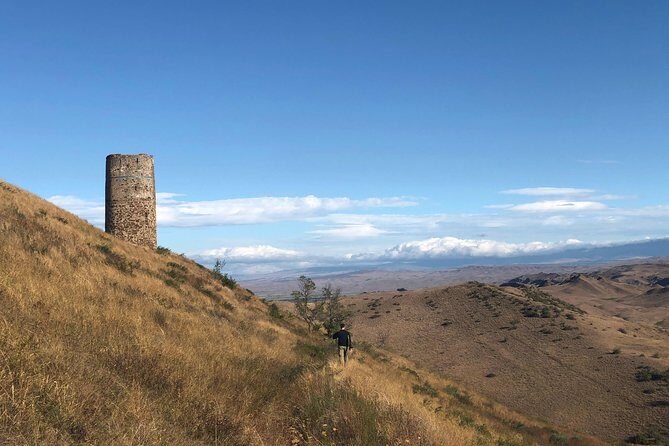
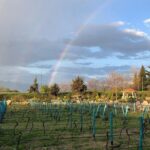
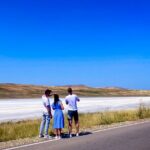
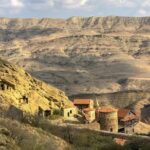
One of the best moments of this tour is the short walk toward and around the Rainbow Hills. The hills are formed by volcanically derived sandstone and minerals, which is why you get those banded colors that look almost painted.
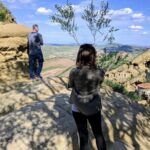
This isn’t an all-day trek. It’s a 30–40 minute hike, built into the itinerary so you still have time for monasteries and towns. But it’s long enough to stretch your legs and give you a real change of scenery instead of just stepping in and out of buildings.
For photos, aim for a pace that lets you stop often. The colors show best when you look from slightly different positions—something you’ll naturally do on a short hike. If you’re prone to rushing, this is the time to slow down.
Other David Gareja and Rainbow Mountain tours we've reviewed in Tbilisi
Udabno: a Soviet project, relocation history, and Polish hospitality
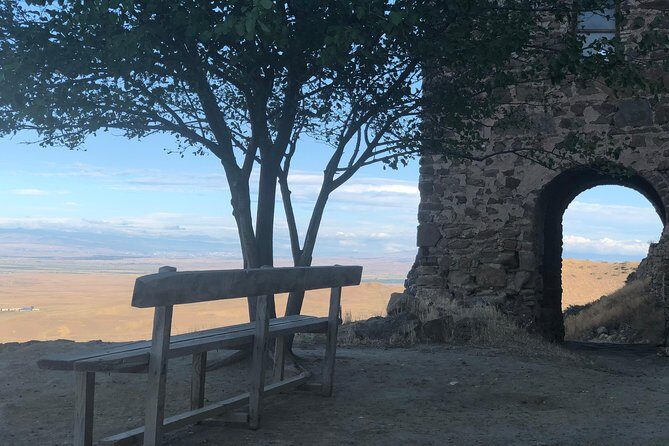
After the monasteries, the tour shifts from stone and spirituality to people and history. You’ll pass by Udabno, a village built in the 1980s as a USSR project for the military. The project wasn’t fully implemented by the government, which left it in an odd in-between state.
After Georgia gained independence, the village became a relocation site: inhabitants were moved here from the Svaneti region as environmental migrants. In the telling here, Udabno was almost forgotten for a while—then changed again when a Polish initiative group decided to settle there and help build a community life.
This stop is valuable because it gives you a human-scale picture of the region, beyond monasteries and wine. It also helps you understand why semi-desert places in Kakheti aren’t empty. They’re shaped by political shifts, movement, and adaptation.
Badiauri and Georgian bread: the bread masterclass moment
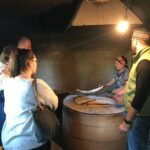
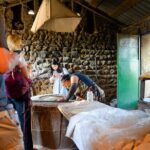
From the Gareja area, you’ll travel toward Badiauri for a hands-on food experience. There’s time for a Cheese Shop stop, where you can see local bread bakeries and even participate in baking Georgian bread.
The bread described here is made from white flour and shaped into half-moon forms. The tour also includes a small masterclass with show elements of Georgian bread making, which is a different vibe than a museum lecture. You’ll learn through doing, and the food context makes the cultural stories easier to remember later.
This part of the day works well if you enjoy practical food experiences. It’s also a nice buffer between heavier monastery stops and the more relaxed walking in Sighnaghi.
Sighnaghi (Sighnaghi Wall): narrow streets, walls, amber wine, and the Marriage Palace
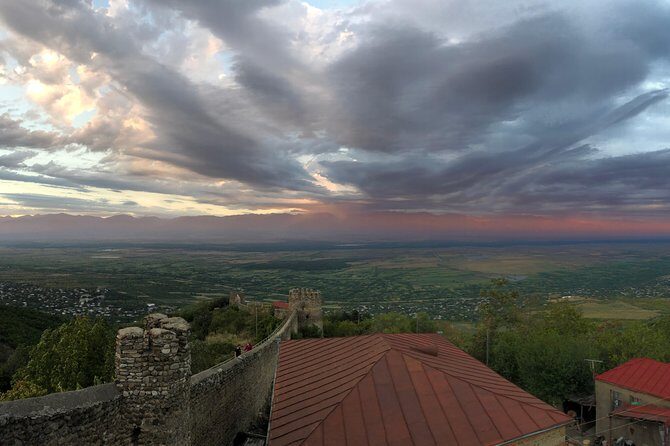
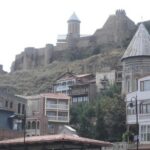
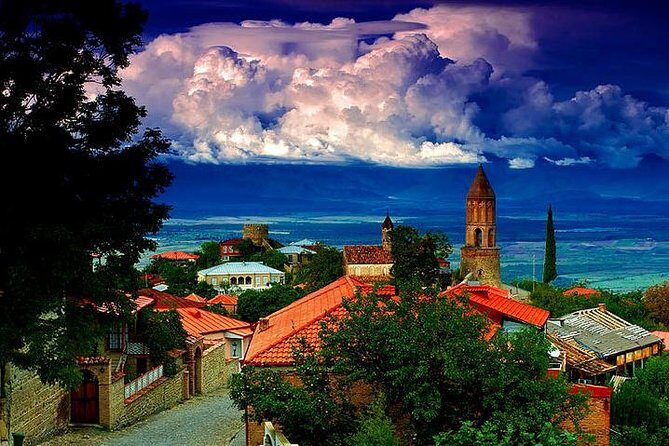
Sighnaghi is often called the city of love, and the reason isn’t complicated. It has romantic narrow streets, fortifications, and a historic center that feels designed for lingering. You’ll also be here long enough—about an hour—to get your bearings and choose your pace.
This town sits in Kakheti’s easternmost region and serves as the administrative center of the Signagi Municipality. “Sighnaghi” is described as a Turkic word meaning shelter or trench, which is a useful detail because it hints at the town’s defensive roots.
What you’ll likely notice fast:
- Fortifications and walls that shape how the town looks
- Amber wine culture, with wineries and natural orange-style traditions in the background
- The Marriage Palace, where foreigners are also allowed to take services
There’s also an option to explore the historic center with a guided walk. If you do it, you’ll get less “we walked around” and more “I understand what I’m looking at,” especially around the walls and street layout.
If you want a simple plan for lunch and wine without overthinking it, the tour suggests a cozy restaurant called OKRO’S WINES on the highest point of town. It’s known for amber/orange natural wines, and the wine referenced here is made from selected Saperavi grapes.
Bodbe Monastery of St. Nino: pilgrimage, architecture, and Alazani views
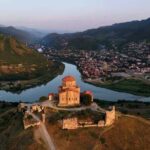
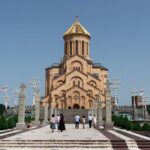
The day finishes with Bodbe Monastery of St. Nino, about 2 km from Sighnaghi. Bodbe is a major pilgrimage site and has roots in the 7th–9th centuries, with significant remodeling in the 17th century.
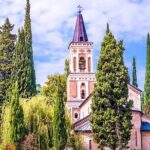
What you’ll see is a mix of old and layered. The complex includes a 3-nave basilica, a ring ball tower, and a modern church. It functions as a nunnery, so this isn’t a passive photo stop. It’s still a working religious site.
Then there’s the view. From the viewpoint, you get spectacular looks over the Alazani Valley, the heart of Kakheti’s wine-producing area. That’s why Bodbe works as a finale: you close the day with a big horizon, after hours of caves, walls, and semi-desert stone.
Price and value: is $167.08 a fair deal?
At $167.08 per person for a 9–11 hour day, you’re paying for three things that are hard to reproduce on your own:
1) Transport that matches the terrain
You’re not only driving to Sighnaghi and Bodbe. You’re also getting off-road 4×4 access for the David Gareja monastery zones.
2) A guide who explains what you’re looking at
David Gareja isn’t just scenic. It’s complex—cave art, monastic history, and a site layout that you’ll understand faster with an art historian-style guide and friendly local storytelling.
3) Convenience built into the schedule
Hotel pickup and drop-off in Tbilisi, plus bottled water and local taxes handled, means you can spend your attention on the sites.
What’s not included is also clearly flagged: alcoholic drinks (wine tasting is an option) and tips for the guide, suggested at 10–20% per person. If you plan to drink wine, that extra cost can add up. The tour notes wine tasting at two wineries for €25, including 3 glasses of wine, so you can budget without surprises.
Who should book this tour (and who might rethink it)
This is a smart fit if you want:
- A one-day Kakheti sampler that includes David Gareja, Sighnaghi, and Bodbe
- Off-road 4×4 access without doing route planning yourself
- Cultural context from a guide, especially for monastery history and cave art
- A short hike that breaks up the drive-heavy day
You might want to choose differently if:
- You hate long days. This is still a full 9–11 hours.
- You’re not comfortable with a 30–40 minute hike on uneven ground.
- You only want urban sightseeing. Most of the time here is outdoors and religious heritage sites.
Should you book this tour?
I’d book it if you’re excited by monastery history, cave paintings, and the strange beauty of color hills in eastern Georgia. The value comes from the transport match (including 4×4), and from not losing hours managing logistics on your own.
If you’re on the fence, decide based on two things: can you handle a long day, and do you actually want the David Gareja caves plus the Sighnaghi-to-Bodbe rhythm? If yes, this tour is a strong use of your time in Kakheti.
FAQ
FAQ
What time does the tour start?
The tour starts at 8:30 am.
Where is the meeting point in Tbilisi?
You meet at the Giant Bicycle monument at Rose Revolution Square in Tbilisi, Georgia.
How long is the trip?
It runs about 9 to 11 hours.
Is hotel pickup and drop-off included?
Yes. Hotel pickup and drop-off from and to Tbilisi are included.
How much hiking is involved?
There is hiking of about 30 to 40 minutes, including time connected to the Rainbow Hills area and monastery exploration.
Is Georgian bread making included?
Yes. The tour includes a small masterclass with show elements of Georgian bread making, and you’ll have a stop connected to local bakeries.
Is wine tasting included in the price?
Wine tasting is not included. The tour notes an optional wine tasting in two wineries costing €25 per person and including 3 glasses of wine.