REVIEW · TBILISI
8-Day Trekking Group Tour in Svaneti
Book on Viator →Operated by TrekGeorgia · Bookable on Viator
Svaneti towers and glacier views in eight days. This Mestia-to-Ushguli trekking trip is interesting because it mixes serious mountain hikes with cultural stops in real Svaneti villages, not just scenic viewpoints. I especially like the expert guides (names that come up again and again include Gogi and Dito), and I like that logistics are handled so you can focus on the trail.
One consideration: you’re doing a real trek week, plus long drive days—so plan for early mornings, simple guesthouse comforts, and mountain weather that can change fast. Even in praised stays, you should assume basics more than luxury, including that hot water might not always be guaranteed.
In This Review
- Key things to know before you go
- Why this Svaneti trek works (and not just for photos)
- Price and what you really get for $1,340
- Fitness reality check: 58 km and high passes
- Day 1: Zugdidi palace, Enguri Dam, and your first night in Mazeri
- Day 2: Mazeri hike up the Dolra River to springs, church views, and a border post
- Day 3: Guli Pass (2960 m) to Koruldi Lakes and the Ushba sightline
- Day 4: A calmer village route to Zhabeshi and the Mulakhi community
- Day 5: Tetnuldi slopes, birch and rhododendron forests, and Adishi’s stone towers
- Day 6: The Adishi River crossing by horseback, then Chkhunderi Pass (2655 m) and glacier views
- Day 7: Ushguli from above, museum in a tower-house, and Lamaria Church
- Day 8: Chalaadi Glacier and the river’s birthplace back to Tbilisi
- Should you book this Mestia-to-Ushguli trek?
- FAQ
- What route does this trekking tour follow in Svaneti?
- How long is the trekking, and what is the walking distance?
- What’s the meeting point and start time?
- What’s included in the price?
- Are trekking poles and backpacks provided?
- What kind of lodging will I have?
- Is the tour offered in English?
- What happens if weather is poor?
Key things to know before you go
- Small groups (max 15) keep the hikes calmer and easier to manage.
- About 58 km on foot, with big pass days like Guli Pass (2960 m) and Chkhunderi Pass (2655 m).
- Horseback is used for the Adishi River crossing for safety.
- Ushguli is high and historic (around 2200 m) with tower architecture and a museum inside a 12th-century tower-house.
- Guesthouse comfort varies: private facilities some nights, shared facilities other nights.
- Two bookend travel days: roughly 9 hours out of Tbilisi and about 10 hours back.
Why this Svaneti trek works (and not just for photos)
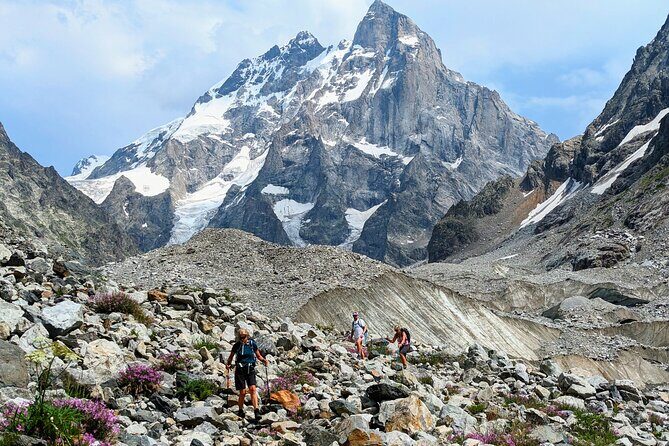
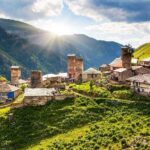
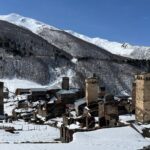
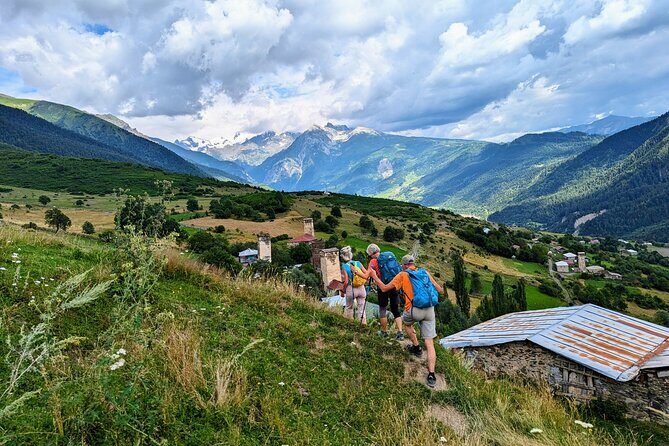
This tour is built around one of Georgia’s most distinctive mountain regions: Upper Svaneti. You spend your days walking through valleys, pine forests, alpine meadows, and village corridors marked by centuries-old tower homes and churches. It’s the kind of trip where the scenery matters, but the best moments are often when the path turns and you’re suddenly looking at a whole row of stone towers against the peaks.
I like that the group stays small and the route is guided end to end, including the cultural visits. When the hike starts, you’re not trying to figure out timing or where to stand for the next view. You’re also not stuck carrying everything—there’s luggage transportation by car during hiking days, which is a big deal on days when you’ll be climbing for hours.
The cultural side isn’t tacked on at the end. You get museum time in Ushguli and village context along the way. And because the tour is operated in English (with a note that guides can be multi-lingual), it’s easier to actually understand what you’re seeing.
Other Svaneti and Mestia tours we've reviewed in Tbilisi
Price and what you really get for $1,340
At $1,340 per person for an 8-day guided trek, you’re paying for more than the hiking. The real value is in the package approach: expert leadership, air-conditioned vehicle, fuel surcharge covered, and day-to-day support that keeps you moving.
Here’s what the included items add up to:
- Meals: 7 breakfasts, 6 lunches, and 7 dinners are listed as included.
- Snacks and bottled water are included, which matters on long pass days.
- Lodging: multiple nights in guesthouses across different villages (with a mix of private and shared facilities).
- Transportation: long-distance drives plus local movement, with luggage carried by car during hiking days.
One small caution: the details show a mismatch about lunch. The package lists lunches on six days as included, yet the “Not included” section says Lunch. Before you lock it in, I’d double-check with the operator so you’re not surprised on which days you’ll pay for lunch yourself.
Also, you can’t treat this like a “cheap flights + I’ll wing the rest” idea. The tour price covers a lot of coordination across valleys and villages—exactly what you’d have to pay for if you arranged everything independently.
Fitness reality check: 58 km and high passes
The good news is the tour fits travelers with moderate physical fitness—as long as you’re honest about your stamina. The hike total is about 58 km, and the longest days run roughly 6 to 10 hours on foot.
The days that demand the most effort are the high pass moments:
- Guli Pass (2960 m) on the way to Koruldi Lakes is described as needing good physical effort.
- Chkhunderi Pass (2655 m) brings panoramic ridge views and a long, scenic day.
Even the “easier” days aren’t flat walks. You’ll still be on mountain trails with changing ground and real elevation. If you train a bit before you go—short hikes with steady uphill work—you’ll enjoy the week more and feel less beat up on the last third.
One more practical note: bring your basics and don’t rely on gear luck. Trekking poles and backpacks can be rented, but you’ll hike better if you have something that fits your stride and balance.
Day 1: Zugdidi palace, Enguri Dam, and your first night in Mazeri
The trek week starts with a lot of moving. You leave Tbilisi at 7:00 am and spend about 9 hours driving, with stops that shift you from city Georgia into high-mountain Georgia.
Along the way, you stop in Zugdidi and visit Dadiani Palace, tied to the local lord who governed a big chunk of western Georgia. Then you continue to the Enguri Dam, noted as one of the highest arch dams in the world at 271.5 meters. It’s a useful contrast day: you get a serious engineering stop before you’re surrounded by defended tower villages.
From there you continue into Upper Svaneti, and the day ends with an overnight in Mazeri. The route is described as passing through a region known for highly preserved villages with defensive tower houses and medieval-era ecclesiastical architecture and arts.
Why this day matters for your trip: it sets the tone. You’re not only reaching trailheads—you’re building context for what the towers and churches mean when you see them up close in later days.
Day 2: Mazeri hike up the Dolra River to springs, church views, and a border post
Day 2 is your first full hike from Mazeri. You follow the Dolra River upstream, and the route is described as passing mineral water springs plus a small church placed for scenic views.
This is the kind of day that helps you find your rhythm. You move through meadows and then into pine forests, with a slow ascent that doesn’t feel like a nonstop grind. The path reaches a border post, where the last ascent begins.
You then turn around and return to Mazeri. The main drawback here is also the reason this day is useful: if weather turns, you’ll still be hiking in mountain conditions without the “short day” escape. Still, it’s a nice warm-up before the higher pass effort later.
Other hiking and trekking tours we've reviewed in Tbilisi
Day 3: Guli Pass (2960 m) to Koruldi Lakes and the Ushba sightline
This is one of the anchor hiking days. You trek from the Mestia area to Koruldi Lakes, traveling through Guli Pass at 2960 meters.
The pass requires good physical effort. That’s your heads-up that pacing matters. Go steady, save your legs, and don’t let the group’s energy push you faster than you should—because the payoff comes after the climb, when you descend into a valley and reach the lakes.
Koruldi Lakes are described as small alpine lakes surrounded by big mountain peaks, including Ushba. This is the moment when the trip shifts from village-to-village trekking into full-on “wow, this is the Caucasus” territory.
Practical downside: this is a long day—around 10 hours—so be ready for a tiring finish. Bring what you need to keep warm after you stop moving, especially if clouds move in.
Day 4: A calmer village route to Zhabeshi and the Mulakhi community
Day 4 turns the volume down a notch. You start trekking toward the Mulakhi community of Zhabeshi village.
The route is described as easy: it follows an off-road car path and a well-marked trail. If you’re the kind of hiker who likes to enjoy views without wrestling your balance the whole time, this is a good day for you. It also gives your legs a bit of recovery before the more demanding terrain ahead.
You’ll spend about 6 hours on this hike. Overnight is in Zhabeshi in a guesthouse with shared facilities. That’s not a dealbreaker, but it does mean you’ll want to be comfortable with simpler accommodations and a more basic setup than your private-facility nights.
Day 5: Tetnuldi slopes, birch and rhododendron forests, and Adishi’s stone towers
Day 5 is where you feel the shift to higher, wilder terrain. You hike up toward the slopes of Tetnuldi, passing a ski resort along the way. After that, you descend through forests of birch trees and rhododendron bushes.
The trail then takes you past a mountainous small river and into alpine meadows. Those open views lead you into Adishi village, described as full of stone towers and older houses built several centuries ago. Adishi’s setting—below Tetnuldi, by a roaring river, framed by high mountains—is part of what makes it so memorable.
The hike is listed around 6 hours, which is manageable, but the ground can still feel demanding after a few days. Also, expect quieter comfort: you overnight in Adishi in a guesthouse with shared facilities.
Day 6: The Adishi River crossing by horseback, then Chkhunderi Pass (2655 m) and glacier views
This is a big day, and it’s also one of the most “Svaneti-real” moments on the trip. You move upstream, then you reach the Adishi River. Because it’s described as roaring, the tour uses horseback for the crossing for safety.
After you’re across, you climb up to Chkhunderi Pass (2655 m). From the pass, you get majestic panoramic views of the Adishi Glacier. You have lunch at the top of the ridge, which is exactly where you want it—because you’re not just eating, you’re soaking in the views while you’re still there.
Then comes the long descent: you walk into the valley of the Khaldechala river and reach Khalde village after about two hours of easier walking. Khalde is noted as a village destroyed in the 19th century by Russian soldiers—a sobering historical marker that gives context to the towers and ruins you may notice later.
The day finishes with an off-road ride to Iprali, where you overnight in a guesthouse with shared facilities. The “consideration” here is simple: this is an 8-hour day with both technical moments (river crossing) and altitude. If the weather is rough, the value of having guides and safety decisions becomes even clearer.
Day 7: Ushguli from above, museum in a tower-house, and Lamaria Church
Day 7 is where your trek culminates. You start with a morning hike through traditional Svani villages, passing Kala and Davberi, then you reach Ushguli from above.
Ushguli is described as the highest permanent settlement in Europe at 2200 m, sitting at the foot of Mount Shkara and near where the Enguri and Kvishiri rivers meet. You’ll see the mix of medieval-type towers and churches, and it’s one of those places where the architecture feels like it has a job: to defend, to endure, to record time in stone.
This is also your cultural day in town. You visit the Ushguli Ethnographic Museum, located in a 12th-century old Svanetian tower-house. Then you visit the medieval Lamaria Church (the Assumption of the Mother of God). It’s a strong pairing: the museum gives context, and the church gives scale in the same walking day.
The hike is around 5 hours. Overnight is back in Mestia with private facilities, which is a nice payoff after a few nights in shared setups.
Day 8: Chalaadi Glacier and the river’s birthplace back to Tbilisi
The last day starts with a quieter outing: you leave for Tbilisi after breakfast, with about 10 hours of travel. On the way, you visit Chalaadi Glacier.
You then follow upstream of the Mestiachala river until you reach the finish point where the river is born, about 1.5 km into the walk. It’s a neat way to close the loop: this trek week has been about rivers, valleys, and passes—then you end at the source.
After that, you continue to Tbilisi. If your body is tired, treat this final hike like an easy bonus, not a punishment. The main work is already done.
Should you book this Mestia-to-Ushguli trek?
I’d book it if you want:
- Guided hiking where the route and safety choices are handled for you.
- A blend of mountain passes plus real village culture, including a museum inside a 12th-century tower-house.
- Small-group energy (max 15) and practical support like luggage transport.
I might skip it (or at least question the fit) if:
- You hate long travel days and prefer to stay in one base area.
- You’re expecting hotel-style comfort every night—some stops use shared facilities, and basic guesthouse conditions are part of the deal.
- Your plan depends on perfectly controlled weather. This experience requires good weather, and if it’s canceled due to conditions, you’ll need flexibility.
If you’re a steady walker and you’re excited by tower villages, passes, and glacier views, this is a strong way to see Svaneti without turning your trip into logistics homework.
FAQ
What route does this trekking tour follow in Svaneti?
It’s a guided Svaneti trek that starts in the Mestia region and includes hikes through villages such as Mazeri, Zhabeshi, Adishi, and Iprali, with the main highlight being the trek to Ushguli.
How long is the trekking, and what is the walking distance?
The tour involves about 58 km of walking over the 8 days, with hike days typically running around 5 to 10 hours depending on the day.
What’s the meeting point and start time?
The tour starts at the Giant Bicycle monument at Rose Revolution Square, Tbilisi, Georgia, with a start time of 7:00 am.
What’s included in the price?
The price includes expert guide leadership, air-conditioned vehicle, bottled water and snacks, luggage transportation by car during hiking days, guesthouse stays during the trek, and dinners (7), lunches (6), and breakfasts (7) as listed in the included details.
Are trekking poles and backpacks provided?
Trekking gear such as trekking poles and backpacks can be rented, but it is not listed as included.
What kind of lodging will I have?
Lodging is in guesthouses. The trip includes 2 nights in Mazeri with private facilities, 2 nights in Mestia with private facilities, plus shared facilities for nights in Zhabeshi, Adishi, and Iprali.
Is the tour offered in English?
Yes. The tour is offered in English (and may also be run by a multi-lingual guide).
What happens if weather is poor?
This experience requires good weather. If it’s canceled due to poor weather, you’ll be offered a different date or a full refund.