One day in the Caucasus means big views fast. This Kazbegi tour strings together historic forts, church stops at high altitude, and a real waterfall hike, all in one long but well-paced route.
I love how the day is set up for comfort: air-conditioned transport, wifi on board so you can post in real time, and bottled water. I also love that it’s not just a drive-by. You get real time at places like Gergeti Trinity Church and the 4 km roundtrip Gveleti hike. One thing to weigh: it’s an all-day commitment (about 12 hours) and the mountain weather can be cold and change quickly.
In This Review
- The route: why this day trip feels like a mini Northern Georgia tour
- Jinvali Water Reservoir: the quiet start before the mountains
- Ananuri Fortress Ensemble: church, water, watch energy
- Black and White Aragvi: a short stop with a story
- Gergeti Trinity Church at 2,170 m: the high-altitude payoff
- Mtavarangelozi Monastery: views toward Dariali Gorge
- Gveleti Waterfall hike: 4 km total, easy tempo, real scenery
- Stepantsminda lunch: choose between local family and menu dining
- Khevi: church ruins and a watchtower built for signals
- Sno village: patriarch ties and stone sculptures
- Jvari Pass travertine and mineral springs: a science-shaped pause
- Russian-Georgian Friendship Monument: end with a wide panorama
- What you’re really paying for: price, inclusions, and time value
- Who this tour suits best (and who should consider another plan)
- Practical tips for a smoother day in Georgia
- Should you book this Kazbegi day tour?
- FAQ
- How long is the Kazbegi tour?
- Is pickup included, and what time does the tour start?
- Are there options for lunch?
- Does the tour include admission tickets?
- Is this a private tour?
- What should I wear for the church visits and the hike?
The route: why this day trip feels like a mini Northern Georgia tour
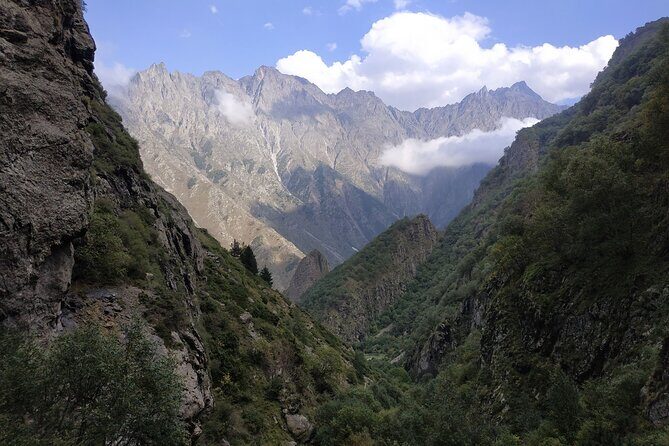
This is the kind of day tour that makes Tbilisi feel bigger than it is. You start at 8:00 am and spend the day working your way from reservoirs and river legends to mountain churches and viewpoints, before heading back late in the day. The itinerary is built so you’re constantly moving, but not in a rush-you’re-late way. Think: short stops that actually let you look, read a little, take photos, and walk a bit.
The “value” part here is that several key moments include entry tickets, and the logistics are handled for you. That matters on a day like this, because you’re dealing with altitude, changing viewpoints, and roads that can turn tricky in winter.
A final note: this experience requires good weather. If conditions are poor, you’ll be offered another date or a full refund—so don’t plan your only free day around it.
Jinvali Water Reservoir: the quiet start before the mountains
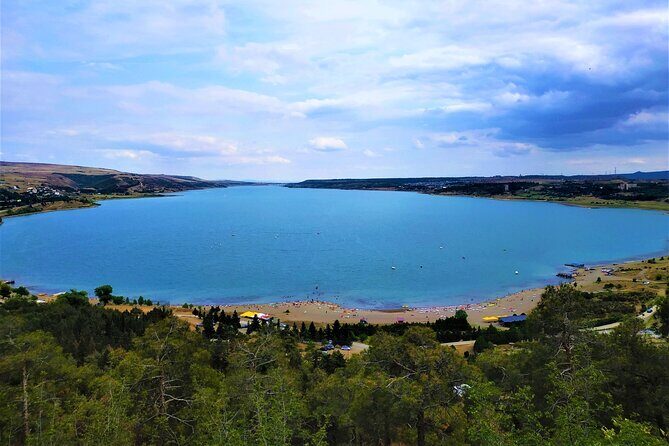
Before the mountains steal your attention, you’ll stop at the Jinvali Water Reservoir, which supplies drinking water to Tbilisi. It’s a man-made landmark, built in 1985, with a maximum depth listed at 75 meters.
Why I think this stop is worth it: it gives you an early sense of scale. You’re about to head into steep valleys and high passes, and the reservoir is a reminder that this region’s water systems shape life in the surrounding cities too. It’s also a good breather stop early on—short enough to keep momentum, not so short that you feel like you never got your day started.
Other Kazbegi tours we've reviewed in Tbilisi

Ananuri Fortress Ensemble: church, water, watch energy
Next comes Ananuri, a fortified castle complex tied to the dukes of Aragvi and a feudal dynasty that ruled the area from the 13th century. The complex includes multiple structures: churches, a bell-tower, a prison cell, and several towers, plus reservoirs and older religious buildings. It’s also listed on the tentative UNESCO program.
What makes it interesting on the ground is the mixture. You’re not looking at one neat monument—you’re looking at a whole defensive-religious complex where everyday life, power, and water control all overlapped.
Practical tip: plan to take a few minutes to look for the older and newer church parts within the complex. Even on a tight schedule, it’s one of those places where you can see layers without needing a long museum-style visit.
Black and White Aragvi: a short stop with a story
Right after Ananuri, you’ll visit the point where the Black and White Aragvi rivers merge. The colors come from rocks of corresponding tones, and there’s a legend that goes along with the contrast—sad in mood, but memorable because it’s tied to what you’re physically seeing.
This is a quick stop (about 10 minutes) but it helps break up the day. Instead of only castles and churches, you get a landscape feature with meaning, and the colors give you an easy photo moment.
Gergeti Trinity Church at 2,170 m: the high-altitude payoff
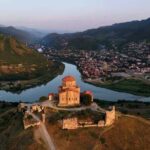
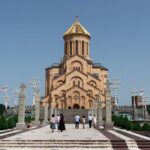
Gergeti Trinity Church is the star for many people, and for good reason. It sits at an elevation of 2,170 meters under Mount Kazbek (5054 m), built in the 14th century. In times of danger, important relics from Mtskheta (including Saint Nino’s Cross) were brought here for safekeeping.
The setting is what makes the stop click. You’re standing at a church location that’s hard to reach on purpose—so it feels protected and purposeful. The small council on the south wall (dated to the 15th–16th centuries) also adds an extra layer beyond “pretty church.” This place was built for community decisions and safety.
One big practical advantage: during the winter period, the tour includes 4×4 transportation from Kazbegi to Gergeti. That’s not a minor detail. It can make the difference between a smooth ride and an uncomfortable, stressful one when roads or snow get involved.
What to remember for your visit:
- Ladies are asked to wear headscarves and dresses in Georgian Orthodox churches.
- Short trousers for men are forbidden.
- Scarves and dresses can be found near some church entrances.
Mtavarangelozi Monastery: views toward Dariali Gorge
After Gergeti, you’ll head to Mtavarangelozi Monastery, set near the Russia–Georgia border area and completed in 2011 at an elevation of 1,300 meters. This stop is timed for a quick appreciation of views over Dariali Gorge and the mountainous Khde River.
Even if you’re not the “monastery photo” type, I like this stop because it changes the angle of the day. Gergeti gives you high altitude and church atmosphere; Mtavarangelozi gives you a wider geographic feel—gorge, river, and border-region mood.
Other hiking and trekking tours we've reviewed in Tbilisi

Gveleti Waterfall hike: 4 km total, easy tempo, real scenery
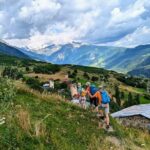
Then you get the hiking portion: Gveleti Waterfall, also known as Snake’s Waterfall. You’ll hike to both smaller and larger waterfalls, with total distance listed as 4 km roundtrip and about 1.5 hours of easy hiking.
This part is why the tour doesn’t feel like a long driving checklist. You’ll move along a narrow pathway near the canyon, climb a bit, and get that pay-off feeling when you reach the waterfall viewpoints.
My practical take:
- Wear comfortable shoes you can trust on uneven paths.
- Bring a warm layer—waterfalls can mean mist and colder air.
- If you’re worried about the hike, the “easy” label matters here, and the total time is short enough that most people can manage it with steady pacing.
Stepantsminda lunch: choose between local family and menu dining
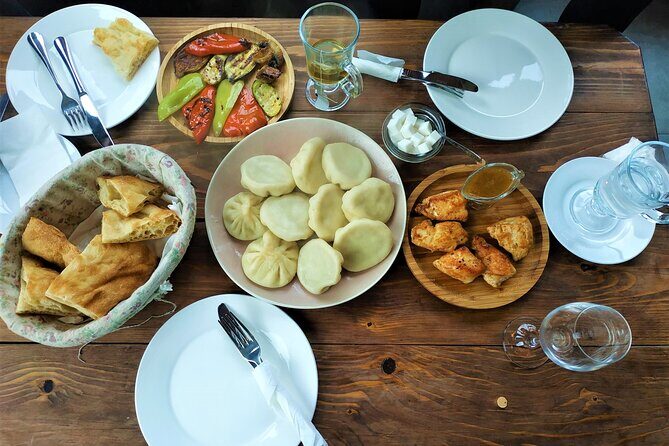
You’ll stop for lunch in Stepantsminda (Kazbegi) for about 1 hour 30 minutes. The tour offers two paths:
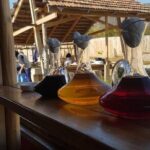
- Tour with Lunch option: lunch with a local family, with tasting of local mountainous cuisine.
- Standard Tour option: lunch at a restaurant where you can order from the menu.
One nice detail from real-world experience: on the family-style lunch, you might even get a hands-on khinkali dumpling lesson. That’s the kind of cultural “extra” that doesn’t happen when you only go restaurant-to-restaurant.
If you can, eat beforehand or bring a snack. The whole day is long, and you’ll want energy for the hike and the later viewpoints.
Khevi: church ruins and a watchtower built for signals
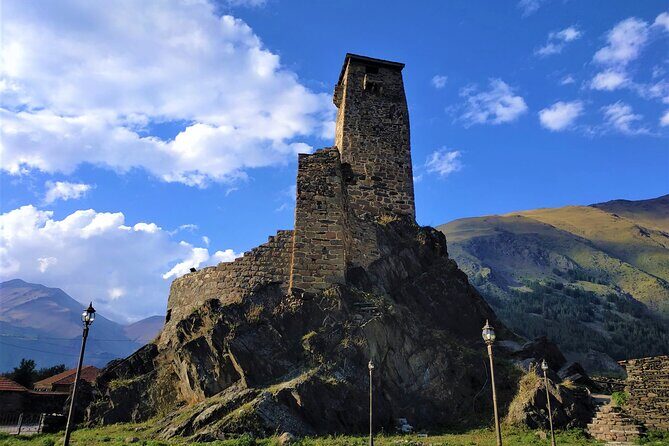
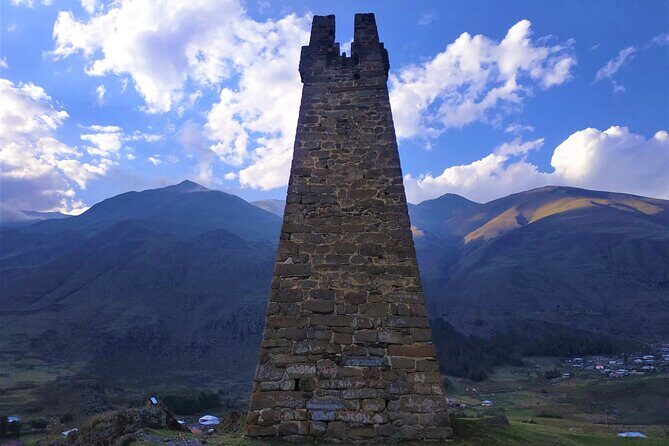
Next is Khevi, where you’ll visit a three-nave basilica from the 9th–10th centuries and a four-story pyramidal watchtower perched on a steep cliff. This tower was used to watch enemy movements and transmit signals by making smoke.
That mix—early religious architecture plus a practical defense structure—makes this stop feel grounded in history, even if you don’t know the dates by heart. It’s also a great place to look out and imagine what “visibility” meant here before modern communication.
This is a short stop (about 20 minutes), so go in with a simple plan: look at the basilica first, then take a slow lap around the watchtower viewpoints for photos.
Sno village: patriarch ties and stone sculptures
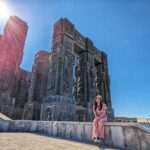
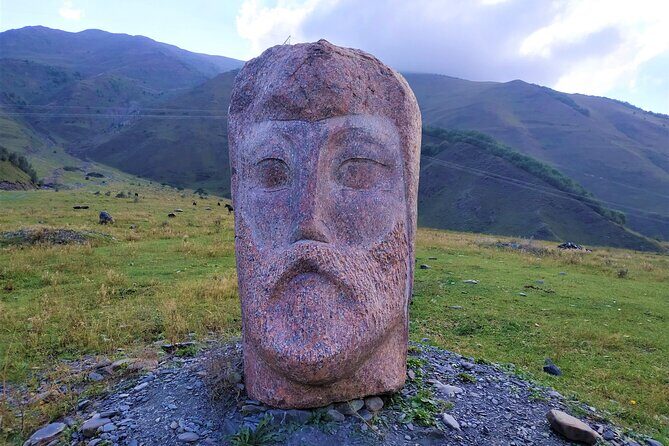
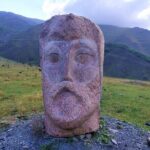
You’ll then visit the village of Sno, home of the Patriarch of Georgia. Sno includes a statue of Vakhtang Gorgasali, a medieval watchtower, and giant portrait sculptures of prominent Georgian writers and public figures created by Merab Firanishvili.
This is one of those stops that feels like it gives you culture without turning into a long museum detour. And because Sno is a village stop, you get a different texture than castles and church interiors.
Keep expectations realistic: the time here is about 10 minutes, so it’s more about seeing and absorbing than reading every detail.
Jvari Pass travertine and mineral springs: a science-shaped pause
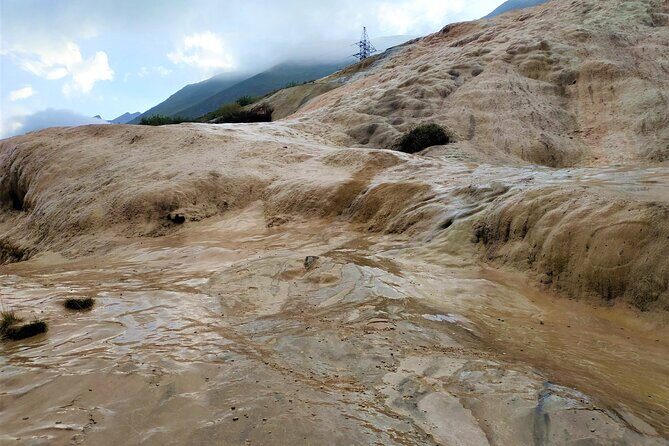
At 2,197 meters above sea level, you’ll stop at Jvari Pass Travertine, part of Kazbegi Protected Areas. Travertine forms when carbonate minerals precipitate out of temperature water.
Why this matters to your day: it adds a “how nature works” moment between architecture and hiking. It’s not a long lecture—it’s a quick, visual stop where you can appreciate mineral patterns as part of the landscape rather than only the view from it.
If you like geology, you’ll probably enjoy this part more than you expect.
Russian-Georgian Friendship Monument: end with a wide panorama
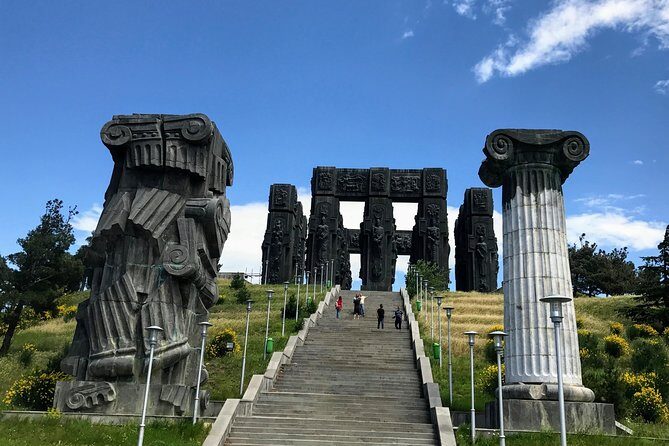
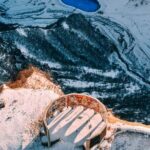
To finish, you’ll visit the Russia–Georgia Friendship Monument (Panorama Gudauri), built in 1983 to celebrate the Treaty of Georgievsk and ongoing friendship between Soviet Georgia and Soviet Russia. It’s also set up for panoramic mountain views.
This is a good closing stop because it wraps the day with a “look back” feeling. You’ve spent hours in fortifications, churches, gorge viewpoints, and waterfall paths. From here, you get the wider context—where all those dramatic locations fit together.
What you’re really paying for: price, inclusions, and time value
The price is $157.50 per person for about 12 hours, with pickup offered. For a day tour, this price point can feel “reasonable” or “high” depending on what’s included, so I like to compare the full package.
Here’s what you get that reduces hassle and cost:
- Air-conditioned vehicle for long-distance comfort
- Wifi on board (so you can stay connected while moving)
- Water provided
- Private format: only your group participates
- English-speaking guide
- Mobile ticket
- Several admission tickets included across key stops
- 4×4 transport from Kazbegi to Gergeti during winter periods
- A structured schedule that covers multiple different types of places in one outing
In other words, you’re not just paying for transport—you’re paying for a planned day with entry coverage and mountain-road support. The main “cost” to you is time and energy, not money.
Who this tour suits best (and who should consider another plan)
This is a strong fit if you want:
- A single-day introduction to Kazbegi beyond just Gergeti Church
- A waterfall hike that isn’t long or extreme (4 km roundtrip)
- A tight itinerary with short learning moments at each stop
- Comfort features like air-conditioning and wifi
- A guide who can explain what you’re seeing in English
It’s not ideal if you:
- Hate long days in a car (12 hours is real)
- Want a slow travel pace with long stays at fewer stops
- Have very low tolerance for cold weather or church dress rules
Practical tips for a smoother day in Georgia
A few things will make your life easier:
- Wear comfortable walking shoes and bring a warm jacket. The route includes high elevation viewpoints and a waterfall hike.
- If you’re visiting Orthodox churches, plan your clothing in advance: headscarf and dress for women; short trousers are not allowed for men.
- Eat beforehand or bring snacks. Lunch is planned in Stepantsminda, but it’s not an early stop, and the day runs long.
- Expect good weather to matter. The experience is weather-dependent, especially with mountain driving and winter conditions.
And one more small strategy: treat this as a “greatest hits” day. You’ll be moving a lot. If you try to capture every minute in photos, you might miss the feeling. Leave some time just to look out over the gorge and mountains.
Should you book this Kazbegi day tour?
If your goal is to get a lot of real Northern Georgia scenery and culture in one day—church at 2,170 m, two waterfalls on a short hike, plus monastery and mineral-formation stops—then this is a smart choice. The wifi + water + air-conditioned vehicle help a long day feel manageable, and the 4×4 winter transport to Gergeti is a real benefit when conditions are tough.
I’d book it especially if you like structure and guidance. Guides such as Alex and Georgi have been praised for clear explanations and strong English, and that kind of interpretation turns “I saw a place” into “I understood the place.”
If you’re trying to travel slowly, or you want fewer stops with more time at each one, you might prefer a longer multi-day approach. But for a first trip to the Kazbegi area, this day tour is one of the most efficient ways to experience it.
FAQ
How long is the Kazbegi tour?
The tour is approximately 12 hours.
Is pickup included, and what time does the tour start?
Pickup is offered, and the meeting start time is 8:00 am.
Are there options for lunch?
Yes. There is a Tour with Lunch option that includes lunch with a local family, and a Standard Tour option that includes stopping at a restaurant where you can order from the menu.
Does the tour include admission tickets?
Admission tickets are included for multiple stops listed in the itinerary, such as Ananuri Fortified Castle Ensemble, Gergeti Trinity Church, Mtavarangelozi Monastery, Gveleti Waterfall, Mineral Springs, and the Russian-Georgian Friendship Monument (and others as noted).
Is this a private tour?
Yes. Only your group will participate.
What should I wear for the church visits and the hike?
Bring comfortable shoes and a warm jacket. For Georgian Orthodox churches, ladies need headscarves and dresses, and short trousers for men are forbidden. Scarves and dresses may be available near some church entrances.