REVIEW · TBILISI
Mtskheta Tour with All UNESCO Sites & Ancient Ruins
Book on Viator →Operated by SelectGeorgia-For Holiday · Bookable on Viator
Mtskheta hits you fast, in the best way. I love how the day stacks UNESCO sites with real, readable context, and I love the calm pacing in a private vehicle with a guide who makes the stories click. One thing to consider: you’ll do enough walking and steps in old Mtskheta that comfortable shoes matter.
This is the kind of tour that turns church stones into a timeline. You start high at Jvari, then move to the sacred center around Svetitskhoveli, then out to Samtavro and Shio-Mgvime. The guides (including Giorgi and George, as named in past experiences) are praised for storytelling that keeps you from feeling like you’re just collecting landmarks.
It also helps that the tour runs with good rhythm: pickup, stops with time to look around, and a private air-conditioned ride between sites. If the weather is bad, the day may shift since this experience requires good conditions, so keep your schedule flexible.
In This Review
- Key points you’ll care about
- Why Mtskheta still feels like Georgia’s spiritual crossroads
- Private, air-conditioned pickup: how the day from Tbilisi actually works
- Jvari Church on its mountaintop: early Georgian architecture and big views
- Svetitskhoveli Cathedral: the living pillar, kings, and the mantle tradition
- Samtavro Church and Saint Nino: kings, nuns, and a 4th-century origin
- Shio-Mgvime Monastery: a plain church, a cave hermit, and early faith
- Walking in old Mtskheta: shoes, steps, and church dress rules
- Price and value: what $127.50 gets you (and why it can be worth it)
- Best fit: who should book this UNESCO Mtskheta day
- Should you book this Mtskheta UNESCO tour?
- FAQ
- What time does the tour start?
- Is hotel pickup included?
- Are admissions included for the church and monastery stops?
- Is lunch included?
- What should I wear for Orthodox churches?
- Is this tour private?
Key points you’ll care about
- Four UNESCO-linked stops across Mtskheta, with short, focused time at each place
- Private group only with a guide in English and a quiet, air-conditioned ride
- Free admission at every listed church/monastery stop, so your money goes to the guide and time
- Jvari Mount views plus “early Georgian church” architecture that’s still recognizable today
- Clothing rules for Orthodox churches, including headscarves and no short trousers for men
- Cave-hush at Shio-Mgvime, tied to the story of Saint Shio and the early hermit tradition
Why Mtskheta still feels like Georgia’s spiritual crossroads
Mtskheta is compact, but it carries a weight you don’t get from big museums. This is where Georgia’s Christian story goes deep into the early centuries, then keeps evolving through the Middle Ages. The UNESCO connection isn’t just a label here—it matches what you see in the churches: surviving forms, layered rebuilds, and the way religious life shaped the town.
I like tours that help you connect the dots, and this one does. Instead of rushing from photo spot to photo spot, you’re guided through why these places matter: the architecture type at Jvari, the sacred burial traditions tied to Svetitskhoveli, the saint-centered founding at Samtavro, and the hermit-and-cave legacy at Shio-Mgvime.
And the tone matters. Past experiences highlight guides who talk in a way that makes the monuments feel human, not dusty. If you enjoy history you can walk through—history that has footsteps in it—this route fits.
Other Mtskheta tours we've reviewed in Tbilisi

Private, air-conditioned pickup: how the day from Tbilisi actually works
The day runs about 9 hours, starting at 9:00 am. You get pickup offered, and you ride in a private vehicle that’s air-conditioned—important in Georgia when the temperature can swing. Since it’s private, it’s only your group, so you’re not competing for answers or getting shoved along at speed.
Time feels managed, too. Each stop isn’t endless; you get enough time to look, breathe, and understand what you’re seeing. That matters at religious sites, where the best moments often happen when you slow down for the interior details and the overall atmosphere.
A small practical note: this tour includes walking in the old town of Mtskheta with stairs and uneven terrain. The provider specifically recommends comfortable shoes. You’ll be grateful for that advice more than once.
Jvari Church on its mountaintop: early Georgian architecture and big views
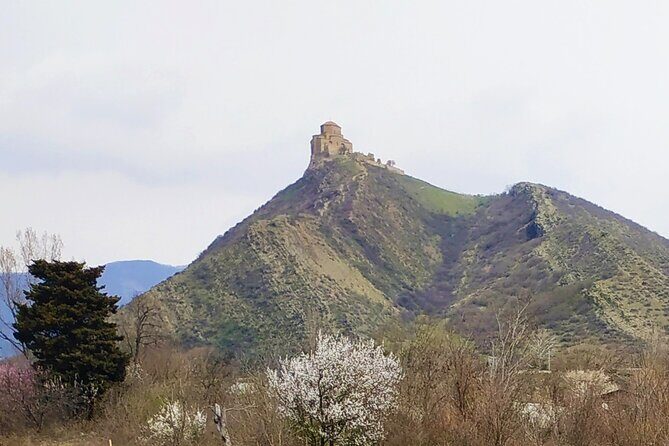
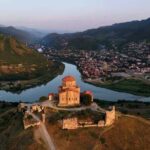
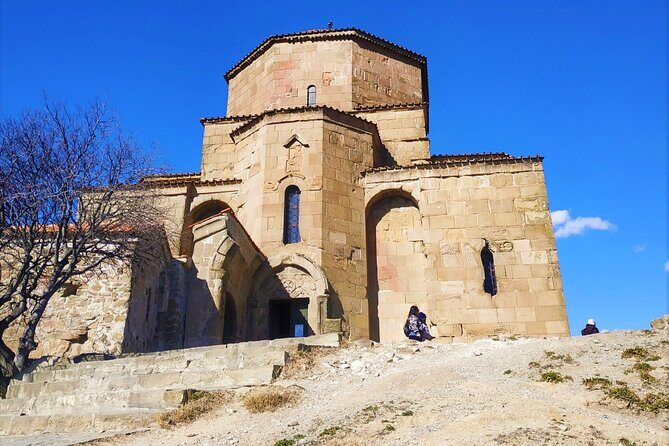
Jvari is the opening scene for this whole day. It’s a sixth-century Georgian Orthodox monastery on Jvari Mount (656 m). What you’re really catching here is the blend of architecture and the natural setting—Georgia’s kind of “church built with the landscape” logic.
Why I think this stop works so well: Jvari is described as an Early Medieval Georgian church that survived to the present day almost unchanged. That’s rare. It means you’re not only learning about history; you’re seeing something that stayed close to its original shape. You also learn that Jvari became the founder of its type—often called the Jvari type of church architecture—seen across Georgia and Armenia.
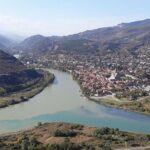
Then there’s the view. One past highlight was the feeling of looking out over the water from the mountaintop. Even if you’re not a “views person,” the way the site sits above the town helps you understand why this location mattered. It’s easier to connect to the religious and strategic importance when the geography is right in front of you.
Practical tip: plan for a bit of walking and standing around the viewpoint area. The stop is about 30 minutes, so wear footwear that won’t make you regret your life choices halfway up.
Svetitskhoveli Cathedral: the living pillar, kings, and the mantle tradition
Svetitskhoveli is the headline. This is the Cathedral of the Living Pillar, in historic Mtskheta, recognized by UNESCO. It’s also big enough that you’ll feel its scale even before you fully absorb the details—at least, that’s how it tends to land. It’s the second largest church building in Georgia after the Holy Trinity Cathedral.
The story here is layered, which is exactly what you want for a good guided stop. Svetitskhoveli is tied to the claimed burial site of Christ’s mantle. Sacred traditions like that keep pulling people back through the centuries, and you’ll hear how the cathedral also served as a burial place for kings.
You’ll also get the architectural timeline, which makes the building feel less like a random old church and more like a designed evolution. The present cross-in-square structure was completed between 1010 and 1029 by medieval Georgian architect Arsukisdze. But the site itself dates back to the early fourth century. So you’re looking at a mix of continuity and change: earlier sacred ground, later structure.
One detail worth knowing as you stand there: the exterior architecture is described as a well-preserved example of typical 11th-century decorations. Inside, the story turns sad in an important way. The cathedral is noted as an endangered cultural landmark, and some priceless frescoes were lost because of being whitewashed by Russian Imperial authorities. That adds a sense of urgency to your visit—this place isn’t just old; it has been fought over and altered.
Expect about an hour here. That’s enough time to take it in without feeling you’re dragging your feet, especially if your guide keeps the narrative organized.
Samtavro Church and Saint Nino: kings, nuns, and a 4th-century origin
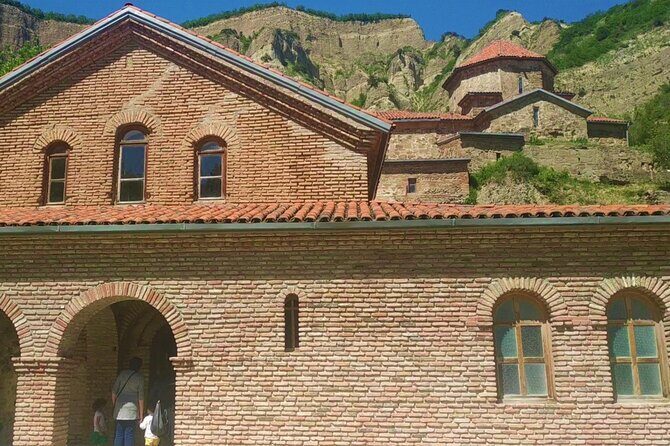
After the scale of Svetitskhoveli, Samtavro feels more intimate, but it’s no less important. Samtavro Monastery is said to be founded in the 4th century by King Mirian III. The founding moment you’ll hear about is linked to Saint Nino, when a small church was built here.
The main temple’s style is dated to the first half of the 11th century, and it’s connected to rebuilding work soon after Svetitskhoveli. That work is associated with King George I and Catholicos-Patriarch Melchizedek I. This is a good stop for understanding how sacred places in Georgia often keep getting renewed rather than replaced.
What I like is that Samtavro combines multiple religious elements under one protected umbrella: it includes the Transfiguration Church and the Nunnery of St. Nino, and it’s UNESCO protected. That helps you see the site as part of a lived religious community, not just a single monument.
The time on-site is about 30 minutes. That’s a good length for Samtavro: you get the core story, enough time to look around, and then you’re moving on while the day still feels energetic.

Shio-Mgvime Monastery: a plain church, a cave hermit, and early faith
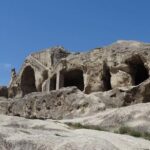
Shio-Mgvime Monastery has a different mood from the town-center churches. It’s tied to Saint Shio, a monk from the 6th century and one of the Thirteen Assyrian Fathers who came to Georgia as Christian missionaries. The center of the story is that Saint Shio spent his last years as a hermit in a deep cave.
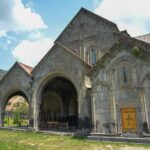
This is where the tour becomes more atmospheric. You’ll learn about an early cruciform church—very plain and strict in design—dating to the 560s-580s. It has an octagonal dome covered with a conic floor. That combination sounds technical, but the effect is simple: this is architecture shaped by discipline and faith.
There’s also a historical detail that helps you picture the art history trail. The church once housed a stone iconostasis, now at the Art Museum of Georgia. Even if you don’t visit that museum, the fact that elements were moved tells you these sites aren’t frozen in time; objects travel, restorations happen, and cultural heritage gets managed (sometimes imperfectly).
The monastery was altered in the 11th and 18th centuries, but it retained its original architecture. Expect about an hour at this stop, which is right for soaking in the quiet and absorbing the idea of the hermit tradition in a physical setting.
Walking in old Mtskheta: shoes, steps, and church dress rules
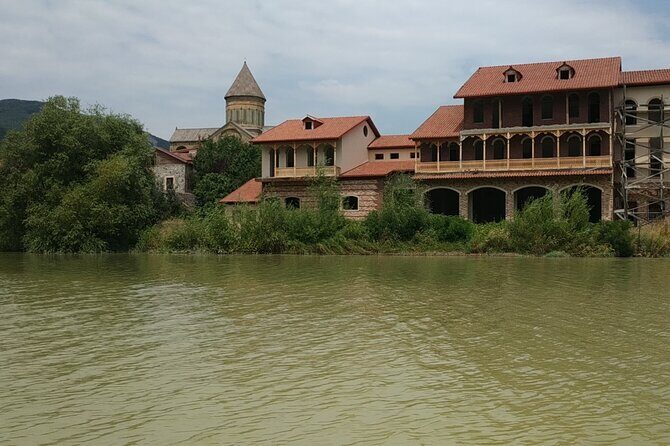
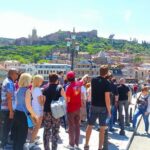
This is not a “sit in the van all day” tour. You’ll walk in the old town of Mtskheta, and the terrain includes stairs. The provider recommends comfortable shoes, and I agree—there’s no reason to arrive with blister plans.
Dress expectations at Orthodox churches are specific:
- Ladies usually need to wear headscarves and dresses in Georgian Orthodox churches.
- Short trousers for men are forbidden.
- Scarves and dresses can be found near some church entrances.
Because those rules can change by site and by moment, it’s smart to have light layers. Even if you think you’ll be fine, don’t gamble. It’s also worth packing something you can put on quickly if a scarf is required.
Also, note the pace: some stops are 30 minutes and others are 1 hour. So you’ll have varying “walk time” and “look time.” Shoes help you stay present for both.
Price and value: what $127.50 gets you (and why it can be worth it)
At $127.50 per person for about 9 hours, the core value here is not only the sightseeing—it’s the private organization. You get:
- Pickup offered and a private air-conditioned vehicle
- A guide in English who explains what you’re looking at
- A route that efficiently covers key UNESCO-recognized sites in Mtskheta
- Free admission at each listed church/monastery stop
Here’s the key way to think about it: if you try to do this on your own, the cost can creep up fast once you factor in transport and wasted time figuring out how to sequence stops. With a private guided route, you’re paying for smooth transitions and context that turns each building into a story you can actually follow.
What you’ll want to check for value is lunch. The tour offers a lunch option tied to dietary restrictions. If you book the budget tour option, lunch isn’t included, but you will stop in a restaurant to have lunch. That’s not a dealbreaker, but it changes how you plan your day and what you’ll spend on food.
If you want a full-day experience without logistics stress, this price often makes sense.
Best fit: who should book this UNESCO Mtskheta day
This tour is a great fit if you want:
- A guided, structured day in Mtskheta rather than DIY hopping
- Deep attention on a small set of high-impact religious sites
- Enough time to feel the atmosphere inside churches, not just stand outside for photos
It also suits people who like architecture and origin stories—Jvari’s early Georgian architecture type, Svetitskhoveli’s cross-in-square timeline, Samtavro’s Saint Nino foundation story, and Shio-Mgvime’s cave hermit tradition.
If you’re someone who hates walking on stairs or you’re limited by mobility, the old town walking and uneven terrain may be a challenge. The tour does say most travelers can participate, but the physical reality is still there: comfortable shoes are the minimum.
Finally, if you’re traveling in a group that wants private attention, the private format is a big win. You can ask questions without waiting for the rest of the group.
Should you book this Mtskheta UNESCO tour?
If you want a focused UNESCO day with fewer headaches, I’d lean yes. Jvari and Svetitskhoveli are major anchors, and the other two stops add variety: Samtavro for Saint Nino and monastic life, Shio-Mgvime for the cave hermit and early strict design.
Book it if:
- You want a full, guided day that makes religious history understandable
- You appreciate free admissions that let you spend more on experience than paperwork
- You’d rather ride comfortably in a private vehicle than manage transfers on your own
Skip or reconsider if:
- You strongly prefer minimal walking or step-heavy routes
- You’re not interested in churches and monastery stories at all (this day is built around them)
- Your travel dates aren’t flexible, since the tour requires good weather and can be moved or refunded if canceled due to poor conditions
FAQ
What time does the tour start?
The tour starts at 9:00 am.
Is hotel pickup included?
Pickup is offered, and you’ll be collected for the tour.
Are admissions included for the church and monastery stops?
Admission tickets are listed as free for each of the four main stops.
Is lunch included?
There’s a lunch option if you book Tour with Lunch, and the provider notes they’ll use dietary restrictions to offer lunch. If you choose the budget tour option, lunch isn’t included, but you’ll stop in a restaurant to have lunch.
What should I wear for Orthodox churches?
Ladies need to wear headscarves and dresses. Men should not wear short trousers. Scarves and dresses are available near some church entrances.
Is this tour private?
Yes. It’s a private tour/activity with only your group participating.