REVIEW · TBILISI
Brutal Tbilisi: Urban exploration and untold stories
Book on Viator →Operated by Friendly.ge: Transfers & Tours in Georgia · Bookable on Viator
Concrete tells the story of Tbilisi. This Brutal Tbilisi tour threads Soviet-era brutalism through real neighborhoods, so the buildings feel less like monuments and more like lived-in chapters of the city’s past and present.
I love the small-group size (up to six), because it makes the walk feel like a conversation, not a lecture. I also love how the route ties architecture to people, from the Ministry of Highways building to dorms that now house refugees, and then up to the Nutsubidze Skybridge bridges.
One possible drawback: this tour is primarily for adults and includes an abandoned museum stop, so you’ll want solid shoes and moderate stamina rather than expecting a super-light sightseeing loop.
In This Review
- Key points before you go
- A Brutalist Walk Through Tbilisi’s Soviet-to-Now Story
- Price and Value: Getting More Than a Photo Tour for $75
- Meeting Point and Getting There Without Stress
- Stop 1: The Ministry of Highways of the Georgian SSR
- Stop 2: Chronicles of Georgia (Memorial History of Georgia)
- Stop 3: The Former Archaeology Museum (Abandoned)
- Stop 4: Maglivi Bridge, Former Dorms, and the University Cable Car
- Stop 5: Nutsubidze Skybridge and the 70-Meter Walk
- How the Guides Turn Concrete Into Stories
- Who This Tour Fits Best (And Who Might Prefer Something Else)
- Should You Book Brutal Tbilisi?
- FAQ
- How long is the Brutal Tbilisi tour?
- How much does it cost?
- What language is the tour offered in?
- How big is the group?
- Where does the tour start?
- Is hotel pick-up available?
- What’s included in the price?
- Are lunch or meals included?
- Is the tour suitable for kids?
- What kind of physical activity level does it require?
- Is admission covered for the stops?
- Cancellation changes: what are the rules?
Key points before you go
- Up to six people means you can ask questions and take photos without feeling rushed
- Five architecture-focused stops cover ministries, memorials, an abandoned museum, housing, and a skybridge
- Free entry at the sites for your tour time keeps the cost predictable
- Nutsubidze Skybridge at 70 meters is the big wow factor, with a chance to meet the elevator operator
- Guides like Alex, Aleksi, Khato, and Khatuna are often praised for turning buildings into stories you’ll remember
- Bottled water included, so you can focus on the walk, not scrambling for supplies
A Brutalist Walk Through Tbilisi’s Soviet-to-Now Story
If you think Tbilisi is only about old balconies and postcard streets, this tour nudges you into a different lane. Brutalist architecture in Georgia isn’t just about concrete shapes. It’s about how governments, students, and communities used design to run everyday life.
What makes Brutal Tbilisi work is the way the route mixes famous-seeming monuments with places that feel strange, quiet, or off the map. You get the visual punch of brutalism, but you also get the human context: why these structures were built, and what became of them after the Soviet era.
I especially like that you’re not stuck in one “tour zone.” You move across the city, then finish back at the Giant Bicycle monument, so the whole experience feels self-contained but not isolated.
Other Soviet and brutalist Tbilisi tours we've reviewed in Tbilisi


Price and Value: Getting More Than a Photo Tour for $75
At $75 per person for about four hours, the value depends on what you’re after. If you want buildings plus explanation, this is a strong use of time.
Here’s why the price adds up:
- The tour includes a local guide and bottled water.
- You get a mobile ticket, and the key sites on the route list admission as free for your visit time.
- It’s structured like a mini urban exploration, not just a drive-by checklist.
The real value is how the guide connects architecture to the stories behind it. Multiple guides are praised for being like an encyclopedia on legs—the point is that you won’t just get facts, you’ll get meaning: who designed what, what the building was meant to do, and how people lived around it.
Meeting Point and Getting There Without Stress
You start at the Giant Bicycle monument near Rose Revolution Square (PQ3R+QJC). The tour ends back at the same meeting point, which makes planning easier if you’re riding public transport or meeting someone later.
Pick-up is limited. The tour data says hotel pick-up is only available for private tours, not for standard public departures. So if you’re not booking private, plan on reaching the starting spot yourself.
Also, the tour is described as being near public transportation, which matters in Tbilisi because neighborhoods can be easier to access than you expect—especially when your route is spread out across the city.
Stop 1: The Ministry of Highways of the Georgian SSR
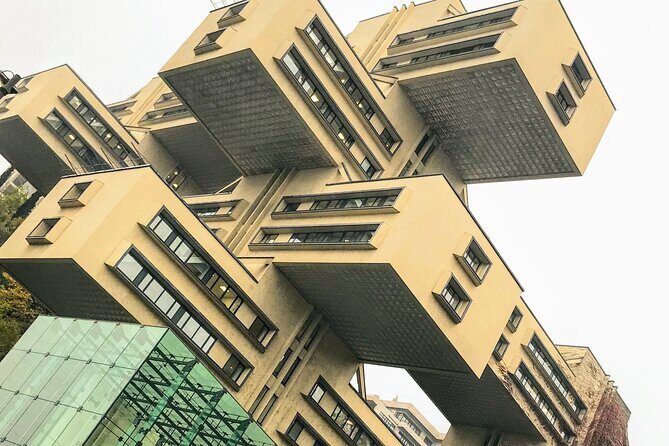
This is your first shock of the trip—in the best way. The Ministry of Highways of the Georgian SSR building gives you a clear brutalist lesson: sharp angles, heavy massing, and the kind of design that looks like it’s meant to last through political eras.
This stop works well if you love architecture because the building isn’t subtle. It’s the sort of structure that demands attention and then rewards it when you start noticing the details.
Timing here is about 30 minutes, with admission listed as free. You’ll likely want some extra time if you enjoy lingering with photos—brutalist buildings look different from each angle, and even short visits can feel long if you’re searching for textures and patterns.
Tip: bring patience for concrete surfaces. The charm is often in the small details, not just the big shape.
Stop 2: Chronicles of Georgia (Memorial History of Georgia)
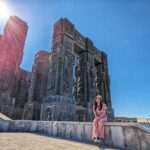
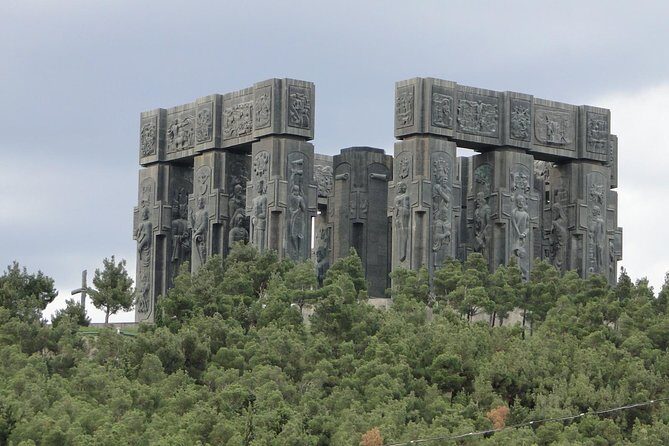
Next comes a monument set up for big views and big scale. The Chronicles of Georgia sits on a hill overlooking Tbilisi, and it’s built like a story in stone—massive pillars and relief scenes tied to major moments in Georgia’s mythology and history.
If you come here for the architecture, you’ll still get that. But the emotional value is stronger: these carvings are meant to communicate identity, not just impress visitors. Even if you don’t know the background, the design tells you it wants you to read it.
This stop lasts about 45 minutes with free admission. The extra time makes sense because you’ll likely want to circle a bit, look for details, and take in the hillside perspective of the city below.
Possible drawback: if you’re sensitive to crowds or long uphill moments, this is the stop where you should pace yourself. The monument’s location implies a more prominent setting than a street-level building.

Stop 3: The Former Archaeology Museum (Abandoned)
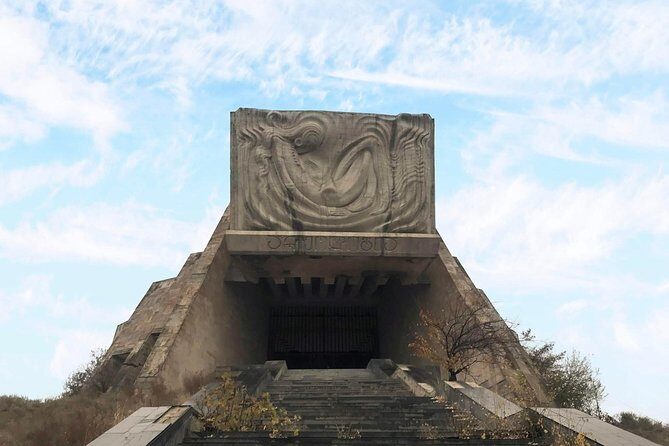
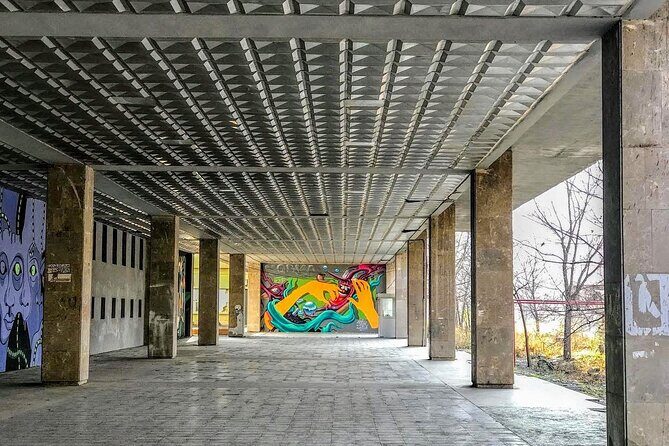
Now the tour takes a turn toward the eerie and the forgotten. The Former Archaeology Museum is described as once grand, now abandoned, and that change in status is part of what makes the stop memorable.
This isn’t just a photo-op for decay. The building’s design and scale feel like a stage that stopped performing. It invites questions, like: what did it serve, who used it, and why did it fall out of daily life?
You’ll spend around 30 minutes here, and admission is listed as free. This is also one of those stops where your guide’s storytelling matters a lot. The same empty spaces can feel either sad or fascinating depending on how they’re explained.
What to consider: abandoned sites can involve uneven areas or surfaces that aren’t designed for visitors. Wear shoes you trust.
Stop 4: Maglivi Bridge, Former Dorms, and the University Cable Car
Stop four is where brutalism stops being abstract. You connect it to housing, displacement, and the lived consequences of changing times.
This section includes former dormitories that have become homes for refugees. That shift changes the mood completely. The architecture is still there, but now it carries different meaning: student life replaced by survival and community.
You’ll also see the old cable car in the university district, another brutalist-era touchpoint linked with the idea of progress and modernity. Put together, these places help you understand how Soviet-era structures weren’t only about government buildings. They were also about mobility, education, and daily routines.
Timing is about 30 minutes, and admission is listed as free at each stop. The route also emphasizes going off the standard tourist path, and this area is exactly where you feel that difference.
Note for your expectations: this is the most human-weight stop on the route. If you prefer purely aesthetic architecture tours, you might find this emotionally heavier than the other locations.
Stop 5: Nutsubidze Skybridge and the 70-Meter Walk
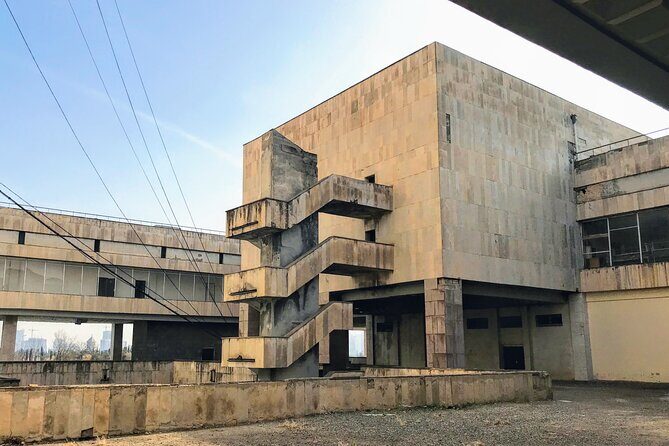
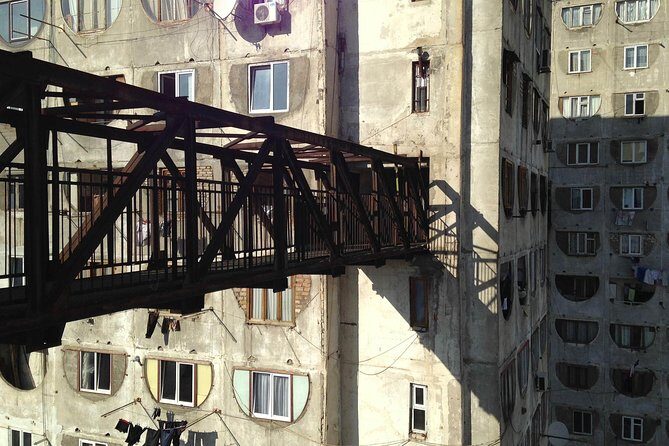
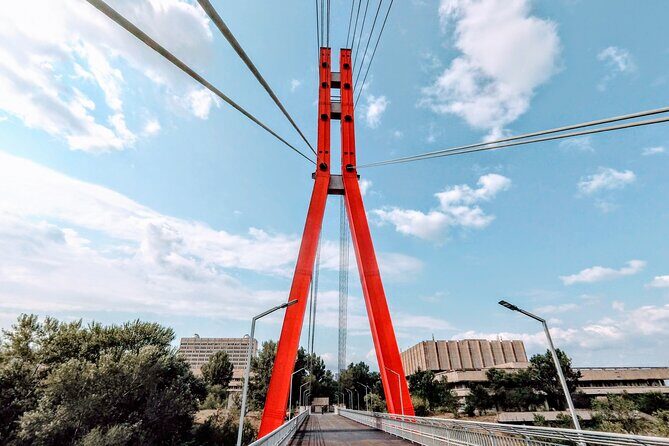
Then you get the payoff. Nutsubidze Skybridge is built with twin towers connected by bridges, and you can walk across them suspended 70 meters above the ground.
This is the stop that many people remember first, because it’s one part architecture and one part personal thrill. The views from up there change how you see the city. You notice the city’s layout, the way neighborhoods stack, and the contrasts between eras you’ve just been learning about.
Timing here is around 45 minutes, and admission is listed as free. You’ll have time to take photos, walk the bridges, and soak up the moment.
One of the most praised moments is the chance to meet the elevator operator associated with the skybridge. It’s an oddly specific detail—and that’s exactly why it feels real. You’re not just staring at architecture. You’re meeting the people who help make it function day to day.
Tip: if you’re afraid of heights, this is the moment to decide honestly. You don’t have to rush. Take it slow and ask your guide what feels best for your comfort level.
How the Guides Turn Concrete Into Stories
A big reason this tour gets near-perfect feedback is the guides. Different names come up again and again, including Alex, Aleksi, Khato, Iona, and Khatuna. Across the board, the consistent theme is that the guide doesn’t just describe shapes—they explain why those shapes mattered.
What you’ll find useful is the way questions get handled. People praise guides for being patient with photo stops and for adjusting pacing when you want to linger. In one set of notes, a guide was even described as able to drop people off on time elsewhere (airport timing was mentioned), which suggests good situational awareness.
You should also come with a couple of questions ready. Things like:
- Who was the intended user of this building?
- What does the design suggest about how the space was meant to work?
- How did the building’s purpose shift after the Soviet era?
And one fun detail: one group mentioned a cha cha drink as an added bonus at the end. You can treat that as a maybe, not a promise.
Who This Tour Fits Best (And Who Might Prefer Something Else)
This is a tour for adults first. The format is described as primarily for adults, and while children can attend with an accompanying adult, it’s not positioned as a kids-only outing.
You’ll be happiest if you:
- love architecture and want Soviet and post-Soviet city design explained
- enjoy off-the-beaten-path neighborhoods, not only the old center
- like a guided route when it unlocks places you wouldn’t find on your own
- can handle moderate walking and some time in an abandoned building
You might skip it if you want mostly religious sites, medieval streets, or a super-easy ride with minimal walking. This one is about the city in its more modern layers—concrete, institutions, memorials, and housing.
Should You Book Brutal Tbilisi?
If your idea of a great day includes architecture, history through buildings, and a guide who actually connects the dots, I’d book it. It’s priced for a small-group experience, and the route hits the kind of Tbilisi most visitors miss: ministries, memorial sculpture, an abandoned museum, refugee-occupied dorms, and the skybridge walk.
Do consider your comfort level with heights at the skybridge and the conditions of an abandoned museum stop. If you’re good with that, you’ll come away with a totally different mental map of Tbilisi than the one you started with.
FAQ
How long is the Brutal Tbilisi tour?
It runs for about 4 hours (approx.).
How much does it cost?
The price is $75.00 per person.
What language is the tour offered in?
The tour is offered in English.
How big is the group?
It’s a small-group tour with a maximum of six people, and the activity has a maximum of 14 travelers.
Where does the tour start?
The meeting point is the Giant Bicycle monument near Rose Revolution Square in Tbilisi.
Is hotel pick-up available?
Hotel pick-up is available only for private tours.
What’s included in the price?
The tour includes a local guide and bottled water.
Are lunch or meals included?
Lunch is not included.
Is the tour suitable for kids?
The tour is designed primarily for adults. Children must be accompanied by an adult if they attend, and a family-friendly tour is recommended for younger children.
What kind of physical activity level does it require?
Travelers should have a moderate physical fitness level.
Is admission covered for the stops?
Admission tickets are listed as free at the stops included in the tour. The tour also uses a mobile ticket valid for the time and date specified.
Cancellation changes: what are the rules?
You can cancel up to 24 hours before the experience for a full refund. Less than 24 hours before does not receive a refund, and changes within 24 hours are not accepted.