REVIEW · TBILISI
Tbilisi old town & soviet heritage – Private driver-guided Tour
Book on Viator →Operated by 11 Regions • Georgia · Bookable on Viator
Tbilisi rewards slow wandering. This private half-day tour mixes landmark stops with real-world pacing, so you can see the big sights without feeling herded. I like that you’re in an air-conditioned car with an English-speaking driver, plus the route is flexible for photo stops along the way. You also get hotel pickup and drop-off, which makes the whole day feel easy.
Two things I especially like: the built-in variety (churches, views, markets, and a tram ride) and the human factor—guides such as Giga, Makho, and Goga are described as energetic and warm, and one visit even credits Mr. Timo for a great day. That personal touch matters in a place where streets and viewpoints can be confusing if you’re on your own.
The one drawback to keep in mind is simple: even though it’s a half-day, you’ll still be walking on old-town streets and up toward Narikala. The tour notes a moderate fitness level, so plan for some stairs and uneven ground.
In This Review
- Key highlights in plain terms
- From Metekhi to Holy Trinity: where Tbilisi’s story shows up fast
- Chronicles of Georgia and quick context before the views
- The cable car moment to Narikala Fortress
- Rike Park, Peace Bridge, and Shardeni Street: a walk you’ll remember
- Dry Bridge and Meidan Bazaar: shopping for stories, not just souvenirs
- Jumah Mosque and Abanotubani sulfur baths: faith and folklore side by side
- Puppet clock tower and Bazari Orbeliani: a sweet ending with options
- Private driver-guided value: is $77.93 per person worth it?
- Who this tour fits best (and who might prefer DIY)
- Should you book?
- FAQ
- FAQ
- How long is the Tbilisi Old Town & Soviet Heritage private tour?
- What time does the tour start?
- Is hotel pickup and drop-off included?
- Is this a private tour or a group tour?
- What kind of transportation is included?
- Is there an admission fee for the stops?
- Do you need tickets in advance?
- Is cancellation free?
Key highlights in plain terms
- Hotel pickup and drop-off: you start 100% from your door in Tbilisi.
- Air-conditioned private ride + WiFi: a comfortable reset between stops.
- Aerial tramway included: a quick cable car hop with big city views.
- Iconic viewpoint loop: Narikala Fortress gives the skyline perspective.
- Old-town layers: churches, Shardeni Street, sulfur baths area, and markets.
- Flexible stops: you can ask for extra time for photos and small discoveries.
From Metekhi to Holy Trinity: where Tbilisi’s story shows up fast
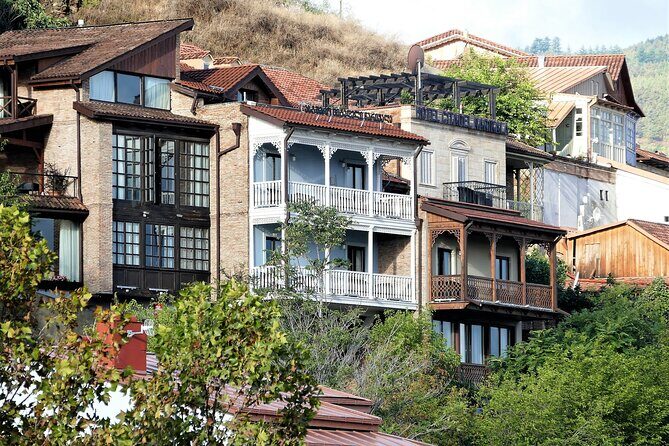
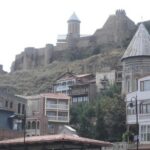
The day starts with Metekhi Cathedral, a 13th-century church that sets the tone for Tbilisi’s old-town maze. You’ll wind through narrow lanes past patterned balconies and colorful façades—exactly the kind of detail that’s hard to notice when you’re rushing. The stop is brief, but it’s timed well: you get a first feel for the neighborhood before the big skyline stuff later.
Next comes Tbilisi Holy Trinity Cathedral, the standout in terms of scale. It rises to 101 meters, and it’s the highest church in Georgia. If you’ve only seen church exteriors from afar, this is where the proportions hit you. I like that the tour keeps it efficient: you get a solid look without turning the day into a long church marathon.
Practical note: both of these are exterior-focused stops with walking around them. Wear shoes that handle cobbles and curbs. Even in a “short” tour, Tbilisi’s old streets can feel like an obstacle course if your footwear is wrong.
Other Old Town tours we've reviewed in Tbilisi



Chronicles of Georgia and quick context before the views
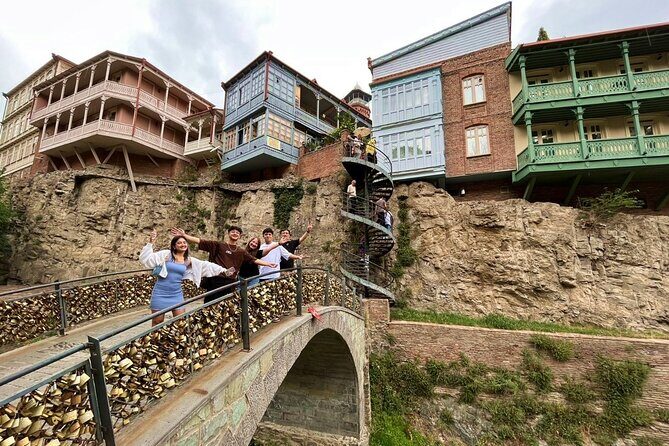
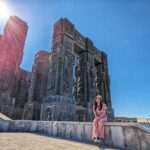
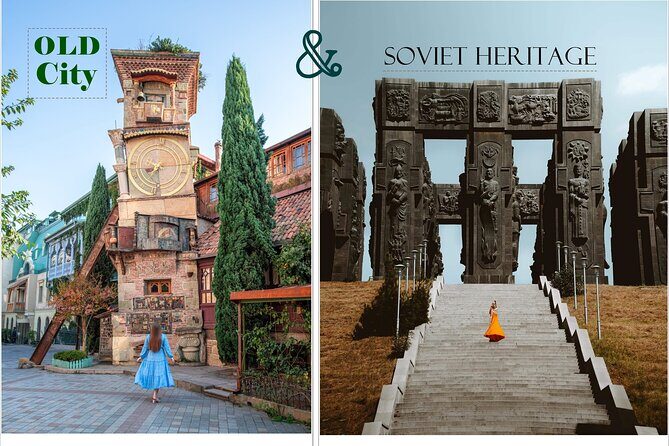
Then you get Chronicles Of Georgia, often described as the Georgian Stonehenge. The idea here is visual storytelling: 16 massive pillars carry scenes from Georgia’s rulers and the life of Jesus. It’s one of those places where you suddenly understand why Tbilisi isn’t just pretty buildings—it’s memory made physical.
This stop is about 30 minutes, which gives you enough time to read the theme in broad strokes and then just stand back and take in the overall scale. If you like monuments that combine art and messaging, you’ll appreciate it more than a quick “photo and go” stop.
One consideration: because it’s a pillar complex, the experience depends on how much you want to interpret. If you’re more into street life and views, you’ll still get the big picture, but you might spend less time reading.
The cable car moment to Narikala Fortress
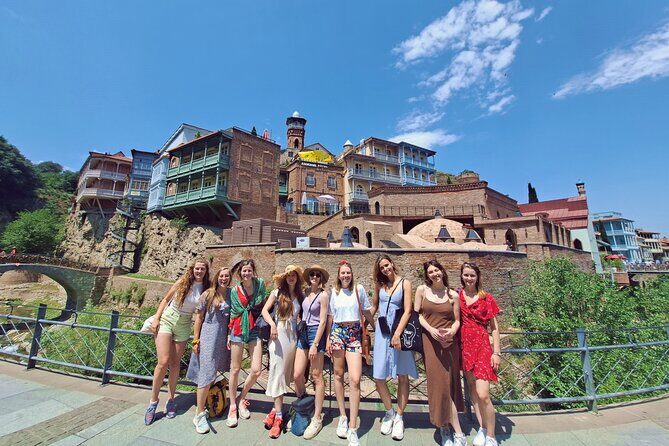
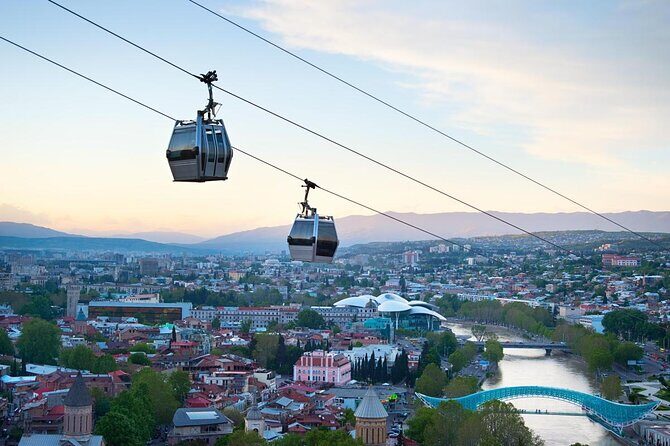
The aerial tramway is a bright, efficient break in the middle of the day. It connects Rike Park on the left bank of the Mtkvari River with Narikala Fortress. The ride is short—only a couple of minutes—but the payoff is a 360-degree view from the cabin windows.
This is where the tour’s pacing makes sense. You’re not just climbing; you’re also being “reset” by the scenery. On days when Tbilisi weather is unpredictable, a tramway stop also helps you keep momentum.
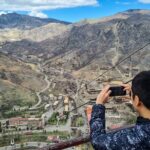
At the top, Narikala Fortress feels like the heart-and-soul viewpoint. The tour keeps your time here fairly focused, but the views over Tbilisi are the whole point. You’ll come away with that classic sense of geography: how the river wraps the city, how the old town hugs slopes, and how layered the skyline really is.
Tip: Narikala is a viewpoint plus walk-around area. Bring your camera, but also take a minute without it. The best photos often come after you’ve already looked longer than you planned.
Rike Park, Peace Bridge, and Shardeni Street: a walk you’ll remember
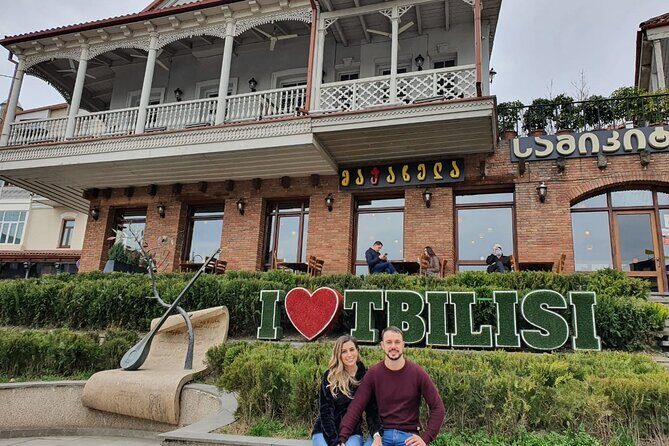
After the fortress views, the route shifts to easy wandering near the river. You’ll stop at Rike Park, where Europe Square is positioned as a meeting point for people from different nationalities and the local community. It’s a calmer counterweight to earlier climbs.
Then you cross the Bridge of Peace. It’s pedestrian-only and relatively young, opened for public use in 2010. This bridge is one of those simple ideas that works: it links Old Town with Rike Park over the river, so it turns transit into a photo stop and a breather at the same time.
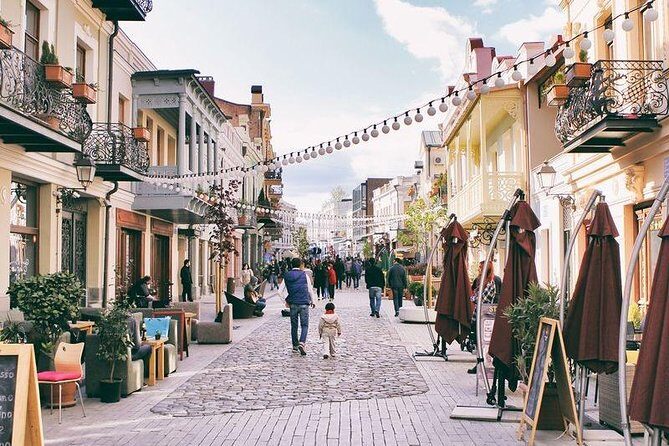
Finally, Shota Rustaveli Street and Jan Shardeni Street give you the city’s human scale. Shardeni Street is pedestrian and one of Tbilisi’s most popular streets—something you’ll feel in your legs just by walking it. The tour also gives you a tight time block here, which is smart: Shardeni has lots of small details, and you don’t want to “overstay” and burn the day.
If you want to shop, people-watch, or just snack-walk, this is the stretch. If you’re the type who likes to plan fewer things and wander more, Shardeni is exactly where the tour’s flexibility can help you slow down.
Dry Bridge and Meidan Bazaar: shopping for stories, not just souvenirs
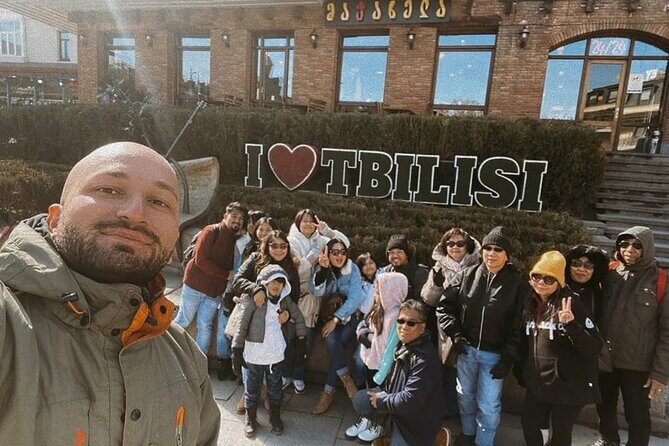
One of the most fun sections is the market time. Dry Bridge Market is right in the old historical part of the city and has the vibe of treasure hunting. You’ll see everything from old coins and postcards to dishes, paintings, books, accessories, and vintage phones and cameras. It’s the kind of place where you might not know what you’re searching for until you spot it.
A nice twist in the tour format: Dry Bridge Market shows up more than once in the day, giving you extra chances to browse if you found the first stop too quick or if you want to compare items and prices with a clearer head.
Then comes Meidan Bazaar, described as an underground tunnel-shop. Here the theme is more “made in Georgia,” from wine and handcrafted socks to postcards, jams, sauces, spices, and tea. If you like edible gifts—or just want to understand Georgian flavors without a formal tasting experience—this stop is practical.
One caution: markets involve decision fatigue. Bring a simple plan like, “I’m only buying one food item and one small souvenir.” Otherwise you can lose an hour without realizing it.
Other Soviet and brutalist Tbilisi tours we've reviewed in Tbilisi




Jumah Mosque and Abanotubani sulfur baths: faith and folklore side by side
You’ll also get a quick visit at Jumah Mosque, currently described as the only Muslim shrine in the city. It’s a simple red brick mosque, known as a place of worship for both Sunni and Shia Muslims. The stop is short, but it broadens the day beyond the dominant church architecture.
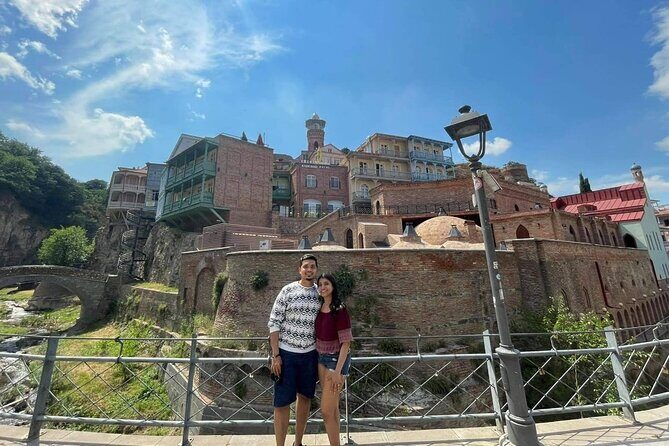
Next up is Abanotubani, the sulfur bath house area—Tbilisi’s well-known postcard zone. The bathhouses have dome-shaped roofs and tiled façades, and the legend says Tbilisi was born here. The domes sit below ground level, so you only see the beehive-like tops from street level.
Important practical note: the sulfur bath admission isn’t included. So if your plan is to actually step into a bath experience, budget separately. Even if you don’t go inside, the architecture and atmosphere are still worth a look.
This part of the day is also where you’ll feel the “scent” of Tbilisi’s daily life. It’s not a polished viewpoint like Narikala; it’s more real, more local, more grounded.
Puppet clock tower and Bazari Orbeliani: a sweet ending with options
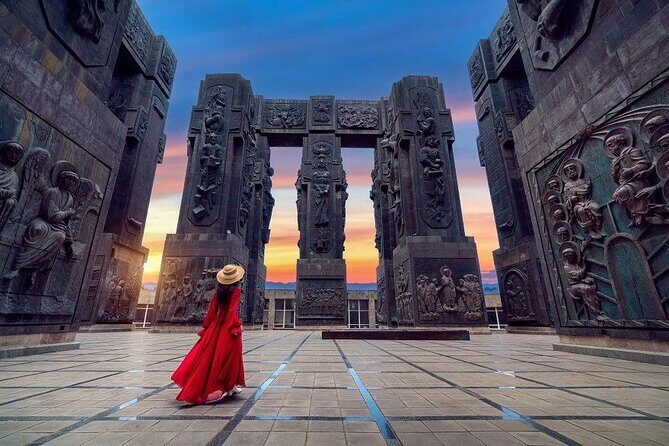
Toward the end, you’ll stop at Rezo Gabriadze Marionette Theater, centered on the clock tower that’s instantly recognizable for its hundreds of tiles. Every hour, an angel figure comes out with a small hammer to ring the bell. There’s also a small puppet theatre inside, with shows described as happening twice a day at noon and at 7 pm for The Circle of Life.
Even if you catch only part of it, the tower is a strong “Tbilisi signature” moment. It’s playful architecture in a city that otherwise leans dramatic.
Finally, the tour closes with Bazari Orbeliani (often just called Bazari), a food hall with multiple modern food facilities and restaurants—Georgian and international options. This is a smart finishing move because it gives you a low-stress place to eat and keep your day going after the guided portion ends.
If you’re traveling with picky eaters, or you want something different from typical Georgian dishes, this last stop gives you choices without needing another long trip.
Private driver-guided value: is $77.93 per person worth it?
At $77.93 per person for a 5 to 6-hour private tour, the value depends on how you travel and what you hate doing on your trip. If you dislike planning, translating, and figuring out routes between viewpoints, this kind of private half-day can feel like time insurance.
You’re buying several useful things at once:
- hotel pickup and drop-off in Tbilisi (less wasted morning time),
- transportation in an air-conditioned car,
- WiFi on board (nice during short transfer gaps),
- an English-speaking guide service, and
- a route that hits both classic landmarks and practical browsing spots.
Also, most listed admissions are free, with one key exception: the aerial tramway is included, and Abanotubani bath admission is not included. That mix helps the tour stay predictable in cost.
For families or mixed ages, this format can work better than a self-guided day. One guide described as tailoring to a family with small kids and an elderly person suggests the pacing can be adjusted when needed.
Who this tour fits best (and who might prefer DIY)
I think this tour is a great match if you want:
- a guided overview that still leaves room for photo stops and small detours,
- comfort between hillier areas thanks to the private car,
- a day that covers major sights like Holy Trinity Cathedral, Chronicles of Georgia, Narikala, and Shardeni Street, plus markets.
You might choose a different approach if you’re the type who loves independent wandering with no set flow at all, or if you have very limited tolerance for walking on old streets. The tour is still a half-day, but it’s not a “sit at every stop” experience.
Should you book?
I’d book this tour if you want Tbilisi’s highlights with a comfortable pace and an English-speaking guide driving your day. The biggest strength is the mix: big monuments, real old-town streets, a proper city view from the fortress, and market time where you can hunt for coins, postcards, books, and small crafts.
If your time is short in Tbilisi and you’d rather trade planning stress for guided structure, this private format is a solid use of a morning. And if you enjoy having a guide who’s friendly and energetic—names like Giga, Makho, and Goga come up in that “made it feel personal” way—this tour is likely to feel more like spending time with a good local friend than ticking boxes.
FAQ
FAQ
How long is the Tbilisi Old Town & Soviet Heritage private tour?
It runs about 5 to 6 hours.
What time does the tour start?
Start time is 9:30 am.
Is hotel pickup and drop-off included?
Yes. The tour includes pickup from your hotel or apartment in Tbilisi, and return drop-off afterward.
Is this a private tour or a group tour?
It’s private. Only your group participates.
What kind of transportation is included?
You travel in a private car, with WiFi on board and bottled water included.
Is there an admission fee for the stops?
Most stops listed are free. The aerial tramway ride is included, while admission for the sulfur bath area (Abanotubani) is not included.
Do you need tickets in advance?
You’ll receive a mobile ticket confirmation at booking time.
Is cancellation free?
Yes, you can cancel up to 24 hours in advance for a full refund.