REVIEW · TBILISI
Group Day Tour of Mtskheta,Jvari,Samtavro
Book on Viator →Operated by Imperial Tours · Bookable on Viator
Old Georgia, on a short loop. This day tour strings together some of the most important Christian landmarks around Mtskheta—and I like that admission tickets are included for the main stops. I also like the small group size (up to 15), which keeps the pace calm and the guide easy to hear.
You’ll ride in an air-conditioned vehicle with WiFi, and you’ll have a professional guide speaking English. The one thing to plan for is that there are three church/monastery stops plus Mtskheta town in about 3 to 4 hours, and meals aren’t included, so you’ll want to think about snacks before or after.
In This Review
- Key highlights worth knowing before you go
- Why this Mtskheta route from Tbilisi hits so hard
- Price and value: what $19 covers (and why it’s fair)
- From Abano St: how the tour runs in real life
- Stop 1: Jvari Monastery and its UNESCO hilltop story
- Stop 2: Svetitskhoveli Cathedral, art, and the Robe of Christ legend
- Stop 3: Samtavro Monastery and the tombs of Georgian rulers
- Mtskheta town stop: a brief taste of the old capital
- What the included tickets + guide combo really does for your experience
- Comfort, pacing, and the one caution: no meals
- Who should book this tour (and who might not)
- Should you book Imperial Tours’ Mtskheta, Jvari, Samtavro loop?
- FAQ
- How long is the Mtskheta, Jvari, Samtavro day tour?
- What time does the tour start, and where is the meeting point?
- Is the tour offered in English?
- How big is the group?
- What’s included in the price?
- Are meals included?
- What is the cancellation policy?
- FAQ
- What’s the general route on the day?
- Is WiFi provided during the tour?
- Is transportation time included in the tour duration?
- When does the tour end?
- Do I need separate tickets for the first three stops?
- How much time do you spend at each site?
Key highlights worth knowing before you go
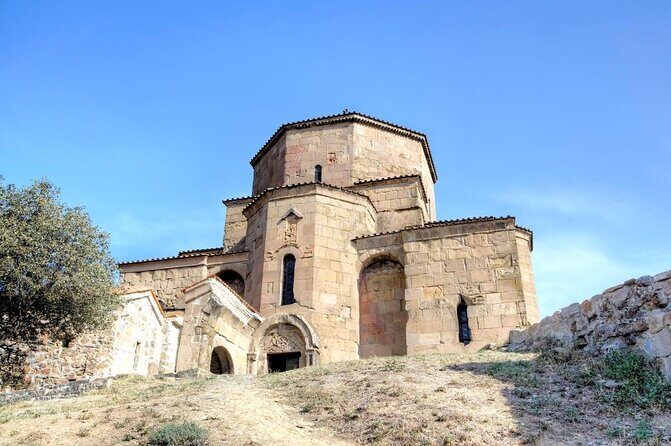
- UNESCO at Jvari: a 6th-century church tied to Saint Nino’s story.
- Svetitskhoveli Cathedral’s Robe of Christ: a famous relic legend wrapped in art and stonework.
- Samtavro’s royal tombs: including King Mirian III, tied to Georgia’s Christian conversion.
- All in one half-day: transportation time is built in, so you won’t waste time coordinating.
- Comfort on the road: air-conditioned vehicle plus WiFi, with an English-speaking guide.
- Tickets included for 3 stops: you can focus on sightseeing instead of budgeting for entry.
Why this Mtskheta route from Tbilisi hits so hard
This tour works because it groups the big spiritual and historical anchors of the region into one efficient storyline. You start with a hilltop church scene that gives you the lay of the land, then you drop into Mtskheta’s cathedral complex, then you move to a quieter monastery setting with royal connections.
If you care about early Christian Georgia, this route makes the themes easy to track: origin stories (Saint Nino), sacred artifacts and legend (Robe of Christ), and dynastic memory (kings and queens). Even if religion isn’t your main interest, the architecture and the setting do a lot of the talking.
And because the group is limited to 15 people, you usually get better rhythm. You’re not fighting a crowd at every corner, and the guide can actually explain what you’re looking at instead of just shepherding people along.
Other Mtskheta tours we've reviewed in Tbilisi

Price and value: what $19 covers (and why it’s fair)
At $19 per person, the value is in the bundle. You’re paying for guided entry to three major sites (Jvari, Svetitskhoveli, Samtavro) plus transportation in an air-conditioned vehicle and WiFi on board. Meals aren’t included, but that’s not unusual for a 3–4 hour half-day plan.
Most importantly, you’re not spending time figuring out tickets and logistics for multiple locations across Mtskheta. This is the kind of “low-friction” day trip that’s great when you want a hit of culture without turning it into a project.
From Abano St: how the tour runs in real life
The tour starts at 15 Abano St, Tbilisi, with a start time of 12:00 pm. It ends back at the meeting point, and transportation time is included in the total length—so you can plan your day with less guessing.
You’ll go by air-conditioned vehicle, which matters in warmer weather and also just makes the day feel smoother. WiFi on board is a small perk, but it’s useful for checking what to look for next at each stop or mapping your way afterward if you want to wander on your own in Mtskheta.
You’ll also get a professional guide in English, and the tour uses a mobile ticket. Confirmation happens at booking, and the meeting point is near public transportation, which gives you options if you want to use transit to reach the start.
Stop 1: Jvari Monastery and its UNESCO hilltop story
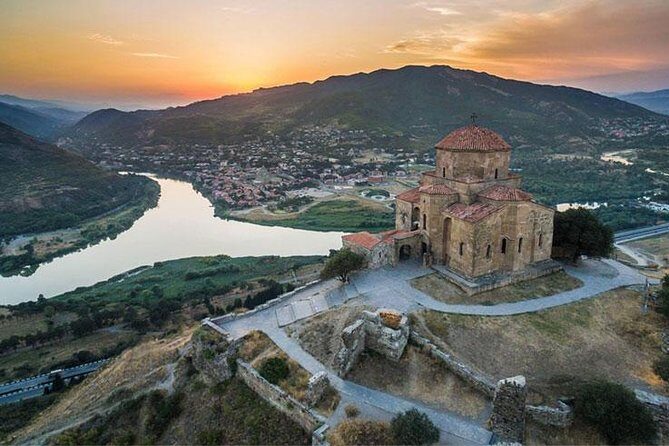
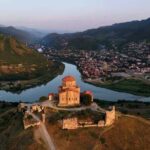
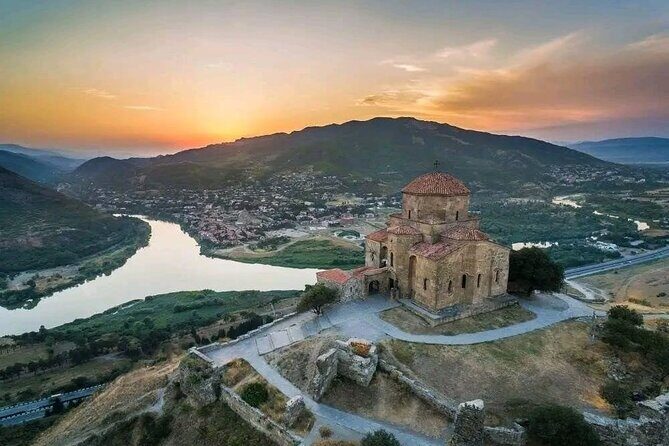
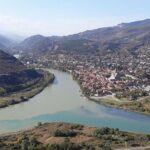
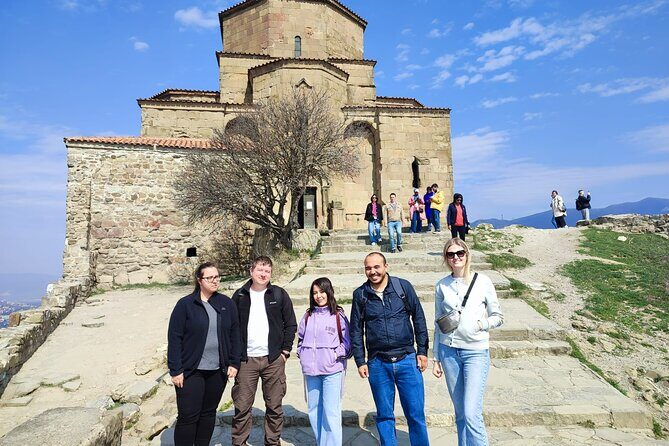
Your first stop is Jvari Monastery (Jvari Church), a UNESCO World Heritage site perched on a hilltop overlooking the town of Mtskheta. This is one of Georgia’s key early Christian architectural landmarks, and it’s especially compelling because it’s tied to the country’s conversion story.
Here’s the core connection you’ll want to pay attention to: the church was built in the 6th century on the site where Saint Nino erected a wooden cross. The structure didn’t freeze in time, either. It began as a small chapel and was later expanded and renovated across centuries, so when you look at it today, you’re really seeing layers of history rather than a single era snapshot.
Jvari is also described as having a mix of styles—Georgian, Armenian, and Byzantine—and it features a unique four-apsed design. That’s the kind of detail a guide can point out in a way you might miss if you’re just looking quickly.
Time on site is about 40 minutes, with the admission ticket included. In that window, focus on two things: the church structure itself (those apses and the overall layout) and the view out over Mtskheta. Even if you don’t linger for long photos, you’ll still get the big-picture “why this spot matters.”
Stop 2: Svetitskhoveli Cathedral, art, and the Robe of Christ legend
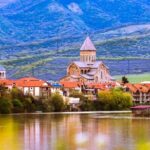
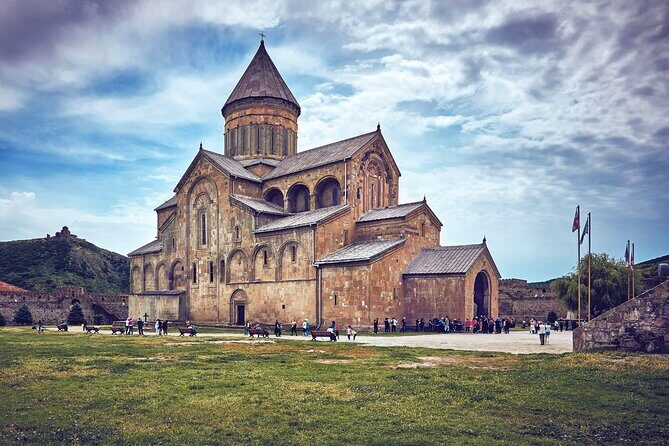
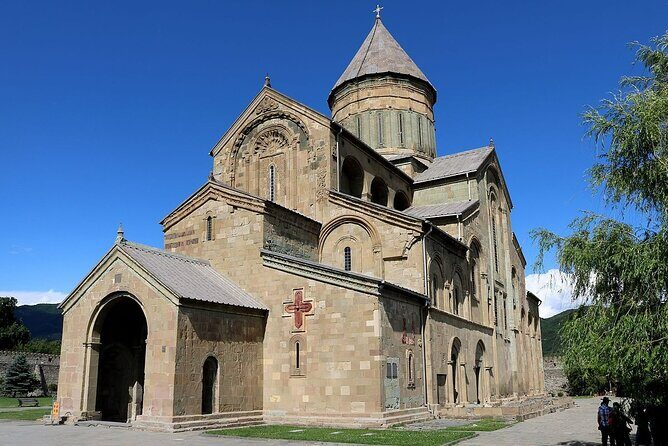
Next comes Svetitskhoveli Cathedral, and this is often the emotional center of the whole day. The cathedral’s story goes back further than the current building: it was originally built in the 4th century, then rebuilt and renovated again and again through the centuries. The structure you see today dates back to the 11th century, shaped by Georgian, Byzantine, and Persian influences.
The cathedral is known for intricate stonework, plus frescoes and ornate decoration. This is the stop where the “architecture lesson” feeling kicks in. You’ll see how religious art and craftsmanship worked together here—stone details and painted surfaces acting like visual theology.
And then there’s the famous legend: Svetitskhoveli is associated with the Robe of Christ, described as a seamless garment said to have been worn by Jesus during his crucifixion. Even if you’re approaching the site from a history angle rather than a devotional one, this relic legend helps explain why people connected to this place cared so deeply about protecting and preserving it.
You’ll spend about 1 hour here, with the admission ticket included. If you’re the type who likes to understand what you’re seeing, this is the best time to slow down. Give your eyes a minute to settle into the stonework and decoration; it’s the kind of detail that looks flat when you rush, but becomes rewarding when you let it come into focus.


Stop 3: Samtavro Monastery and the tombs of Georgian rulers
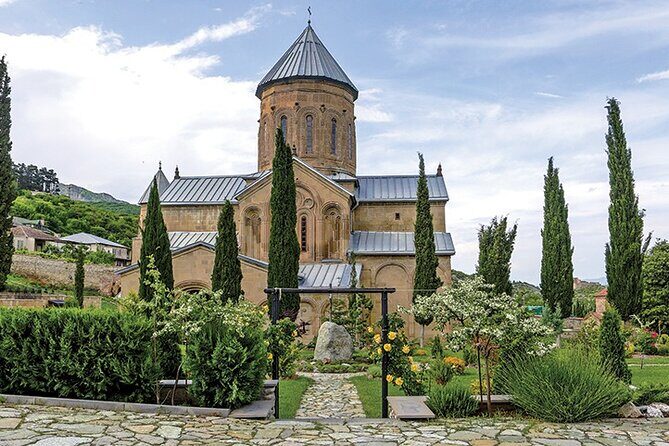
The tour continues to Samtavro Church / Samtavro Monastery, located in Mtskheta as well. This stop feels a little different from Svetitskhoveli: it’s still religious and historically important, but it carries a strong “place where power and faith meet” vibe because it’s tied to the monarchy.
Samtavro was founded in the 4th century, with the current structure dating to the 11th century after repeated rebuilding and renovations over time. Again, you’ll see a mix of styles—Georgian, Byzantine, and Persian—which is a recurring theme across Mtskheta’s religious sites.
What stands out here is the focus on frescoes, intricate stonework, and ornate decoration. And the big hook for many visitors is the monastery’s role as a final resting place for Georgian kings and queens. The site includes the tomb of King Mirian III, who is credited with helping convert Georgia to Christianity in the 4th century.
Time here is about 30 minutes, and the admission ticket is included. In a short visit, I’d use your time like this: first, look for the tomb area as the anchor point of the visit; then spend the remaining time letting your eyes catch the fresco and stone details. A guide can point you toward what’s most meaningful, and that makes the short stop feel more complete.
Mtskheta town stop: a brief taste of the old capital
After the monastery and cathedral stops, you get a chance to step out into Mtskheta town itself. The tour includes about 30 minutes here, and it’s free (no admission).
This is the moment to reconnect the sites you saw to the actual town that surrounds them. Mtskheta is described as one of the oldest continuously inhabited places in the world and a major religious and cultural center in Georgia. Even in a short time window, that context helps you understand why these monuments were built where they were.
With only 30 minutes, you won’t do a full town exploration. Use the time to get your bearings, walk a little, and pick one street or viewpoint that lines up with the hilltop perspective from Jvari. If you want to extend the day after the tour ends, this quick town stop is a good way to choose where to go next.
What the included tickets + guide combo really does for your experience
A lot of day tours “include tickets,” but here the included admissions make a difference because you’re hitting three major sites that are the whole point of the region: Jvari, Svetitskhoveli, and Samtavro. That saves you a step at each location and keeps you on schedule.
The guide is also the difference between sightseeing and understanding. The best part of this tour style is the way the story connects the stops: Saint Nino’s origin link at Jvari, the Robe of Christ legend at Svetitskhoveli, and the royal conversion memory at Samtavro. When those themes click in your head, the day feels more meaningful than just visiting famous buildings.
The tour’s group limit (up to 15) helps too. With fewer people, you’re less likely to feel rushed or lost, which means you can actually look at details like the four-apsed layout at Jvari or the ornate stonework and frescoes at the cathedral.
Comfort, pacing, and the one caution: no meals
The tour is built for a half-day rhythm: 3 to 4 hours, starting at 12:00 pm. You’ll be moving between multiple sites, so plan your expectations. This is not a slow museum day. It’s a focused route.
The practical caution is simple: meals aren’t included. Since you’re spending most of the time at churches and monasteries, you may not want to stop for a full meal midstream anyway. I’d plan either a light snack before you go or a solid plan afterward in Tbilisi, so you don’t feel hungry during the last leg.
Also, because Jvari is on a hilltop overlooking Mtskheta, expect you’ll be walking in an uneven, outdoor setting for at least part of the stop. That’s normal, but it’s good to know so you’re not surprised by steps or slopes.
Who should book this tour (and who might not)
I think this tour is a strong fit if you want:
- A guided day trip from Tbilisi that focuses on the big Mtskheta religious sites.
- A route where admission tickets are included, so your day stays simple.
- English commentary that helps you connect architecture to the stories behind it.
You might skip it if you want a long, unstructured day in Mtskheta with plenty of free time for wandering. This tour prioritizes seeing the major monuments in a tight window, so you’ll feel the schedule.
It also works best for people who like historical and cultural sights—especially early Christian sites and the layers of styles (Georgian, Byzantine, Armenian, and Persian influences) that show up again and again across these locations.
Should you book Imperial Tours’ Mtskheta, Jvari, Samtavro loop?
If you’re looking for an efficient half-day that covers the heart of Mtskheta’s sacred architecture, this is an easy yes. The big reasons: included admission for three major stops, a professional English guide, and comfortable A/C transport with WiFi for a short 3–4 hour schedule.
Book it if you want your sightseeing to feel organized and meaningful without spending extra time on planning. Consider a morning snack plan or a post-tour meal plan because meals aren’t included. If you handle that one detail, you’ll get a strong, story-driven sampler of Georgia’s religious and royal legacy in one day.
FAQ
How long is the Mtskheta, Jvari, Samtavro day tour?
It lasts about 3 to 4 hours.
What time does the tour start, and where is the meeting point?
The tour starts at 12:00 pm. The meeting point is 15 Abano St, Tbilisi, Georgia.
Is the tour offered in English?
Yes, it is offered in English.
How big is the group?
The maximum group size is 15 travelers.
What’s included in the price?
The tour includes an air-conditioned vehicle, WiFi on board, a professional guide, and admission tickets for Jvari, Svetitskhoveli Cathedral, and Samtavro Church. It also uses a mobile ticket.
Are meals included?
No. Meals are not included.
What is the cancellation policy?
Free cancellation is available. You can cancel up to 24 hours in advance for a full refund.
FAQ
What’s the general route on the day?
You visit Jvari Monastery first, then Svetitskhoveli Cathedral, then Samtavro Church, and you finish with a short stop in Mtskheta town.
Is WiFi provided during the tour?
Yes, WiFi is available on board.
Is transportation time included in the tour duration?
Yes, time for transportation is included in the total duration.
When does the tour end?
It ends back at the meeting point.
Do I need separate tickets for the first three stops?
No. Admission tickets for Jvari, Svetitskhoveli Cathedral, and Samtavro Church are included.
How much time do you spend at each site?
Jvari is about 40 minutes, Svetitskhoveli Cathedral is about 1 hour, Samtavro is about 30 minutes, and Mtskheta town is about 30 minutes.