REVIEW · TBILISI
Half-Day Food Tour of Tbilisi Dezerter’s Bazaar
Book on Viator →Operated by Meet Me Here - Tbilisi · Bookable on Viator
Tbilisi gets tasty fast. This half-day tour maps out Dezerter’s Bazaar for you, then strings together market bites, a sit-down meal, and a focused Georgian wine tasting. I love how it turns a food market into a story you can taste, and I love the clear food plan that includes standout dishes like Ghobi and tonis lobiani.
One thing to plan around: it’s not recommended for travelers with nut allergies, so if you’re sensitive, ask questions early. The good news is the rest of the format is straightforward: English-speaking, mobile ticket, and a private group that stays together from start to finish.
In This Review
- Key highlights you’ll actually care about
- Dezerter’s Bazaar starts your Tbilisi food education at 10:00
- Navigating the market: what you’re tasting (and why it matters)
- The Ghobi bowl: a seasonal starter that sets the tone
- What to look for while you’re sampling
- Tonis lobiani and tkemali: bread + sauce are the secret language
- Tonis lobiani: stuffed bean bread baked in a tone oven
- Tkemali: homemade spur plum sauce
- A note on nut allergies
- Lunch after the market: relaxing with real local food
- Georgian wine tasting: what you learn at the wine bar
- Price and logistics: is $125 a good value for this food day?
- Who should book this tour (and who might skip it)
- Should you book Half-Day Food Tour of Tbilisi Dezerter’s Bazaar?
- FAQ
- What time does the tour start and where does it begin?
- How long is the Half-Day Food Tour of Tbilisi Dezerter’s Bazaar?
- Is this tour private?
- What language is the tour offered in?
- Are nut allergies a concern for this tour?
- What is the cancellation policy?
Key highlights you’ll actually care about
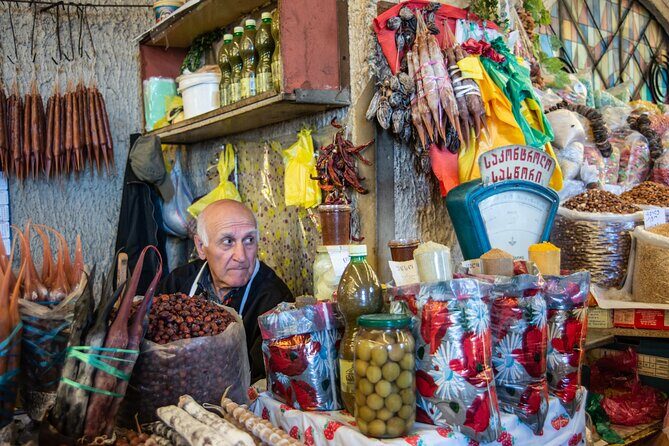
- A local guide named Paul who connects you with vendors and explains what you’re eating
- Dezerter’s Bazaar food-market time so you learn by tasting, not just watching
- Specific Georgian dishes on the menu, including Ghobi, tonis lobiani, and tkemali
- Lunch at a notable local restaurant after the market momentum
- A select wine tasting at a renowned wine bar, with learning built in
- Private tour format, so you don’t get lost in a crowd
Dezerter’s Bazaar starts your Tbilisi food education at 10:00
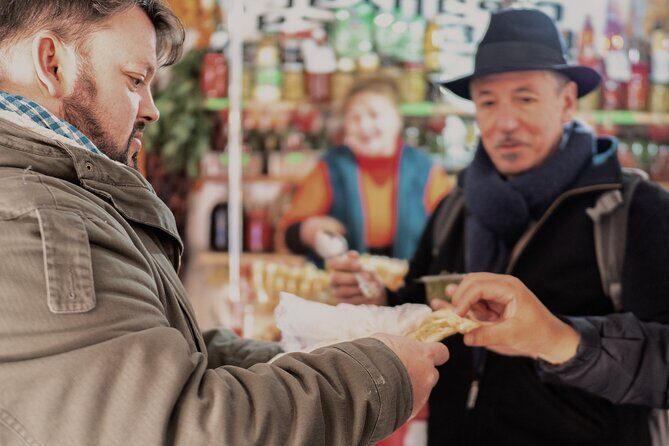
The tour kicks off at the Shota Rustaveli Monument, right at 10:00 am. That matters because markets change fast. Getting there early (and with a guide) helps you see more than just the loudest stalls—you start noticing the people, the rhythm, and what looks genuinely popular that day.
Your guide for this experience is Paul, and the strongest theme in the feedback about him is simple: he knows the market as a web of relationships. You’ll meet vendors, sample foods, and get context for what you’re tasting. In practice, that means you’re not left standing in front of a stall guessing. You’re also not trying to build your own food “cheat sheet” while everything is moving.
Also, this is a private tour/activity, so it’s just your group. That keeps things calm. You can ask questions without waiting your turn, and you’re more likely to get personal recommendations from Paul when you’re deciding what to try next.
Other Tbilisi food tours we've reviewed in Tbilisi


Navigating the market: what you’re tasting (and why it matters)
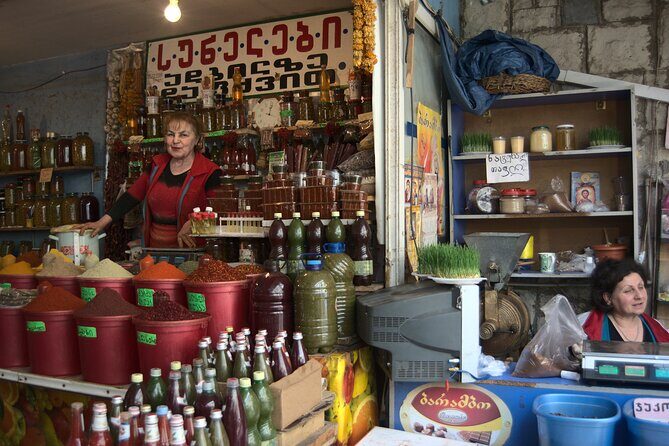
The core of the experience is time at Tbilisi’s central farmer’s market, Dezerter’s Bazaar. This is where you learn the Georgian habit of mixing textures and tastes—fresh, pickled, fermented, creamy, and herby all on the same plate.
You’re not just eating a random mix of snacks. The tour is built around seasonal starters and bread culture, then ties those flavors to what you’ll see later at lunch and in the wine bar.
The Ghobi bowl: a seasonal starter that sets the tone
One of the featured highlights is a large bowl of seasonal starters called Ghobi. The menu includes:
- pkhali
- jonjoli
- a cheese assortment
- corn bread
If you’ve never had pkhali before, think of it as a vegetable-driven starter where herbs and seasoning do the heavy lifting. Jonjoli is another clue that Georgian food isn’t shy about flavor. Combined with cheese and corn bread, Ghobi becomes a practical sampler of textures: creamy against earthy, warm bread against cooler bites, and herb-forward flavors that make the whole table feel alive.
For me, the value here is that you get a guided introduction to how Georgian plates work. After tasting Ghobi, you’ll have a better sense of what to order later on your own—because you’ll know what roles different dishes play.
What to look for while you’re sampling
Even with a structured menu, you’ll still get moments where you can choose your pace—what you try first, what you want another bite of, and what flavors you’re curious about. When that happens, focus on these cues:
- What’s being served repeatedly by the same vendors
- What looks fresh and fragrant rather than only packaged
- What Paul pairs together so your plate makes sense
This is the part of the tour that feels like getting a local’s shortcuts.
Tonis lobiani and tkemali: bread + sauce are the secret language
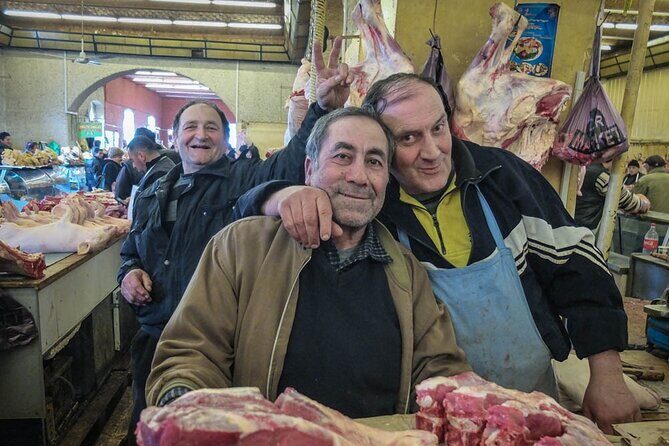
Two other menu stops anchor the savory side of the day: tonis lobiani and tkemali.
Other food & drink experiences in Tbilisi




Tonis lobiani: stuffed bean bread baked in a tone oven
Tonis lobiani is stuffed bean bread baked in a tone oven. Even if you don’t know the term before the tour, you’ll leave with an understanding that Georgian bread is not just a side. It’s a vessel for flavor and comfort.
The stuffed center matters because it changes how you experience the bread. You’re not eating plain dough. You’re eating something that has been shaped and filled to bring warmth and richness with every bite. If you like hearty food, this is one of those items you’ll remember when you’re back home craving something specific.
Tkemali: homemade spur plum sauce
Then comes tkemali, a homemade spur plum sauce. This is where Georgian cuisine shows its balance: tang alongside savory. Spur plum sauce adds brightness that cuts through richness, so the meal doesn’t feel heavy even when the food is substantial.
I like tkemali because it teaches you a seasoning idea you can reuse. Next time you see plum-based sauces or tangy fruit condiments in Georgian cooking, you’ll know what they’re doing on the plate.
A note on nut allergies
Since nut allergies are specifically called out, this is the moment where you should be extra careful. If you have a nut allergy, it’s worth asking the operator what’s included in the dishes you’ll taste, and whether any cross-contact is possible at the market. Don’t assume because a dish sounds simple that it’s nut-free.
Lunch after the market: relaxing with real local food
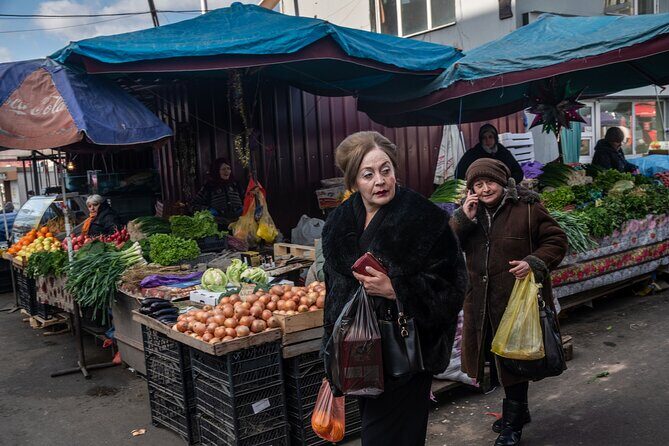
After all the walking and tasting, the tour shifts to dining at a notable local restaurant for regional specialties. The practical value of this stop is how it resets your energy.
Instead of turning lunch into another question mark, you go from market sampling to a seated meal where the flavors connect. It also helps you translate what you learned in the market into something more complete: starters, bread, sauces, and the feeling of a proper Georgian table rather than a series of bites.
From the tone of the feedback, the lunch step functions like a reward. People describe the day as fun and easy—Paul handles the flow so you’re not stressing about what comes next. That’s a big deal when you’re on vacation and you don’t want your best food hours eaten by logistics.
Georgian wine tasting: what you learn at the wine bar
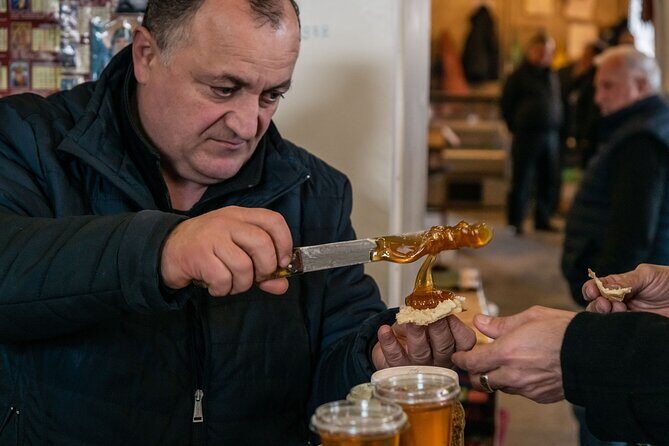
The final segment is a select tasting of artisanal Georgian wines at a renowned wine bar. This isn’t just a pour-and-go stop. It’s part of the food story, and that connection is what makes the tasting feel worth your time.
Georgian wine culture is a big part of how locals talk about ingredients, seasons, and tradition. On this tour, the wine tasting ties into what you ate earlier—especially the tang and richness from dishes like tkemali and the creamy parts of Ghobi. Even if you’re not a total wine nerd, you’ll pick up enough context to order with confidence later.
The feedback also points to celebratory moments—wine and chacha toasts are part of the day’s mood. That kind of atmosphere matters. It turns the tasting into a social experience rather than a classroom.
And yes, there’s something especially satisfying about ending with a wine bar that feels like an insider spot. You get to finish your day tasting, learning, and relaxing in the same flow.
Price and logistics: is $125 a good value for this food day?
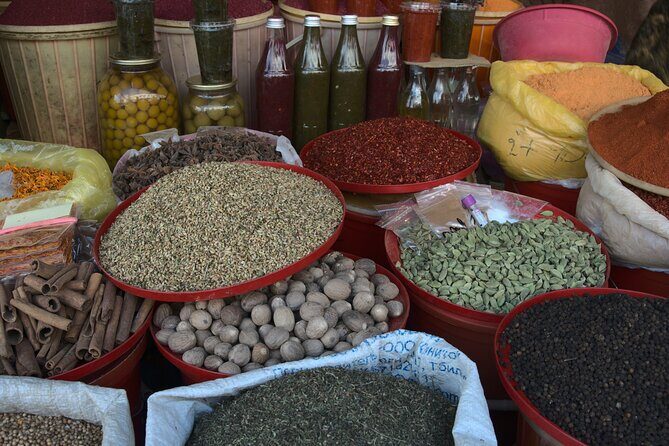
At $125 per person for about 5.5 hours, you’re paying for three things that add up fast in this part of the world: a guide, curated tastings, and a full arc from market to lunch to wine bar.
Here’s how I’d judge the value if I were planning your day:
- You’re not paying just for food. You’re paying to have Paul’s vendor access and context, which saves you hours of trial-and-error.
- Tastings are not random. They’re built around named Georgian dishes: Ghobi, tonis lobiani, and tkemali.
- You also get the wine stop included, which is often where independent planning gets tricky—finding the right place and ordering without guessing.
One more practical point: the tour uses a mobile ticket and ends back at the meeting point. That keeps your day tidy. No awkward end-of-tour scramble.
The one trade-off is the allergy limitation. If nut allergies apply, the tour isn’t recommended. If you don’t have that concern, this looks like a strong way to get a concentrated, guided food day without building the entire plan yourself.
Who should book this tour (and who might skip it)
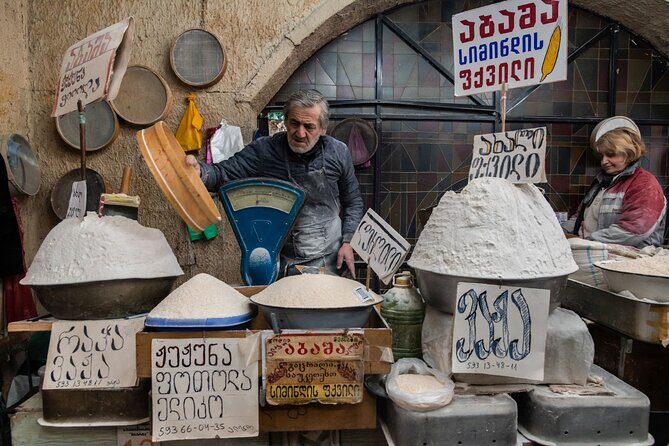
This tour is a good fit if:
- You’re in Tbilisi for a short time and want a fast, food-focused orientation
- You enjoy market energy but want someone to translate it for you
- You want a balanced day: savory bites, a sit-down meal, then wine
You might want to think twice if:
- You have nut allergies (the tour explicitly says it’s not recommended)
- You prefer totally unguided travel and don’t want a structured sequence
If you’re traveling with friends or a partner, the private group format can be especially nice. It keeps the day flexible inside the overall plan.
Should you book Half-Day Food Tour of Tbilisi Dezerter’s Bazaar?
I’d book it if you want to eat your way into Georgian culture without guessing. The biggest selling point is Paul—his market knowledge, his connections, and the way he keeps the day fun and organized. You get a thoughtful food mix (Ghobi, tonis lobiani, tkemali), a real lunch stop, and a wine tasting that helps tie flavors together.
If you can handle the allergy guidance and you’re comfortable doing a 10:00 am start, this is a smart use of half a day. It’s the kind of experience that leaves you with food memories you can actually order again later.
FAQ
What time does the tour start and where does it begin?
It starts at 10:00 am at the Shota Rustaveli Monument, located at 2 Mikheil Zandukeli St, Tbilisi, Georgia.
How long is the Half-Day Food Tour of Tbilisi Dezerter’s Bazaar?
The duration is approximately 5 hours 30 minutes.
Is this tour private?
Yes. It’s a private tour/activity, so only your group participates.
What language is the tour offered in?
The tour is offered in English.
Are nut allergies a concern for this tour?
It’s not recommended for travelers with nut allergies.
What is the cancellation policy?
You can cancel for a full refund up to 24 hours before the experience starts. If you cancel less than 24 hours before the start time, the amount paid is not refunded.