REVIEW · TBILISI
Mtskheta and Jvari UNESCO Private Tour
Book on Viator →Operated by Georgia Tour Factory · Bookable on Viator
Two UNESCO stops in one half-day plan. If you want big Georgian history without a long grind, this tour is a smart fit: you’ll hit Jvari Monastery for classic river-and-hill views, then move on to Mtskheta, an ancient capital where faith and legend shape what you see.
I like how this feels well-paced. You get a guided flow between sites, plus hotel pickup and drop-off, so you don’t burn time figuring out transport on your own. And I especially like that the key site admissions are listed as free on this experience, which makes the overall value clearer.
One consideration: this is a short tour, but it still involves driving and time on-site, and the experience notes it depends on good weather. If conditions are poor, the schedule may shift or you’ll get a refund—so keep a little flexibility in your day.
In This Review
- Key highlights worth your attention
- Why Jvari + Mtskheta is the right UNESCO combo from Tbilisi
- Jvari Monastery: the Cross name, the hilltop views, and the UNESCO story
- Mtskheta: Georgia’s ancient capital and why Svetitskhoveli draws pilgrims
- The drive and private transport that keep this day from feeling heavy
- How the guide experience makes these sites easier to understand
- Price and value: is $30.04 per person a good deal?
- What the timing means for your photos and your energy
- Who should book this private UNESCO tour
- Should you book the Mtskheta and Jvari UNESCO Private Tour?
- FAQ
- How long is the Mtskheta and Jvari UNESCO Private Tour?
- Is pickup included, and where does it work in Tbilisi?
- Is this a private tour?
- What language is the tour offered in?
- What’s included in the price?
- Are meals included?
- Do I need to pay for admission tickets?
- What happens if the weather is bad?
- Can I cancel and get a full refund?
Key highlights worth your attention
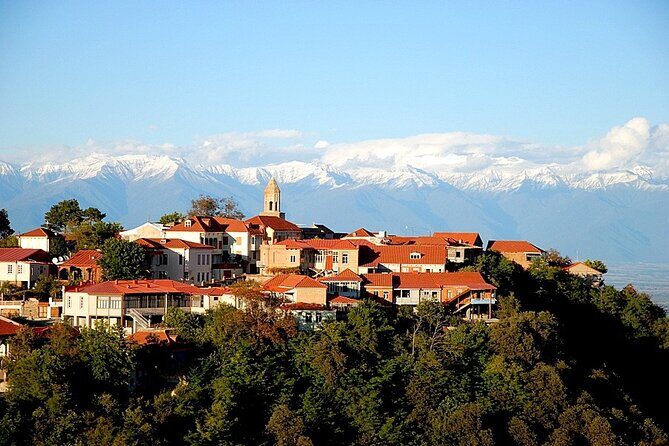
- Jvari Monastery’s UNESCO setting with a hilltop viewpoint over the Aragvi and Kura rivers
- Mtskheta as a living museum: over 2,500 years of continuous habitation
- Free entry at both stops (as listed), which helps your trip budget
- Hotel pickup and drop-off across Tbilisi so you start and end hassle-free
- English-speaking private guiding (including guides like George and Gogi)
Why Jvari + Mtskheta is the right UNESCO combo from Tbilisi

Tbilisi is busy. So it helps to have a plan that gives you a clean hit of heritage fast. This tour pairs two UNESCO sites that explain each other: Jvari shows the spiritual geography of the region, while Mtskheta shows the cultural and historical center where that spirituality took root.
The route is designed to keep things smooth. You’ll be picked up inside Tbilisi city limits and taken by an air-conditioned vehicle. Then you’ll spend a focused chunk of time at each place—enough to see the highlights, without turning your day into a marathon.
Also, the tour is private. That means you’re not squeezed into a crowd rhythm. If you’re traveling as a couple, as a small group, or even solo, you can generally ask questions and move at a comfortable pace.
Other Mtskheta tours we've reviewed in Tbilisi

Jvari Monastery: the Cross name, the hilltop views, and the UNESCO story
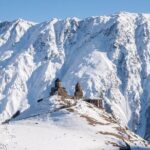
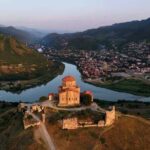
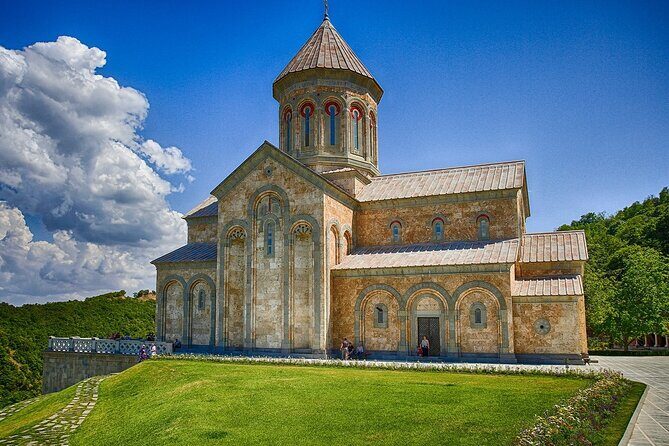
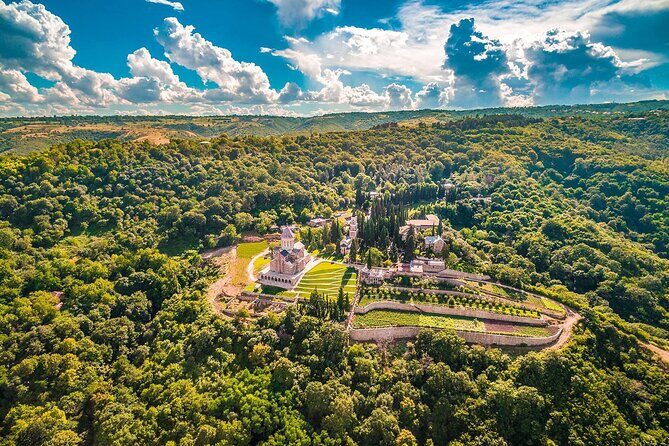
Your first stop is Jvari Monastery, tied to early Christian Georgia and perched high above the landscape. The site dates back to the 6th century AD, so it feels grounded in the long timeline of this region. And you don’t just visit a building—you’re there for the setting, too.
The monastery’s name, Jvari, means The Cross. During your time there, your guide shares the story tied to that name and the monastery’s significance. It’s also listed as a UNESCO World Heritage Site since 1994, so you’re looking at a place that has been recognized internationally for its cultural importance.
Plan for about 40 minutes at Jvari. That time is typically enough to:
- get your bearings on the hilltop,
- take in the sweeping view where the Aragvi and Kura rivers meet,
- and understand what you’re looking at before you move on.
What I’d pay attention to: the way the monastery sits above the rivers. When a site is built like that, the location is part of the message. Even if you’re not a “church architecture” person, the setting makes the visit easier to remember.
Possible drawback to keep in mind: because it’s on a hill, it can mean uneven ground and steps. If you have mobility issues, you’ll want to go slowly and plan for a bit of walking.
Mtskheta: Georgia’s ancient capital and why Svetitskhoveli draws pilgrims
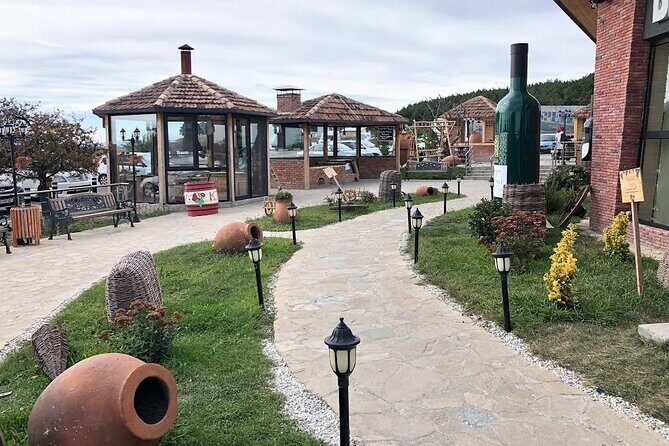
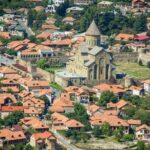
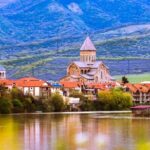
After Jvari, the tour heads to Mtskheta, the ancient capital of Georgia and another UNESCO World Heritage Site. This isn’t just a stop for photos. It’s described as a living city—meaning the history is layered into daily life, streets, and local businesses.
Mtskheta has been continuously inhabited for over 2,500 years. It also served as the capital of the early Kingdom of Iberia, which helps you understand why so many major monuments cluster here. One example mentioned on this tour is Bebris Castle, dating to the 1st century.
The big spiritual anchor in Mtskheta is Svetitskhoveli Cathedral. The tradition connected to this cathedral is powerful: the robe of Jesus was brought from Jerusalem to Georgia in the 1st century and then buried here. Whether you approach this as faith, folklore, or both, it explains why people treat this cathedral like more than a historic landmark.
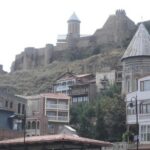
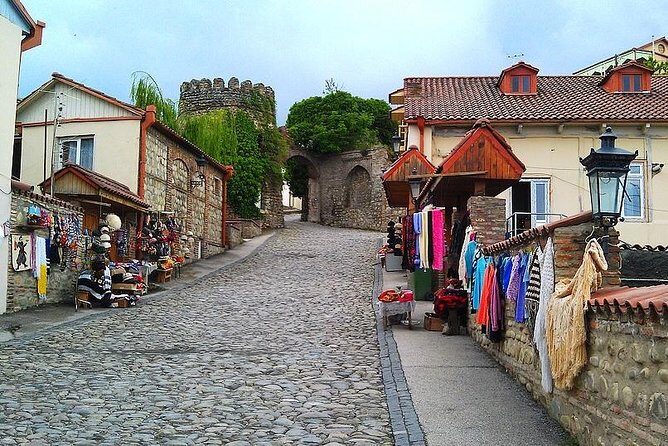
Your time at Mtskheta is about 1 hour. You’ll walk from the parking area toward the historic fortress, passing through narrow streets with souvenir shops, wine tasting spots, and Georgian sweets. That walk matters because it transitions you from “tour mode” into “city mode.” It’s the kind of casual browsing that often makes a UNESCO day feel human rather than scripted.
From there, you’ll visit the burial place of the robe of Jesus at Svetitskhoveli Cathedral. After the main visit, you’ll have additional time to explore the area and take photos.
Tip for getting the most out of your hour: don’t try to see everything. Pick one or two places to linger—cathedral viewpoints and street scenes tend to deliver the best payoff in the limited time you have.
The drive and private transport that keep this day from feeling heavy
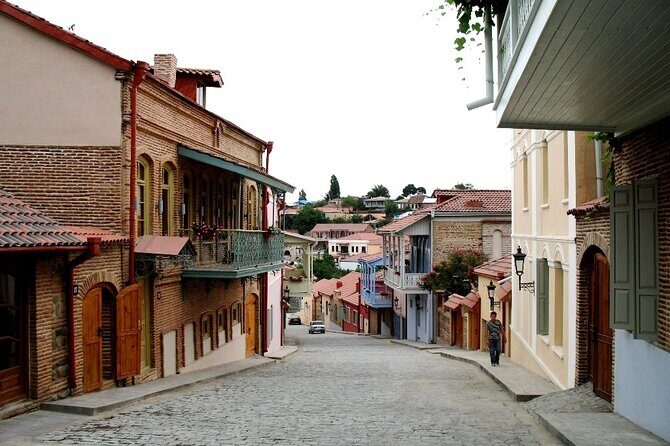
One reason people book this kind of outing is simple: they want UNESCO without logistics stress. This tour is built around that. You get hotel pick-up & drop-off and travel by a private, air-conditioned vehicle.
The pickup coverage is broad for Tbilisi: the provider offers pickup from all hotels, apartments, and any address within Tbilisi city limits. That can save you time and decision fatigue—especially if your hotel is not near major sights.
The private setup also changes the feel of the tour. It’s only your group, so:
- you’re not stuck waiting for strangers,
- you’re less likely to feel rushed,
- and your guide can tailor questions as the day unfolds.
That said, one note from experience feedback is that it can still be a long day in the car. This tour is listed at about 4 hours total, and you’ll be moving between two sites with some transit time. So it’s best as a half-day culture plan, not as a “do everything today” combo.
How the guide experience makes these sites easier to understand
This kind of tour works best when the guide connects the dots. The provided details highlight English-speaking guiding, and feedback points to specific guides such as George and Gogi for strong communication and clear explanations.
I like tours where the guide doesn’t just list facts, but helps you understand why a place matters. In this itinerary, that’s especially useful because both stops have layers:
- Jvari is tied to a story behind the name and the religious meaning of the site,
- Mtskheta’s identity blends ancient political history with major religious tradition,
- and you’re in a UNESCO context, where the “why” is part of the experience.
If you’re traveling solo, this private structure also helps. You can ask questions without feeling like you’re interrupting a group flow, and you can move at a relaxed pace.
And because the tour is short, the guide’s ability to be clear matters even more. When your time is limited, you want the explanations to land quickly.
Other private tours in Tbilisi






Price and value: is $30.04 per person a good deal?
At $30.04 per person for roughly 4 hours, this is positioned as solid value—especially because it includes several big cost-savers.
Here’s what you’re getting for that price:
- Hotel pickup and drop-off
- Private transportation in an air-conditioned vehicle
- A guided visit structure across two UNESCO sites
- A mobile ticket (as listed)
- English-speaking guiding
Admissions are listed as free at both stops, which is another plus for budget planning. The tour does not include meals, so you may want to handle snacks or lunch separately if you’ll be out for longer than expected.
Is the price low? It’s not a “throwaway” bargain either. It’s a sensible rate for a private, chauffeured half-day that targets two internationally recognized sites in one clean sequence. If you’d otherwise need taxis, tickets, and time wasted coordinating transport, this arrangement often ends up feeling cheaper in real life.
What the timing means for your photos and your energy
This tour is compact by design. About 40 minutes at Jvari, then about 1 hour in Mtskheta, with transit and guiding time woven in.
That timing is great for:
- first-time visitors to Georgia’s UNESCO highlights,
- travelers who want a structured day without overplanning,
- and photographers who want variety—river view first, cathedral and old-city streets second.
It’s also why you should treat the “extra” time at Mtskheta as important. That’s when you can:
- slow down for street scenes,
- try local sweets or browse souvenirs if that’s your thing,
- and step back from constant walking to actually enjoy the area.
The other practical point: the tour requires good weather. So if you’re hoping for clear river views from Jvari, aim for flexibility in your schedule.
Who should book this private UNESCO tour
This experience is a strong match if you:
- want a guided UNESCO day without handling transport,
- like clear, story-focused explanations from an English-speaking guide,
- and prefer a half-day outing that doesn’t eat your whole calendar.
It’s also a good option if you’re staying within central Tbilisi and you want a fast way to reach the ancient capital region without figuring things out.
If you hate car time, you might reconsider. One note in the feedback points out that even though it’s short, it can still feel like a long day in the vehicle. Keep that in mind when stacking activities for the same day.
Should you book the Mtskheta and Jvari UNESCO Private Tour?
I’d book it if you want a simple, private UNESCO plan that starts with hotel pickup, ends back at your door, and gives you two UNESCO stops that connect well together. The value looks good on paper and in practice because transport and site admissions are handled for you, and the guide attention seems to be a standout.
I would think twice if weather is unpredictable during your dates or if you need lots of mobility support for hilltop terrain. In those cases, it’s not that the tour is wrong—it’s that the weather note and the walking on hills matter.
If your goal is to get meaningful cultural context around Jvari and Mtskheta without a stressful day, this is a tidy way to do it.
FAQ
How long is the Mtskheta and Jvari UNESCO Private Tour?
The duration is listed as about 4 hours.
Is pickup included, and where does it work in Tbilisi?
Yes. Pickup is offered from all hotels, apartments, and any address within Tbilisi city limits.
Is this a private tour?
Yes. It’s private, and only your group will participate.
What language is the tour offered in?
The tour is offered in English.
What’s included in the price?
Hotel pick-up & drop-off, private transportation, and air-conditioned vehicle service are included.
Are meals included?
No. Meals are not included.
Do I need to pay for admission tickets?
The tour lists admission tickets as free for both stops.
What happens if the weather is bad?
The experience requires good weather. If it’s canceled due to poor weather, you’ll be offered a different date or a full refund.
Can I cancel and get a full refund?
Yes. You can cancel up to 24 hours in advance for a full refund, with the cutoff based on local time.