REVIEW · TBILISI
Day Tour to Mtskheta, Gori (Stalin museum) and Uplistsikhe
Book on Viator →Operated by Tripify · Bookable on Viator
Four very different places, one easy car ride. I love how this tour stitches together UNESCO Mtskheta, Gori’s 20th-century reality at the Stalin Museum, and then lands you in Uplistsikhe’s rock-cut world. I also like that you get pickup anywhere in Tbilisi with an air-conditioned vehicle, so you spend the day seeing sites instead of wrestling buses. One watch-out: entrance tickets are not included for most stops, so you’ll want to budget extra once you’re out there.
The pace is built for a full day (about 7 to 8 hours), with time at each major site so you can actually read, walk, and take photos. If you’re trying to understand Georgia beyond Tbilisi’s city center, this is a strong, high-impact day.
In This Review
- Key things that make this tour worth your time
- Price and logistics: what $95 really buys
- Door-to-door pickup in Tbilisi: less stress, more sightseeing
- Stop 1: Mtskheta and the UNESCO story of early Georgia
- Gori and the Stalin Museum: what you’ll actually see
- Stop 3: Gori Fortress on the hill—power, repairs, and changing roles
- Stop 4: Uplistsikhe cave town—streets, gates, sewers, and the secret tunnel
- Timing and pacing: how to survive 7 to 8 hours well
- Who should book this tour (and who might want a different day)
- Should you book this day trip from Tbilisi?
- FAQ
- What’s included in the tour price?
- Do I get pickup in Tbilisi?
- How long is the tour?
- Is the tour in English?
- Is there an admission fee for Mtskheta?
- Is this a private tour or a shared group?
- Are service animals allowed?
Key things that make this tour worth your time
- Pickup where you are: any hotel (or even the airport) in Tbilisi, straight to the first stop
- A UNESCO stop early: Mtskheta gets a solid 2 hours and is free to enter
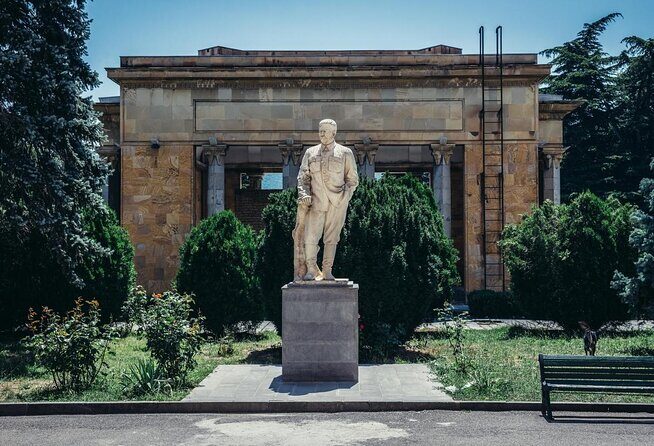
- Stalin Museum in Gori: a focused, hall-by-hall look with the memorial house and exhibition building
- Gori Fortress history in plain terms: a hilltop strategic fort with repairs tied to King Erekle II
- Uplistsikhe as an open-air museum: rock-hewn streets, gates, and a secret tunnel to the river Mtkvari
- Private group day: only your group rides together in the same vehicle
Price and logistics: what $95 really buys
At $95 per person for a day trip, you’re paying mainly for convenience and time. You get private transportation in an air-conditioned vehicle and door-to-door pickup anywhere in Tbilisi. The tour also runs in English, and you’ll receive a mobile ticket, which helps things move quickly once you arrive.
What’s not included matters: only Mtskheta’s admission is free. The other stops explicitly don’t include entry fees, so your real total cost will depend on those on-site tickets. If you’re traveling as a group, there’s also group discount availability, so it’s worth checking whether your total per person drops if you’re part of a larger booking.
Duration is listed as 7 to 8 hours, which is realistic for four distinct locations outside Tbilisi plus time to walk around and get photos.
Other Mtskheta tours we've reviewed in Tbilisi

Door-to-door pickup in Tbilisi: less stress, more sightseeing
This is one of the strongest practical perks. You’re told to share your location, and the operator will pick you up from basically anywhere in Tbilisi, including hotels and airports. That means you don’t need to figure out where to meet a bus, buy a separate local ticket, or worry about timing your own connections.
Because it’s a private tour/activity (only your group), you also avoid the stop-and-start feeling that can happen on larger group days. Your driver and vehicle become your moving base for the whole route.
A small planning note: since the stop fees aren’t included (except Mtskheta), I like to keep a bit of cash or card space ready for on-site admission and any extras at each place.
Stop 1: Mtskheta and the UNESCO story of early Georgia
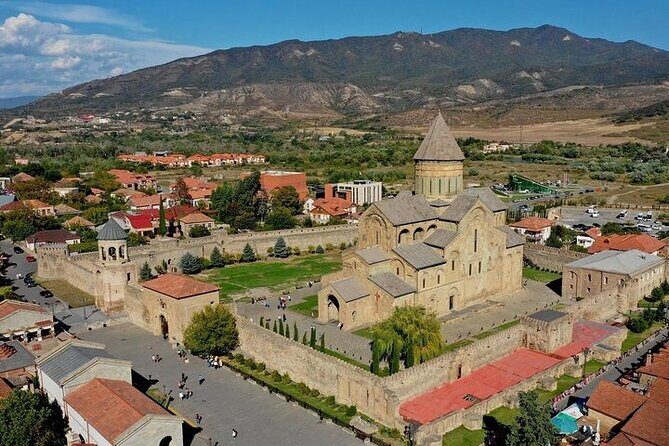
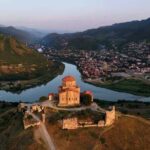
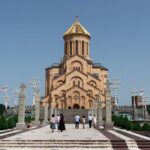
You start in Mtskheta, one of the oldest cities in Georgia. It’s officially UNESCO-recognized because the city carries deep layers of early Georgian political and religious life.
Here’s what makes this first stop click: Mtskheta wasn’t just important—it was foundational. The city traces back to early peoples and then served as the capital of the early Georgian Kingdom of Iberia from the 3rd century BC through the 5th century AD. Even after that kingdom period, Mtskheta kept a major role as the place tied to coronations and royal burials for much of Georgia’s history.
You’ll have about 2 hours, and admission is listed as free. That free entry is a real value boost early in the day. It also helps you avoid the common frustration of spending the first part of a day negotiating money and tickets while everyone is still awake and organized.
What to do with your time in Mtskheta
- Use the two hours to slow down and connect the dates and roles: capital, coronations, burials
- Take a few anchor photos early, because the later stops get more physically demanding (fortress and cave sites)
Gori and the Stalin Museum: what you’ll actually see
From Mtskheta, you move to Gori, a city with deep roots reaching back to the early Bronze Age. While you’re there, you can stop to take pictures at the house where Joseph Stalin was born (a quick photo opportunity is part of the flow).
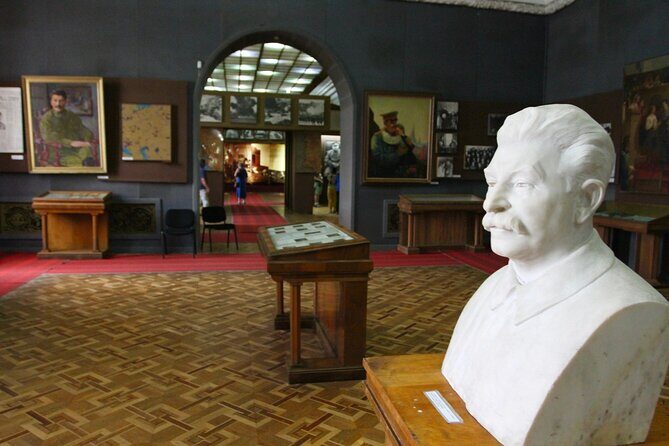
Then comes the main event: the Stalin Museum complex, opened in 1957, near the birth house. This complex is made up of:
- the memorial house
- Stalin’s carriage
- a two-storey exhibition building
What I like about this museum experience is its structure. The exhibits are divided into six halls, arranged roughly in chronological order. That makes it easier to follow the arc instead of getting lost in a pile of artifacts.
The displays include many items that are described as being owned by Stalin or connected to him, such as office furniture and personal effects. There’s also a documentary-style approach—photographs, paintings, and newspaper articles. The collection doesn’t just say history happened; it tries to show how it was presented and remembered.
The exhibition ends with one of twelve copies of Stalin’s death mask, taken shortly after his death. That detail is memorable because it closes the narrative on a specific, physical object rather than leaving the story in mid-air.
A realistic consideration
This museum is historically heavy. If you want a full day that balances mood, pair it with breaks in your pacing and let the other stops pull you toward different kinds of meaning—especially Uplistsikhe, which is all about everyday space carved from rock.
Stop 3: Gori Fortress on the hill—power, repairs, and changing roles
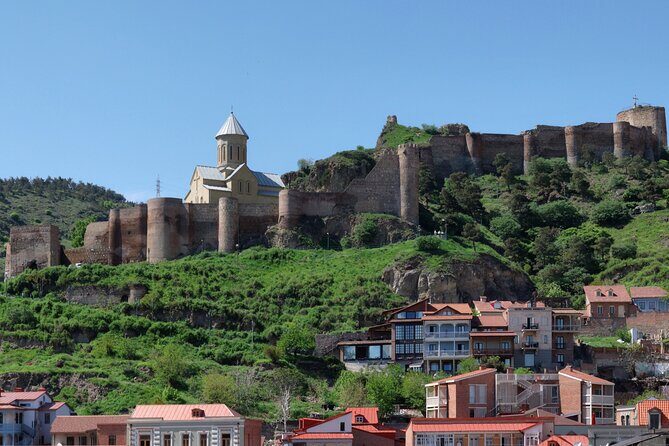
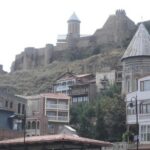
After the museum, the tour moves to Gori Fortress, situated in the center of Gori on a rocky hill. The descriptions highlight that archaeological traces on the northern slope point to fortress life in the last centuries of the I millennium BC.
So you’re not just looking at one era—you’re seeing a layered site. The fortress is first mentioned in sources in the 13th century, and it mattered strategically because controlling it meant domination over all of Shida Kartli.
One concrete detail I found especially useful: the fortress’s current appearance is tied to 1774, when King Erekle II repaired it after thorough work. Later, after the unification of Kartli-Kakheti with Russia, the fortress still had military function: the Russian Army Grenadier Battalion was stationed there in the early years. Over time, it lost that strategic role.
You’ll have about 2 hours here, but admission is not included, so plan for that on-site ticket.
How to get the most out of fortress time
This is the kind of place where a slow walk beats a quick run. Look for vantage points and think about why a hilltop matters when you’re remembering the strategic story—fortresses like this weren’t built to be scenic; they were built to control routes and territory.
Other Uplistsikhe cave tours we've reviewed in Tbilisi


Stop 4: Uplistsikhe cave town—streets, gates, sewers, and the secret tunnel
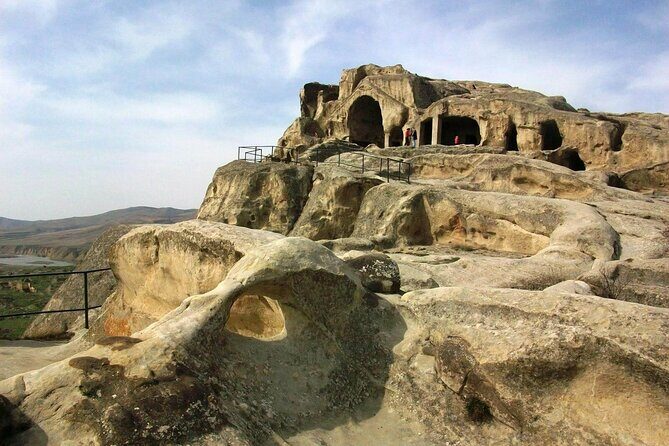
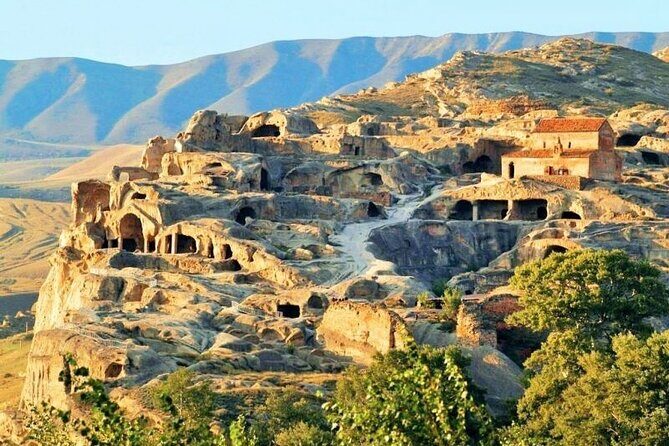
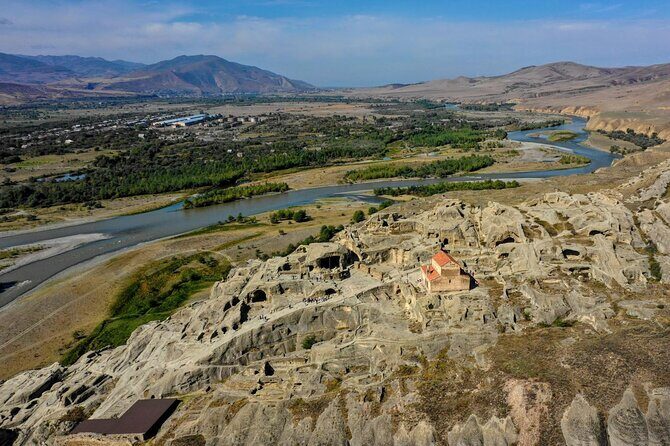
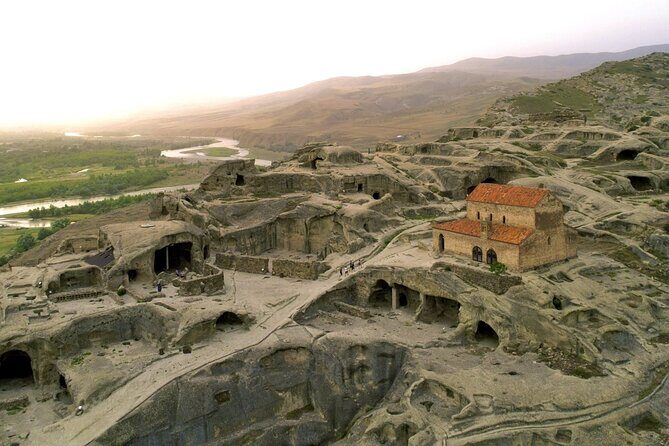
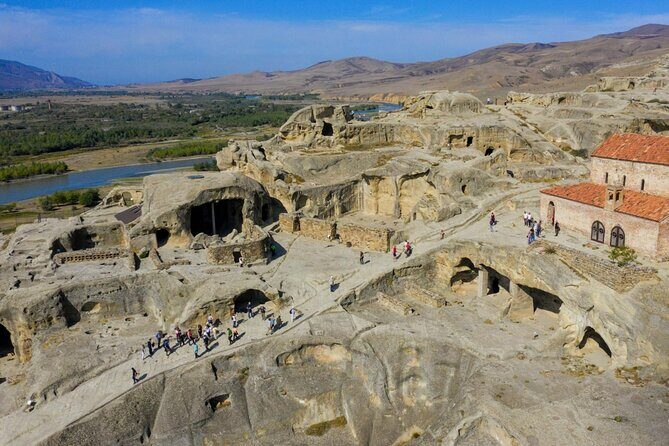
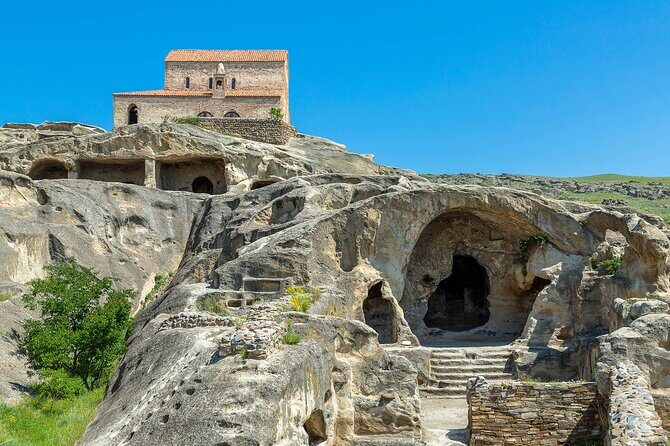
Uplistsikhe is the day’s most physically distinctive stop. It’s described as a rock-hewn town and one of the oldest settlements in the Caucasus.
It also works as an open-air museum today, meaning you’re not just staring at one building behind glass. You’re walking through what used to be a real settlement space.
What you can expect to see includes:
- streets and squares
- a sewer system
- four gates
- a secret tunnel that leads to the river Mtkvari
- a fence and other built features
The description also includes a legend: Uplistsikhe was built by slaves who worked with a pickaxe where one half was covered with iron and the other with gold. The story goes that after the hard work wore down the iron portion, the slave gained freedom and precious metal as a reward. The tour explanation adds that this legend connects to how people understand Georgia’s mining traditions and even ties into the wider Golden Fleece myth.
I like that Uplistsikhe gives you a break from political museums. Instead of a curated indoor narrative, you’re reading history through the geometry of a carved city.
Practical note for your day
Uplistsikhe and Gori Fortress are the kind of places where your shoes and your energy matter. This isn’t a sit-down-only outing, so if you want the full experience, pace yourself across the four stops. And since only Mtskheta’s entry is free, you’ll likely spend time paying tickets at multiple sites later in the route.
Timing and pacing: how to survive 7 to 8 hours well
A 7 to 8 hour schedule means you’ll be moving on a schedule, but it’s still built around 2-hour windows at each main stop (Mtskheta, Stalin Museum/Gori area, Gori Fortress, and Uplistsikhe).
That timing has a benefit: you’re not rushing every site for 30 minutes. You can read, look around, and get the photos you came for.
Still, be smart about energy. This kind of day can feel long once you reach the fortress and cave town, especially if you’re the type who likes to linger at details. My advice is simple: decide what matters most to you at each stop ahead of time. If Stalin’s era is your priority, give extra attention at the six halls. If you care most about ancient Georgia’s built environment, spend extra time inside the Uplistsikhe walkways and gates.
Also: the tour includes food suggestions at the end of the day. That’s useful because once you’re back in Tbilisi, you’ll be tired and hungry. Let your driver’s restaurant pointers do the work for you.
Who should book this tour (and who might want a different day)
This tour fits best if you want a single day that covers very different eras:
- ancient and medieval Georgian importance at Mtskheta
- a heavy 20th-century chapter at the Stalin Museum in Gori
- strategic hilltop context at Gori Fortress
- and a more hands-on, physical history at Uplistsikhe
You’ll probably enjoy it most if you:
- like history that comes from objects and places, not just dates on a page
- want a clear “route” outside Tbilisi without organizing transport yourself
- prefer a private setup, where the day can match your group’s rhythm
If you’re the type who dislikes political history, you might still find the museum worthwhile for its structure and artifacts, but it’s worth mentally preparing for the tone.
Should you book this day trip from Tbilisi?
If you want a meaningful, efficient day outside Tbilisi and you’re okay paying on-site fees at most stops, this is a strong pick. The biggest selling points are the door-to-door pickup, the mix of eras (ancient capital to Stalin-era to rock-hewn living space), and the fact that you’re not stuck planning transport across multiple locations.
My call: book it if you’re excited by variety—UNESCO heritage, museum storytelling in Gori, fortress history on a hill, and walking an open-air cave town at Uplistsikhe. If budget planning for multiple admission fees feels annoying, or if you prefer softer, lighter stops, then you may want to choose a more single-theme day.
FAQ
What’s included in the tour price?
The tour includes private transportation in an air-conditioned vehicle. Mtskheta’s admission is free, but all other fees and taxes are not included.
Do I get pickup in Tbilisi?
Yes. Pickup is offered from any place in Tbilisi, including hotels and airports. You’ll share your location, and the driver comes to you.
How long is the tour?
It runs for about 7 to 8 hours total, with around 2 hours at each main stop.
Is the tour in English?
Yes. The tour is offered in English, and confirmation is received at booking.
Is there an admission fee for Mtskheta?
Mtskheta’s admission ticket is free for this stop. The other sites listed don’t include admission fees in the tour price.
Is this a private tour or a shared group?
This is a private tour/activity. Only your group participates.
Are service animals allowed?
Yes. Service animals are allowed, and the tour notes that most travelers can participate.