REVIEW · TBILISI
Tbilisi & Mtskheta Tour
Book on Viator →Operated by Choose Georgia · Bookable on Viator
Cathedrals, puppets, and river views in one run. This Tbilisi and Mtskheta tour is interesting because it stitches together major sacred stops and unexpected city details in a tight time window. You start at the Holy Trinity Cathedral, then move through the Marionette Theater, the Sulphur Waterfall area, and the Peace Bridge before heading toward Mtskheta’s most famous churches.
I love how efficiently it strings sights together without turning your day into a sprint. I also like the mix: from the huge Orthodox Holy Trinity Cathedral to the smaller, older Anchiskhati Basilica, then from a modern bridge break to a hilltop church with views over the Aragvi and Mtkvari rivers.
One thing to consider: most stops are only 15 to 40 minutes, so it’s not the best fit if you want long, slow wandering at every church. Bring comfortable shoes and accept a quick “look, learn, move on” rhythm.
In This Review
- Key things to know before you go
- Why this Tbilisi-to-Mtskheta route works in 4–6 hours
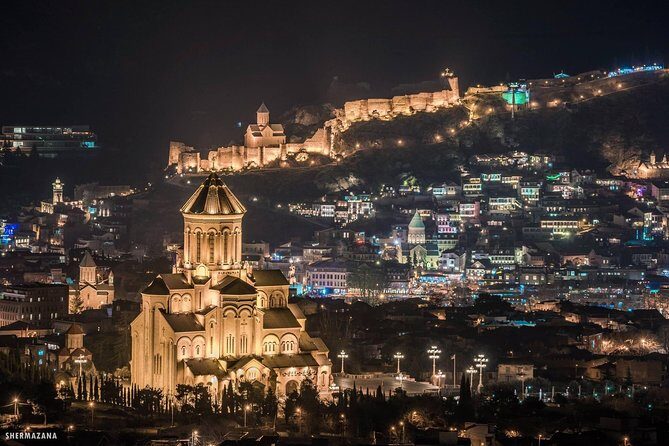
- Stop 1: Tbilisi Holy Trinity Cathedral, where scale does the talking
- Stop 2: Rezo Gabriadze Marionette Theater, puppets with meaning
- Stop 3: Dzveli Tbilisi Sulphur Waterfall and the bath-house district vibe
- Stop 4: The Bridge of Peace for a modern pause in the city center
- Stop 5: Anchiskhati Basilica, old stones and faded frescoes
- Stop 6: Jvari Church on the hilltop with Aragvi and Mtkvari views
- Stop 7: Svetitskhoveli Cathedral in Mtskheta, the robe of Christ
- Timing, what to wear, and how much you’ll actually see
- Pickup, English guidance, and the value math of $74.88
- Who this tour suits best
- A quick word on the guide style
- Should you book this Tbilisi & Mtskheta tour?
- FAQ
- What time does the tour start?
- Is hotel pickup included?
- How long is the tour?
- What language is the tour offered in?
- Are tickets included for the stops?
- Can I cancel for a full refund?
Key things to know before you go
- Hotel pickup gets you moving fast from your own address in Tbilisi
- Free admission tickets are listed for every stop on the route
- Old Tbilisi meets modern Tbilisi at the Sulphur Waterfall and Bridge of Peace
- A hilltop church view is built in at Jvari, looking over the confluence of Aragvi and Mtkvari
- You’ll see a major Mtskheta cathedral at Svetitskhoveli, tied to the robe of Christ
- You get a private group experience with your own group only, in English
Why this Tbilisi-to-Mtskheta route works in 4–6 hours
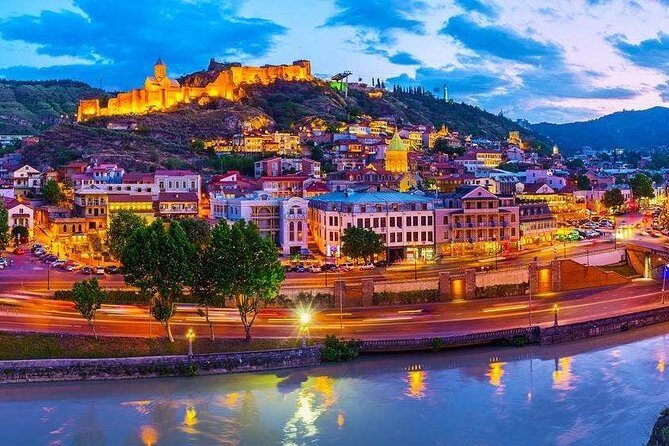
This is the kind of day plan that helps you get your bearings fast. You cover a lot of ground in a single block of time, and the stops are chosen to show you different sides of the region: big Orthodox architecture, older church stones, a cultural puppet institution, and scenic river overlooks.
You’ll also appreciate the practical setup. The tour is offered in English, and pickup is available so you’re not trying to coordinate taxis or public transit while your time is ticking. With a start time of 10:00 am, you get a full morning-and-early-afternoon feel rather than scrambling for late-day light.
The route is mostly timed around short visits. That can be a drawback if you’re the type who wants to sit and read every inscription. But if you like a guided “greatest hits” structure, this format is actually relaxing: you just follow the plan, ask questions, and enjoy what you can.
Other Mtskheta tours we've reviewed in Tbilisi

Stop 1: Tbilisi Holy Trinity Cathedral, where scale does the talking
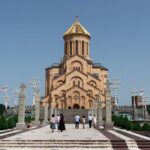
Your day begins at the Holy Trinity Cathedral, one of the largest Orthodox cathedrals in the world. Even with a short visit, the scale is the point. You get that immediate feeling of Georgia’s Orthodox presence, not as a background detail, but as a central character.
The cathedral stop is scheduled for about 20 minutes, and the admission ticket is listed as free. In practice, that means you’re likely to get enough time to step inside (if open for visitors when you arrive), look around, and take a few photos before moving on.
Why it’s worth your first stop: Starting with the biggest landmark helps your brain lock onto what matters. Once you see the scale here, the older churches later in the day feel more intimate, and the contrast makes the whole route click.
Stop 2: Rezo Gabriadze Marionette Theater, puppets with meaning
Next up is the Rezo Gabriadze Marionette Theater. The theater may be modest in size, but it’s described as one of the world’s preeminent cultural institutions, with mature puppet performances that carry depth and meaning.
You’ll spend about 20 minutes here, and again the admission ticket is listed as free. The key idea is that this isn’t just a quirky stop for photos. The theater is known for performances that get real critical respect and international recognition.
What you’ll likely enjoy most: If you like culture that’s not strictly “museum-style,” this is a nice switch. The puppet format can feel playful on the surface, but the theater’s reputation points toward thoughtful storytelling rather than childish entertainment.
Possible consideration: Because the scheduled time is short, you’ll want to have the expectation that this is a quick cultural pause, not a full evening at the theater.
Stop 3: Dzveli Tbilisi Sulphur Waterfall and the bath-house district vibe
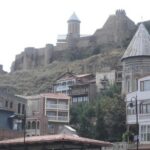
After the theater, you move to Dzveli Tbilisi Sulphur Waterfall. The best way to think about this stop is as a sensory street scene: the waterfall is in the district associated with the sulphur bath houses, and the route passes by the only mosque in Tbilisi.
This stop is scheduled for about 20 minutes, with an admission ticket listed as free. That fits the reality of the site: you’re not planning a long architectural study. You’re dropping into an active part of the city’s everyday geography, where the water-and-bath-house association is part of what makes Tbilisi feel like Tbilisi.
Why it’s valuable in a tour like this: It’s the “local texture” break. You’ve had sweeping religious landmarks and a cultural theater stop; now you get something more physical and atmospheric.
Tip that helps: If you want photos, use the short time well. Stand in one place for a minute to watch how people move around the area, then pick your angle.
Stop 4: The Bridge of Peace for a modern pause in the city center
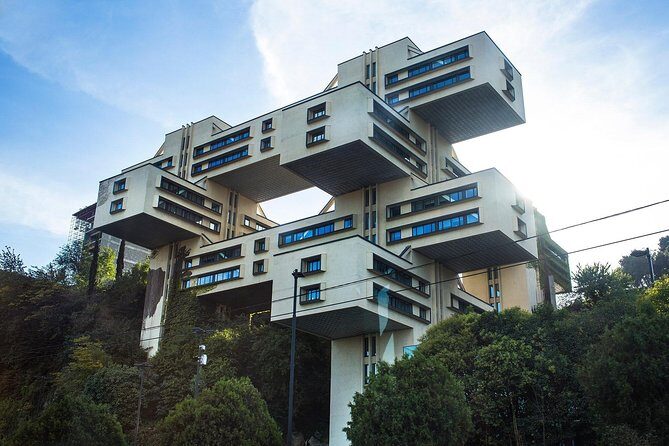
The Bridge of Peace is next, a modern bridge in the city center. It’s scheduled for about 15 minutes, with admission listed as free.
This stop works like a palate cleanser. You’re moving from historical and spiritual sites into a modern city moment, which makes your overall day feel balanced instead of repetitive.
Why I like this kind of break: Even when your feet are tired, bridges and viewpoints give you a chance to recharge visually. They also make it easier to reset your sense of direction before the older churches.


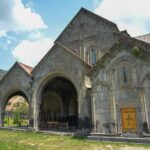
Stop 5: Anchiskhati Basilica, old stones and faded frescoes
Anchiskhati Basilica is the oldest church of Tbilisi, and it’s described as truly spiritual, with ancient stones and faded frescos. You’ll spend about 15 minutes here, and the admission ticket is listed as free.
With a short timeframe, the goal is not to study every detail. The goal is to feel what makes a place “old” in a physical way. Older churches often have a quieter energy than newer ones, and the mention of faded frescos hints at that lived-in, time-worn atmosphere.
The payoff: By now, you’ve seen the biggest cathedral (Holy Trinity), the cultural stop, and the city textures. Anchiskhati gives you the “ground level” of history: compact, old, and focused.
Practical consideration: Because you’re moving quickly, keep your expectations realistic. This is a short visit that sets the tone, not a long sit-down.
Stop 6: Jvari Church on the hilltop with Aragvi and Mtkvari views
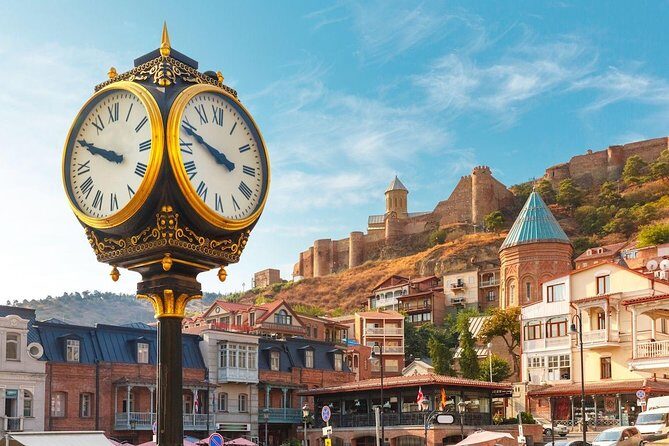
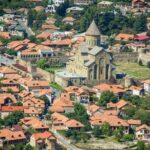
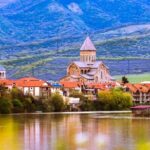
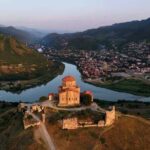
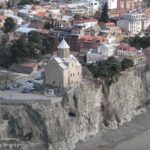
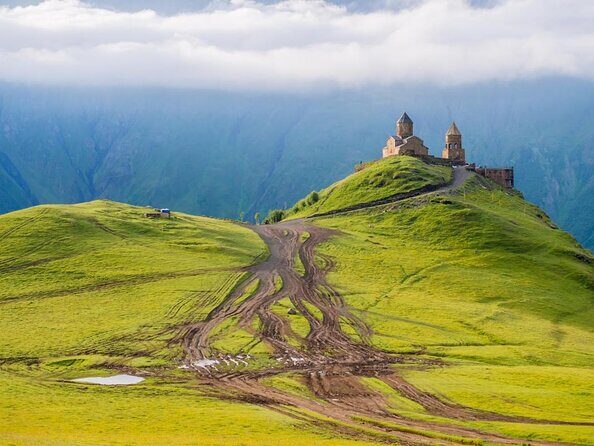
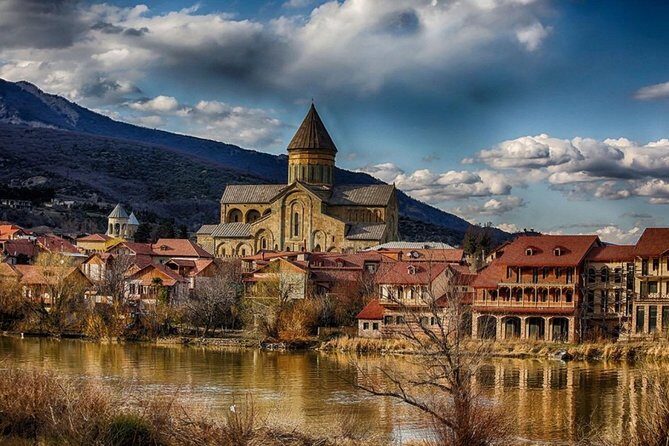
Then you go to Jvari Church, built on a hilltop and described as an architectural masterpiece of the early Medieval Period. The views are part of the package: you’ll enjoy looking at the confluence of the Aragvi and Mtkvari rivers.
This stop is scheduled for about 30 minutes, with admission listed as free. That extra time compared with the city stops matters. You need a bit more room to take photos, look around, and actually enjoy the view without feeling rushed.
Why this stop anchors the whole day: When your itinerary includes both city sites and religious architecture, a hilltop viewpoint helps you understand the geography. The rivers give context to why so much is placed where it is.
If the weather is clear: Plan to spend a few minutes just looking. Views like this are the kind you remember later, even if the rest of the day fades.
Stop 7: Svetitskhoveli Cathedral in Mtskheta, the robe of Christ
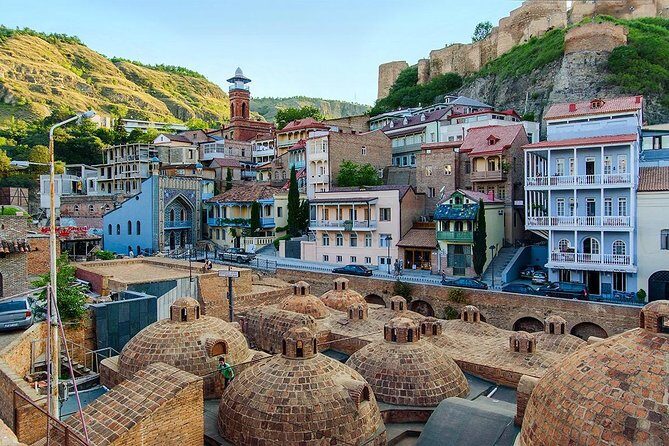
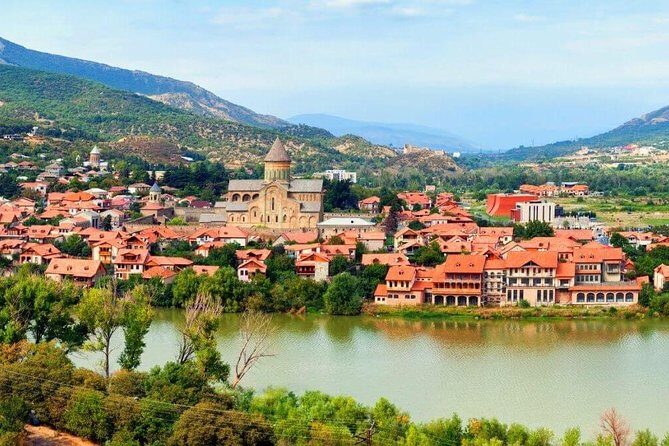
Your final big church stop is Svetitskhoveli Cathedral, the main cathedral of Mtskheta. It’s also described as a sacred place where the robe of Christ is being kept.
You’ll spend about 40 minutes here, and admission is listed as free. This is the longest stop on the route, which makes sense. When a site is tied to something so central to Christian tradition, you usually want a little more time to absorb the setting.
What makes it meaningful: This isn’t just an architectural stop. It’s framed as sacred and linked to a specific religious relic. Even if you’re not traveling for religious reasons, that kind of context helps you read the space differently.
How to get the most from the time: Use the first part of your visit to orient yourself: where you are, what’s around you, and what feels most central. Then slow down for photos and a second look.
Timing, what to wear, and how much you’ll actually see
The tour runs about 4 to 6 hours in total. Inside that window, the stops range from 15 minutes to 40 minutes. That means you’ll see the highlights, but you won’t do deep “every chapel” time.
So here’s my practical advice: treat this as a guided tour for orientation and context, not a museum crawl. Wear shoes you can walk in comfortably. Bring a light layer if the day feels cool in the morning.
Also, keep your phone charged. This day format can easily create lots of photo moments: Holy Trinity Cathedral scale, the old-stone texture at Anchiskhati Basilica, and then the hilltop rivers at Jvari.
If you’re the type who hates feeling rushed, you might prefer a slower church-focused tour. But if you want to tick off a high-value set of sights and still feel like you experienced the variety of Georgia’s culture and scenery, this schedule can feel just right.
Pickup, English guidance, and the value math of $74.88
The price is $74.88 per person, and for that you get a guided, structured day with pickup offered. The tour also lists a mobile ticket, which usually means less hassle with paper confirmations.
What makes the value strong here is the combination of things that reduce your own costs and coordination:
- Pickup offered means you start with less friction
- English guidance helps you understand what you’re seeing, not just look at it
- Free admission tickets listed for every stop reduce the “hidden costs” feeling
- Private group only means you’re not squeezed into someone else’s pace
- Group discounts may help if you’re traveling with more than one person
Is it cheap? No, not “random taxi day” cheap. But it is a smart spend if you want the main sights covered in one block, with guided context and transport already handled.
If you’re already in Tbilisi and planning a half-day with multiple long taxi rides, this kind of package often feels fair fast.
Who this tour suits best
This is a great fit if you want a clear route and you don’t want to spend your day planning between Tbilisi and Mtskheta. It’s also a good match if you like religious architecture but also appreciate a cultural stop like the Marionette Theater and a city texture stop like the Sulphur Waterfall.
It can work well for most people, since the tour states that most travelers can participate. It’s especially helpful if you’d rather follow a plan with a guide than navigate transfers and timing on your own.
One note: because visits are time-limited, people who love slow travel might find the pace slightly sharp. That said, the schedule is balanced enough that even quick stops can feel satisfying.
A quick word on the guide style
A name that shows up in past experiences with this operator is Anna. If you get her, expect a calm, thorough, relaxed style with explanations that answer lots of questions. The humor seems to land well too, which matters when you’re moving between sites and you want the day to feel human rather than robotic.
Even if your guide is someone else, the tour’s promise is the same: English commentary and a smooth, guided flow between the key stops.
Should you book this Tbilisi & Mtskheta tour?
Book it if you want high-impact sightseeing with minimal planning. You’ll get a solid sweep of sacred Tbilisi and Mtskheta highlights, plus a couple of “left-field” moments like the Marionette Theater and the Sulphur Waterfall area.
Skip it if you know you’ll be frustrated by short stop times and you want to linger for long periods at each church. This is built for coverage and context, not for marathon wandering.
If you’re doing Tbilisi and want Mtskheta too, this tour is a practical way to get both without turning your trip into a logistics project.
FAQ
What time does the tour start?
The meeting start time is 10:00 am.
Is hotel pickup included?
Yes. Your guide and driver will meet you at your hotel for sightseeing.
How long is the tour?
The duration is approximately 4 to 6 hours.
What language is the tour offered in?
The tour is offered in English.
Are tickets included for the stops?
Admission tickets are listed as free for the listed stops.
Can I cancel for a full refund?
Yes. You can cancel up to 24 hours in advance of the experience for a full refund.