REVIEW · TBILISI
3 days tour package-Short break holiday in Georgia
Book on Viator →Operated by Budget Friendly Tours FZE LLC · Bookable on Viator
Tbilisi in three days is a fast hit. This short break package pairs a guided Tbilisi walking tour with a full day into the Caucasus, then finishes at UNESCO sites in Mtskheta. I really like the way it keeps you moving without wasting time, plus the friendly on-the-ground help at the airport—Mr. Soso and Ms. Makuna are named in the recent experience notes, and that welcome can set the tone for the whole trip. The only real drawback is the schedule can feel full, with early starts on the mountain day and a day of driving that eats up daylight.
Two things I’d highlight right away: the sights are chosen for easy “wow” moments—like the Bridge of Peace lighting up before sunset—and the plan is structured around your flight times, including the option to join the walking tour on day one or day three. I also like that the tour is priced as a budget-friendly bundle with guide service, transportation, and airport transfers. Just keep in mind that food and drink aren’t included, and you’ll still need to arrange your own lodging in Tbilisi.
In This Review
- Quick take: what makes this 3-day Georgia plan work
- Entering Georgia with an airport handoff that doesn’t feel stressful
- Tbilisi at 6 PM: a walking tour that hits the big icons and the quirky stuff
- Rustaveli Avenue and Liberty Square: the straight-line introduction
- Rezo Gabriadze clock tower: the angel-with-a-hammer moment
- Bridge of Peace and Rike Park: modern Tbilisi with lights and space
- Old Town Tbilisi: Metekhi, Abanotubani baths, and the sulfur-bath pick-me-up
- Kartlis Deda and the final Old Town streets
- Day 2: the Caucasus day trip that turns Tbilisi into a mountain story
- Zhinvali Reservoir and Ananuri: water, fortress walls, and wide views
- Lunch at Hotel-Restaurant Kakhaberi: where khinkali does the heavy lifting
- Panorama Gudauri and a possible Friendship Monument detour
- Stepantsminda and Gergeti Trinity Church: the viewpoint that makes the long day worth it
- Return timing: back to Tbilisi late, not late-late
- Day 3 UNESCO in Mtskheta: Jvari Monastery to Svetitskhoveli Cathedral
- Jvari Monastery: the Monastery of the Cross with the river meeting view
- Svetitskhoveli Cathedral: where a church story mixes with Georgia’s identity
- Free time in Mtskheta: wine tasting and simple choices
- Price and value: what $100 covers, and what you should budget
- Group size and real-world logistics: why timing matters here
- Who this trip suits best (and who should skip it)
- Should you book this short break holiday in Georgia?
- FAQ
- FAQ
- Where do you meet at the airport?
- Do I get taken from the airport to my hotel in Tbilisi?
- What time is the Tbilisi walking tour?
- Can I join the walking tour on a different day?
- When does the mountain excursion start, and where do we meet?
- Which UNESCO sites are visited on day three?
- Is wine tasting included?
- Is hotel pickup included?
- Is food included in the price?
- Do I need extra money for Gergeti?
Quick take: what makes this 3-day Georgia plan work
- Airport meet and transfer: You’re met at Tbilisi or Kutaisi airport (red scarves), then driven to your Tbilisi hotel.
- Flexible city-walk timing: The evening Tbilisi walking tour runs at 6 PM, and you can join it the same day or on day three based on flights.
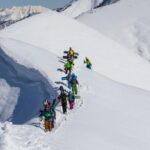
- A real mountain day: Zhinvali Reservoir, Ananuri, Gudauri/Panoramas, Stepantsminda, and the Gergeti Trinity Church viewpoint.
- UNESCO on day three: Jvari Monastery (Monastery of the Cross) plus Svetitskhoveli in Mtskheta.
- Value-focused inclusions: Guide service, transportation service, airport transfers, and wine tastings.
- Group cap of 50: Big enough to feel social, small enough to still move efficiently.
Entering Georgia with an airport handoff that doesn’t feel stressful
The trip starts with something simple but important: someone is there when you land. You’ll meet at Tbilisi or Kutaisi International Airport, in front of the information center, and the guide team uses red scarves so you don’t have to play guessing games in the terminal.
From there, you’re taken to your accommodation in Tbilisi. You also get a mobile ticket, which is handy if you’re juggling multiple stops and want everything in one place. This is the kind of setup that lets you start sightseeing the same day instead of spending your first day in transit mode.
Other multi-day Georgia tours we've reviewed in Tbilisi

Tbilisi at 6 PM: a walking tour that hits the big icons and the quirky stuff
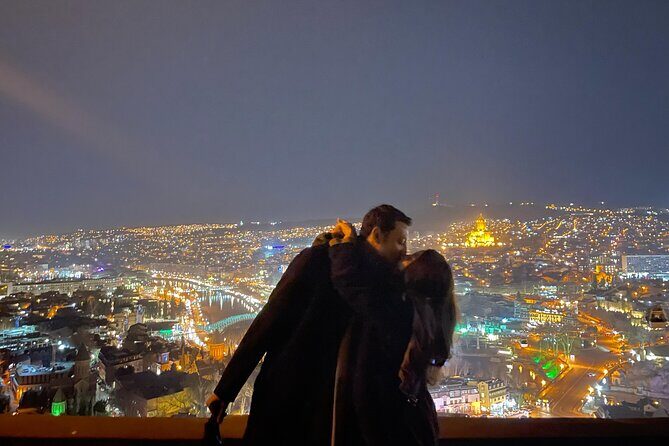
Your Tbilisi evening walk runs at 6 PM. The meeting point is First Republic Square, in front of the bicycle monument. You can join that same day, or if your flight timing doesn’t cooperate, you can switch and join it on day three—so you’re not forced into one exact schedule.
This walk is loaded with places that are easy to enjoy even if you’re tired. And it covers a spread of Tbilisi personalities: grand avenues, old-town twists, and sulfur-bath fun.
Rustaveli Avenue and Liberty Square: the straight-line introduction
The tour begins with Rustaveli Avenue, the main boulevard vibe. If you’ve ever compared Tbilisi to other European capitals, here’s where that feeling comes closest: hotels, cafes, and major buildings line the street, and it’s a good way to get your bearings fast.
Then you’ll reach Liberty Square, the central hub of Georgia’s capital life. It’s short, quick, and useful—think of it like the “okay, now I understand where I am” stop before the older parts of town take over.
Rezo Gabriadze clock tower: the angel-with-a-hammer moment
Next up is the Rezo Gabriadze Marionette Theater area, home to the famous clock tower with the hourly angel. Every hour, an angel comes out with a small hammer to ring the bell, and you can also catch a puppet show inside the tower at 12:00 and 19:00 (called The Circle of Life).
Even if you’re not into architecture-as-fun, this stop works because it’s interactive. You can look up, watch the details on the tiles, and you’re always a few minutes away from a small payoff.
Bridge of Peace and Rike Park: modern Tbilisi with lights and space
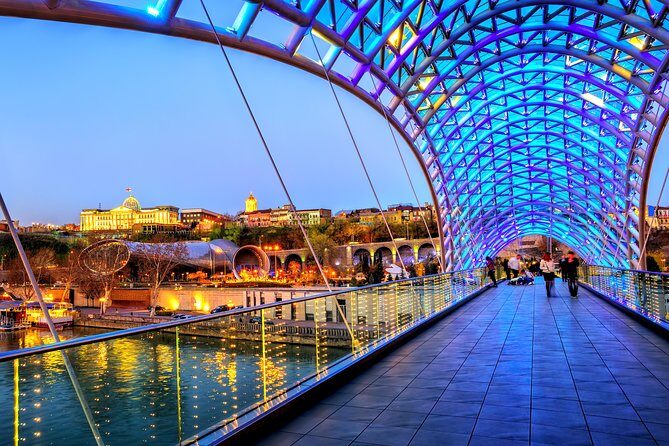
The Bridge of Peace is a pedestrian bridge over the Mtkvari River, built with glass and steel in a bow-shaped design. It’s officially opened in May 2010 and includes more than 10,000 LED bulbs that turn on daily 90 minutes before sunset.
Walk across—or at least spend a few minutes nearby—and then you’ll head toward Rike Park, the riverfront park designed for families and casual roaming. Expect playful features like singing and dancing fountains, climbing walls, maze areas for kids, and even mega-chess. If your travel style includes a short break between major sights, this is a great place to catch your breath.
A few more Tbilisi tours and experiences worth a look

Old Town Tbilisi: Metekhi, Abanotubani baths, and the sulfur-bath pick-me-up
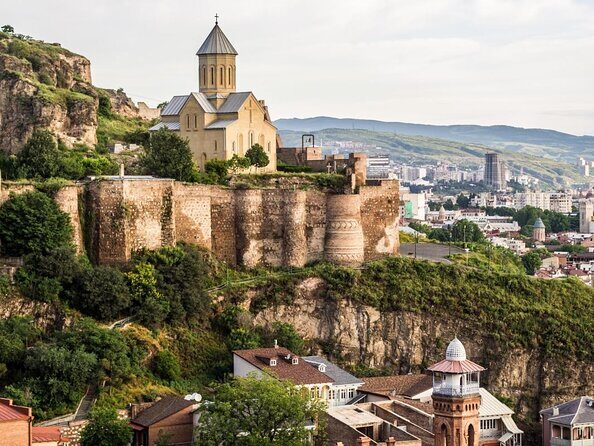
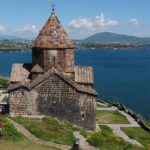
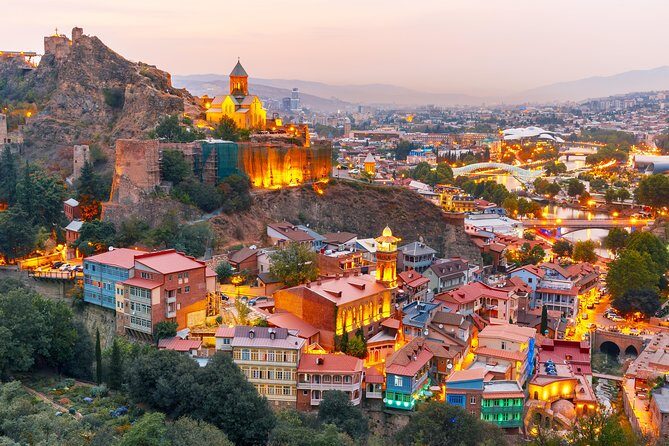
As the walk shifts toward older Tbilisi, you pass Monument of King Vakhtang Gorgasali, which ties the city to its founding stories. From there you’ll see Metekhi Cathedral, perched on a cliff plateau near the river, with a spot that matches its legend and setting.
Then comes Abanotubani, the hot springs district and bathhouse street in the Old Town. If you’re curious about Georgia’s more everyday, local-side traditions, this is one of the most memorable sections. After that, you’ll stop at Chreli Abano Spa, where you can have that classic sulfur bath experience—especially if you like the idea of something tourist-friendly that still feels authentic.
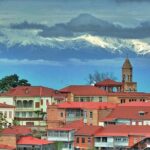
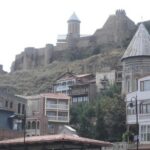
There’s also Leghvtakhevi Waterfall for when the weather is warm and you want a place to cool down. The last stretch heads up toward Narikala Fortress for sweeping views over the city and river. Even when the walls aren’t in perfect shape, you still get that sense of Tbilisi’s long timeline.
Kartlis Deda and the final Old Town streets
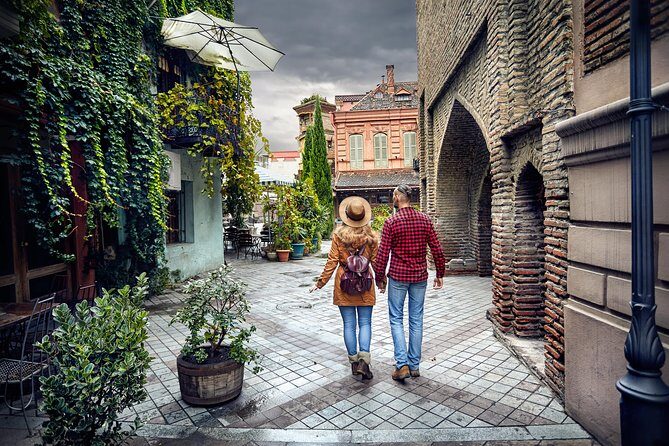
The walk caps with Kartlis Deda on Sololaki hill. The big aluminum figure is designed to represent Georgia’s attitude: a bowl of wine for friends, and a sword for enemies. It sounds dramatic, but that’s exactly why it’s memorable.
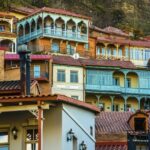
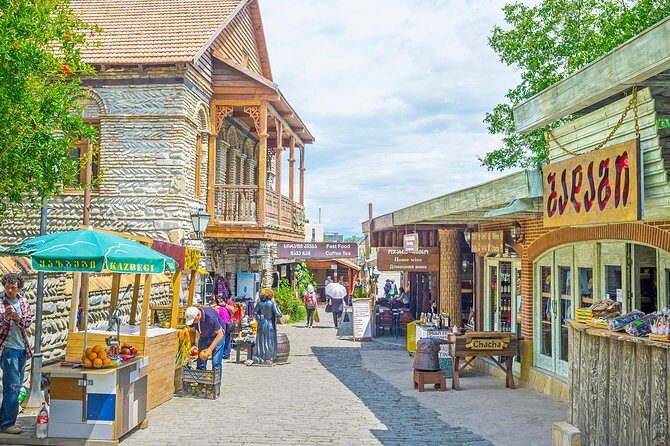
You finish with a stroll through Old Town’s narrow streets and wooden balconies, then Jan Shardeni Street, one of the most popular pedestrian areas in Tbilisi. It ends at Rose Revolution Square, which is short but satisfying—a final marker before you call it a night.
Day 2: the Caucasus day trip that turns Tbilisi into a mountain story
Day two starts early. You’ll meet at First Republic Square, in front of the Giant Bicycle monument, at 8:30 AM. That meeting detail matters because the mountain day relies on one thing: punctual departures.
This is the day that takes your trip from city photos to real altitude views. If you like a day with a plan and not too many decisions, you’ll probably enjoy it. If you hate being on the move, plan to treat this as your “big activity day” and keep your evenings lighter.
Zhinvali Reservoir and Ananuri: water, fortress walls, and wide views
First comes Zhinvali Water Reservoir, along the Georgian Military Highway. The water turns blue between the mountain ridges, and it’s a strong photo stop.
Then you reach Ananuri Fortified Castle Ensemble, dating to the 16th–18th centuries. It sits above the Aragvi River and was a stronghold for a feudal dynasty, with battles shaping the site. You’ll get about an hour here, enough time to walk around, study the fortress layout, and take photos that include both the fortress and the reservoir.
Lunch at Hotel-Restaurant Kakhaberi: where khinkali does the heavy lifting
After the castle stop, you stop at Hotel-Restaurant Kakhaberi. This is where you can eat a traditional lunch and, if you want, you can also go rafting before lunch.
The food highlight is obvious: khinkali. The note here is simple—when you’re in Georgia’s khinkali country, this is not the place to skip lunch.
Panorama Gudauri and a possible Friendship Monument detour
Next is Panorama Gudauri, a stop designed for views, plus an optional detour: the Georgia–Russia Friendship Monument near the highway, built in 1983. It’s a round stone-and-concrete structure overlooking Devil’s Valley, and it fits the “stop fast, see something specific” style of the day.
Gudauri itself is a ski-area town on a south-facing plateau around 2,200 meters. Even if you’re not skiing, it helps you understand why people come here in winter.
Stepantsminda and Gergeti Trinity Church: the viewpoint that makes the long day worth it
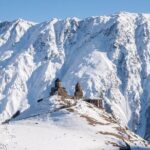
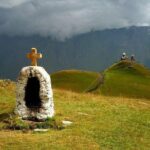
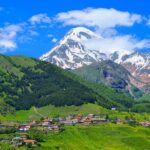
Then you reach Stepantsminda (Kazbegi), the main base for the Kazbegi area and a popular starting point for treks. You’ll visit Gergeti Trinity Church, which sits at about 2,170 meters below Mount Kazbegi.
The church was built in the 14th century and is the only cross-cupola church in the Khevi province. From the church, you get an epic panoramic view of the valley—so yes, this is the kind of stop where you’ll look longer than your “planned” photo time.
One important practical note: the ride up toward the church can involve extra transport. The plan mentions renting a special car from Kazbegi to reach the church area (about 20 Gel, roughly $6–7 per person, noted as optional). If you’re traveling with limited time or energy, it’s worth planning for.
Return timing: back to Tbilisi late, not late-late
You return from the mountains to the village around 5 PM, with time for an early dinner. Departure from Kazbegi to Tbilisi is listed as around 7 PM, and you’re dropped back in Tbilisi (near Rose Revolution Square) around 11 PM.
That means day two is a full day in practice. You’ll want an easy dinner routine on the hotel end and a quick reset mindset for the next morning.
Day 3 UNESCO in Mtskheta: Jvari Monastery to Svetitskhoveli Cathedral
Day three is for UNESCO. Meet at First Republic Square, again at the Giant Bicycle monument, and plan to arrive before 10 AM. If you have a same-day flight, you’ll want to finish check-out before pick-up time and meet in the lobby.
This day is calmer than the mountain route, but it still includes driving and structured stops.
Jvari Monastery: the Monastery of the Cross with the river meeting view
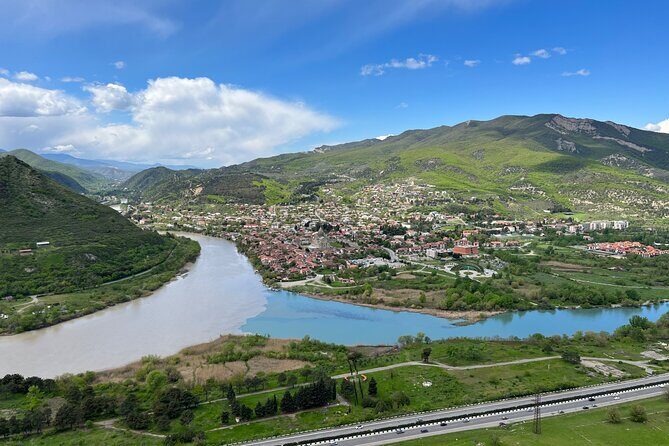
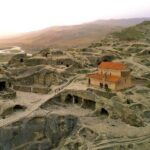
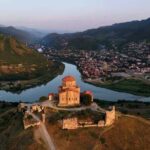
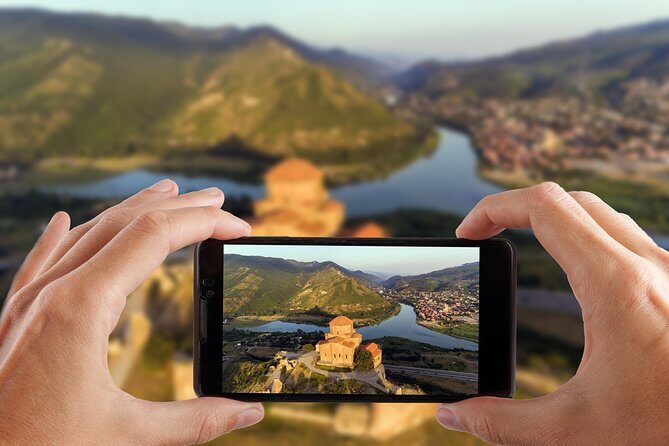
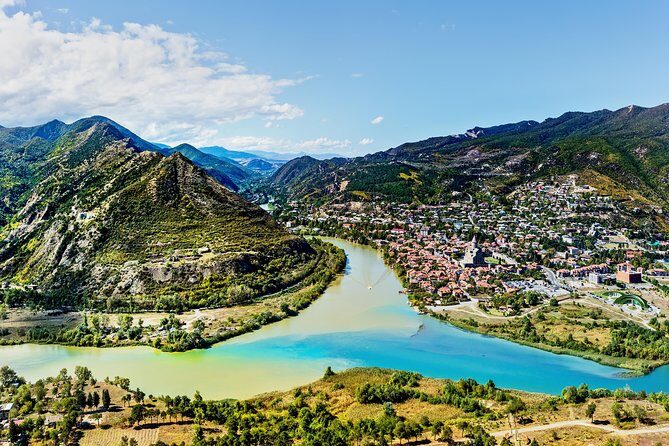
After about 30 minutes drive, you’ll visit Jvari Monastery. The name translates to Monastery of the Cross, a sixth-century Georgian Orthodox site near the confluence of the Mtkvari and Aragvi rivers.
It’s described as one of the historic structures of Mtskheta, and it’s UNESCO-listed. The big advantage here is the setting: you can see how the rivers shape the town and why the monastery is perched in that location.
Svetitskhoveli Cathedral: where a church story mixes with Georgia’s identity
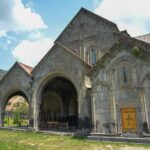
Then you drive about 20 minutes to Svetitskhoveli Cathedral. Mtskheta is UNESCO-listed too and is considered one of Georgia’s oldest cities, with a role as a capital and a coronation/burial place through many centuries.
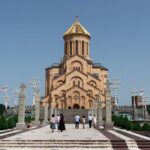
Svetitskhoveli is noted as the second-largest church building in Georgia after the Holy Trinity Cathedral, and it’s linked to the burial site of Christ’s mantle in the tradition around the site. This stop lasts around two hours, giving you time to take in the cathedral and the setting without feeling rushed.
Free time in Mtskheta: wine tasting and simple choices
You’ll get around one hour of free time in Mtskheta. The plan mentions options like shopping, wine tasting, and even boat trips or other activities.
This is where the tour’s wine tastings inclusion likely shows up in your day. If you’ve been curious about Georgian wine culture, this is the built-in moment to try it without making plans on your own.
Then you return to Tbilisi at 2 PM and head directly to the airport if you have a flight that day.
Price and value: what $100 covers, and what you should budget
At $100 per person, this package is budget-friendly mainly because it bundles the costly parts: guide service, transportation service, and airport transfers. It also includes wine tastings, and most stops on the plan are marked as admission ticket free.
Still, be realistic. Accommodation isn’t included, even though you stay in Tbilisi each night. And food and drink aren’t included, so you should budget for meals on your own during the walking tour evening and the mountain day lunch (unless you plan to buy something on the spot at the lunch stop).
If you’re trying to keep expenses tight, this works well. If you want everything fully covered with meals and a guaranteed private ride, you’ll likely feel like you’re doing a bit of budgeting yourself.
Group size and real-world logistics: why timing matters here
The tour caps at 50 travelers. That’s large enough that you’ll probably see a mix of nationalities and travel styles, but small enough that the guide can keep things moving at each stop.
You should also plan for day-to-day rhythm. Day one is an evening walk, day two starts at 8:30 AM and runs long into late night, and day three starts by 10 AM and focuses on UNESCO.
Also remember the flexibility built in for the Tbilisi walking tour. If you land at a weird hour, you’re not stuck losing the city walk. You can shift it to day three depending on your flight times and wishes.
Who this trip suits best (and who should skip it)
This is a good fit if you want a short, structured way to see Tbilisi highlights, add a serious mountain day, and still leave time to fly out without extra planning.
It’s especially good for first-timers who’d rather trust a route than build one from scratch. It also suits people who like guided context—church legends, fortress stories, and why the city looks the way it does.
You might consider another option if you hate early wake-ups or you’re not keen on long drives. Day two is a lot of movement in one day, and the return happens late.
Should you book this short break holiday in Georgia?
If your goal is a simple, value-based 3-day Georgia plan—Tbilisi, mountains, then UNESCO—this one makes sense. The big strengths are the airport pickup setup, the Tbilisi walk that actually covers a wide set of iconic spots, and the mountain day that reaches the Gergeti Church viewpoint.
I’d book it if you’re comfortable handling your own meals and lodging, and you don’t mind a packed day two. I wouldn’t book it if you want a slow trip where you can linger for hours on end at every stop.
FAQ
FAQ
Where do you meet at the airport?
You meet at either Tbilisi or Kutaisi International Airport, in front of the information center. The guide team uses red scarves for easy identification.
Do I get taken from the airport to my hotel in Tbilisi?
Yes. After meeting at the airport, you’re transferred to your accommodation in Tbilisi.
What time is the Tbilisi walking tour?
The Tbilisi evening walking tour starts at 6:00 PM. The meeting point is First Republic Square, in front of the bicycle monument.
Can I join the walking tour on a different day?
Yes. Depending on your flight times and wishes, you can join the Tbilisi walking tour on the same day or on the third day at 6 PM.
When does the mountain excursion start, and where do we meet?
On the second day, you meet at 8:30 AM at First Republic Square, in front of the bicycle monument.
Which UNESCO sites are visited on day three?
On day three, the UNESCO stops are Jvari Monastery and Svetitskhoveli Cathedral in Mtskheta.
Is wine tasting included?
Yes. Wine tastings are included as part of the experience.
Is hotel pickup included?
Hotel pickup is included only for groups more than 4. Otherwise, airport transfers are provided.
Is food included in the price?
No. Food and drink aren’t included.
Do I need extra money for Gergeti?
An optional 4WD car from Kazbegi to Gergeti is listed as extra (about 20 Gel per person, noted as roughly $6–7).