REVIEW · TBILISI
Gareja Sunrise Hike Tour from Tbilisi and Rainbow Hills Trail
Book on Viator →Operated by Taste of Georgia · Bookable on Viator
Sunrise at David Gareja starts with a headlamp moment. This tour pairs pre-dawn views with a monastery morning walk, plus the wide-open feel of the semi-desert. I also like that it keeps things personal with a max group size of 10, not a long bus parade. One thing to consider: you’re up at 2:30 am and you’ll hike, so bring practical shoes and don’t plan on sleeping in.
The drive out of Tbilisi is part of the fun. You’ll ride an air-conditioned van, with WiFi and bottled water, then gradually build up to the big morning payoff. It’s a day trip that feels like two trips in one: calm sunrise outdoors, then a cultural morning in small villages.
At $260.36 per person, this isn’t a budget hop. Still, you’re getting a long-distance early start, guiding in English, and a structured plan that squeezes in multiple monastery viewpoints and the Rainbow Hills walk.
In This Review
- Key things to know before you go
- Why a pre-dawn start makes David Gareja feel different
- The drive out of Tbilisi: Giant Bicycle monument meet-up and semi-desert roads
- Stop-by-stop: from USSR-built Udabno to monastery caves and a tower
- Udabno village: a Soviet plan turned into a lived-in community
- Dodorka monastery caves: early Christianity in a hard place
- Chichkhituri tower: the monastery leadership view
- David Gareja at sunrise: hike, monastery walk, and the Rainbow Hills feel
- Rainbow Hills trail: stretch your legs over real terrain
- What views to expect
- Oasis Club breakfast in Udabno: local fuel after the hike
- Bread-making moments, when timing works
- Border rules and the Udabno Monastery option
- Price, time, and what you’re truly buying
- Who this tour is best for (and who should skip it)
- A note on guides and the team you’ll rely on
- Practical tips so your morning goes smoothly
- Should you book the Gareja sunrise hike and Rainbow Hills trail?
- FAQ
- What time does the tour start?
- How long is the tour?
- What’s the meeting point in Tbilisi?
- Is pickup from my accommodation included?
- Is the tour offered in English?
- What’s included in the price?
- Do I need a good fitness level?
- Are there ticket costs for the sites?
- What happens if weather is poor?
- Is cancellation free?
Key things to know before you go
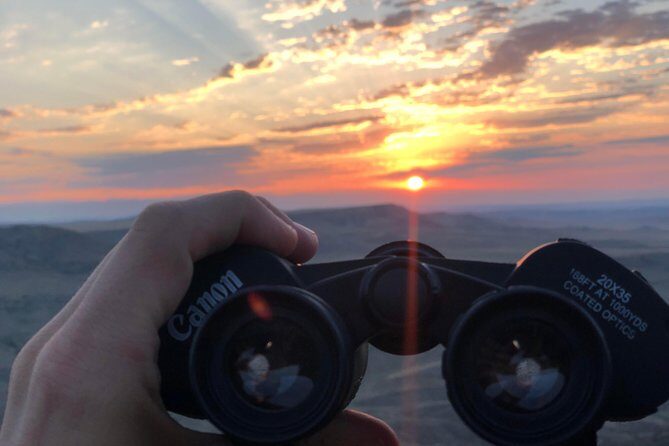
- 2:30 am start means you’ll trade sleep for real sunrise silence
- Small group (up to 10) keeps the hike and monastery stops calm and easy to follow
- David Gareja sunrise + Rainbow Hills gives you both heritage and wide terrain views
- Udabno village breakfast adds a human, local-food break after the hike
- Border-dependent Udabno Monastery tour may change based on conditions that day
- Moderate fitness required for early walking in open, uneven terrain
Why a pre-dawn start makes David Gareja feel different
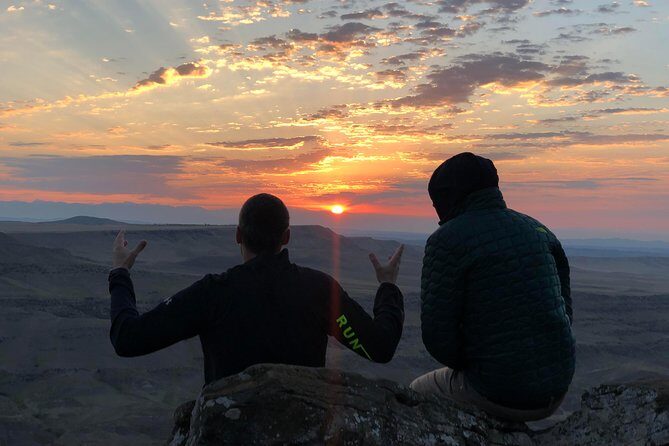
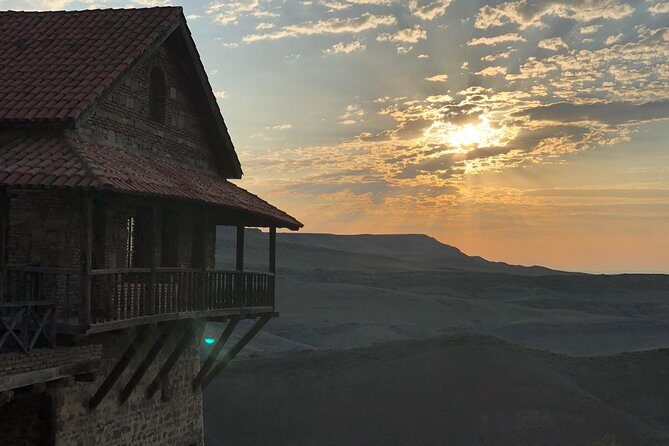
This is the kind of sunrise tour that actually earns its early wake-up call. You start at 2:30 am, and that timing matters. Sunrise at David Gareja isn’t just about the light on stone—it’s the quiet, the cooler air, and the sense that you’re arriving before the day becomes noisy.
Once the hike begins, you feel the change from city rhythms to semi-desert stillness. That early hour also gives your guide time to set the story and the route before you’re standing in position for the view. The result is a sunrise moment that feels more personal than staged.
And then there’s the walk right after sunrise. You’re not rushing immediately back to the van. You’ll have time to explore the monastery area and enjoy the colorful mountains views as morning settles in.
Other David Gareja and Rainbow Mountain tours we've reviewed in Tbilisi
The drive out of Tbilisi: Giant Bicycle monument meet-up and semi-desert roads
You begin at the Giant Bicycle monument area in Tbilisi (Rose Revolution Square for the start point). Pickup is offered around Liberty Square, where your guide and driver wait. The plan is to gather early, get organized quickly, and leave so you’re not sitting in traffic while the sun climbs.
The drive takes about 2 hours into the semi-desert region near Kakheti Highway. Expect the real-world experience of getting out into Georgia’s wider spaces, including stretches where roads can be bumpy. Your driver matters here, and the tour runs with experienced people who know how to handle potholes and mixed road surfaces.
This part of the day also gives context. Along the way you’ll stop for viewpoints and small historical anchors, so when you finally reach the monasteries, you’re not seeing them like random ruins. You’re seeing them as part of a broader religious landscape shaped by time, stone, and isolation.
Stop-by-stop: from USSR-built Udabno to monastery caves and a tower

Udabno village: a Soviet plan turned into a lived-in community
After a short drive (around 70 minutes from Tbilisi), you’ll reach Udabno, a village that started as a USSR project. The original plan was designed for militaries, but it wasn’t fully implemented.
When Georgia gained independence, inhabitants were relocated—many came from the Svaneti region as environmental migrants. Udabno nearly faded into the background. Then a Polish initiative group helped settle and reshape the area, and life changed.
For you, that means the breakfast stop isn’t just food. It’s a chance to learn how hospitality works in a place that had to reinvent itself. It also makes the semi-desert feel human, not empty.
Dodorka monastery caves: early Christianity in a hard place
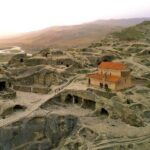
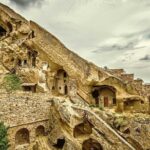
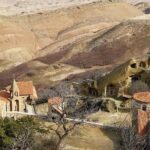
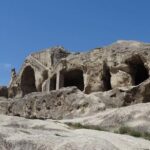
On the left side of the main road near the David Gareja monastery area, you can observe caves tied to Dodorka monastery. This site traces back to the first half of the 6th century and is associated with St. Dodo, one of David Garejeli’s disciples.
Even if you only observe from the roadside, it adds a feeling for how this region functioned: monastic life wasn’t built for comfort. It was built for devotion, solitude, and survival in a landscape that demands toughness.
Other hiking and trekking tours we've reviewed in Tbilisi

Chichkhituri tower: the monastery leadership view
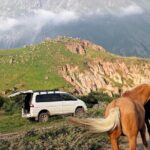
Before arriving at the main monastery area, you’ll also see Chichkhituri tower on a right-side mountain slope. It was part of the monastery complex and, in early medieval times, served as a living place for the head of the Lavra monastery.
This gives you a neat mental model. Monasteries here weren’t just churches and walls. They were systems—roles, hierarchy, and buildings placed where they could serve the community.
David Gareja at sunrise: hike, monastery walk, and the Rainbow Hills feel

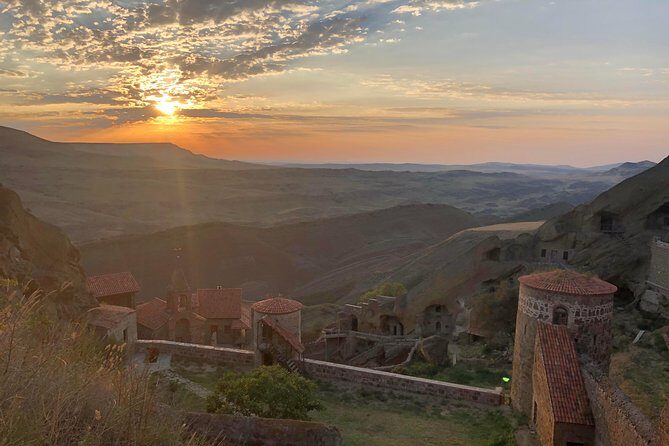
This is the core of the tour. You’ll hike for about 3 hours tied to sunrise viewing, then continue with a sunrise walk around the monastery area and nearby colorful mountains views.
What you’re really paying for is the order of events. Doing sunrise first means you’re not arriving when the light is already harsh or when groups have filled the viewpoints. The morning also helps your eyes read the terrain—rock, ridge lines, and distant mountains start to look sculpted rather than flat.
Rainbow Hills trail: stretch your legs over real terrain
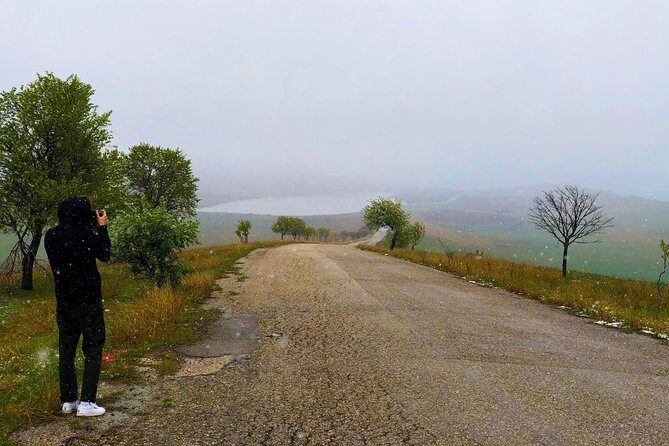
After the monastery morning, you’ll spend time on the Rainbow Hills trail. The name fits what you’ll see, but the bigger point is how it feels. You’re crossing open terrain with long sightlines, and you can sense just how wide the region is.
This hike isn’t about complicated climbing. It’s about endurance and pacing. Your guide will keep you moving, but you’ll have chances to stop for views and for the slow satisfaction of walking somewhere that feels far from city life.
What views to expect
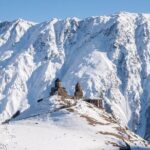
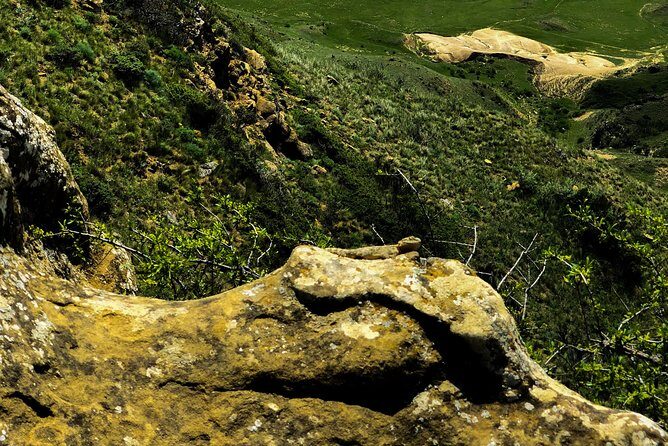
From the monastery area and ridges, you’ll have panoramic views of the Caucasus Mountains. Depending on the season and conditions, distant peaks can look snow-capped even when the rest of the day feels dry and bright.
If you’re the type who loves a good horizon line, this part delivers. If you prefer museums and indoor air-conditioning, you may find this tour more outdoorsy than you planned.
Oasis Club breakfast in Udabno: local fuel after the hike
After the hike and monastery time, you’ll head to Oasis Club (ოაზის კლუბი). This is your breakfast and relaxation stretch, about 1 hour 30 minutes.
The real value here is timing. You’re not waiting too long after the active part of the day. You’ll eat, sit, and let your body cool down.
The tour includes breakfast/brunch, and you’ll also have bottled water as part of the package. This matters because semi-desert mornings can shift quickly—sunrise is cool, but it can warm up fast.
Bread-making moments, when timing works
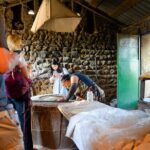
One of the nicest surprises you might encounter is a local food moment beyond the standard meal. In at least one run, the guide helped visitors try making traditional bread in the Udabno area when baking was still underway. If you’re into hands-on food experiences, ask your guide if there’s anything cooking while you’re there.
Even if bread-making isn’t possible that day, you’ll still get the core point: a real village breakfast rather than a rushed stop in a tourist storefront.
Border rules and the Udabno Monastery option
One detail you should know early: there’s a guided tour to Udabno Monastery if the border will be opened. That means your schedule can shift based on conditions that day.
For planning, think of this like a possible bonus. The main sunrise and Rainbow Hills pieces are the heart of the day, but the monastery add-on depends on access.
If your trip dates are fixed and you really want that specific monastery visit, keep a flexible mindset. This is also one reason early communication with the operator helps.
Price, time, and what you’re truly buying
At $260.36 per person, you’re paying for more than entry-level sightseeing. You’re buying an early start, a long drive, English-speaking guidance, and a full-day structure that hits multiple heritage points without turning your day into logistics puzzles.
The tour runs 7 to 9 hours total, and you’re capped at 10 travelers. That small group size is a big part of the value. It makes questions easier, pacing smoother, and sunrise logistics simpler.
You also get practical comfort: an air-conditioned vehicle, WiFi onboard, and bottled water. Those aren’t flashy perks, but on a 2:30 am departure they are the difference between cranky and calm.
Who this tour is best for (and who should skip it)
This tour fits best if you:
- enjoy sunrise experiences more than late-morning photos
- like walking in open terrain and want a guided route
- want culture plus nature, not just one or the other
- prefer small groups where your questions actually get answered
It’s less ideal if you:
- hate early starts with uneven terrain
- want fully guaranteed access to border-dependent sites
- expect a gentle, mostly-transport day
Moderate physical fitness is mentioned as the requirement. That’s a fair match for a sunrise hike plus Rainbow Hills walking, especially with the early hour.
A note on guides and the team you’ll rely on
The tour experience rises or falls on the guide and the driver. This run pairs you with an English-speaking guide and a careful driver who handles long roads and potholes.
Names from past schedules include guides like Zura / Zurab and drivers such as Acho, David, or Goga. What they have in common is the ability to connect the sites to real human stories—monks’ lifestyle, monastery respect, and why each stop matters beyond the photo.
In other words, you’re not just following a checklist. You’re getting context as you walk.
Practical tips so your morning goes smoothly
- Wear proper hiking shoes. Open terrain can be uneven.
- Dress in layers for sunrise. The early hour can be much cooler than later.
- Bring a light snack or stick to the included breakfast timing. You’ll work up an appetite.
- Expect a long morning start. Set a second alarm and plan to be awake before pickup time.
- If you’re sensitive to early hikes, slow your pace immediately. Don’t wait until you’re tired.
Also, note the tour uses a mobile ticket and confirmation happens at booking. Plan on having your device ready early so the day starts without stress.
Should you book the Gareja sunrise hike and Rainbow Hills trail?
I think this is a strong choice if you want an authentic, time-smart day outside Tbilisi. The sunrise timing is the big win. You’ll see David Gareja in calm light, not crowds and midday glare. The Rainbow Hills walk then balances history with open terrain.
The one reason to hesitate is the cost versus comfort level. At $260.36, you should be sure you’re okay with an early start and a moderate hike. If you want relaxed pacing, this might feel demanding.
If you’re the type who likes stories you can test with your own eyes—stone, caves, towers, ridges—then this tour fits your style. Book it for the morning peace and the small-group feel, not for a casual day out.
FAQ
What time does the tour start?
The tour starts at 2:30 am.
How long is the tour?
It runs approximately 7 to 9 hours.
What’s the meeting point in Tbilisi?
The start meeting point is at the Giant Bicycle monument near Rose Revolution Square in Tbilisi. Pickup is offered, and your guide and driver wait near the monument area around Liberty Square.
Is pickup from my accommodation included?
Pickup is offered. The guide and driver wait at the monument meeting area, and pickup details are provided with your booking.
Is the tour offered in English?
Yes, the tour is offered in English.
What’s included in the price?
The tour includes breakfast/brunch after the hike, an air-conditioned vehicle, WiFi onboard, bottled water, and a guided Udabno monastery visit if the border is opened.
Do I need a good fitness level?
You should have moderate physical fitness since there is a sunrise hike and a Rainbow Hills trail walk.
Are there ticket costs for the sites?
Admission tickets are listed as free for the stops mentioned in the schedule.
What happens if weather is poor?
This experience requires good weather. If it’s canceled due to poor weather, you’ll be offered a different date or a full refund.
Is cancellation free?
Yes. You can cancel for a full refund up to 24 hours before the experience’s start time.