REVIEW · TBILISI
Sacred Sites and Ancient Wonders: Jvari, Mtskheta and Uplistsikhe
Book on Viator →Operated by BB Georgia Travel · Bookable on Viator
Georgia’s past feels close on this road day. You start at Jvari Monastery, a sixth-century Georgian Orthodox site perched above Mtskheta, with big views over the city and the Aragvi–Mtkvari meeting point. Then you move into the UNESCO spotlight at Svetitskhoveli Cathedral, where centuries of royal coronations and burials helped shape what Georgia became.
I love how this tour mixes spiritual places with political history and then lands in an ancient stone city. The pacing is long enough to actually see things (Jvari gets about 30 minutes; Svetitskhoveli about an hour), and the story stops feel connected rather than random. One drawback to plan around: two key attractions, the Stalin Museum and Uplistsikhe, have extra entry fees (each listed at 15 GEL), and you’ll want good shoes for uneven rock at the cave town.
One more plus: the guides seem to work hard to keep the day smooth. In the feedback, people highlighted calm communication and solid storytelling from guides like Irakli and Davit, which matters when you’re spending a full day away from Tbilisi.
In This Review
- Key points to know
- Jvari Monastery: the best first photo in the whole day
- Svetitskhoveli Cathedral: UNESCO, kings, and a famous religious legend
- Gori’s Stalin Museum: Soviet history in a compact package
- Uplistsikhe Cave City: rock-hewn streets shaped by the Silk Road
- Price and logistics: why $100 can feel fair here
- How the timing works from a practical point of view
- What kind of traveler will enjoy this most?
- Service feel: why the guide can make or break the day
- Should you book Sacred Sites and Ancient Wonders?
- FAQ
- What is the price of the tour?
- How long does the tour last?
- What time does the tour start, and where does it end?
- Which sites are included in the day plan?
- Are entrance tickets included?
- Do I get a ticket on my phone?
- Is free cancellation available?
Key points to know
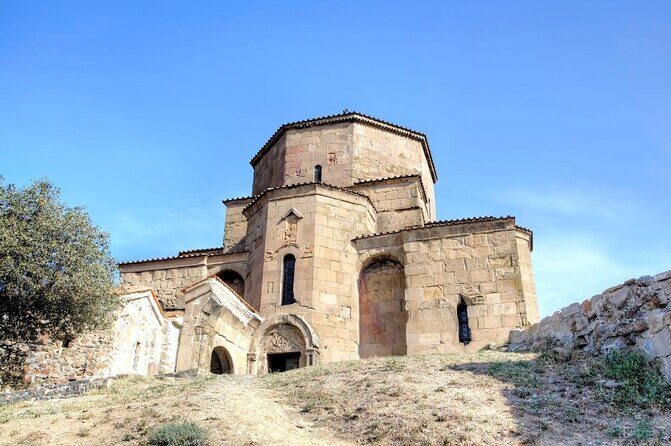
- Hilltop views at Jvari over Mtskheta and the Aragvi–Mtkvari confluence
- UNESCO Svetitskhoveli Cathedral tied to royal coronations, burials, and the tradition of Christ’s robe
- Gori’s Stalin Museum focused on his early life and includes an armored train
- Uplistsikhe Cave City: rock-hewn streets and rooms tied to the old Silk Road
- Most entrances are easy wins: Jvari and Svetitskhoveli are free; only two paid sites
Jvari Monastery: the best first photo in the whole day
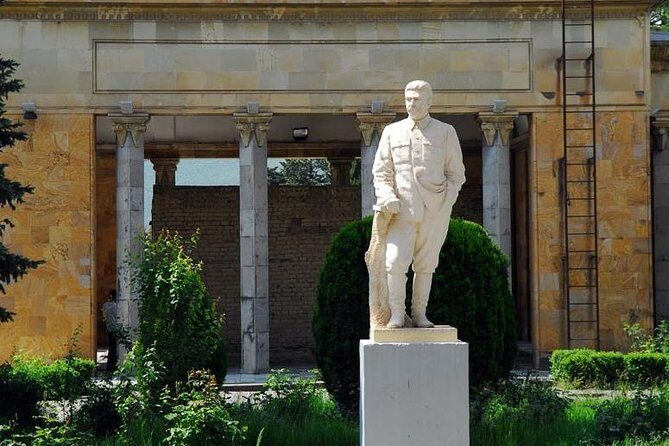
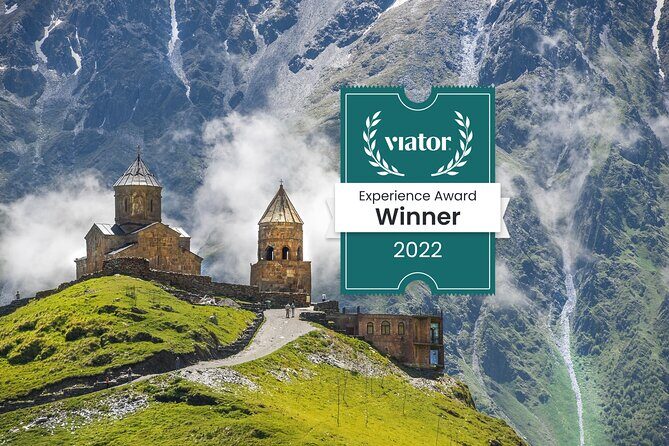
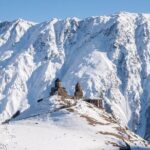
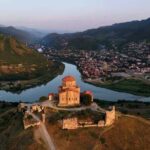
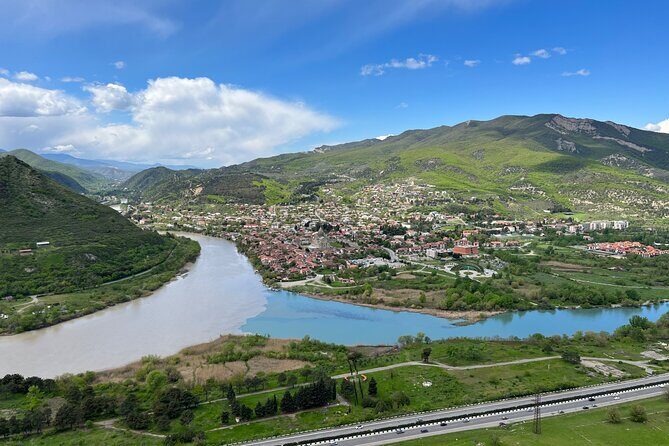
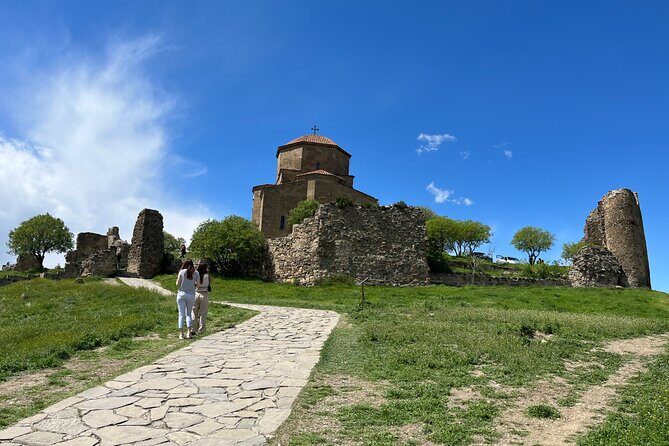
Jvari Monastery sits above Mtskheta, and you feel it right away. It’s a sixth-century Georgian Orthodox monastery, built for a reason that’s still obvious: the height gives you the view, and the view gives you context. From here, you can look over Mtskheta and also take in the meeting place of the Aragvi and Mtkvari rivers—one of those geography details that makes the region’s history make sense.
You get about 30 minutes at this stop, which is the right amount of time for a hilltop site. Long enough to walk around, catch the best angles, and understand why people have treated this as a sacred vantage point for centuries. Since the admission ticket is listed as free, you’re not paying to access the location’s main payoff: the scenery and the monastery setting.
What to watch for: because it’s on a hill, the ground can feel uneven. Wear shoes you trust, and bring a layer if the morning is cooler than you expect. This is the kind of stop where you don’t want to rush, but you also don’t want to lose time later in the day—so 30 minutes is a practical fit.
Other Mtskheta tours we've reviewed in Tbilisi

Svetitskhoveli Cathedral: UNESCO, kings, and a famous religious legend
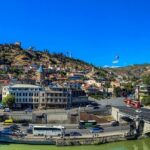
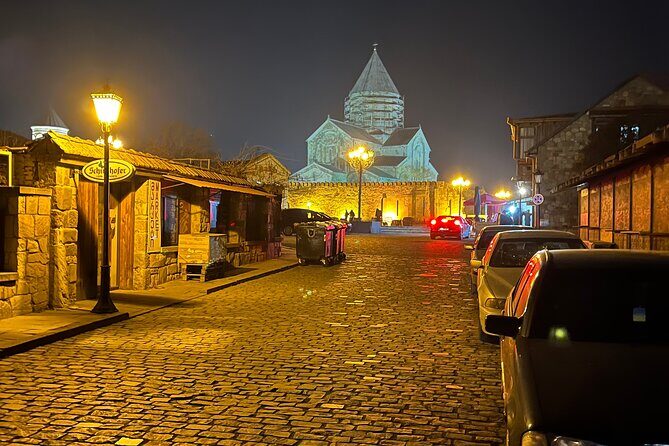
Then you’re in Mtskheta, the older Georgian powerhouse of the region. The city dates back far earlier than most visitors realize, with a foundation listed in the 5th century BC. Mtskheta served as the capital of the early Georgian Kingdom of Iberia, from the 3rd century BC up to the 5th century AD. After that, the capital moved toward Tbilisi, but Mtskheta stayed important—especially for coronations and burials of many Georgian kings.
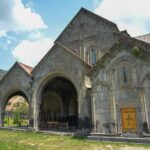
Svetitskhoveli Cathedral is the UNESCO World Heritage anchor here. It’s described as a masterpiece of the Early Middle Ages, and it carries a tradition that Christ’s robe is believed to lie beneath the cathedral. That belief is one reason the site matters beyond architecture. It’s not just a beautiful building; it’s a place with spiritual gravity in local memory.
You’ll have about an hour at Svetitskhoveli, and that’s enough to do the essentials without feeling like you’re being herded. You can slow down, take in the cathedral’s scale, and understand why it became a royal and religious landmark. The admission ticket is listed as free for this stop, which makes this segment feel like real value: you’re paying mostly for the guidance and travel time, not for entry after entry.
A practical consideration: cathedrals often mean rules about dress and quiet behavior. The tour won’t tell you to be loud anyway, but you should show respect with covered shoulders and modest clothing if the conditions require it. Also, an hour can fly by if you focus only on photos—give yourself at least a few minutes to look around and read the space with your eyes.
Gori’s Stalin Museum: Soviet history in a compact package
Next comes Gori, known above all for being Joseph Stalin’s birthplace. This part of Georgia’s history can feel heavy, and it’s also oddly straightforward because the museum centers on his early life. The museum is described as the house where Stalin was born and grew up, and you can also see his armored train.
The tour gives you about one hour here. That’s a smart timing choice if your goal is a day trip: enough time to grasp the basics, but not so long that you feel stuck in one topic for the rest of the day. If you’re the kind of visitor who likes political history and artifacts, this stop will land well because it’s concrete—birthplace home context, plus the armored train detail that makes the era feel less theoretical.
Admission for the Stalin Museum is listed as not included, with a ticket price of 15 GEL. So budget for it if you’re doing the full set. The value is in the combination: you’re seeing religious sites in Mtskheta, then shifting into Soviet-era context in Gori, all within one day.
One caution: if you’re not interested in Stalin or Soviet history, this is still a key cultural stop for understanding 20th-century Georgia. You can still enjoy it as historical research, but I’d go in with expectations that this is not just a neutral “museum stop.” It’s built around a political figure, and the mood reflects that.
Uplistsikhe Cave City: rock-hewn streets shaped by the Silk Road
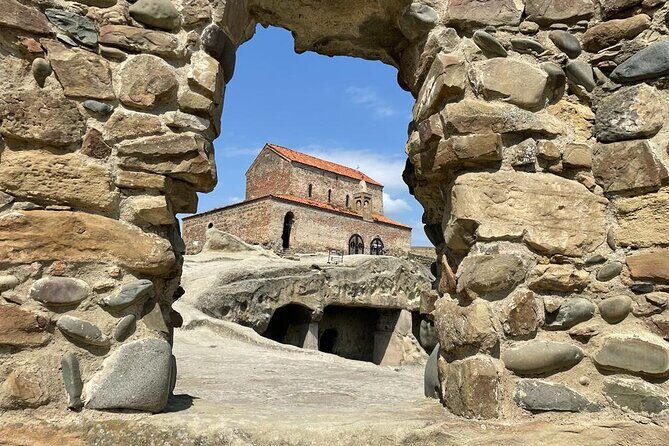
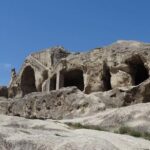
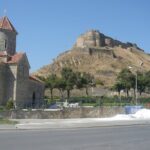
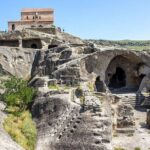
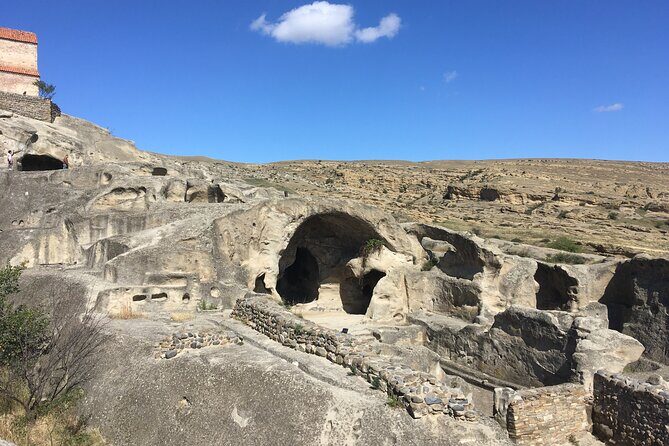
After Gori, you’ll reach Uplistsikhe Cave Town. The name Uplistsikhe is given as Fortress of the Lord, and the site lives up to the sound of it. This is an ancient rock-hewn town, and it’s not a small roadside ruin—you’re walking through a complex that was once both strategic and commercial.
Uplistsikhe sat directly on the path of the old Silk Road. When you stand in the stone passages, that trade-route context helps. This wasn’t just a religious site tucked away from everything. At its peak, the town had a population listed as 20,000, which means you’re dealing with a real urban scale, not a couple of carved rooms.
You get about an hour here, which is again the right kind of time for cave architecture. Rock-hewn sites can chew up time because you want to keep looking at how rooms were cut, how spaces connected, and why certain areas would have been used. One hour is enough to understand the layout and feel the atmosphere without turning it into a marathon.
Admission for Uplistsikhe is also listed as not included, at 15 GEL. So this tour’s “extra fees” are concentrated into two places, rather than becoming a ticket festival across multiple stops. That’s good for planning and value.
What to prepare for: rock surfaces can be uneven and stairs may be part of the experience. Bring shoes with traction. If it’s hot, keep an eye on hydration. Since food and drinks are not included, plan to manage snacks yourself, especially because you’ll be out for roughly seven hours.
Price and logistics: why $100 can feel fair here
The listed price is $100 per person for an approximately 7-hour day. On paper, that can look like “just transport.” But the included items are what make the math make sense: fuel surcharge, a driver/guide, hotel pickup and hotel drop-off, and a private vehicle.
That combination matters in Georgia’s areas outside the center of Tbilisi. You save time and mental energy by not figuring out how to connect multiple sites with separate rides. Plus, the tour structure groups the stops into a sensible route: Jvari and Mtskheta first, then Gori, then Uplistsikhe.
The best part for value-minded travelers: two major religious/cultural stops are effectively free in the schedule. The Jvari Monastery admission ticket is listed as free, and Svetitskhoveli Cathedral is also listed as free. Your extra ticket costs are limited to the Stalin Museum and Uplistsikhe Cave Town (each 15 GEL). Add those two and you’ll have a clearer sense of the full spend without surprises multiplying across the day.
Also keep an eye on the feature notes: group discounts may apply, and you’ll likely receive a mobile ticket. Mobile tickets are convenient when you don’t want to track printed paper in a pocket all day.
The only part I’d consider carefully is food. Food and drinks are not included, and lunch isn’t listed as included. So you should bring water and plan where you’ll eat on your own, or make quick decisions when opportunities appear.
Other Uplistsikhe cave tours we've reviewed in Tbilisi
How the timing works from a practical point of view
The tour starts at 10:00 am in Tbilisi and ends back at the meeting point. With about 7 hours total, you’ll spend a chunk of the day moving between sites but still get real time at each stop.
The schedule includes:
- Jvari Monastery: about 30 minutes
- Svetitskhoveli Cathedral: about 1 hour
- Stalin Museum: about 1 hour
- Uplistsikhe Cave Town: about 1 hour
That “about an hour per major site” pattern is one reason this trip works. It avoids the two extremes: not enough time to see anything, and too much time that makes you feel numb. The stops also alternate themes—views and monastery space, then cathedral and legend, then Soviet history, then ancient stone city—so your brain isn’t stuck in one mode.
One last timing thought: you’ll want your photo plan, but don’t let photos steal your understanding. Spend a few minutes at each site looking for the story cues. For Jvari, it’s the view and rivers. For Svetitskhoveli, it’s the royal significance and sacred tradition. For Stalin’s museum, it’s the birthplace-home focus plus the armored train. For Uplistsikhe, it’s the Silk Road urban logic and the scale of the carved town.
What kind of traveler will enjoy this most?
This tour is best if you like mixing big themes without changing countries in your head.
I think it’s a strong fit for:
- People who want a balanced day: sacred architecture, UNESCO history, and 20th-century political context
- Visitors who like varied settings: hilltop monastery views, cathedral interiors, museum exhibits, and rock-cut city streets
- First-timers who want a near-Tbilisi “greatest hits” day that doesn’t waste all your time in transit
It may be less ideal if:
- You hate walking on uneven surfaces (Uplistsikhe is rock-hewn)
- You don’t want to pay extra for two sites (Stalin Museum and Uplistsikhe)
- You need a lunch included day plan (food and drinks aren’t provided)
Service feel: why the guide can make or break the day
The feedback highlights that communication and handling plan changes matter. In the information provided, one of the guide names mentioned is Irakli, praised for pleasant communication and storytelling. Another guide name mentioned is Davit, with people appreciating how he connected sites and shared stories that made the places feel more meaningful than just names on a map.
That kind of guidance matters most on tours like this, where the same day contains sacred sites, royal history, Soviet-era memory, and ancient trade-route city life. A good guide helps you connect the dots so you don’t just collect landmarks.
If you want a smooth day, this tour’s private-vehicle setup with hotel pickup and drop-off helps. You aren’t doing public transport puzzle-solving all morning, and you can focus on the sites.
Should you book Sacred Sites and Ancient Wonders?
Yes, I’d book it if you want a smart, efficient way to see multiple layers of Georgian history in one day from Tbilisi. The strongest reasons are the mix of places and the value math: Jvari and Svetitskhoveli are listed as free admissions in the schedule, while the extra ticket costs are limited to the Stalin Museum and Uplistsikhe.
I’d skip or think twice if you strongly dislike Soviet history, or if you need a fully meal-included day, or if uneven rock ground makes you nervous. For most people, though, this is a well-structured “different worlds in one loop” trip: monastery views, UNESCO cathedral meaning, Gori’s Stalin context, and Uplistsikhe’s Silk Road stone city.
FAQ
What is the price of the tour?
The tour is priced at $100.00 per person.
How long does the tour last?
It lasts about 7 hours.
What time does the tour start, and where does it end?
The tour starts at 10:00 am in Tbilisi, Georgia, and it ends back at the meeting point.
Which sites are included in the day plan?
The tour includes Jvari Monastery (Jvari Church), Svetitskhoveli Cathedral in Mtskheta, the Stalin Museum in Gori, and Uplistsikhe Cave Town.
Are entrance tickets included?
Admission for Jvari Monastery and Svetitskhoveli Cathedral is listed as free. Tickets for the Stalin Museum (15 GEL) and Uplistsikhe (15 GEL) are not included.
Do I get a ticket on my phone?
Yes. The tour notes a mobile ticket.
Is free cancellation available?
Yes, free cancellation is available up to 24 hours in advance of the experience’s start time for a full refund.