REVIEW · TBILISI
Chiatura and Katskhi Pillar One Day Urbex Tour
Book on Viator →Operated by Friendly.ge: Transfers & Tours in Georgia · Bookable on Viator
Industrial Georgia is not where you expect it.
This one-day tour strings together two very different corners of the country: Chiatura’s Stalin-era cable cars and Soviet streets, and the monk story at Katskhi Pillar near Imereti. I especially like how the pace works—small groups mean you’re not stuck waiting around—plus the stops are built around places that feel lived-in, not staged for photos.
My main caution is the logistics. It’s a long drive (about 2.5 hours each way), and the experience involves old cable cars and elevated viewpoints, so it’s not a great match if you hate heights, get motion sickness, or have mobility or back issues.
In This Review
- Why this tour gets the high marks
- Entering Mgvimevi Monastery: 8th-century murals and a hidden door
- Katskhi Pillar and Monk Maxime: a limestone monolith with a human story
- Chiatura’s cableways: Soviet engineering still in motion
- Chiatura’s Soviet center: more than cable car photos
- The full day rhythm from Tbilisi (and the drive you can’t ignore)
- Small group vs private upgrade: what extra attention really buys
- Price and value: $123 with free stops, but lunch costs extra
- Who should book this one-day industrial loop
- Should you book Chiatura and Katskhi Pillar?
- FAQ
- How long is the Chiatura and Katskhi Pillar one-day tour?
- What’s the price per person?
- What’s included in the tour?
- Is lunch included?
- Is admission free at the main stops?
- Is hotel pick-up offered?
- Is this tour suitable for people with mobility issues or a fear of heights?
Why this tour gets the high marks
- Small group attention means the day doesn’t feel like a bus schedule.
- Free admissions at key stops keep the day’s real cost down.
- Monastery + pillar + cable cars gives you variety without wasting time.
- Old engineering still running lets you experience Soviet infrastructure up close.
- Monk Maxime story at Katskhi Pillar adds human meaning to a strange, vertical site.
Entering Mgvimevi Monastery: 8th-century murals and a hidden door
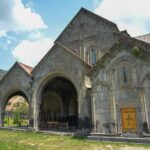
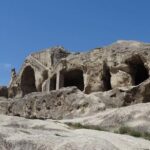
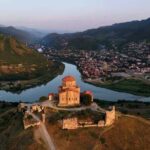
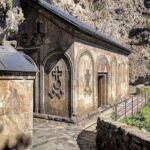
Mgvimevi Monastery is the kind of stop that rewards slowing down. The complex was built in the 8th century, and the church facades are decorated with crosses and ornamental borders, so even before you go inside you get that sense of deliberate design rather than ruins left behind.
Inside, the walls carry mural paintings from different periods, including 8th-century work and later additions from the 16th century on the southern wall. One of the most striking details here is that an older fresco was found under a newer layer, featuring Rati from the Racha Region alongside his wife and his brother Niania Kakhaberisdze. You don’t need a guidebook to appreciate the basic idea: layers of time, literally painted over and then recovered.
Then there’s the tunnel under the church—strengthened by arches. That detail matters because it turns the building from a simple sightseeing object into something functional and engineered. In the same spirit of preserved artifacts, two notable items from Mgvimevi are now kept in the Georgian National Museum: an engraved icon and a very rare curved wooden door from the 11th century. You’ll see the monument itself here, but you also get a sense that the best pieces didn’t stay in place.
The monastic complex also includes a small church partly carved into a cliff and a two-storey bell tower dated to the 12th–14th centuries. If you like architecture that grew in stages—stonework changing as centuries passed—this is a satisfying first stop.
Practical note: the visit is short on the schedule (about 45 minutes), so focus on what you can see clearly: exterior cross patterns, the wall paintings inside, and the way the structures sit around the cliff setting.
Other Kutaisi and western Georgia tours we've reviewed in Tbilisi
Katskhi Pillar and Monk Maxime: a limestone monolith with a human story
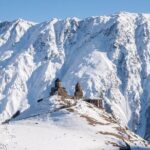
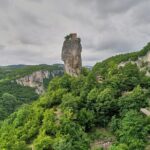
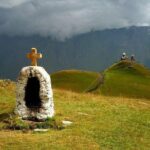
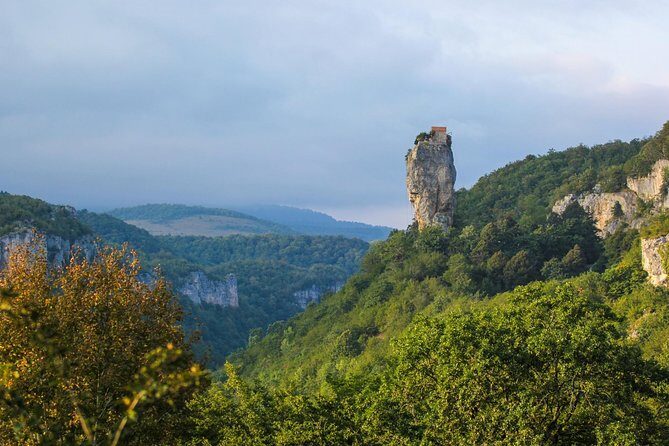
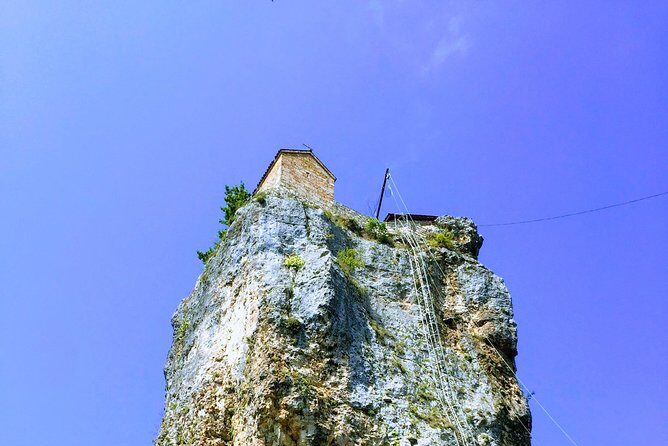
Katskhi Pillar is the main character of the day. It’s a natural limestone monolith near the village of Katskhi in western Georgia (Imereti), close to Chiatura.
You go there to see something unusual in plain sight: a tall, solitary rock feature that has attracted a sustained religious presence. The tour experience includes learning about its sole resident—a monk named Maxime. That bit changes the tone of the visit. Instead of treating the pillar like a roadside spectacle, you get a context for why it matters.
Another thing I like is how the schedule respects the site. The stop is about 45 minutes, which is long enough to understand the setting without turning the day into a waiting game. Also, admission is listed as free, which makes Katskhi Pillar feel like a high-impact stop without added cost.
Practical reality check: Katskhi Pillar isn’t described as wheelchair-friendly, and the overall tour involves heights and enclosed spaces. If you’re nervous about that kind of physical experience, this is one of those days where your comfort should come first.
Chiatura’s cableways: Soviet engineering still in motion
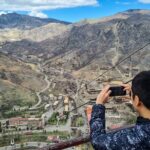
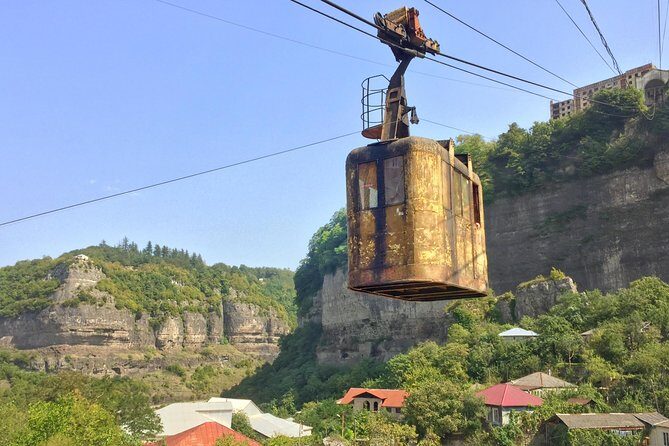
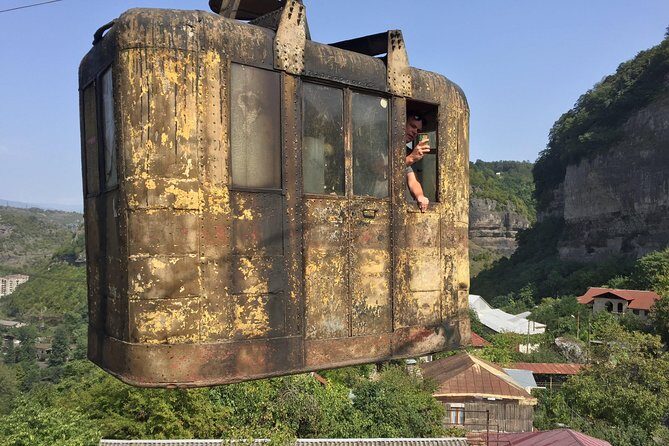
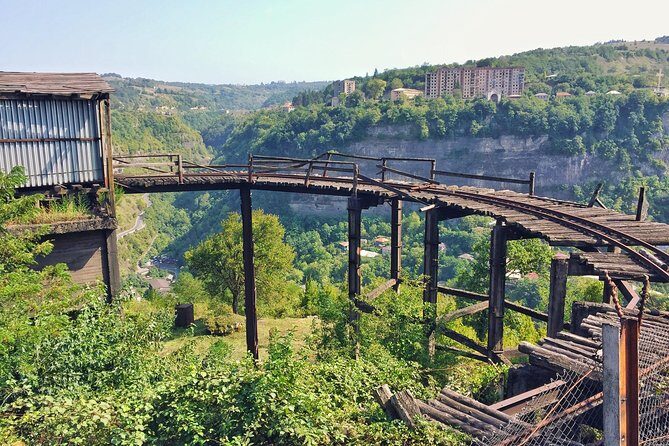
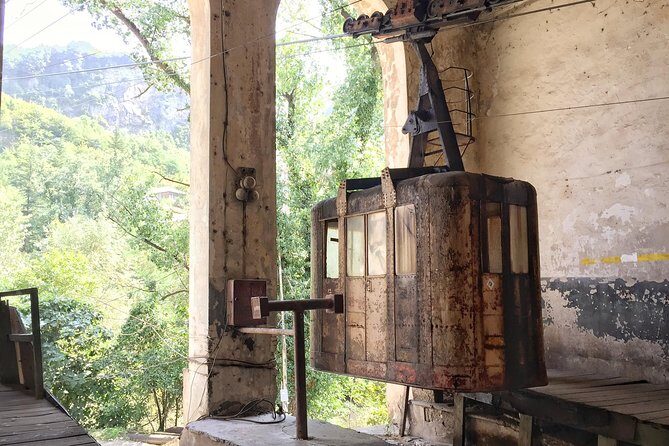
Now for the part that turns this into a true industrial day trip: Chiatura’s cableways. The big attraction is the Stalin-era cable car system, and the key word is still in use. These aren’t museum props. They’re functioning transportation, used around the city and connecting neighborhoods to mines above.
The route crosses the Qvirilia River gorge and uses cable cars organized into 10 passenger cars and 2 cars for manganese transport. The total cable span is over 6 km, which is a scale you only grasp once you’re looking at the full system rather than thinking of it as a couple of quaint cabins.
Some stations have murals of Soviet heroes. That detail can surprise you if you’re expecting only plain utility. Instead, the system is wrapped in ideology and art—industrial infrastructure treated as public identity.
There’s one practical limit you’ll want to remember: the maximum capacity of the cable car is 4 people. That affects timing and how you’ll think about grouping. If you’re traveling with friends, it may be easier than if you’re part of a looser group, because packing capacity matters when operators move cars through the line.
Also keep in mind the tour note about maintenance. Some cable lines are closed or under repair, and visiting them may not be possible. So go in with flexibility. This is a real working system, not a closed set created for tourists.
The ride time in the plan is about 3 hours at the cableways area. That’s enough time to take photos, walk viewpoints, and get a feel for how the whole network fits together—without rushing you out after one quick ride.
Chiatura’s Soviet center: more than cable car photos
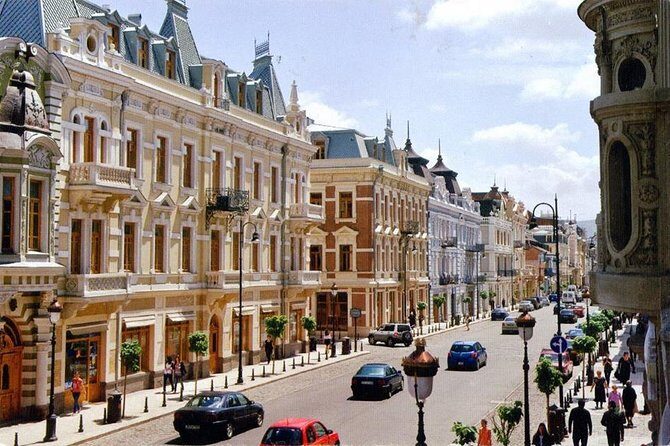
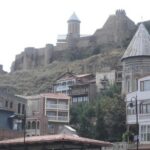
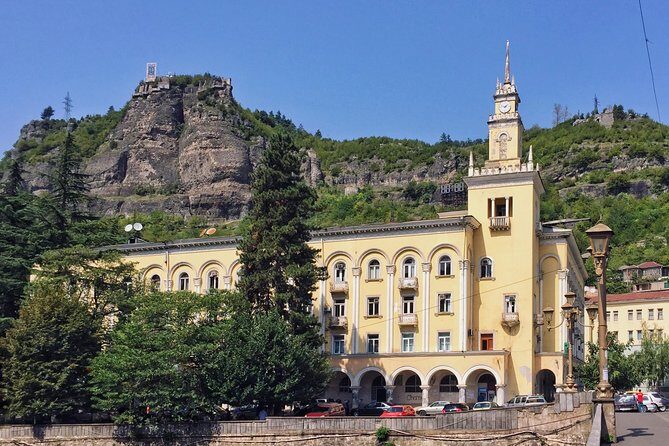
Chiatura isn’t only cable cars, and the tour plan makes room for the parts beyond the machinery. The center is described as pleasant for walking, and if you like Soviet architecture, you’ll enjoy the town’s character in a way you won’t get from a fast stop.
Why this matters: cable cars are the headline, but streets and buildings are how you measure whether a place is still a community or a theme park. In Chiatura, the walk through the center helps you connect the industrial story to daily life.
You’re scheduled for about 2 hours here. That’s a decent chunk for wandering at an easy pace, taking in street geometry, and spotting the visual fingerprints of the industrial era. Since admission is listed as free here too, it stays a low-cost way to see more than the minimum.
If you want photos, don’t just shoot the cable lines. Look at how the town seems built around the gorge and how structures hold their place against the slope. Even if you don’t consider yourself a Soviet-architecture fan, it’s the kind of urban shape that sticks in your memory.
The full day rhythm from Tbilisi (and the drive you can’t ignore)
This tour is long—about 12 hours total. The plan includes a return to Tbilisi in the evening with a brief stop back in the city.
The biggest factor is the driving time: roughly 2.5 hours each way. That’s not a deal-breaker, but it does change what you should pack mentally. Bring water (you’ll have bottled water included), plan to sit back and accept that you’re committing to a day trip rather than a quick hop.
It’s also not recommended if you’re prone to motion sickness or have back problems. I’d take this seriously. When you’re spending hours in a car, you want your body on your side for the cable car ride and the viewpoint walking.
Weather matters too. The tour is listed as subject to favorable weather conditions, which makes sense for exterior walking and cable systems.
If you’re the type who hates delays, this might still work well because small groups typically help keep the day fluid. One guide can move the schedule based on your pace rather than the pace of a larger crowd.
Other Soviet and brutalist Tbilisi tours we've reviewed in Tbilisi


Small group vs private upgrade: what extra attention really buys
There are two ways this tour shows up for you: a standard group format and a private tour upgrade.
The tour description highlights that a small group means more attention from your guide. In practice, that matters at sites where you want a bit more time for questions—like murals, the story behind Katskhi Pillar, or how Chiatura’s system functioned historically.
For private tours, there’s hotel pick-up (and hotel transfers) mentioned as included. That can be worth it if you don’t want to deal with meeting points and timing stress, especially on a day with a long drive.
Based on the feedback, guide quality is a major reason people feel it’s worth the money. One review specifically praised Aleksi for tailoring the day so it felt like it was about the group rather than forcing everyone into a rigid script. Another referred to an Alex guide with expert and precise pacing. Either way, the pattern is clear: when the guide can match your interests quickly, industrial tours stop feeling like checking boxes.
Price and value: $123 with free stops, but lunch costs extra
At $123 per person, you’re paying for more than sightseeing. You’re paying for transportation time, the guide, and the effort of stitching together a far-flung industrial loop in a single day.
A big value driver here is that many major stops have free admission: Mgvimevi Monastery, Katskhi Pillar, the cableways area, and Chiatura center. That keeps your day from turning into a collection of entry fees on top of the tour price.
What isn’t included is lunch. That’s the one obvious extra cost. If you’re trying to keep your budget tight, plan ahead—eat before you start, or bring a simple plan for during the Chiatura portion.
Also included: bottled water and a local guide. For private tours, hotel pick-up is included, while non-private formats are described with pickup available details that get clarified with you.
Overall, the price looks fair for the combo of free sites plus guided interpretation, especially when you factor in the long drive and the specialized destination.
Who should book this one-day industrial loop
This is for you if you:
- like industrial archaeology, Soviet-era design, and places that still feel real
- want a day trip that’s not the usual mountain view checklist
- enjoy architecture and murals, not just scenic photo stops
- prefer a small group feel where your guide can answer questions
You should think twice if:
- you have a fear of heights or you don’t feel comfortable with elevated viewpoints
- you have mobility issues, since the tour is not suited for that category in the notes
- you get motion sickness or have back problems, since the drive is about 2.5 hours each way
- you’re hoping to visit every single cable line, since some lines can be closed for repairs
One more practical thought: the cable car capacity limit of 4 people means the ride experience can feel more “controlled” than crowded, which is often good. But it also means you may wait if timing doesn’t line up perfectly with your group.
Should you book Chiatura and Katskhi Pillar?
I’d book it if your idea of a great day in Georgia includes leftover Soviet infrastructure, cliffside monasteries, and that strange mix of human belief and raw geology at Katskhi Pillar.
If you want an easy day with minimal physical strain and you hate heights, skip it. The whole point is the vertical, the industrial, and the working cable cars—great if you can handle those conditions.
For most people who like off-the-beaten-path sites and thoughtful guiding, this is a standout value: free admissions, a full itinerary built around meaning (not just movement), and guides that can keep the day focused.
FAQ
How long is the Chiatura and Katskhi Pillar one-day tour?
The duration is approximately 12 hours.
What’s the price per person?
The price is $123.00 per person.
What’s included in the tour?
It includes bottled water, a local guide, and hotel pick-up for private tours.
Is lunch included?
No, lunch is not included.
Is admission free at the main stops?
Admission is listed as free for Mgvimevi Monastery, Katskhi Pillar, the Cableways Chiatura, and Chiatura.
Is hotel pick-up offered?
Hotel pick-up is offered for private tours. For other options, pickup details are clarified with you to confirm the time and place.
Is this tour suitable for people with mobility issues or a fear of heights?
The tour is not suitable for travelers with mobility issues or a fear of heights, since it includes riding old cable cars and visiting elevated viewpoints.