REVIEW · TBILISI
Chiatura. Soviet Past in the present. + Katskhi pillar
Book on Viator →Operated by Wonderful Travel · Bookable on Viator
Soviet leftovers, Georgia’s calm faith, and big views.
This full-day private trip to Chiatura and Katskhi Pillar feels like two very different eras hitting the same road: a real mining town with Soviet-era cable cars, then a 40-meter rock crowned by a monastery. I love the chance to see industrial ruins tied to magnesium mining and how your guide keeps the story clear, not academic. I also like that it’s set up as a comfortable A/C day with snacks and bottled water, so the schedule doesn’t feel punishing. One thing to consider: you’ll deal with some steps and a tunnel at Mgvimevi, so plan on moderate physical effort.
What makes this outing especially practical is the “grab-and-go” pacing. You get hotel pickup and drop-off, plus WiFi on board, and the admissions at each stop are free—so your time goes into seeing, not paying. In the English-language experience feedback, guides such as David and Irakli are praised for being friendly and for making Georgian history and everyday life click into place, with easy conversation rather than a lecture.
If you’re tight on time or dislike long drives, this 8–10 hour day can feel like a full commitment. But if you want an off-the-main-track mix of Soviet industry and ancient sacred sites, it’s a strong match.
In This Review
- Key points to know before you go
- From Tbilisi to Chiatura: A long day, but it’s built to move
- Chiatura: The Soviet mining town with cable cars you can still picture
- The route to Katskhi Pillar: From industry to a 40-meter rock monastery
- Mgvimevi Monastery: Stone carvings, frescoes, and a route with steps and a tunnel
- Comfort, snacks, and timing: How the day stays manageable
- Guides David and Irakli: How conversation makes the sights stick
- Who this Chiatura and Katskhi tour is best for
- Price and value: Is $150 per person worth it?
- Should you book this Soviet past + Katskhi pillar day tour?
- FAQ
- What’s the duration of the tour?
- Is hotel pickup and drop-off included?
- How much is the tour, and what’s included in that price?
- Is lunch provided?
- Does the tour have a language option?
- Is this a private tour?
- Is there a minimum fitness level?
- What’s the cancellation policy?
Key points to know before you go
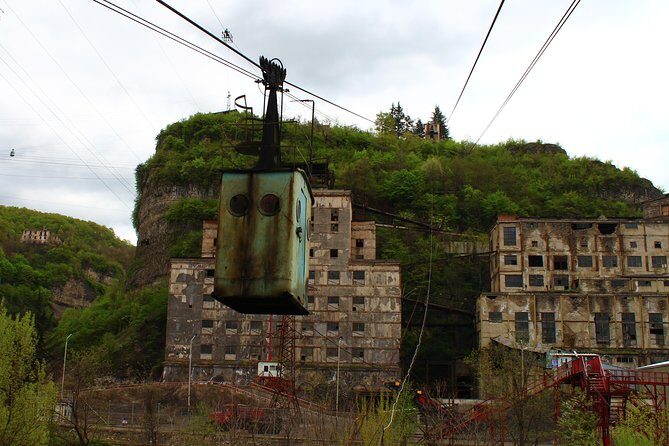
- Chiatura’s cable-car story is still tied to mining, so the town feels active even where parts are abandoned.
- Katskhi Pillar is a striking 40-meter limestone monolith with a monastery on top.
- Mgvimevi Monastery (13th century) adds art and stonework: carvings, frescoes, and a route with steps plus a tunnel.
- Hotel pickup and A/C transfers make the day smoother from Tbilisi.
- Admissions are free for the stops included, and snacks plus bottled water are provided.
- You’ll be traveling privately, meaning your guide can adjust to your pace.
From Tbilisi to Chiatura: A long day, but it’s built to move
This is a full-day private outing that runs about 8 to 10 hours. The big win here is convenience: you get hotel pickup and drop-off, and you travel by air-conditioned vehicle, which matters when the schedule stretches and temperatures change.
You’ll also want to plan your expectations around the drive time. Chiatura is not “around the corner” from Tbilisi, so you’re committing to a proper day out of town. The trade-off is that you leave the main tourist circuits behind and get a look at a Soviet-era industrial pocket that doesn’t get polished into a theme park.
If you prefer, pickup can start from other cities as well (not just Tbilisi). That’s useful if you’re already basing elsewhere in Georgia and want to avoid backtracking.
Other Kutaisi and western Georgia tours we've reviewed in Tbilisi
Chiatura: The Soviet mining town with cable cars you can still picture
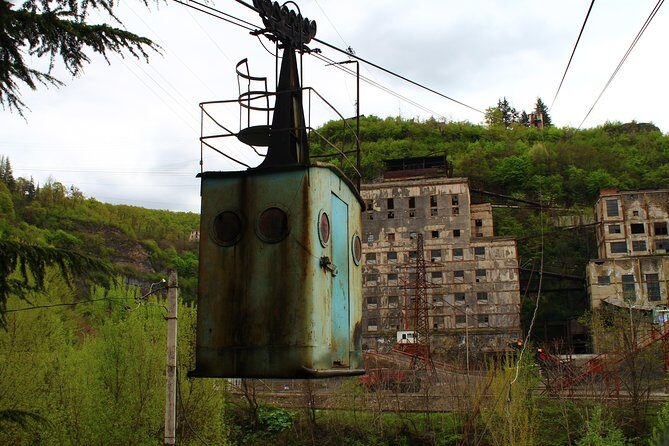
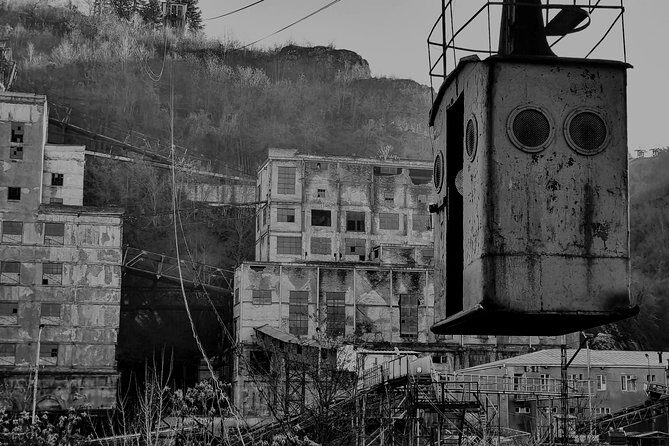
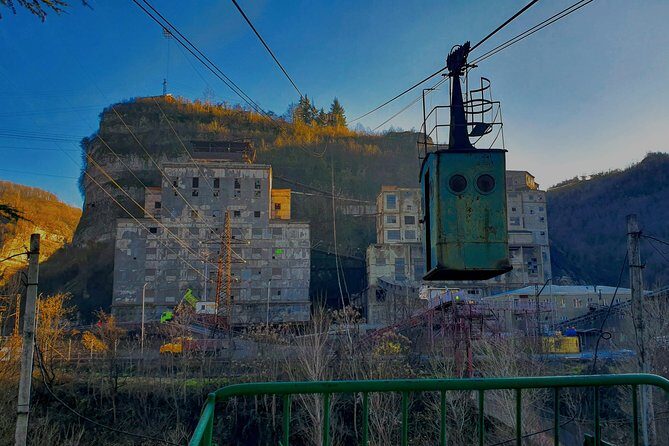
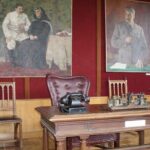
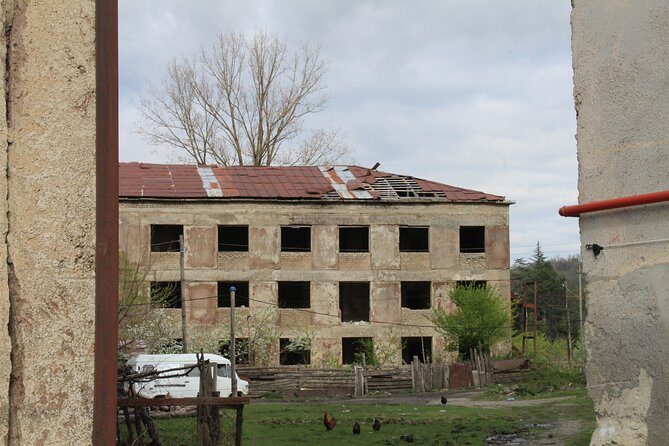
Chiatura is the heart of the Soviet-era fascination. This town isn’t just a museum. It’s a working place shaped by extraction, with Soviet-era cable cars historically used for miners—in particular, magnesium mining. Even when parts of the system are no longer in everyday use, the infrastructure still tells the story.
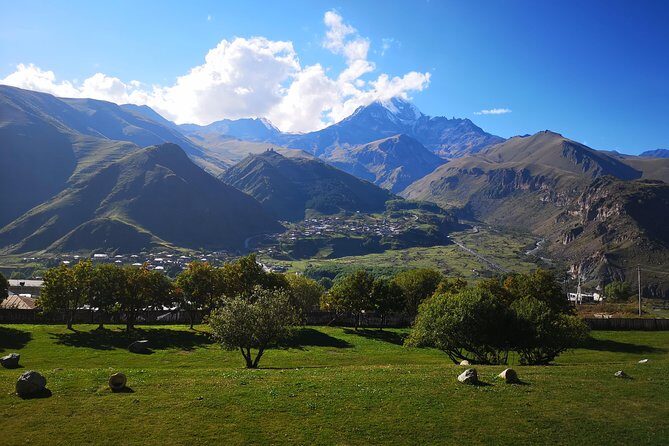
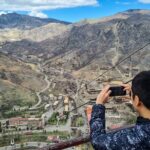
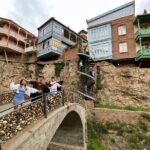
You’ll spend about two hours here, which is a realistic amount of time for industrial viewpoints, factory remains, and the town’s natural setting. The views tend to be a major part of the experience: Chiatura’s terrain helps explain why cable lines became the solution. When you’re standing in the right spots, the logic of the old system clicks fast—why the stations sit where they do, and why the buildings and routes feel built around steep slopes.
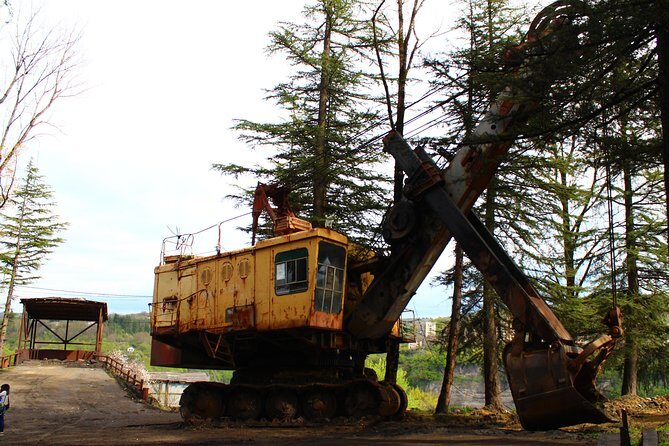
What I like about the Chiatura stop: it’s hands-on in a visual way. You don’t just get told about Soviet engineering; you see the bones of it—old factory bits and the cable-car network’s remnants. Plus, the pace is relaxed enough that you can stop for photos without feeling like you’re always chasing the clock.
A possible drawback: Chiatura is the kind of place where you may walk on uneven ground and alongside old structures. Wear shoes you trust. If you’re prone to sore feet, build in some extra walking time for yourself and don’t try to “power through” every viewpoint in one go.
Admission for this stop is free, so your visit time stays focused on the experience itself rather than ticket math.
The route to Katskhi Pillar: From industry to a 40-meter rock monastery
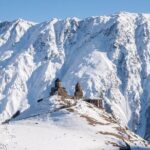
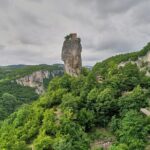
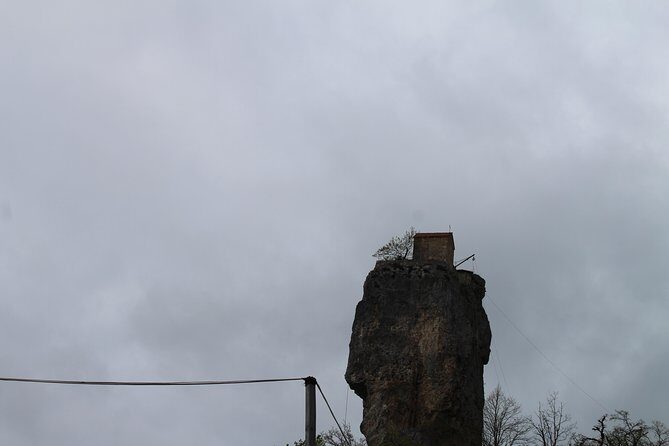
After Chiatura, the trip shifts from Soviet-era infrastructure to something completely different: faith built into the landscape. You head to Katskhi Pillar, a natural limestone monolith about 40 meters high with a monastery on top.
The stop is short—around 30 minutes—so you’ll want to arrive ready to look. This is one of those places where the best photos come when you understand the scale first. From below, the pillar can feel almost unreal in its height, and the monastery placement adds that sense of purposeful contrast: severe rock, delicate human presence.
What makes Katskhi Pillar work in a day like this: it gives you a mental reset. Chiatura is about industry and systems; Katskhi is about devotion and endurance. In one outing, you get both ways Georgia has learned to adapt—one by building cables and factories, the other by placing a monastery high on stone.
Since the admission is free here too, you can spend those 30 minutes purely observing: the pillar shape, the monastery silhouette, and the way the surrounding terrain frames the view.
Mgvimevi Monastery: Stone carvings, frescoes, and a route with steps and a tunnel
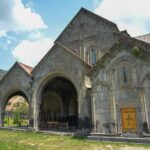
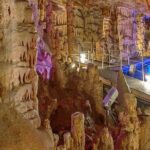
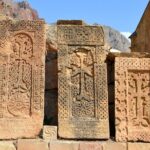
The final featured stop is Mgvimevi Monastery, a 13th-century site known for detailed stone carvings, frescoes, and a spectacular setting. You’ll have about 20 minutes here—short, but enough time to see the highlights if you keep your movement steady.
The experience is also physical in a specific way. You go up through steps and then through a tunnel route to reach the main viewpoints. That matters because this isn’t a flat stroll. It’s a “pay attention with your body” place.
What you’ll appreciate at Mgvimevi: the combination of art and access. The carvings and frescoes aren’t just wall decoration; they’re tied to the monastery’s dramatic approach. Standing in the right spots, you can understand why people historically wanted a location like this—protected, visible, and apart.
One consideration: if stairs and tunnels make you uncomfortable, plan to go slowly. The tour doesn’t require athletic performance, but it does call for moderate physical fitness. If you’re comfortable with uphill steps and enclosed passages, you’ll likely enjoy it. If not, bring patience and take breaks.
Admission here is also free, so your time stays focused on seeing.
Comfort, snacks, and timing: How the day stays manageable
One underrated part of a long out-of-town day is basic comfort. This tour includes snacks, bottled water, and A/C transfers. It also includes WiFi on board, which can be handy during travel time if you need to keep your photos and maps organized.
Lunch is not included. So if you want a smoother day, have a plan before you set out: either eat before pickup or be ready to grab something on the way back (depending on your guide’s suggestions and local options). Because you’re spending limited time at each stop, waiting too long for lunch can steal from your sightseeing window.
Also, with a duration of roughly 8–10 hours, bring the everyday items that matter:
- a camera with enough battery (you’ll want it at Chiatura and on the pillar)
- a light layer (church sites and shaded tunnels can feel cooler)
- comfortable footwear for steps and potentially uneven ground
This is one of those tours where small preparedness pays off fast.
Other Soviet and brutalist Tbilisi tours we've reviewed in Tbilisi



Guides David and Irakli: How conversation makes the sights stick
A big part of why this tour rates 5 stars is the human side. In the feedback, guides named David and Irakli get highlighted for being friendly, professional, and strongly invested in Georgian history and daily life. The best praise isn’t about reciting dates; it’s about making the sites understandable.
Here’s what you’re effectively buying when you book a private tour like this:
- fewer pauses for logistics
- more time to ask questions
- and a guide who can connect Soviet industrial choices with what you’re looking at right now
If you like history explained through real places—how miners worked, why cable systems made sense, why monasteries ended up where they did—this is the kind of guide interaction that turns photos into memories with context.
And if you’re more of a talk-with-the-driver type, guides like Irakli are described as accommodating and easy to converse with, including discussion of Georgian life beyond the monuments.
Who this Chiatura and Katskhi tour is best for
This day tour fits best if you want a serious change of scenery without multiple hotel moves. It’s also a good choice if you’re drawn to places where history shows up as physical structure: old factories, cable systems, monolith scale, and church art you can actually see up close.
You’ll likely enjoy it if:
- you like off-the-beaten-path stops
- you want a private, English-language experience
- you don’t mind a long day outside the city
- you’re okay with moderate walking and stairs at Mgvimevi
It’s less ideal if you have limited mobility or you strongly prefer fully flat sites. The tunnel route is a clue: you should assume you’ll feel enclosed at least briefly.
Also, because it’s private and your group gets undivided attention, it’s a great option if you’re traveling as a couple or with friends who want flexibility rather than sticking to a fixed group shuffle.
Price and value: Is $150 per person worth it?
At $150 per person, you’re paying for more than transport. You’re paying for a full-day private setup that includes:
- hotel pickup and drop-off
- air-conditioned vehicle with WiFi
- snacks and bottled water
- admissions included as free at each stop
- a guide who can tailor the conversation and pace to your group
The free admission piece matters because it protects your day from “surprise costs” at each location. It also means you can spend time where it counts: walking, looking, and asking questions.
Where the value really lands is the private format. If you’ve ever done group day trips and lost time to waiting, strict timing, or people moving at different speeds, private is a practical upgrade. If you split it with your group and you care about the guide experience, it becomes easier to justify.
One caution: it’s not a cheap “grab a seat” style outing. This is best seen as a paid day of guided access and transport, not a budget hop.
Should you book this Soviet past + Katskhi pillar day tour?
I’d book it if you want a day that feels like two real stories in one route: Soviet mining engineering in Chiatura, then a monastery perched on a natural limestone pillar. The price feels more reasonable once you factor in A/C transport, pickup/drop-off, snacks and water, and the fact that admission is free at every included stop.
But decide with your body in mind. Mgvimevi includes steps and a tunnel, and the day runs long. If you’re comfortable with moderate walking, bring camera-ready curiosity and good shoes, and you’ll get a lot out of 8–10 hours.
If that sounds like your style, this tour is a strong choice.
FAQ
What’s the duration of the tour?
The tour runs about 8 to 10 hours.
Is hotel pickup and drop-off included?
Yes. The tour includes A/C transfers with hotel pickup and drop-off.
How much is the tour, and what’s included in that price?
The price is $150.00 per person, and it includes all fees and taxes, air-conditioned vehicle, private transportation, WiFi on board, and snacks plus bottled water. Admissions at the included stops are free.
Is lunch provided?
No, lunch is not included.
Does the tour have a language option?
Yes, it’s offered in English.
Is this a private tour?
Yes. It’s a private tour/activity, and only your group participates.
Is there a minimum fitness level?
You should have a moderate physical fitness level due to stairs and a tunnel at Mgvimevi Monastery.
What’s the cancellation policy?
Free cancellation is available up to 24 hours before the experience’s start time for a full refund.