REVIEW · TBILISI
Georgian Essence: Cultural Immersion in a week
Book on Viator →Operated by Wonderful Travel · Bookable on Viator
Georgia reads like a fairy tale with receipts. In eight days, you cover monasteries, fortresses, caves, and wine country with private transport and carefully timed stops across Tbilisi, Kakheti, the Caucasus, and the Black Sea.
Two things I really like: the human touch from Irakli, who’s praised for staying supportive and planning helpful breaks, and the way the trip makes Georgian food part of the story, from qvevri winemaking to a cooking lunch with a local family. You end up seeing the sites, but you also learn how people live around them.
One thing to consider: at $2,200 per person, this is a premium price, and the tour needs good weather to run as planned.
In This Review
- Key highlights that make this tour work
- Why a private Georgia route feels easier than DIY
- Price and logistics: what $2,200 buys you
- Day 1: David Gareja caves to Signagi views and Telavi wine country
- Day 2: qvevri craft at Vardisubani, then Khevsureti fortress life
- Day 3: Aragvi Valley fortifications, the Gudauri Friendship Monument, and Gergeti
- Day 4: UNESCO churches, Stalin’s birthplace, and a cooking lunch in Mtskheta
- Day 5: Dashbashi Canyon’s Diamond Bridge, Vardzia cliff caves, and Rabati
- Day 6: Goderdzi Pass, Makhuntseti Waterfall, then Batumi on the Black Sea
- Day 7: Martvili Canyon by boat, Prometheus Cave, and Kutaisi’s Bagrati Cathedral
- Day 8: Gelati and Motsameta, Katskhi Ladder views, Chiatura rope roads, and Mgvimevi
- Should you book Georgian Essence for an 8-day Georgia binge?
- FAQ
- How long is the Georgian Essence tour?
- How much does it cost per person?
- Is this a private tour?
- Is pickup offered?
- What ticket format do you receive?
- Are entrance fees included?
- Does the tour include meals?
- Does the tour require good weather?
- What is the cancellation policy?
Key highlights that make this tour work
- A guide who handles the rhythm: photo-friendly stops, smooth coordination, and answers that connect culture to daily life
- Georgia through food and wine: shotis puri and aged cheese at Badiauri, plus a qvevri maker visit in Kakheti
- Church art you can actually see: frescoes and famous pilgrimage sites like Bodbe, Jvari, and Gergeti Trinity
- Rock-cut history on both ends: David Gareja and Uplistsikhe, plus the cliff monastery of Vardzia
- Coast + canyons, not just castles: Batumi, Martvili Canyon boat time, and Prometheus Cave
Why a private Georgia route feels easier than DIY
This tour is built around the idea that Georgia is easier when someone else manages the driving, timing, and the “where do I go next” moments. You’re not trying to stitch together bus routes between spiritual sites, fortresses, wineries, and mountain viewpoints. You just follow the plan and adjust within reason as the day unfolds.
The best part is how the route mixes big-name stops with smaller, practical experiences. You get the famous Georgian Orthodox pilgrimage sites, but you also get food and craft culture that make the day feel real. That balance is what makes the trip feel like more than a checklist.
And because it’s a private setup for your group only, you’re less likely to get stuck in the squeeze of shared tours. If you like taking your time at churches or want a quick extra moment for a view, this style of tour is the right format.
A few more Tbilisi tours and experiences worth a look
Price and logistics: what $2,200 buys you
At $2,200 per person for about 8 days, this is not a “cheap and cheerful” Georgia trip. What you’re paying for is door-to-door organization: private transportation, pickup offered, and a guide who stays with you through the route rather than pointing you toward the next stop.
It also helps that the tour includes key meals. The plan calls for breakfasts and lunches at comfortable hotels and during the day’s activities. That matters in Georgia because half the fun is eating well—so it’s good when you’re not spending time searching for meals between castles and caves.
Finally, entrance fees aren’t all on you. Many stops list admission included, while some are free. So the cost isn’t just “driving and a guide.” You’re also covered for a lot of the paid entry points that add up when you plan independently.
Day 1: David Gareja caves to Signagi views and Telavi wine country
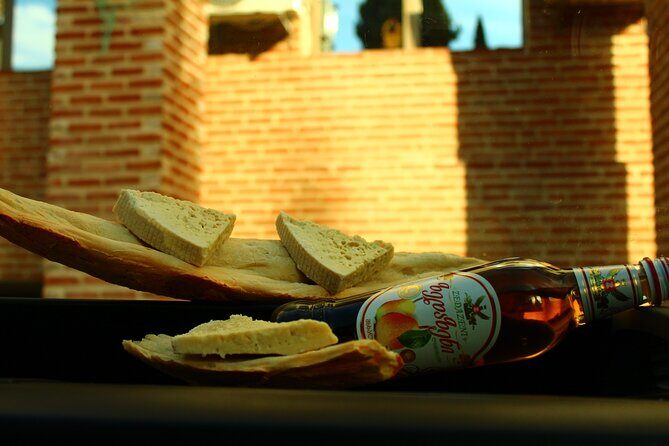
Your first day leans into Georgia’s mix of faith, grit, and food.
You start at David Gareja Monastery (about 1 hour, admission included), a rock-hewn monastic complex on the Georgia–Azerbaijan border. The setting is part of the effect: caves, churches, and a desert-like terrain that makes the whole place feel ancient and remote. It’s also famous for frescoes and historical manuscripts, so it’s a strong opening for anyone who likes seeing Christian art in its real context.
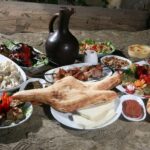
Then you shift gears with Badiauri, a short stop focused on taste. You’re looking at fresh bread, shotis puri, baked in clay ovens, and paired with aged cheese (about 15 minutes, free). This is the kind of quick, practical food break that helps the day feel balanced instead of nonstop stone and stairs.
After that comes Bodbe Monastery of St. Nino (about 30 minutes, admission included). This is a pilgrimage site tied to the story of Saint Nino, the figure associated with bringing Christianity to Georgia. If you care about how faith shaped daily life, you’ll likely find this stop both calming and meaningful.
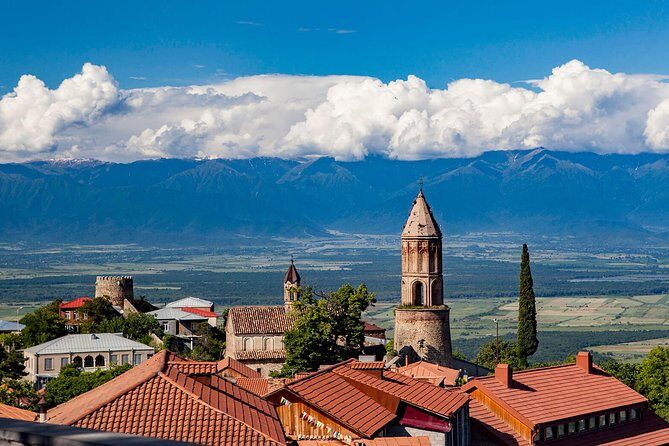
Next is Signagi, the City of Love (about 2 hours, free). Signagi’s real draw is the hilltop feel and the views over the Alazani Valley and the Caucasus Mountains. Stroll the old-town lanes, check out shops, and take in the well-preserved 18th-century architecture.
You finish in Telavi (about 30 minutes, free), the Kakheti administrative center. You’ll get the winemaking vibe, plus the chance to look at landmarks such as Batonis Tsikhe and the Palace of King Erekle II.
Day 2: qvevri craft at Vardisubani, then Khevsureti fortress life
Day 2 keeps the focus on Georgian identity, but in a more specialized way.
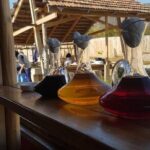
At Vardisubani, you visit a qvevri maker (about 1 hour, free). This is the kind of experience that turns “wine talk” into real cultural practice. You’ll see the craft of shaping the clay vessels that Georgia is famous for. It also gives you a clearer reason for why the winemaking tradition is treated as cultural heritage, not just production.
Next is Kvetera Fortress, Church (about 40 minutes, admission included). It dates to the 10th century and features ecclesiastical architecture with stone carvings and frescoes. If you liked the churches from Day 1, this is the more detailed, older-feeling version.
Then you head to Shatili Medieval Fortress Village (about 1 hour, admission included). Shatili is a UNESCO-listed mountain fortress village known for defensive towers and stone houses. The remoteness is the point here: you’re seeing how people lived in a hard geography and built for defense as part of daily survival.
Practical tip: this is mountain timing. Layers help, and sturdy shoes matter because village walking can mean uneven stone.
Day 3: Aragvi Valley fortifications, the Gudauri Friendship Monument, and Gergeti
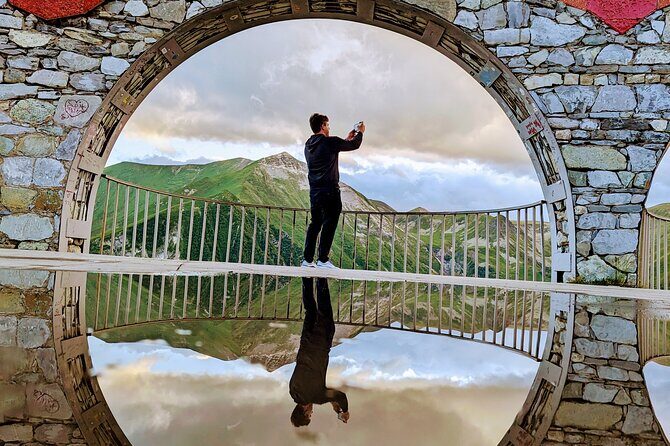
Day 3 is about dramatic views and big symbols.
You begin with Ananuri Fortified Castle Ensemble (about 1 hour, admission included) in the Aragvi River Valley. It has fortress structures, a mix of architectural influence, and frescoes. The views from the ensemble are a key part of the experience, especially if you like seeing why fortresses were built where they were.
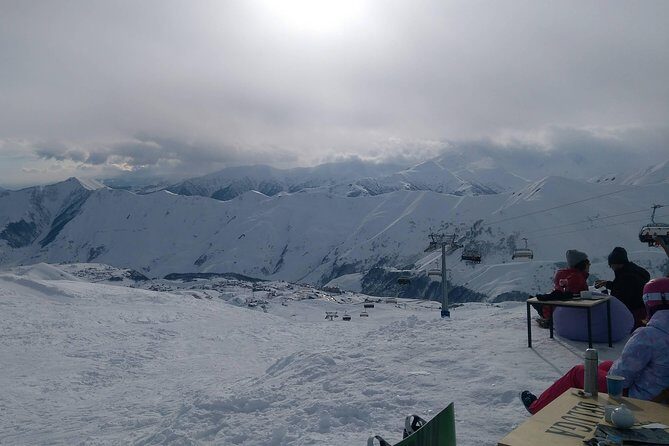
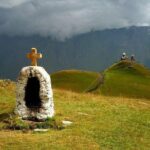
Then you stop at the Russian Georgian Friendship Monument near Gudauri (about 40 minutes, free). This one is more about the story and the era than the religious feel. Constructed in the 1980s, it commemorates the Treaty of Georgievsk and uses mosaic work that catches your eye against the mountains.
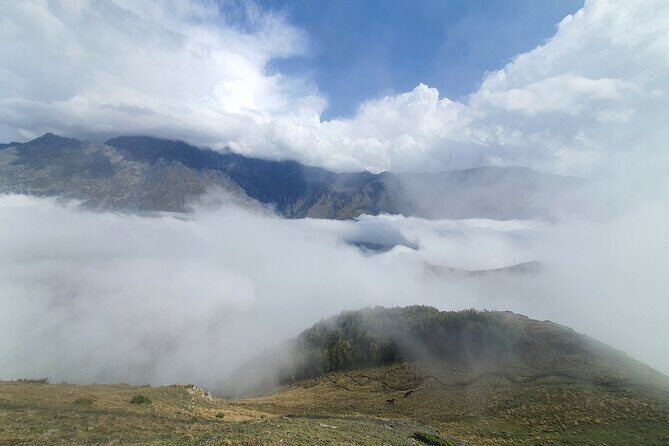
After that comes Gergeti Trinity Church (about 1 hour, admission included). The church sits high above the valleys, and the photo power here is strong for a reason: the setting gives you a clean view of the monument and the surrounding peaks. It’s a classic Georgia moment, but it doesn’t feel generic because you’re getting it as part of a broader route that already taught you how geography, faith, and culture connect.

Day 4: UNESCO churches, Stalin’s birthplace, and a cooking lunch in Mtskheta
Day 4 is a real contrast day—sacred sites, Soviet-era history, and hands-on cooking.
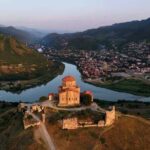
First is Jvari Church near Mtskheta (about 1 hour, free). As a UNESCO site, it’s known for early Christianity and for the view from the hill. You’ll also see frescoes inside, and the site is tied to Saint Nino’s story.
Then you head to the Stalin Museum in Gori (about 1 hour, admission included). This stop can feel jarring after religious architecture, but that contrast is useful. Georgia’s modern story sits on top of older layers, including the Soviet period, and this museum gives you a direct look at that legacy through Stalin’s birthplace.
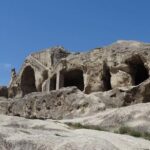
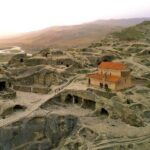
After lunch-time energy shifts (in the middle of the day), you visit Uplistsikhe Cave Town (about 1 hour 30 minutes, admission included). It’s an ancient rock-hewn town with cave dwellings, streets, and structures carved into stone. Climbing rock-cut stairways is part of the deal, and it makes the place feel like a real settlement rather than a static ruin.
Next comes Svetitskhoveli Cathedral in Mtskheta (about 1 hour, admission included). This medieval cathedral matters for multiple reasons, including its role as a burial site of Georgian kings and its status as a pilgrimage destination. If you want church art and stonework that feels old and important, this is a strong anchor.
Then you switch into Georgian cooking mode. In Mtskheta, you take part in a cooking class and have lunch hosted by a local family (about 2 hours, free). Expect hands-on instruction, including learning khinkali-making, plus other classic Georgian dishes. Even if you don’t think of yourself as a cooking person, this is one of the most practical “take-home” parts of the tour because you eat what you make.
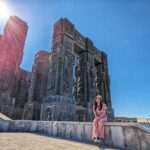
You end the day with Chronicles of Georgia in Tbilisi (about 30 minutes, admission included). It’s a monumental sculptural ensemble that visually narrates key moments of Georgian identity—useful when you’ve spent the day bouncing between religion, empire, and everyday life.
Day 5: Dashbashi Canyon’s Diamond Bridge, Vardzia cliff caves, and Rabati
Day 5 is the “Georgia does nature and ruins at the same time” day.
You start at Dashbashi Canyon (about 1 hour, admission included). The main highlight is Diamond Bridge, a distinctive diamond-shaped structure over the canyon. Walking out onto the bridge and looking down at the river below is a quick thrill, and the canyon gives you a break from churches without leaving history behind.
Next you visit Vardzia (about 2 hours, admission included). This is a cliff monastery carved into the side of a mountain, with chapels, chambers, and frescoes. It’s UNESCO, and it tends to hit different than cave towns because you’re seeing a whole community built into stone.
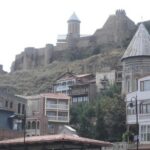
Then you finish the day at Rabati Castle in Akhaltsikhe (about 1 hour, admission included). Rabati is a fortress with layered architectural influence. You can explore courtyards and structures on site, including museum areas and religious buildings. The value here is that it feels like a meeting point of styles, not just a single-era monument.
Practical note: Vardzia and Rabati both mean walking. Build in some water breaks, and don’t plan to treat every stop like a sprint.
Day 6: Goderdzi Pass, Makhuntseti Waterfall, then Batumi on the Black Sea
Day 6 shifts toward coastal energy while still keeping mountain stops.
You visit Goderdzi Pass (about 20 minutes, free). It’s short, but the payoff is the panoramic views from the pass area. If you want a “mountain air” moment without losing half the day to travel, this fits well.
Then it’s Makhuntseti Waterwall and King Tamar’s Bridge (about 1 hour, admission included). You’ll get a waterfall in a scenic setting plus time on the historic bridge. It’s a good break day because the pace is slower and you’re mostly walking easy paths and enjoying the sound and view.
Finally, you arrive in Batumi (the stop lists 1 minute, free, but the city visit is part of the day’s plan). Batumi is modern and coastal, with a Black Sea vibe. You’ll want time around Batumi Boulevard and the Old Town’s cobblestone streets, plus the chance to explore the city’s museums and art scene. If you’ve spent the last few days on monasteries, Batumi provides an easy contrast: beach-city life mixed with Georgian culture.
Day 7: Martvili Canyon by boat, Prometheus Cave, and Kutaisi’s Bagrati Cathedral
Day 7 is packed with natural wonders and one major city stop.
You start at Shekvetili Dendrological Park (about 2 minutes, admission included). Even with a short time window, it’s a sign of how this tour doesn’t treat nature as filler. The park is over 100 hectares, so it gives you a calm pause between active visits.
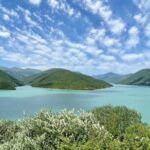
Then you head to Martvili Canyon (about 1 hour, admission included). The highlight is the boat ride along turquoise waters, plus viewpoints in the canyon. The walls and greenery create a “Georgia has more than stone buildings” moment.
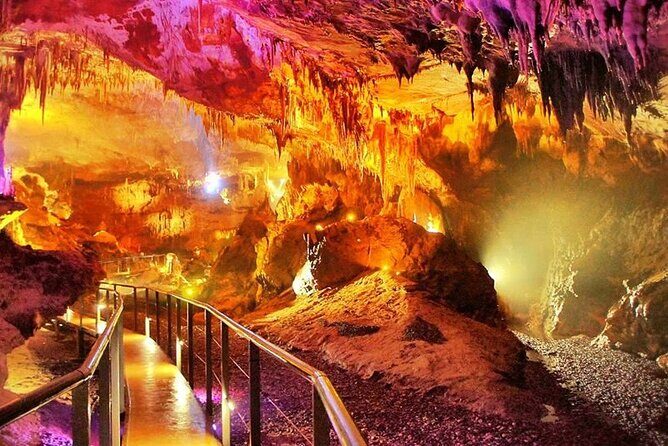
Next comes Prometheus Cave (about 1 hour, admission included). It’s an underground world with stalactites and stalagmites, plus an underground river experience illuminated with lights. If you like geology, it’s one of the more unusual stops on the whole route.
Later, you visit Bagrati Cathedral in Kutaisi (about 30 minutes, admission included). It’s UNESCO and partly restored, and you also get hilltop views over Kutaisi. It’s a great final city anchor before the last day’s spiritual and unusual sites.
You also get some time in Kutaisi (about 1 hour, free). It’s the second-largest city in Georgia, and the plan includes a chance to wander cafés, markets, and local shops.
Day 8: Gelati and Motsameta, Katskhi Ladder views, Chiatura rope roads, and Mgvimevi
Day 8 is a mix of spiritual sites and the strange-but-true engineering story of Chiatura.
You begin with Gelati Monastery near Kutaisi (admission included). Founded in the 12th century, it’s known for church architecture and frescoes. You also get the feel of a monastery complex designed for learning and worship—so it’s not just one church photo.
Next is Motsameta Monastery (about 30 minutes, admission included). It’s perched above and connected to the story of martyrs. Plan on quieter time here: lighting candles and looking closely at frescoes is the point.
Then comes Katskhi Pillar (about 40 minutes, admission included). It’s a limestone monolith topped with a small medieval monastery. Access is by a narrow ladder, so it’s not for everyone if heights feel intimidating. If you can handle that, the view from up there is the payoff.
After that you visit Chiatura (about 1 hour, free). Chiatura is famous for its cable car system, often called rope roads. You’ll glide by cable cars above valleys and cliffs, plus see Soviet-era architecture and visit the Museum of Cable Cars. It’s a refreshing change from churches because it’s a story of work, industry, and how people built around steep terrain.
You end with Mgvimevi Monastery (about 1 hour, admission included). This is another cliffside cave-style monastic stop, remote and quiet, with cave dwellings and chapels carved into limestone.
Should you book Georgian Essence for an 8-day Georgia binge?
Book it if you want: a single organized route, door-to-door driving, and a guide who can connect what you’re seeing with how Georgians live now. This tour’s strongest selling point is how often the day pairs major sites with food, wine, or craft culture—so you’re not just staring at stone monuments all week.
Skip it (or at least reconsider) if you’re chasing a low-cost trip or if long travel days between regions will make you cranky. This route moves across Kakheti, the Caucasus, and the Black Sea, and that kind of coverage only feels great when you’re okay with being on the road between highlights.
One last thought: if you book, pack comfortable shoes and plan for stairs, uneven paths, and variable mountain weather. You’ll enjoy the churches more when you’re not nursing sore feet.
FAQ
How long is the Georgian Essence tour?
The tour is listed as 8 days (approx.).
How much does it cost per person?
The price is $2,200.00 per person.
Is this a private tour?
Yes. It’s a private tour/activity, and only your group will participate.
Is pickup offered?
Yes, pickup is offered.
What ticket format do you receive?
The tour includes a mobile ticket.
Are entrance fees included?
Many stops list admission ticket included, while some stops are free. The itinerary shows a mix of included and free entries by site.
Does the tour include meals?
The overview says breakfasts and lunches are included, with hotels and meals chosen to match the tour style.
Does the tour require good weather?
Yes. The experience requires good weather, and if it’s canceled due to poor weather, you’ll be offered a different date or a full refund.
What is the cancellation policy?
Free cancellation is available. You can cancel up to 24 hours in advance for a full refund, but within 24 hours there is no refund.