REVIEW · TBILISI
Ancient Georgia Group Tour: Mtskheta,Jvari, Gori, Uplistsikhe
Book on Viator →Operated by Imperial Tours · Bookable on Viator
A single day can cover Georgia’s big stories. You’ll see the meeting of rivers at Jvari, the sacred heart of Mtskheta at Svetitskhoveli, and then switch gears to Soviet history in Gori’s Stalin museum. I like that the tour keeps moving, but it still builds in real time to look, walk, and take photos.
Two things I especially like: the comfort of an air-conditioned van for a long day, and the mix of stops that feel both spiritual and political instead of repeating the same scenery. One thing to consider: it’s a long stretch (about 9–10 hours), and the day can run longer if your group ends up doing narration in more than one language.
In This Review
- Key highlights you’ll actually care about
- A 9 to 10 Hour Ancient Georgia circuit from Tbilisi
- Jvari Monastery and the rivers at their meeting point
- Svetitskhoveli Cathedral: Mtskheta’s main spiritual anchor
- Stalin Museum in Gori: Soviet history in the place it began
- Uplistsikhe cave town: rock-cut layers and serious walking
- Lunch timing: a local restaurant break
- Wear the right shoes
- Getting the most from a small group and a switching-languages day
- Price and value: what $24 buys and what to budget next
- Practical tips that make the day easier (and more respectful)
- Bring a scarf or head covering for churches
- Plan long pants or leg coverage
- Use shoe traction for Uplistsikhe
- Keep a light backpack
- Weather matters
- Who this tour suits best
- Should you book the Ancient Georgia group tour (Mtskheta, Jvari, Gori, Uplistsikhe)?
- FAQ
- How long is the tour?
- Where does the tour start and end?
- Is admission included for every site?
- What’s included in the tour price?
- Is the tour offered in English?
- How big is the group?
- Does the tour require good weather?
- What are the cancellation rules?
Key highlights you’ll actually care about
- Free church visits at Jvari and Svetitskhoveli, with paid time focused on the two major ticket stops
- Small group size (max 15), which makes it easier to keep track of everyone during walks
- Uplistsikhe cave city with rock-cut sites spanning many centuries and a mix of styles from different regions
- Stalin museum in Gori, tied to the place where he was born, with exhibits inside his birth house
- Comfort features included: WiFi on board and an air-conditioned vehicle
- Practical dress tips for churches: bring a headscarf and plan for covered shoulders/legs
A 9 to 10 Hour Ancient Georgia circuit from Tbilisi
This is a full-day route that starts at 15 Abano St in Tbilisi at 9:00 am and returns you to the same meeting point. The listed total time is about 9 to 10 hours, and transportation time is already part of that plan, so you’re not guessing how much of the day is spent in a van.
The tour is built for a maximum of 15 people, which helps. With larger groups, you can feel trapped in a line or rushed between stops. Here, the day typically feels like guided sightseeing with room to actually look at what you came for, not a sprint.
You’ll move through three different “moods” of Georgia in one go: early Christian sites around Mtskheta, the Soviet chapter in Gori, and then the older-than-you-think story of the cave town at Uplistsikhe. That variety is a big part of the value.
Other Mtskheta tours we've reviewed in Tbilisi

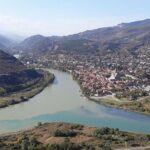
Jvari Monastery and the rivers at their meeting point
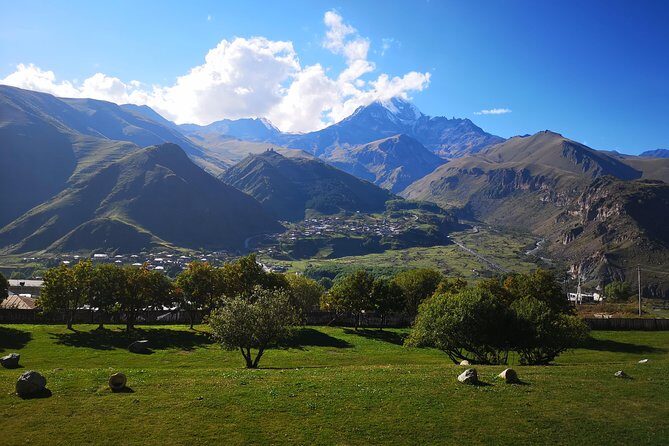
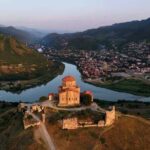
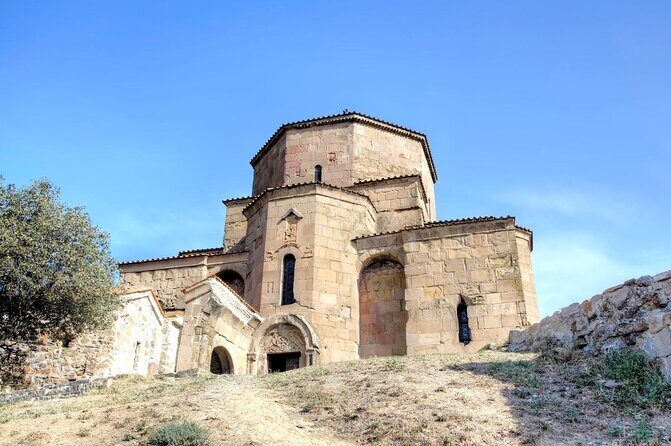
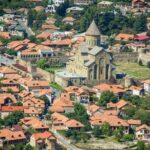
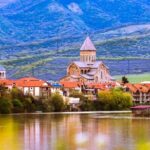
Your day starts with Jvari Monastery, timed for about 40 minutes. The location matters. Jvari sits at the confluence of the Mtkvari and Aragvi rivers, so you get a natural sense of “place” the moment you arrive. Even if you’re not the type to memorize historical dates, confluence points tell a story: trade routes, settlements, and spiritual sites tend to cluster where rivers connect.
Admission here is free, so you can spend your money on the ticket stops later without feeling like the day is nickel-and-diming you immediately. Also, this stop is short enough that you don’t feel like you’re being parked. You can do a quick orientation, take in views, and still have energy for the rest of the route.
Practical note: this is a monastery visit, so plan clothing that works for church interiors. If you’re wearing layers, you’ll thank yourself later when the day gets warmer inside the van and cooler in the open air.
Svetitskhoveli Cathedral: Mtskheta’s main spiritual anchor
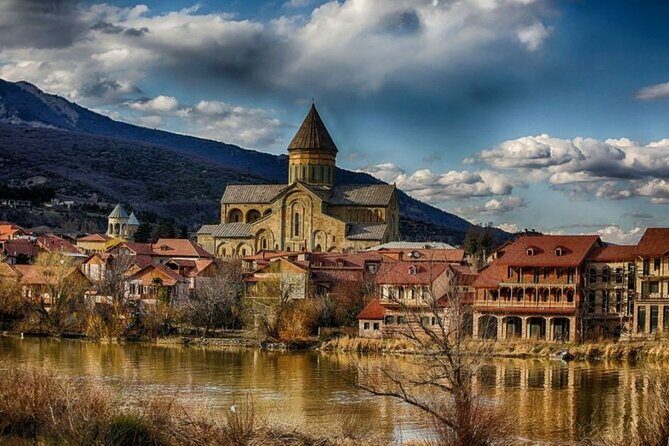
After the Gori and cave town stops, you return to Mtskheta for Svetitskhoveli Cathedral for about 30 minutes. This is the one that really grounds the religious story of the day.
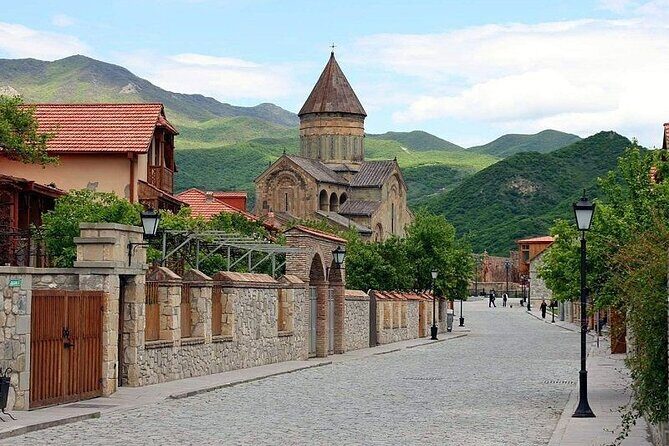
Svetitskhoveli is described as being at the heart of Old Mtskheta and considered even more historically significant than Jvari. The tradition is that it was erected on the spot chosen by Saint Nino, and the cathedral is known for relics. What makes it more than a pretty stop is the specific list of what people come to see: a belief that it houses Christ’s Mantle, a 4th-century baptismal font, and a piece of cedar wood said to have been salvaged from the original structure.
Admission is free, which is a nice win because this stop has the emotional weight of a “center.” In a well-paced day, a short visit like this can feel powerful when you’re not being rushed through it.
If you’re trying to decide what to photograph: spend your time looking up from ground level, then step back for wider angles. Cathedral spaces often reward a slower glance. Even with only 30 minutes, you can get both details and the big picture.
Stalin Museum in Gori: Soviet history in the place it began
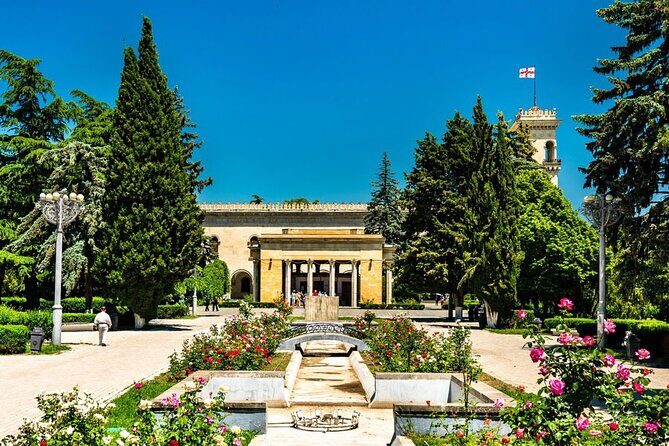
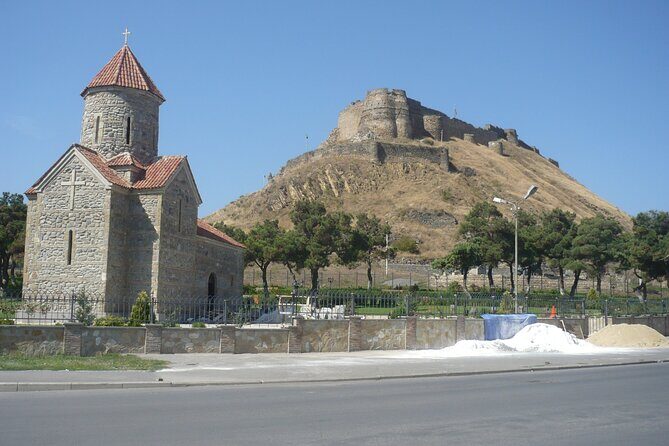
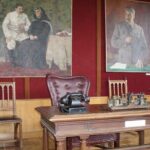
Next comes a total mood shift to Gori and the State Stalin Museum. The stop is about 1 hour, and admission is 15 GEL per person. This museum sits in the town where Stalin was born, and the museum complex opened in 1957.
A key detail that makes this more than generic exhibits: the memorial museum opened during Stalin’s lifetime (1937) in the actual house where he was born. You’re not just reading about a figure. You’re walking into the setting connected to that origin story.
How to frame it while you’re there: if your goal is to understand Georgia’s 20th-century pressures, this stop is a fast, concentrated way to do it. If you’re expecting a neutral, distance-free museum experience, you might find the tone is shaped by the museum itself and the era it reflects.
One practical consideration from the field: the museum setup can be fairly basic, and if you strongly rely on audio aids, you might prefer to bring your own plan for reading and absorbing the exhibits.
Uplistsikhe cave town: rock-cut layers and serious walking
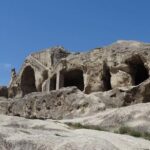
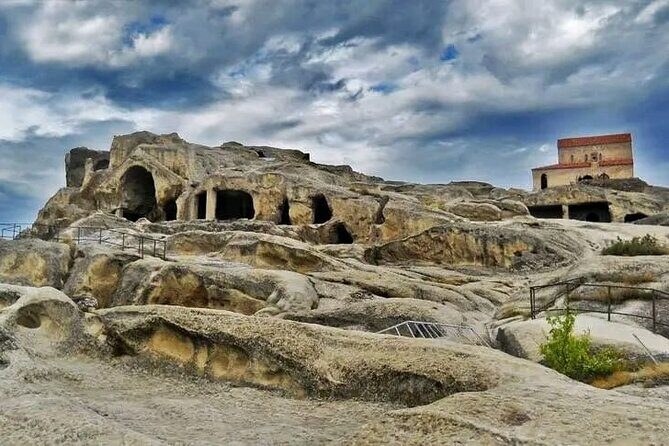
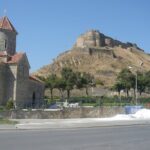
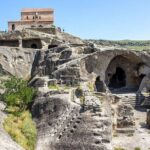
Then you hit Uplistsikhe, a cave town built on a high rocky left bank of the Mtkvari River. You’ll spend about 2 hours total for the cave town experience, split into two time blocks. Admission is 15 GEL per person.
The reason Uplistsikhe earns its keep is the mix of time periods and styles in one place. The site includes structures from the Early Iron Age to the Late Middle Ages. It’s also described as a unique combination of rock-cut cultural styles linked to Anatolia and Iran, plus the co-existence of pagan and Christian architecture.
That sounds academic, but here’s why it matters for you on the ground: a cave city like this doesn’t feel like one “moment in time.” You can see different kinds of spaces carved and adapted for different needs—storage, worship, daily life—layered over long stretches. It’s visual history you can walk through.
Other Uplistsikhe cave tours we've reviewed in Tbilisi
Lunch timing: a local restaurant break
You also get lunch during the Uplistsikhe portion, at a local restaurant. Lunch is not included in the tour price, so you’ll need to budget for a meal. The upside is that you’re eating close to the action. You’re not bouncing back and forth to Tbilisi just to find food.
Wear the right shoes
Uplistsikhe involves climbing on rocks. If the weather is wet, it can get tricky. I’d treat your footwear like it’s for uneven outdoor stairs, not sightseeing sandals. Good traction matters.
Also, think about energy. Even with guidance, you’re doing real walking and climbing. If you’re even slightly unsure about your footing, choose sturdier shoes and take your time.
Getting the most from a small group and a switching-languages day
The tour is offered in English, and the van includes WiFi plus air conditioning, which helps a lot on a long day. Guides can also switch languages to accommodate the group, and that’s a real-world detail worth planning around.
From real experiences with this kind of setup, the biggest risk isn’t knowledge—it’s pacing. If your group ends up doing narration in more than one language, you may feel like you’re hearing the same ideas twice. That can stretch the day beyond what you expect, even if the core schedule looks similar on paper.
If you’re the type who tunes out when you have to process two languages, do yourself a favor and confirm what the group language pattern looks like before you go. It’s also smart to have a short buffer for patience on arrival days.
The good news: when the guide is on top of logistics, it shows. People have praised guides like David, Natalia, Lasha, Tami, and Omar for keeping the group together, adjusting plans smoothly, and making sure everyone stays engaged. In practice, that means clearer meeting points, better pacing between walking areas, and fewer chances you end up lost in the wrong direction.
Price and value: what $24 buys and what to budget next
The tour price is $24.00 per person, and it includes WiFi on board and an air-conditioned vehicle. Over a 9–10 hour route with multiple sites, that baseline value can feel solid.
But you should budget for the ticket stops and lunch:
- Stalin Museum (Gori): 15 GEL per person
- Uplistsikhe cave town: 15 GEL per person
- Lunch: not included, you’ll eat at a local restaurant at the end of the tour segment
- Jvari Monastery: free admission
- Svetitskhoveli Cathedral: free admission
So the main added costs are the two paid ticket sites plus your meal. If you’re someone who likes packing a lot into one day, this tour is built for that. If you hate extra ticket lines or prefer a slower pace, you might feel the day is asking more from you than from your wallet.
My practical take: this is a good value when you want variety—Christian roots in Mtskheta, Soviet history in Gori, and the older world at Uplistsikhe—without needing to plan driving, parking, and linking sites on your own.
Practical tips that make the day easier (and more respectful)
Bring a scarf or head covering for churches
Church visits mean covering up. If you don’t want to borrow scarves on site, bring your own headscarf. People note that women may want coverage for head areas, and men should plan for leg coverage if needed.
Plan long pants or leg coverage
If you’re a man, bring long pants if you have them. If not, you may find you need extra covering options at entrances. It’s not hard, but it can slow you down if you’re unprepared.
Use shoe traction for Uplistsikhe
This is the most physically “hands-on” stop. Uplistsikhe has climbing and uneven surfaces. Wet conditions can make it more slippery, so shoes with grip are your best friend.
Keep a light backpack
You’ll want space for a scarf, water, and something small to keep your day comfortable. The tour has van comfort, but outside you’ll be carrying the basics.
Weather matters
The experience is described as requiring good weather. If conditions are poor, you should expect changes to the plan, with the option of a different date or a refund.
Who this tour suits best
This is a strong fit if you:
- want a big historical day without doing the driving math
- like mix-and-match stops: sacred sites, Soviet-era history, and cave architecture
- can handle walking and rock steps at Uplistsikhe
It’s not ideal if you:
- have mobility limitations that make climbing difficult
- expect a fully flat, stroller-friendly schedule
- get frustrated when narration turns into a dual-language format
Should you book the Ancient Georgia group tour (Mtskheta, Jvari, Gori, Uplistsikhe)?
I’d book it if your goal is a first-timer-friendly sampler of central Georgia—one day that takes you from river-spiritual viewpoints to a Soviet museum birthplace, then into an ancient cave city.
But I wouldn’t book it if you want slow travel or you know you’re sensitive to long days and language switching. The day is packed, and Uplistsikhe is the stop where physical comfort matters most.
If you do book: pack traction shoes, bring a headscarf, and be ready for an energetic pace. For the price, with two paid ticket sites and two free major sites, the day is set up for value and variety—just know what kind of day you’re choosing.
FAQ
How long is the tour?
It runs about 9 to 10 hours and starts at 9:00 am.
Where does the tour start and end?
The tour starts at 15 Abano St, Tbilisi, Georgia and ends back at the same meeting point.
Is admission included for every site?
No. Jvari Monastery and Svetitskhoveli Cathedral are free, but the Stalin Museum costs 15 GEL per person and Uplistsikhe costs 15 GEL per person. Lunch is also not included.
What’s included in the tour price?
You get WiFi on board and an air-conditioned vehicle.
Is the tour offered in English?
Yes, it’s offered in English.
How big is the group?
The tour has a maximum of 15 travelers.
Does the tour require good weather?
Yes. It requires good weather, and if it’s canceled due to poor conditions, you’ll be offered a different date or a full refund.
What are the cancellation rules?
Free cancellation is available. You can cancel up to 24 hours in advance for a full refund.