REVIEW · TBILISI
Mtskheta – Jvari + Gori – Uplistsikhe Tour
Book on Viator →Operated by Georgia Tour Factory · Bookable on Viator
A day like this gives you four different Georgia vibes in one clean loop. You get big views from Jvari, sacred sites in Mtskheta, Soviet history in Gori, and then a 3,000-year-old cave fortress at Uplistsikhe. It’s built for an easy, efficient day trip without you juggling transport.
What I like most is the hassle-free hotel pickup and drop-off, plus a private setup where you only share the day with your group. The driver-guide approach also matters here: you’re not just dropped at gates, you get context as you move from place to place.
One drawback to plan for: the day depends on conditions outside. If rain or cold wind shows up, the higher spots and rocky walks can feel tough, and you’ll want to be ready with warm layers and good shoes.
In This Review
- Key highlights to know before you go
- Why this day trip from Tbilisi works so well
- Price and logistics: what $54.07 covers (and what to budget)
- Stop 1: Jvari Monastery for the cross and the river meeting views
- Stop 2: Mtskheta and Svetitskhoveli Cathedral, UNESCO in an easy walk
- Stop 3: Gori’s Stalin House-Museum for a focused look at Soviet Georgia
- Stop 4: Uplistsikhe cave town for the fortress of God you can actually walk through
- A quick packing checklist for Uplistsikhe
- The driver-guide effect: why the “private” part matters
- Weather and comfort: don’t let cold rain steal your day
- Who should book this Mtskheta–Gori–Uplistsikhe private loop?
- Should you book? My practical verdict
- FAQ
- How long is the Mtskheta–Jvari + Gori – Uplistsikhe Tour?
- Does the tour include hotel pickup and drop-off in Tbilisi?
- What entrance fees are not included?
- Is the tour offered in English?
- Is WiFi available during the drive?
- What happens if the weather is bad?
- What’s the cancellation policy for a full refund?
Key highlights to know before you go
- Private tour feel: only your group, with a driver-guide and time to take it at your pace.
- In-car WiFi: handy for maps, messages, and keeping the day low-stress.
- Jvari and Mtskheta are free to enter: you only budget paid entrances at Gori and Uplistsikhe.
- Uplistsikhe’s rock-carved sights: Sun Temple, Royal Hall of Queen Tamar, old library, and more.
- Stalin House-Museum in Gori: a focused look at Joseph Stalin’s life via the original house and items.
- Good weather helps a lot: this tour is designed for an outdoor day, so pack for the conditions.
Why this day trip from Tbilisi works so well
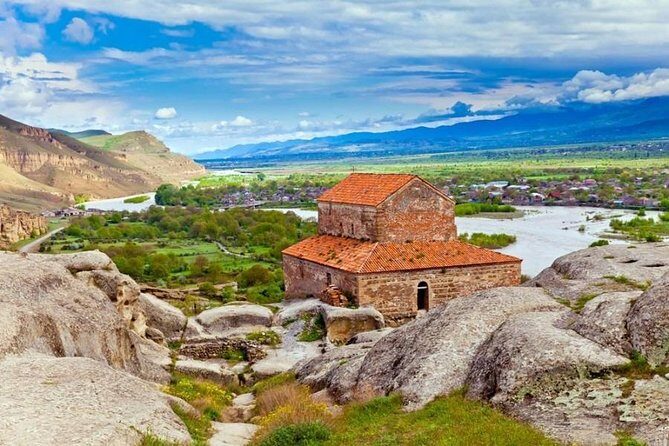
This is the kind of route I’d pick when you want depth without complexity. You’re covering four major stops that each tell a different chapter of Georgia: early Christianity and royal era symbolism, a UNESCO capital with sacred relics, a Soviet flashpoint town, and then a rock-city that long predates all of it.
The timing is also sensible. You’re not spending hours in one museum and then rushing the rest. Instead, you get short, meaningful visits—about 20 minutes at Jvari, around 45 minutes in Mtskheta, about an hour in Gori, and roughly an hour at Uplistsikhe—plus driving time that keeps the day feeling full but not endless.
And because it’s private transportation with pickup anywhere in Tbilisi, you skip the headache of coordinating multiple rides. For a one-day itinerary, that’s not a small detail—it’s the difference between enjoying the day and feeling behind.
Other Mtskheta tours we've reviewed in Tbilisi

Price and logistics: what $54.07 covers (and what to budget)
The listed price is $54.07 per person, and it includes hotel pickup and drop-off, private air-conditioned transportation, and a driver-guide in English. It also includes things that make the day smoother, like mobile ticketing and in-car WiFi.
Two entrance fees are not included:
- Stalin House-Museum (Gori): $5.00 per person
- Uplistsikhe Cave Town: $5.00 per person
Meanwhile, the key church/cathedral stops are listed as free for tickets during the scheduled visits:
- Jvari Church
- Svetitskhoveli Cathedral in Mtskheta
So in practical terms, you’re mainly planning for two small add-ons. If you’re comparing value, you’re paying for an efficient, guided loop that’s hard to stitch together yourself—especially when you factor in pickup, transport, and interpretation across multiple sites.
One more small logistics note: this tour is often booked about 30 days in advance on average. If your dates are fixed (holidays, weekends, or a busy summer window), it’s smart to book early rather than waiting.
Stop 1: Jvari Monastery for the cross and the river meeting views
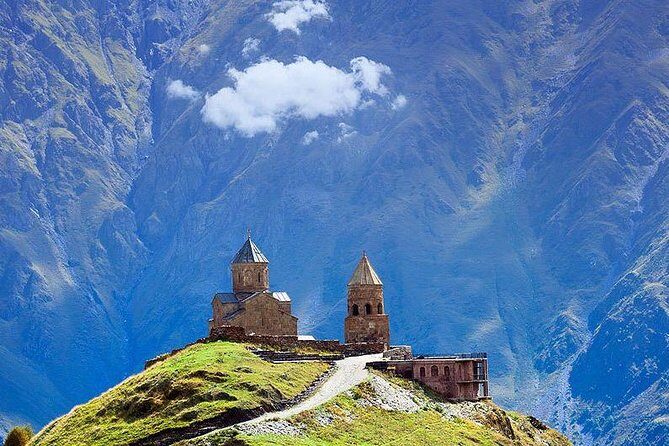
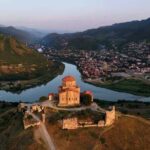
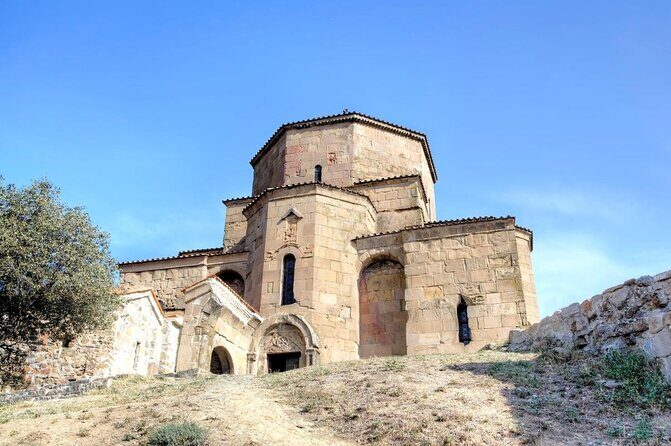
Jvari is the opener, and it’s a strong one. The monastery sits on a high point near the ancient capital of Mtskheta, above the intersection of the Aragvi and Kura rivers. The setting is part of the experience: you’re going up to understand why people built sacred places where the land and water align so dramatically.
The timing is short—about 20 minutes—so this is not a “slow wander” stop. It’s more like a viewpoint-plus-spot-the-details moment. The church itself dates back to the 6th century, and the name Jvari translates from Georgian as the cross. Expect your guide to explain why the architecture and placement became so important in the story of Georgian Christianity.
What to keep in mind:
- Bring layers. Even when Tbilisi feels mild, ridge locations can be windy.
- Wear shoes with solid grip. The ground near viewpoint areas can be uneven.
- If it’s cold or rainy, this is the spot where conditions can affect your comfort the most, since you’re outdoors at a height.
Stop 2: Mtskheta and Svetitskhoveli Cathedral, UNESCO in an easy walk
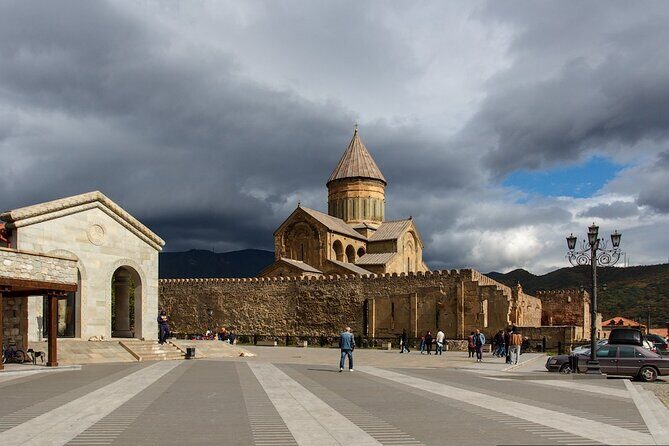
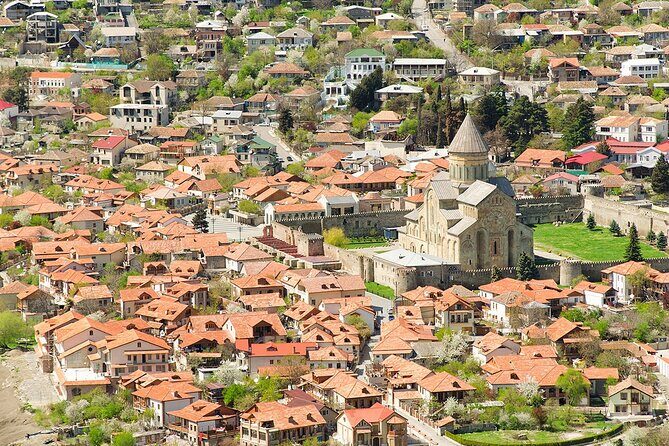
Next comes Mtskheta, another UNESCO World Heritage Site. This town has been inhabited for more than 2,600 years, and it once served as the capital of the early Georgian Kingdom of Iberia. In other words, you’re not just visiting a pretty historic town—you’re stepping into a timeline that stretches way beyond modern borders.
Your visit includes a walk from the parking area to the historical center. Along the way, you pass narrow streets where you’ll likely spot souvenir shops, wine tastings, and traditional Georgian sweets. That’s a nice break in the day, because after the viewpoint at Jvari, you get a more relaxed pace—strolling, looking, and getting your bearings.
The main focus here is Svetitskhoveli Cathedral, one of the most sacred places in Georgia. It’s known as the burial site of Christ’s Robe. Whether you’re coming for religious meaning, architecture, or big-story history, this cathedral is the reason many people make the trip.
The scheduled time at Mtskheta is about 45 minutes, which gives you enough room to:
- see the cathedral area properly
- look around the streets without feeling rushed
- ask questions while things are still fresh and your group is together
If you enjoy context, this is a great stop for it. A driver-guide can help you connect the symbolism of Jvari’s cross with why Svetitskhoveli became such a key spiritual landmark.
Stop 3: Gori’s Stalin House-Museum for a focused look at Soviet Georgia
Then the route shifts gears to Gori, Joseph Stalin’s hometown. The emotional tone here can be very different from the church visits. Instead of sacred relics, you’re walking through curated pieces of a political life that shaped the 20th century.
The visit is about 1 hour, with an entry fee listed as $5.00 per person (not included). At the Stalin House-Museum, you see:
- Stalin’s original house where he was born
- his office
- personal items like his pipe, cigars, and telephone
- a railway carriage, plus more displays
This stop can be fascinating or uncomfortable, depending on what you prefer to learn about history. Either way, it’s unusually concrete. You’re not only hearing abstract facts—you’re looking at objects associated with a real person and his world.
Practical tip: if you’re sensitive to heavy historical material, go in with your expectations set. This isn’t a vibe stop—it’s a structured museum stop where the point is context and information.
Other Uplistsikhe cave tours we've reviewed in Tbilisi



Stop 4: Uplistsikhe cave town for the fortress of God you can actually walk through
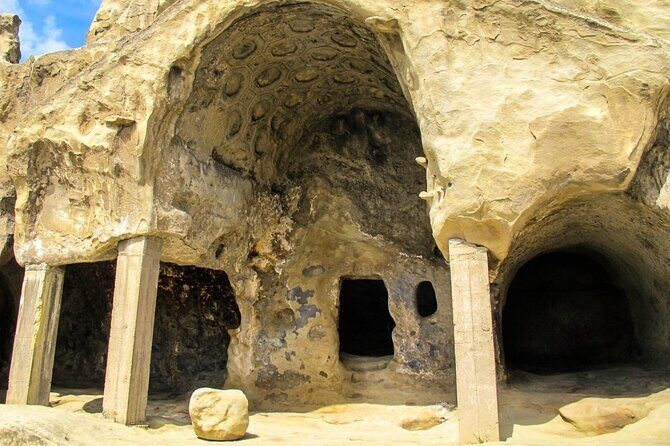
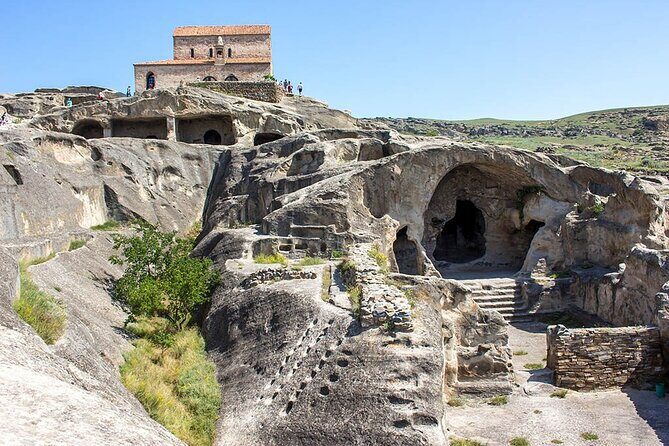
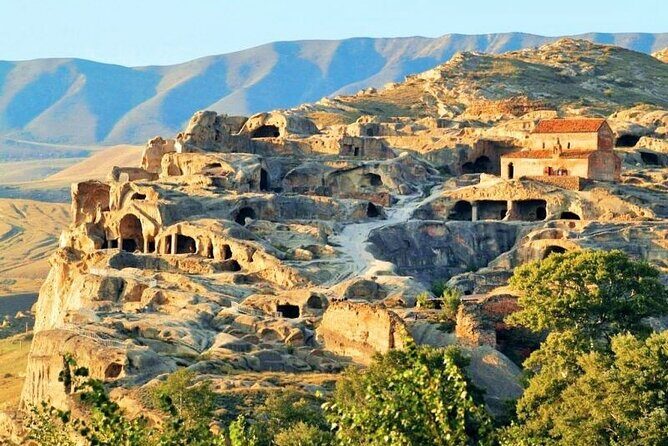
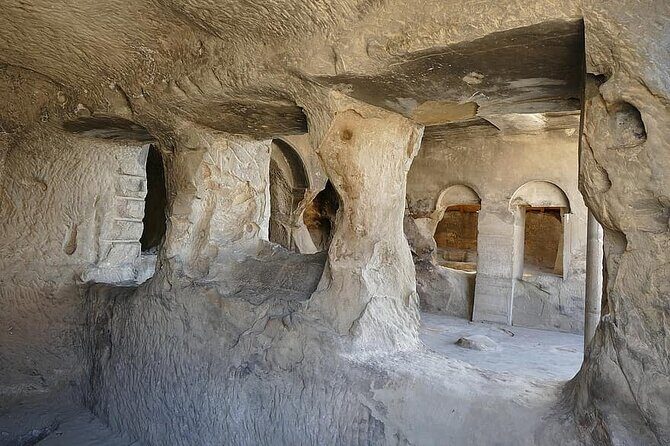
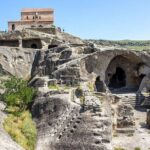
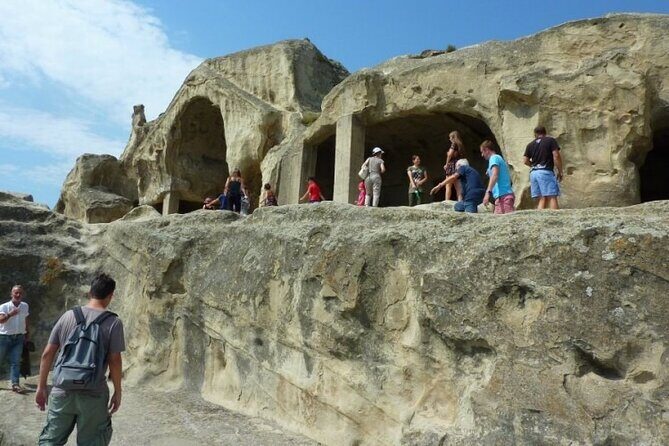
Finally you reach Uplistsikhe, often described as the Fortress of God. This is where the tour becomes most physical. Uplistsikhe is an ancient cave city carved into the rock, with roots that go back about 3,000 years.
You’ll have about 1 hour here, and the entrance fee is listed as $5.00 per person (not included). Even in that limited time, you can see why it’s so memorable. The site keeps buildings and caves from different times in history, and around 150 caves remain today.
Some of the featured areas you’ll see include:
- the tunnel
- the Sun Temple
- the Royal Hall of Queen Tamar
- the winery area
- a 6th-century church
- the old library
- an ancient stone-carved pharmacy
This stop also rewards good planning. On hotter days, the rocky paths and steps can feel intense. And if you’re hoping to climb the highest sections, bring sturdy shoes and be ready for uphill work.
One practical heads-up from real-world pacing: signage isn’t always the easiest to follow at cave sites, and you may find it helps to have guidance on which routes to take. The structure is old, and it can be easy to drift into a less efficient path if you’re trying to figure it out on your own.
A quick packing checklist for Uplistsikhe
- Good shoes for uneven stone and slopes
- Warm or rainy-day layers if conditions turn
- Water (even if you think you’ll find it on-site, don’t rely on that)
Also, note the winery area. Some tours include time around the winery for Georgian wine tasting, and it can be a pleasant way to round off a tough walk—but don’t plan your whole comfort strategy around getting refreshments there.
The driver-guide effect: why the “private” part matters
The difference between a basic tour and a great one is usually the guide. On this route, your driver-guide isn’t just driving; they explain what you’re seeing at each stop and adjust pace to match your group.
That shows up most at the transitions:
- When you go from Jvari’s setting to Mtskheta’s cathedral, the story connects better.
- When you shift from medieval religious sites to the Stalin House-Museum, your guide can help you place what you’re seeing in the bigger Georgian narrative.
You also get practical help in small ways: recommendations for food stops and tips on what to look for, plus help with photos when you want them. With a private group, you’re also more likely to get your questions answered without waiting for everyone else.
In short: you’re paying for more than transport. You’re buying time saved and meaning added.
Weather and comfort: don’t let cold rain steal your day
This tour needs decent weather. When it’s dry and clear, the ridge views from Jvari and the walks around Mtskheta and Uplistsikhe feel effortless. When it’s windy or rainy, the same stops get harder fast.
A common pattern is that people underestimate cold wind at higher points. If you run into rain, expect the day to feel much colder than you think. For that reason:
- dress in layers
- bring a rain shell if your forecast looks shaky
- don’t plan to do fine in flimsy shoes on rocky stone
For seasonal timing, September and October are often a sweet spot. The temperatures are usually more forgiving, and you get better odds of comfortable outdoor exploring.
Who should book this Mtskheta–Gori–Uplistsikhe private loop?
This works best if you want a structured one-day route with real variety. It’s a good fit for:
- history buffs who like seeing the connections between eras
- people short on time in Tbilisi who still want UNESCO plus a cave city
- anyone who prefers a private day with hotel pickup over DIY logistics
- families with older kids who can handle walking and a cave-town environment (especially with help from the guide on site)
It may be less ideal if you hate uphill walking, because Uplistsikhe is physically active. It can also be tougher if you’re traveling with very limited mobility, since cave cities tend to involve steps and uneven surfaces. The tour itself does not list special accessibility features beyond being in an air-conditioned vehicle.
Should you book? My practical verdict
Yes, I’d book this if you want a focused, guided day that covers four major Georgia sites in a logical order. The value is strong because you get pickup, air-conditioned private transport, English interpretation, and free entry at two of the main historic stops.
Add the paid entrances only if you’re committed to both Gori and Uplistsikhe, and you’ll still land in a reasonable total spend for a full day with context.
Just be smart about comfort:
- pack for cold wind and rain if the forecast is uncertain
- bring firm shoes
- bring water for Uplistsikhe and don’t assume it will be easy to restock on-site
If those are no problem for you, this is a solid way to see real Georgia beyond Tbilisi—without turning your day into a transport puzzle.
FAQ
How long is the Mtskheta–Jvari + Gori – Uplistsikhe Tour?
It runs for about 8 hours.
Does the tour include hotel pickup and drop-off in Tbilisi?
Yes. Your guide picks you up from your hotel or any address in Tbilisi, and you’re also dropped back after the tour.
What entrance fees are not included?
The Stalin House-Museum in Gori costs $5.00 per person, and Uplistsikhe Cave Town costs $5.00 per person. Other listed site entries are free during the scheduled stops.
Is the tour offered in English?
Yes, it’s offered in English.
Is WiFi available during the drive?
Yes. There is in-car WiFi.
What happens if the weather is bad?
This experience requires good weather. If it’s canceled due to poor weather, you’ll be offered a different date or a full refund.
What’s the cancellation policy for a full refund?
You can cancel up to 24 hours in advance for a full refund. If you cancel less than 24 hours before the start time, the amount paid is not refunded.