REVIEW · TBILISI
Private Walking Tour in Tbilisi and Mtskheta Old Town
Book on Viator →Operated by Giorgi · Bookable on Viator
Four churches, one cable car, and great viewpoints. This private walking tour in Tbilisi strings together big historical stops in real neighborhoods, then adds Mtskheta for sweeping river scenery and the feeling that Georgia’s story is written in stone. You start in Tbilisi around Liberty Square, then head by private car to Mtskheta, with English-speaking guidance by Giorgi.
I love the tight focus on how places connect—especially how the walk bounces between sacred sites and the political layers of the region. I also love the mix of quick stops and high-reward views: short looks at places like Anchiskhati Basilica and Sioni Cathedral, plus longer climbs and overlooks like Narikala and Jvari.
One possible drawback: it’s a walking-and-scenery route, with a few spots where you may find uneven ground and stairs, so pack comfortable shoes and plan for some “effort” between viewpoints.
In This Review
- Key highlights you’ll feel right away
- Why This Tbilisi and Mtskheta Route Works So Well
- Price and Value: What $55 Buys in the Real World
- Starting in Tbilisi: Anchiskhati Basilica and Sioni Cathedral
- Stop 1: Anchiskhati Basilica (about 10 minutes)
- Stop 2: Sioni Cathedral Church (about 15 minutes)
- Chardin Street: Old Tbilisi Mood in One Walk
- Stop 3: Jan Shardeni Street (about 15 minutes)
- Metekhi Cathedral: River-Bank Views and a 5th-Century Legacy
- Stop 4: Metekhi Cathedral (about 15 minutes)
- Tbilisi Cable Car: A Short Ride, Big Perspective
- Stop 5: Aerial Tramway (included)
- Narikala Fortress: The Overlook That Makes the Work Worth It
- Stop 6: Narikala Fortress (about 40 minutes)
- Jvari Church: Where Two Rivers Meet the Sky
- Stop 7: Jvari Church (about 1 hour)
- Svetitskhoveli Cathedral and Mtskheta Hill Views
- Stop 8: Svetitskhoveli Cathedral + sightseeing around the hills (about 1 hour)
- How to Plan Your Walk: Comfort Tips That Matter
- Who This Tour Suits Best (and Who Might Want Something Different)
- Should You Book This Tour?
- FAQ
- What is the duration of the Private Walking Tour in Tbilisi and Mtskheta Old Town?
- How much does the tour cost?
- Is the tour offered in English?
- Does the tour include pickup?
- How do you travel from Tbilisi to Mtskheta?
- Is the tour a private experience?
- Is a cable car ride included?
- Are admission tickets included for the sights?
- Are service animals allowed?
- Is free cancellation available?
Key highlights you’ll feel right away
- Real neighborhood routing through Tbilisi Old Town, not just a bus-to-photo-op loop
- Sioni Cathedral area and its unusual cluster of nearby faith sites
- King Vakhtang Gorgasali connections tying multiple landmarks together
- A cable car ride for Old Town views without burning your whole day
- Jvari and Mtskheta viewpoints focused on the Mtkvari and Aragvi river meeting
Why This Tbilisi and Mtskheta Route Works So Well
This is the kind of tour where the geography helps you understand the story. Tbilisi sits by the Mtkvari River, and once you start seeing how churches, fortifications, and streets line up with the river and hills, the city stops feeling random.
What I like most is the pace. You’re not trapped in one location for hours. You get a smart sequence: a handful of key sacred buildings in Tbilisi, a cable car moment to widen your view, then the drive to Mtskheta for the kind of outlook that makes you pause even if you’re not a “look-at-the-view” person.
Also, because it’s private, Giorgi can match the tempo to what you care about—history, politics, or just trying to make sense of what you’re seeing. If you’re into the backstory behind the monuments, this style fits well.
Other Mtskheta tours we've reviewed in Tbilisi

Price and Value: What $55 Buys in the Real World
At $55 per person for about 4 to 5 hours, you’re paying for three practical things: a guide who can connect dots, curated time at the best places, and on-the-ground logistics so you don’t have to piece everything together.
Here’s the value math that matters:
- Several sites are free with admission ticket included in the experience structure.
- The Tbilisi cable car stop has its ticket included, which usually means less hassle and no guesswork about how to fit it in.
- You get pickup around Liberty Square and then private car transport to Mtskheta (about 30 minutes), which saves you the “figuring-it-out” time.
If your goal is to see a lot of meaningful stops in one go—without spending your day figuring out routes—this price is fair.
Starting in Tbilisi: Anchiskhati Basilica and Sioni Cathedral
Your tour begins in the Old Town area near Liberty Square, then you work your way toward some of the oldest religious landmarks in the city.
Stop 1: Anchiskhati Basilica (about 10 minutes)
Anchiskhati Basilica is described as the oldest building in Tbilisi. That alone is a reason to take your time even if the stop is short. In about ten minutes, you’re mostly getting oriented: you learn to look for scale, craftsmanship, and why this site matters before you move on.
My tip: treat this as a warm-up. Even if you’re rushing, take ten seconds to notice details—because later you’ll see the same “why this place, why here” logic show up again and again.
Stop 2: Sioni Cathedral Church (about 15 minutes)
Sioni Cathedral is another anchor site, and it’s surrounded by other religious communities nearby. What makes this stop special is that you’re not only looking at one church—you’re taken through the area’s mix of faiths: a Muslim mosque, an Armenian church, a Jewish Synagogue, and a Catholic church in the neighborhood.
This is where the tour does something useful for your brain: it shows how Tbilisi isn’t just a museum of monuments. It’s a lived-in place where different communities exist in close proximity. It’s also a good moment to ask questions, because Giorgi’s explanations can make the symbols feel less abstract.
Practical note: since the focus is on sightseeing around a cluster of sites, you should be ready for a calm, respectful pace rather than a “run around and take photos” stop.
Other Tbilisi walking tours we've reviewed in Tbilisi




Chardin Street: Old Tbilisi Mood in One Walk
Stop 3: Jan Shardeni Street (about 15 minutes)
Jan Shardeni Street—linked with the name of Jean-Baptiste Chardin—captures a blend of old and new lifestyles in Tbilisi. This is the tour’s breathing section. The sacred stops are heavy. Chardin Street shifts you into streetscape and everyday texture.
I like this segment because it helps you understand what you’re seeing from the inside. After the cathedrals and basilicas, you start to notice how the city’s history plays out in daily life: shop fronts, street character, and the general rhythm of the neighborhood.
Consideration: this is also a good place to slow down if you want photos that include context. You’ll likely get more value by capturing streets you can identify later, rather than chasing random angles.
Metekhi Cathedral: River-Bank Views and a 5th-Century Legacy
Stop 4: Metekhi Cathedral (about 15 minutes)
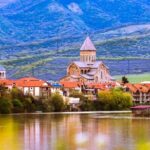
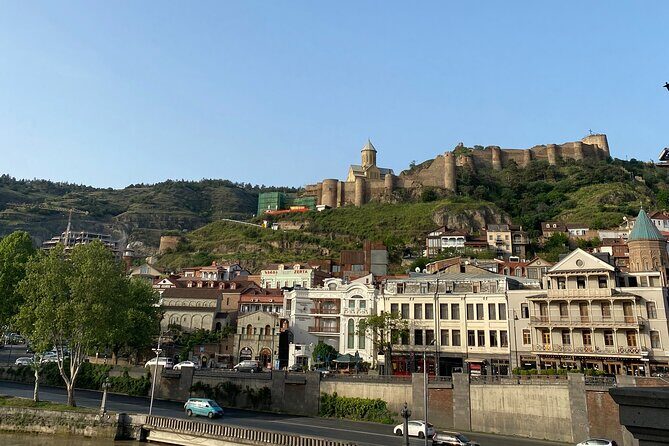
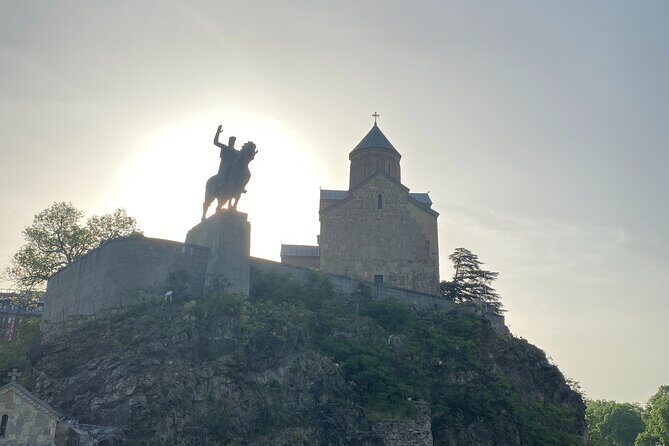
Metekhi Cathedral sits on the left bank of the Mtkvari River. That location matters, because it positions you near the water and near the “why Tbilisi grew where it did” story.
The yard includes a statue of King Vakhtang Gorgasali, tied to the 5th century. The tour connects him to building the strong castle and the very first church there—so you’re not just seeing a monument. You’re seeing a theme repeat across the day.
What to watch for here: the way the tour links people and power to physical space. When the same king shows up at multiple stops later, the pattern feels less like trivia and more like a map of influence.
Tbilisi Cable Car: A Short Ride, Big Perspective
Stop 5: Aerial Tramway (included)
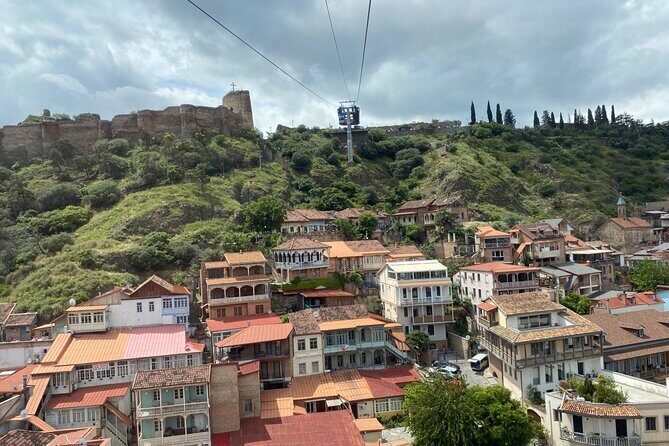
The cable car segment is short (about 15 minutes), but it’s high impact. It gives you a birds-eye view over Tbilisi Old Town, and it’s a smart break from walking.
I recommend using this time to do a mental reset. Look down and try to connect what you’ve seen: streets to churches, and neighborhoods to the river and hills. When you return to ground level afterward, you’ll “get your bearings” faster.
One practical consideration: cable car time can feel like the tour’s breather. If you’re sensitive to heights or enclosed spaces, you should think about that before you step in.
Narikala Fortress: The Overlook That Makes the Work Worth It
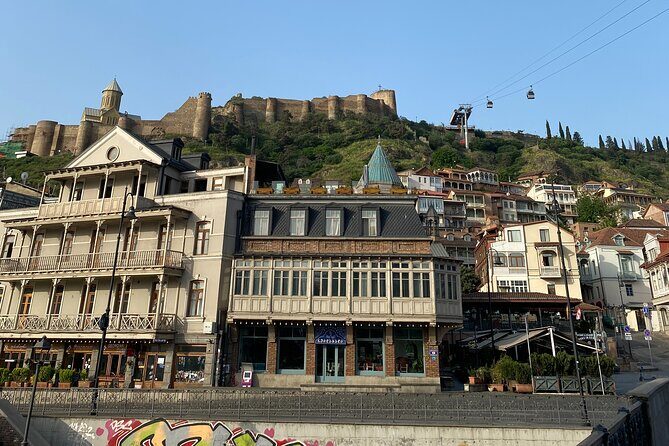
Stop 6: Narikala Fortress (about 40 minutes)
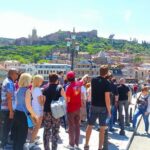
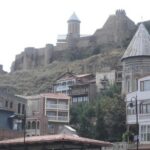
Narikala Fortress overlooks Tbilisi and the Mtkvari River. This is one of the longer stops, so it’s more than a quick peek. You’re meant to linger and take in the city from above.
Another big connection returns: the first walls of the fortress were built by King Vakhtang Gorgasali in the 5th century. That repetition is a smart teaching trick. Instead of learning ten disconnected facts, you get one line through the whole day.
What I’d do with the time: pick a viewpoint, sit or stand for a minute, then look back toward where you started in the city. It’s the easiest way to turn a scenic stop into real understanding.
Consideration: fortress ground can be uneven and busy with other visitors, so keep your footing and don’t rush this segment just to catch the next stop.
Jvari Church: Where Two Rivers Meet the Sky
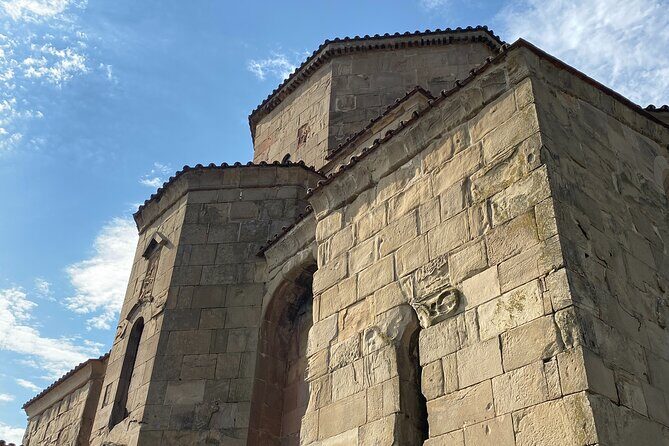
Stop 7: Jvari Church (about 1 hour)
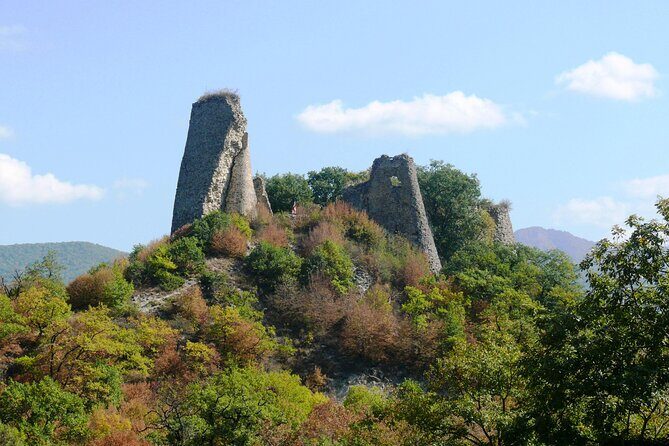
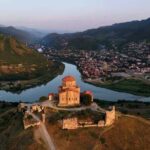
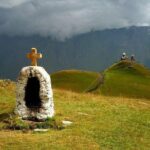
Jvari Church offers something different from the Tbilisi stops: a wide natural view. You get the meeting of the Mtkvari and Aragvi rivers and a view of Mtskheta from above.
It also includes an older layer of structure—described as a 14th-century-old building and ancient castle walls—so you’re looking at both architecture and landscape as one combined picture.
This is also one of the best moments to let the guide’s context land. From up here, you can see why hilltop sites mattered: visibility, protection, and symbolic importance. You don’t need fancy knowledge to enjoy it, but if you like history and politics, this kind of site answers why people wanted control of high ground.
Svetitskhoveli Cathedral and Mtskheta Hill Views
Stop 8: Svetitskhoveli Cathedral + sightseeing around the hills (about 1 hour)
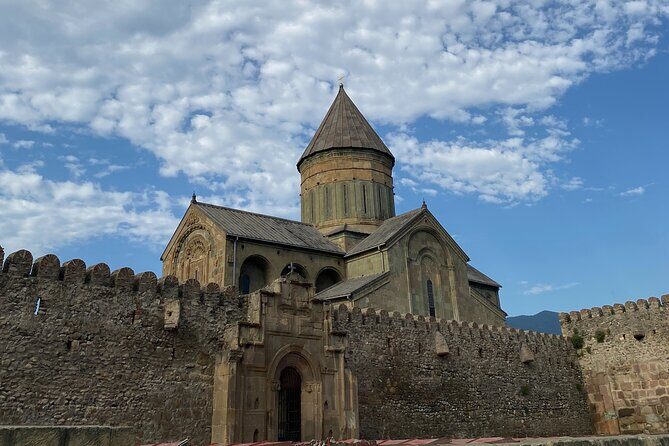
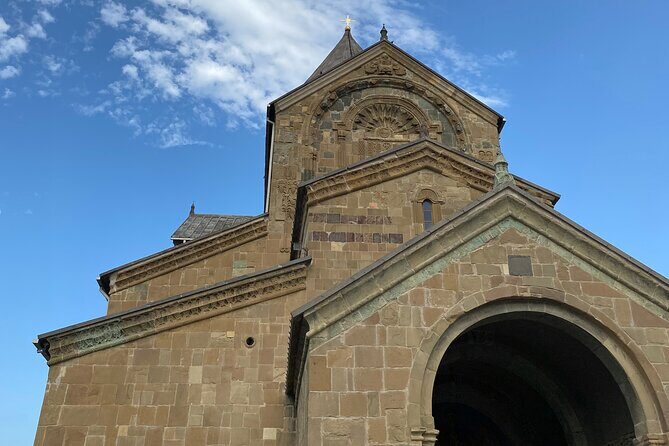
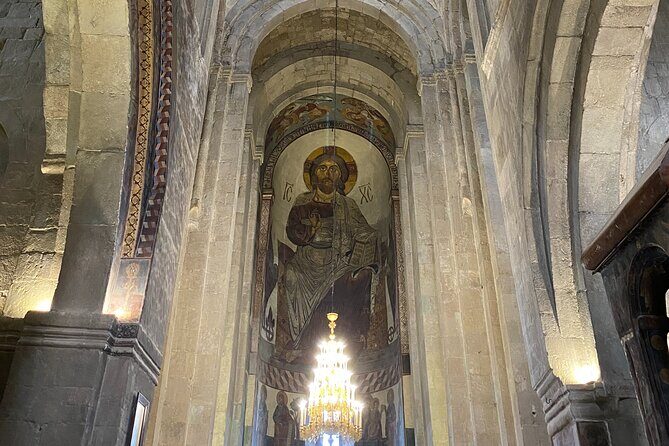
Back in Mtskheta, the tour shifts from viewpoints to one of the most meaningful churches in town: Svetitskhoveli Cathedral. You’re also brought into the wider sightseeing sense of the area, including Mtskheta’s status as the ancient capital of Georgia.
This stop is framed as more than “walk in, look around.” You also get beautiful sightseeing from the hills connected with the Jvari Monastery area, which ties the whole day together: river meeting, hilltop vantage points, then the central cathedral.
What makes this part feel rewarding is the pacing. After the long hour at Jvari, the cathedral and church visit gives you a different type of payoff. It’s the “details” contrast to the big panorama—like trading your binoculars for close-up reading.
How to Plan Your Walk: Comfort Tips That Matter
This tour is built around walking and viewpoints, and a few locations may involve stairs or uneven ground. You’ll have a better time if you come prepared.
I’d plan for:
- Comfortable shoes you don’t mind getting a bit dirty.
- Light layers, because you’ll move between courtyards, viewpoints, and the car.
- A small water bottle if you run thirsty easily—there’s no mention of drinks included, so it’s smart to self-supply.
Also, because the stops are spread across religious sites, keep an eye on how you dress. Even if the tour doesn’t focus on rules, your best experience comes when you dress with respect.
Who This Tour Suits Best (and Who Might Want Something Different)
This tour is a great match if you want:
- A clear, connected route across major Tbilisi landmarks and Mtskheta.
- History with political context—especially the kind that explains why faith communities and power shaped where buildings went.
- A guide-led day where you get answers, not just photos.
It’s also a strong choice if you like variety in one window: basilicas, a cathedral area with multiple faiths, a historic street, a fortress overlook, a cable car view, and then river scenery in Mtskheta.
If you want a slow museum-style tour where you sit in one place for a long time, you might find the pacing too active. But if you prefer movement and meaning, this is the right tempo.
Should You Book This Tour?
I’d book it if your goal is to see the core of Tbilisi and Mtskheta without spending your day figuring out transport and sequencing. The included cable car ticket plus free-admission structure at key sites gives this tour a good “value-per-hour” feel.
Book it especially if you like when a guide connects details—like how King Vakhtang Gorgasali shows up across multiple landmarks—or if you want the deeper context behind Georgia’s religious and political landscape.
On the other hand, if you hate walking, dislike heights, or want long stays in just one location, you may be happier with a more single-site-focused plan.
FAQ
What is the duration of the Private Walking Tour in Tbilisi and Mtskheta Old Town?
It lasts about 4 to 5 hours.
How much does the tour cost?
The price is $55 per person.
Is the tour offered in English?
Yes, it’s offered in English.
Does the tour include pickup?
Yes. Pickup starts around Liberty Square, and then the group travels to Mtskheta by private car.
How do you travel from Tbilisi to Mtskheta?
You go by private car, which takes about 30 minutes.
Is the tour a private experience?
Yes. It’s private, and only your group participates.
Is a cable car ride included?
Yes. The Tbilisi cable car (aerial tramway) stop includes the ticket.
Are admission tickets included for the sights?
Admission tickets are free for the listed church and fortress stops. The cable car ticket is included as well.
Are service animals allowed?
Yes, service animals are allowed.
Is free cancellation available?
Yes. You can cancel for a full refund if you cancel up to 24 hours in advance of the start time.