REVIEW · TBILISI
Tbilisi Old Town Walking Tour with a Local Guide
Book on Viator →Operated by Views Georgia Tours · Bookable on Viator
Old Tbilisi starts making sense quickly. This 3-hour-15-minute walking tour strings together classic stops—like the 6th-century Anchiskhati Basilica and the glass-and-steel Bridge of Peace—with a guide who helps you read what you’re seeing instead of just pointing at it. I especially like that the pace is short enough to keep your feet happy, yet long enough to hit major landmarks from different eras; and I also like the practical value: the cable car ride is included.
The one thing to plan around is churches. You’ll face a no photos inside rule and a dress code, so bring something that covers shoulders/knees if you want stress-free entry.
If you’re deciding whether to book, this tour is best for first-timers who want context fast. If you prefer to wander alone for hours, you may find the structured route a bit limiting.
In This Review
- Key highlights you should care about
- Good Value for a First-Timer Day: What $38 Buys
- Route Reality: How the 3 Hours 15 Minutes Works
- Start Point to Old Town Core: Where You’ll Feel the City’s Layers
- Anchiskhati and Sioni: Two Church Stops, Two Different Meanings
- The Bridge of Peace: Glass-and-Steel Modernity Over the River
- Rezo Gabriadze Marionette Theater: Street-Level Storytelling
- Shardeni Street: The Easy Walk Into the Upper Kala Vibe
- Tamada Statue and the Culture of the Supra Feast
- Europe Square and the Great Synagogue: Two Belief Systems, Two Time Frames
- Tree of Life: A Modern Monument with a Personal Question
- Rike Park and the Rike-Narikala Cable Car: Views Without the Steep Work
- Kartlis Deda: The Mother of Georgia and Her City-Scale Gaze
- Lunch, Wine Tasting, and Church Photo Rules
- Who This Tour Fits Best (and Who Might Feel Crowded)
- Should You Book This Old Town Tour?
- FAQ
- How long is the Tbilisi Old Town Walking Tour?
- What does the tour cost?
- What’s included, and what’s not?
- Is the tour offered in English?
- Where does the tour start and end?
- Is the cable car included in the price?
- Are church entrances and photos allowed?
- Can I join if I’m traveling with someone with special needs or a service animal?
- Is wine tasting part of the tour, and is there an age limit?
Key highlights you should care about
- $38 price that includes the local guide and the cable car, so you’re not doing surprise add-ons mid-walk
- Free admission stops like Anchiskhati Basilica, Sioni Cathedral, and the Great Synagogue from the outside (the tour keeps things efficient)
- A real mix of places: churches, a synagogue, a marionette theater, modern memorial-style monuments, and a river crossing
- Group size stays small (max 15), which makes Q&A actually possible
- Rike-Narikala cable car is timed into the route, giving you views without fighting logistics
- Sensitive photo and clothing rules at churches mean you’ll want to dress for entry
Good Value for a First-Timer Day: What $38 Buys
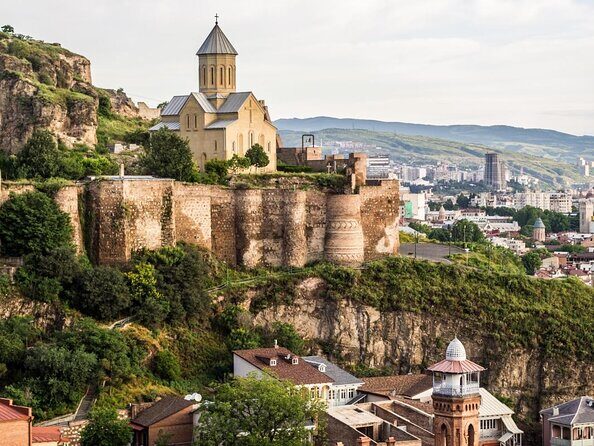
At $38 per person, this tour is aimed at one simple goal: help you get your bearings fast in Tbilisi’s Old Town. What makes it feel like good value is the way the price is built. You’re paying for a professional local guide and getting the cable car included, while most of the sightseeing moments are set up as free admission stops.
You also get a route that’s not “just photos.” The guide’s job here is to connect symbolism to place—like how the Tamada statue links directly to the Georgian supra feast culture, or how Sioni’s name connects to a word meaning sunny. That kind of context is what turns a list of landmarks into a story you can actually remember.
There’s one extra cost to think about, but it’s optional. Lunch is not included, and the plan suggests a traditional Georgian bakery where you’ll likely pay around 3–5 Gel (about 2–3 euros). So you’re not forced into a pricey meal—just given a practical option if you want it.
Other Tbilisi walking tours we've reviewed in Tbilisi



Route Reality: How the 3 Hours 15 Minutes Works
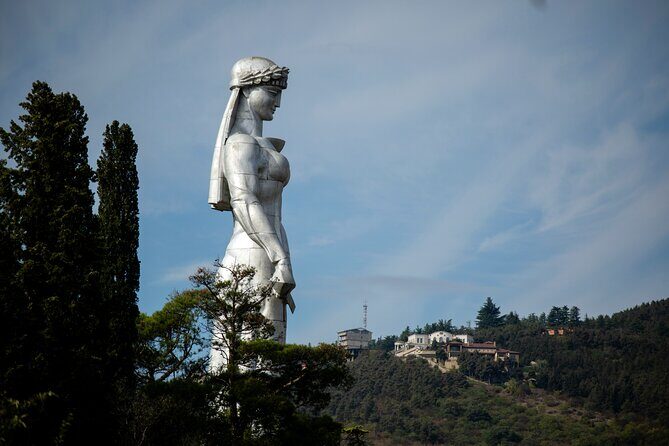
This walk runs about 3 hours 15 minutes, and travel time is included. That matters because in Old Town, you’re often moving between hills, squares, and church blocks. Here, the schedule is tight enough that you won’t feel like you’re doing a full-day hike, but it’s long enough to reach both the street-level old quarter and the viewpoint area above the river.
The group stays capped at 15 travelers, which helps the whole experience feel less rushed. Smaller groups also make it easier to ask questions—especially when the guide starts explaining why certain monuments look the way they do, or why a name like Sioni carries a second meaning.
Your day likely starts at 17 Ioane Shavteli St and ends at Freedom Square. That’s a useful detail for planning afterward. Freedom Square is a natural hub for continuing on foot or grabbing transit, so you won’t be stuck back where you began.
Start Point to Old Town Core: Where You’ll Feel the City’s Layers

The tour begins near Ioane Shavteli Street, then moves into the Upper Kala area. This is where Tbilisi’s Old Town starts to show you both “old-world” texture and modern-city confidence.
One of the first stops is a sculpture group connected to Berikaoba, placed near Dry Bridge. The figures are all about motion—lively, expressive, and built to suggest the festival’s spirit of freedom and rebellion. Even if you don’t catch every historical detail, you’ll feel the message: this isn’t a statue garden. It’s public art with an attitude.
Right after that, you step into the spiritual layer of the city with Anchiskhati Basilica, described as the oldest church building in Tbilisi. It’s a three-nave basilica dating to the 6th century. That alone is a big “anchor point” in time. The guide’s explanation matters here because it turns the building from a photograph into an actual timeline marker: you start seeing which parts of Tbilisi survived, which transformed, and which symbolism kept going.
Anchiskhati and Sioni: Two Church Stops, Two Different Meanings

If you only remember one thing from the church portion, let it be this: you’ll learn the difference between “a church you see” and “a church you understand.”
Anchiskhati Basilica gives you the early foundation—ancient Christian architecture in the heart of the city. It’s a quick stop, but it sets the stage for what comes next.
Then you reach the Sioni Cathedral Church complex. This is more than one building. You’ll see the fence, the Cathedral of the Assumption, and two bell towers. The tour also explains the name: Sioni is connected to a sacred mountain in Jerusalem, and it’s also described as a Hebrew word meaning sunny. That kind of word origin may sound nerdy, but it’s exactly the sort of detail that makes the place feel less random.
Two practical notes for your visit:
- No photos inside churches
- Dress code applies
If you show up in shorts or sleeveless tops, plan to adjust before you’re at the entrance. It saves time and keeps the experience smooth.
The Bridge of Peace: Glass-and-Steel Modernity Over the River
The Bridge of Peace is a “before and after” moment for many visitors because it’s new compared with the older church stops. It’s a bow-shaped bridge made of glass and steel over the Mtkvari (Kura) River.
The value here isn’t just that it’s photogenic. It’s that the guide uses it to show how Tbilisi can hold modern design alongside older layers. You’re still in the Old Town area, but suddenly you’re looking at a structure built for today’s city life.
If you like architecture, pause and look at how the bridge changes the river view. It has that effect where the river looks like a background instead of the main event—until you watch how people flow across it.
Other Old Town tours we've reviewed in Tbilisi





Rezo Gabriadze Marionette Theater: Street-Level Storytelling
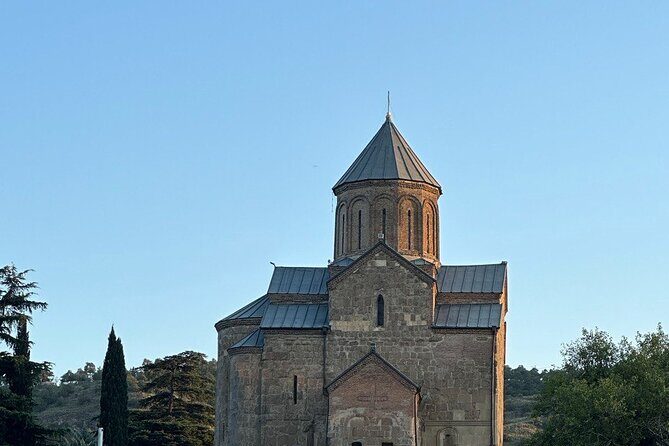
Next comes a stop many visitors miss unless someone points it out: Rezo Gabriadze Marionette Theater. In front of the theater is the famous clock tower, and the guide shares why this spot matters in Tbilisi.
The theater itself is known for its unique architecture vibe—think recognizable forms and a location that feels designed for passing feet, not for remote destinations. Even without going inside, you get a strong sense of character just from how the building sits in the city’s walkable blocks.
It’s one of those stops that works well in a group tour because it’s short, but it gives you something memorable besides “more churches.”
Shardeni Street: The Easy Walk Into the Upper Kala Vibe
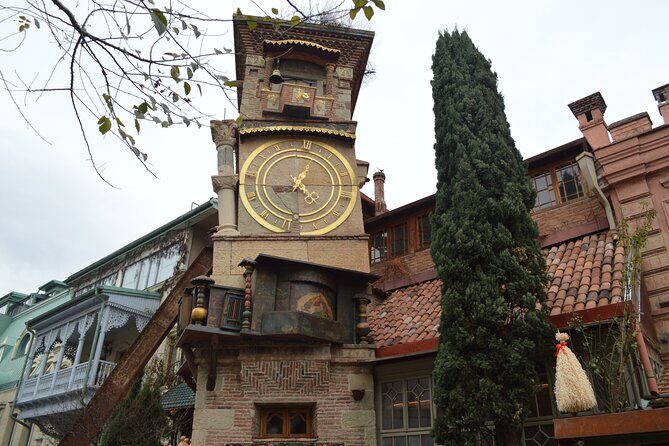
You’ll also pass through Shardeni Street, described as a small walking street in the Upper Kala district, between Vakhtang Gorgasali Square and Sioni Street.
This is the part of the day where Tbilisi feels like a place you’d happily linger. You’re in the older district, but you’re not stuck in formal museum mode. Shardeni’s value is practical: it helps you connect the big-ticket monuments to the human-scale street life around them.
If you have time after the tour ends, this is also a good area to return to for a relaxed coffee or a snack—but keep it flexible. The tour ends at Freedom Square, so you can decide how much extra walking you want.
Tamada Statue and the Culture of the Supra Feast

In the old town near Sioni Cathedral, you’ll see a bronze monument of Tamada—the traditional Georgian toastmaster—holding a wine horn (kantsi) in a classic toasting gesture.
What I like about this stop is that it’s not just symbolic. It’s described as linking the statue to Georgia’s wine culture and the importance of the supra (Georgian feast) tradition. The tour also mentions that the monument is inspired by an ancient Tamada figurine found in Vani, dating over 2,000 years old.
That’s a powerful way to think about monuments. Instead of “a statue to look at,” you get “a statue that carries a social role.” If you’re the type of traveler who enjoys cultural rituals more than facts-only sightseeing, this is one of your better stops.
One more practical detail from the tour info: there’s a minimum age of 18 for wine tasting. The tour doesn’t specify your personal tasting experience in the details given here, but if wine tasting is part of your day, that age rule matters.
Europe Square and the Great Synagogue: Two Belief Systems, Two Time Frames
After the Old Town core, you’ll reach Europe Square to see EU flags being blown by the wind. The guide frames Georgia’s long-term direction toward the EU, and the flags become a simple, visible way to understand current aspirations without reading a book.
Then you’ll visit the Great Synagogue of Tbilisi from the outside. The building is located in the old historical district and dates to the period 1895 to 1903, built by Georgian Jews from Akhaltsihe.
This stop adds an important balance to a day heavy on churches. It reminds you that Tbilisi’s history includes multiple religious communities, and the city’s architectural footprint reflects that. Even if your interest is casual, the guide’s explanation helps you notice features you might otherwise skip.
Tree of Life: A Modern Monument with a Personal Question
Next is the Tree of Life monument, created in 2016 by artist David Monavardishvili. The tour invites you to consider what inspired the artist—maybe old Tbilisi lifestyle, maybe something else.
This is one of those stops that’s short but clever. It doesn’t ask you to memorize dates. It asks you to interpret meaning. If you like art that leaves room for your own thoughts, this one will work.
If you’d rather have every fact delivered like a script, you might find it a lighter stop. But it’s a good break in the route between older religious sites and the cable car viewpoint.
Rike Park and the Rike-Narikala Cable Car: Views Without the Steep Work
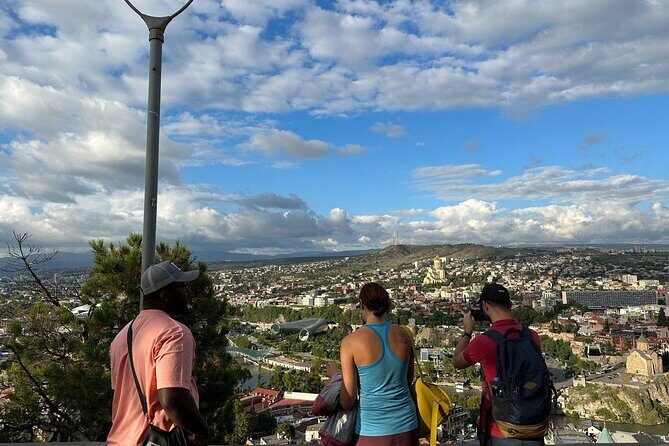
Now comes a practical upgrade: the tour includes a cable car ride. You’ll start this part at the Rike-Narikala Cable Car (Lower Station) and then head to the top of the mountain by cable car.
It’s listed as 15 minutes for the cable car segment, and the cable car itself is included in the tour price. That’s important, because reaching this viewpoint on your own can mean more time, more walking, and more effort than you planned.
Before the cable car, you’ll see Rike Park, which is described as the center of Tbilisi. This gives you a sense of where “the city machine” operates—then you shift upward for the skyline effect.
Kartlis Deda: The Mother of Georgia and Her City-Scale Gaze
At the end of the day’s upward angle, you’ll meet Kartlis Deda—the Mother of Georgia monument. The tour frames it as representing all Georgian women and having a gaze over the city.
The monument is credited to Georgian artist Elguja Amashukeli in the tour details, and it’s described as standing in front of Metekhi Church, looking down over the Mtkvari (Kura) River. That location matters. You’re not just seeing a sculpture. You’re getting the viewpoint relationship between the river, the church area, and the old quarter.
This is also a good stop for photos—outside, from angles where you can capture the city below. If you’ve been walking through religious and historical stops, Kartlis Deda feels like the shift into identity and scale.
Lunch, Wine Tasting, and Church Photo Rules
Food during a walking tour is where things can go sideways, so here’s the reality from the tour info: lunch is not included, and there’s a suggested bakery stop with expected costs around 3–5 Gel (about 2–3 euros).
That’s budget-friendly enough that you can treat it as a convenience rather than a planned expense. You can also decide what you want: a quick bite now, or save your proper meal for after the tour ends at Freedom Square.
Two other “don’t step on a rake” rules:
- No photos inside churches
- Church dress code applies
If you’re traveling in warm weather, it’s smart to carry a light layer. It usually solves the dress issue in minutes.
And if wine tasting is part of your tour timing, remember the age rule: 18+ only.
Who This Tour Fits Best (and Who Might Feel Crowded)
This tour is a strong match if you want:
- A first-time Old Tbilisi orientation
- A route that mixes architecture, culture, and modern symbols
- A short, guided day where you don’t have to plan transport or decide what to prioritize
It’s also good if you like asking questions. With a max of 15 people, the guide has a better chance to answer you without turning the day into a lecture line.
You might hesitate if:
- You prefer long, free wandering without stopping often
- You hate photo restrictions and dress-code rules (especially if you don’t want to think about what you’re wearing)
- You plan to use the day primarily for deep museum time, because this tour is built around quick, meaningful stops—not long indoor visits
Should You Book This Old Town Tour?
Yes, you should book it if you’re coming to Tbilisi for the first time and want a structured way to understand what you’re seeing. The price feels fair because the guide + cable car are included, and the route hits a smart mix: ancient churches, a major public-art stop, a modern river crossing, a marionette theater, and cultural monuments like Tamada and Kartlis Deda.
Skip or adjust expectations if your travel style is mostly independent roaming, or if church rules are a hassle. But for most visitors, this is the kind of tour that helps Old Town click into place in a single afternoon.
FAQ
How long is the Tbilisi Old Town Walking Tour?
It’s about 3 hours 15 minutes, and travel time is included in that total.
What does the tour cost?
The price is $38.00 per person.
What’s included, and what’s not?
Included: professional guide service and the cable car. Not included: lunch (the tour suggests a traditional Georgian bakery where lunch can cost around 3–5 Gel).
Is the tour offered in English?
Yes, it’s offered in English.
Where does the tour start and end?
It starts at 17 Ioane Shavteli St, Tbilisi, Georgia and ends at Freedom Square, Tbilisi.
Is the cable car included in the price?
Yes. The tour includes the Rike-Narikala cable car.
Are church entrances and photos allowed?
Taking pictures inside churches is not allowed. There is also a church dress code to follow.
Can I join if I’m traveling with someone with special needs or a service animal?
Service animals are allowed, and the tour is near public transportation. Most travelers can participate.
Is wine tasting part of the tour, and is there an age limit?
The tour information includes a wine tasting age rule: minimum age is 18 years old.