REVIEW · TBILISI
Top highlights of Tbilisi: Old City Sameba Chronicles of Georgia
Book on Viator →Bookable on Viator
A day of Tbilisi in a tight loop. This tour strings together Old City icons, the Sameba Cathedral, and the must-see Chronicles of Georgia monument in one smooth route.
Two things I’d call out right away: the comfortable air-conditioned vehicle that keeps you moving between neighborhoods, and the way guides like Mariami, Makho, and Mindia turn big monuments into clear, human context you can actually remember.
One drawback to consider is pacing: it’s a lot of stops in one day, so you’ll want practical shoes and a quick photo mindset.
If you’re short on time, this is a strong way to get your bearings fast—especially with pickup from any location in Tbilisi. You’ll hit viewpoints (Metekhi and Narikala), scenic river views (Peace Bridge), and the cultural heart of Shardeni Street, plus a stop where shopping is literally tucked underground in a tunnel-style bazaar.
The only real “watch out” is weather. The experience notes good weather is important, and several of the best moments depend on you being able to walk around and see the views properly.
In This Review
- Key Things to Notice Before You Go
- Entering The Old City Loop Without Guesswork
- Metekhi Cathedral: The View Over Old Tbilisi
- Rike Park: A Modern City Graphic Made in Public Space
- Narikala Fortress at Night Energy (Even If You’re There Earlier)
- Leghvtakhevi Waterfall: A Small Stop With a Big Photo Reward
- Meidan Bazaar: Georgian Souvenirs in an Underground Tunnel
- Shardeni Street: Art, Handmade Items, and Evening-Style Energy
- Peace Bridge: A Modern Landmark on the Mtkvari River
- Tbilisi Holy Trinity Cathedral (Sameba): The Biggest Orthodox Statement
- Chronicles of Georgia: The Monument That Tells Georgia’s Story in Stone
- Comfort, Timing, and the Private-Group Experience
- Is $35 Good Value for This Mix of Sights?
- Should You Book This Tbilisi Tour?
- FAQ
- How long is the Tbilisi Old City and Sameba plus Chronicles tour?
- What does the tour cost?
- Is pickup included?
- What language is the tour in?
- Is admission included for all stops?
- Is lunch included in the price?
- Do I need to print tickets?
- Is this a group tour?
- Is there a weather requirement?
- What’s the cancellation policy?
Key Things to Notice Before You Go
- Old City, planned in smart order: viewpoints first, then the valley-and-river area, then the big landmark finales.
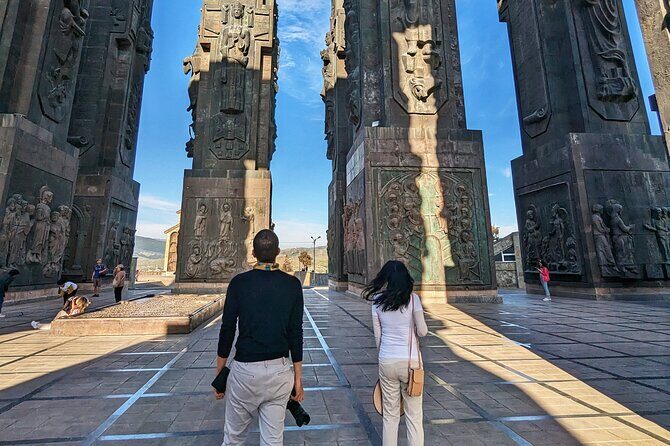
- Chronicles of Georgia is the star stop: 16 massive pillars plus scenes from the life of Jesus.
- Guides can handle questions and your pace: from Mariami’s helpful explanations to Mindia’s patient, steady pace.
- Most stops are free: admission is included mainly for Narikala, so your day stays good value.
- You’ll get more than a walking tour: fortress and scenic points that aren’t as convenient on foot.
Entering The Old City Loop Without Guesswork
This is the kind of tour that helps you stop “figuring it out” and start noticing details. With pickup from anywhere in Tbilisi, you don’t waste your first hours on directions, taxis, or timing. The route is built around the kinds of sights that shape how Tbilisi looks and feels: church viewpoints on the hills, river landmarks, and the old pedestrian streets where daily life still shows up.
The duration is about 5 to 6 hours, with short, realistic time blocks at each stop. That matters because Tbilisi is steep in places. You can absolutely walk much of Old City, but you’ll also spend energy climbing and waiting for the right moment. Here, the car handles the transitions so your legs stay useful for the viewpoints and short wandering.
This is a private tour/activity, meaning only your group participates. That tends to make it easier to ask questions, move at a comfortable rhythm, and get practical photo help (more on that later).
The day ends up feeling like a quick guided orientation to the city’s layers: the old spiritual center, the modern “renewed” symbols, and the big national storytelling monument at Chronicles of Georgia.
Other Mtskheta tours we've reviewed in Tbilisi

Metekhi Cathedral: The View Over Old Tbilisi

You start at Metekhi Cathedral, the historical heart of the city area. The site is associated with King Vakhtang and the early development of the capital, with the first church placed here in the 5th century. Even if you don’t remember dates, the place makes sense once you’re standing there: it’s a hilltop church zone, and Tbilisi was always meant to be seen from elevation.
Time on site is about 35 minutes, and the ticket is free. What you’ll get in that window is enough time to look around without feeling rushed. This stop works well as an opener because it gives you a “map in your head” of where Old Tbilisi sits.
Practical tip: expect stairs or uneven ground near viewpoints. Wear shoes you’re comfortable with. If you like photos, position yourself to capture the old-city view and then do a second angle for contrast.
Why it’s worth it: starting here helps every later stop click into place. Narikala, Shardeni, and even the river landmarks feel easier to understand once you’ve seen the city from above.
Rike Park: A Modern City Graphic Made in Public Space
Next up is Rike Park, described as a newer, artistically planned park right in the center. The fun detail here is the design concept: from above, the layout forms a large-scale map of Georgia. You don’t need to be a design nerd to enjoy it—you just need a moment to look at how Tbilisi uses public space as a statement.
This stop is short—about 15 minutes—and admission is free. That’s enough time to walk through the park paths and get a quick feel for the modern side of the riverfront.
Possible consideration: if you’re expecting a “must-linger” park like you’d find in some European capitals, this one is more of a stop-and-see. It’s part of the route rhythm, not a long decompression break.
Narikala Fortress at Night Energy (Even If You’re There Earlier)
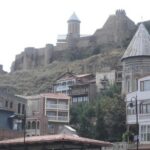
Then you move to Narikala Fortress, one of the city’s most visited sights. It’s the kind of fortress that draws the eye from many directions across Tbilisi, so you’ll feel like you’re closing a loop: you’ve likely seen it from elsewhere, and now you’re right there.
Narikala is about 40 minutes, with admission included. That included ticket detail matters because it reduces the “what do I pay next?” friction and keeps the tour flow clean.
This is also a classic evening-style viewpoint. Even if the light is different when you visit, the fortress still delivers that sense of scale and history. It’s a panoramic spot built for photos.
Practical tip: bring a phone strap or secure your camera. Wind can pick up on ridge areas, and crowds tend to gather around the best angles.
Also, plan your walking. The fortress area involves slopes and steps, so it helps to move steadily rather than sprint between photo points.
Leghvtakhevi Waterfall: A Small Stop With a Big Photo Reward

In the old city area, you’ll see Leghvtakhevi Waterfall. It’s a small waterfall in a very old part of Tbilisi near Abanotubani. The tall detail is what makes it memorable: it’s listed as 22 meters tall.
This stop is about 20 minutes, and admission is free. It’s the kind of attraction you can enjoy in a short window because you’re mainly there for the sight and a few photos from good angles.
One consideration: it’s a more compact stop, so you’ll likely feel like you’re waiting for the best moment to photograph rather than exploring deep interiors. If your group wants a longer pause, this is not that stop.
Other Old Town tours we've reviewed in Tbilisi





Meidan Bazaar: Georgian Souvenirs in an Underground Tunnel

Next is Meidan Bazaar, described as a tunnel-style shop area underground. The key idea: typical tourist-interest products are assembled here, with the focus on goods made in Georgia—ranging from wine to handcrafted socks, postcards, jams, sauces, spices, and tea.
Time is about 25 minutes, and admission is free.
Why this stop works: it gives you a convenient place to browse Georgian food souvenirs without making shopping feel like the main event. You can treat it as a “peek and sample” zone.
Practical tip: if you plan to buy edible gifts, check packaging and plan for how you’ll carry items back. Lunch isn’t included later, so shopping snacks here can also help you avoid going hungry if your day runs a bit longer.
Shardeni Street: Art, Handmade Items, and Evening-Style Energy
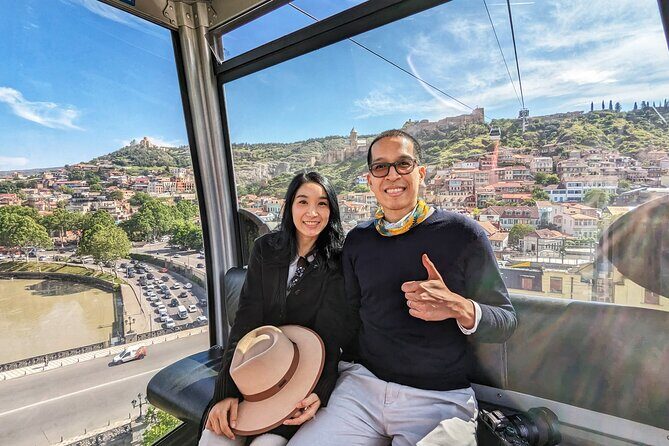
Now you hit Jan Shardeni Street, one of Tbilisi’s famous small walking streets. It’s been a social and cultural center, with art galleries, vitreous enamel sellers, handmade items, and bars and restaurants.
This stop is about 25 minutes, and admission is free. The goal here isn’t to “complete a shopping list.” It’s to feel the street’s vibe and spot what you like—handmade crafts, small art displays, and places that look like locals might actually choose them on a normal night.
A drawback to consider: this street can be crowded depending on time of day. If you’re sensitive to hustle and bumpiness, keep your pace calm and expect tighter movement through the busiest sections.
Peace Bridge: A Modern Landmark on the Mtkvari River
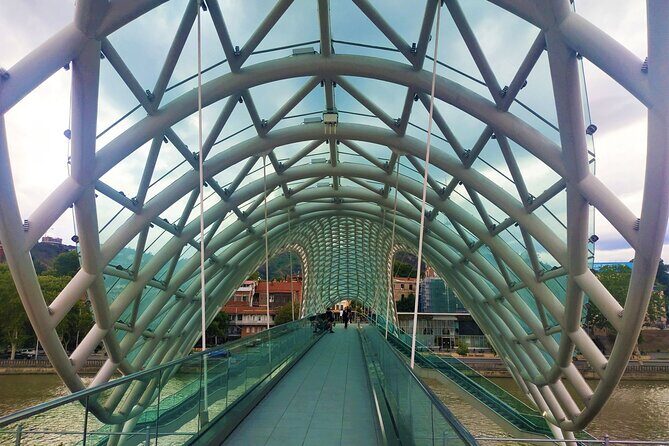
Next comes the Bridge of Peace (Peace Bridge), on the Mtkvari River. It’s one of the symbols of renewed Tbilisi, officially opened on May 6, 2010, designed by Michele de Luca.
This stop is short—about 10 minutes—and admission is free.
Why it’s on this route: the Peace Bridge connects you visually to the city’s story of rebuilding and modernization. It also gives you a clean “river reset” between older neighborhoods and the big cathedral.
If you’re into architecture, this is worth it even in a short time block because you can capture wide shots and reflections, depending on the light.
Tbilisi Holy Trinity Cathedral (Sameba): The Biggest Orthodox Statement
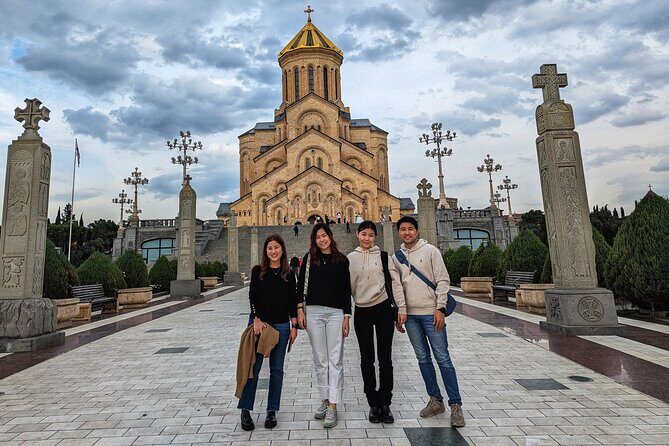
Then you reach Tbilisi Holy Trinity Cathedral, commonly called Sameba. It’s the main cathedral of the Georgian Orthodox Church and also the biggest one.
Time is about 40 minutes, and admission is free.
What makes this stop feel special is the scale. Sameba isn’t subtle. Even if you’re not religious, it’s a powerful civic landmark—one that signals the place of faith in Georgian identity and public life.
Practical tip: keep your expectations realistic. In 40 minutes you won’t wander forever inside and out. Focus on exterior viewing first, then decide if you want a quick interior look based on what the site allows at the time you arrive.
Chronicles of Georgia: The Monument That Tells Georgia’s Story in Stone
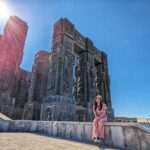
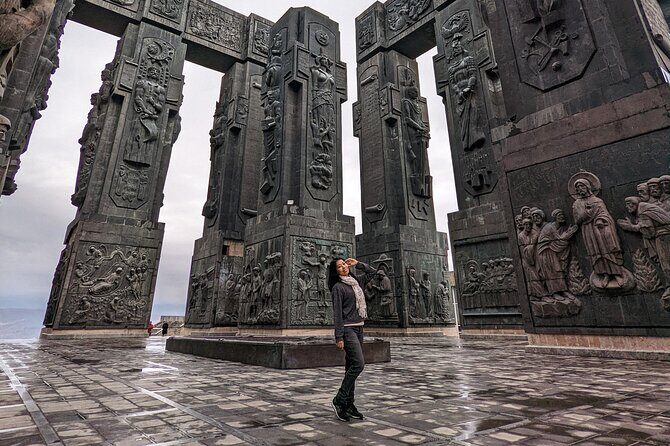
Finally, you get to Chronicles of Georgia. It’s also known as the History Memorial of Georgia and Georgian Stonehenge. The highlight is clear: 16 massive pillars showing the history of Georgia and its rulers, plus scenes from the life of Jesus.
Time here is about 1 hour, and admission is free.
This is the stop that most strongly changes your understanding of the day. Churches and viewpoints show you how Tbilisi looks. Chronicles shows you how Georgia frames its identity—big, formal, and symbolic. The scale makes it feel like the city’s storytelling has a physical “voice,” and it helps tie together why sacred spaces and national monuments sit so prominently in the landscape.
If your schedule is tight, this is the stop to prioritize mentally. Give yourself time to read what you can, then do a second pass for visual rhythm across the pillars.
Comfort, Timing, and the Private-Group Experience
A big part of the value here is the structure. You’re in an air-conditioned vehicle during the transitions, which matters in Tbilisi when walking can mean hills plus street crowds.
The tour also includes pickup from any location in Tbilisi, which is a small detail that ends up being a big deal in practice. It reduces planning stress. You also use a mobile ticket, so you’re not juggling printouts.
Because it’s private, you’re not stuck in a large group shuffle. In the real-world experience from guides like Mariami, Makho, and Mindia, the explanations tend to fit the moment, with a clear focus on history and cultural context you can follow without feeling lost.
Photo help is also part of the charm. Several guided experiences mention guides taking time to help with photos, so if you care about getting images without awkward posing, it’s worth leaning into that.
One thing to plan for: lunch isn’t included. With a day this packed, you’ll want to eat before or plan for an easy meal right after. If you skip food, the last monument will feel shorter than it should.
Is $35 Good Value for This Mix of Sights?
At $35 per person for about 5 to 6 hours, the value comes from three things: you get transportation between widely spaced sites, you get guided context at multiple stops, and the admission costs are mostly handled (Nar kiala is included; most others list free admission).
In other words, you’re not just paying to be driven around. You’re paying for a route that hits the city’s most recognizable “how it’s built” moments—church hills, river landmarks, Old City streets, and the national storytelling monument—without turning it into a logistics headache.
If you’re traveling as a couple, this tour also works well as a high-signal introduction day. If you’re solo, it’s still worth considering because the structure is private and the guide can adjust your pace.
Should You Book This Tbilisi Tour?
Book it if you want a guided, photo-friendly orientation to Tbilisi in one day—especially if you care about Sameba and Chronicles of Georgia but don’t want to stitch together transport and tickets on your own.
Skip it (or be picky) if you’re the type who wants long, slow hangs at each site. This tour is built for seeing a lot, not for lingering for hours in just one place. Also, keep weather in mind since the experience notes good conditions are important.
If you’re aiming to get the highlights with real context, and you like the comfort of being picked up and dropped through the city, this is a smart way to start your Georgia trip.
FAQ
How long is the Tbilisi Old City and Sameba plus Chronicles tour?
It runs about 5 to 6 hours.
What does the tour cost?
The price is $35.00 per person.
Is pickup included?
Yes. Pickup is offered from any location in Tbilisi.
What language is the tour in?
The tour is offered in English.
Is admission included for all stops?
Most stops list free admission. Narikala Fortress has admission included. Chronicles of Georgia is also listed as free.
Is lunch included in the price?
No. Lunch is not included.
Do I need to print tickets?
You receive a mobile ticket.
Is this a group tour?
It’s private, so only your group participates.
Is there a weather requirement?
Yes. The experience requires good weather. If it’s canceled due to poor weather, you’ll be offered a different date or a full refund.
What’s the cancellation policy?
You can cancel for a full refund up to 24 hours in advance of the experience start time.