REVIEW · TBILISI
Tbilisi Walking Tour with Cable Car, Wine Tasting & Bread Bite
Book on Viator →Operated by SelectGeorgia-For Holiday · Bookable on Viator
Tbilisi clicks fast on foot. This private 4-hour route ties together Old Town churches, fortress views, and a cable car ride up to the Mother of Kartli monument, with wine tasting and a bread bite added in.
I especially like that you get wine tasting included without an extra stop, and that the cable car views make the tour feel like more than just sightseeing on sidewalks. It’s also designed to fit an easy morning or afternoon rhythm.
One consideration: you’ll be doing real walking in Old Tbilisi, including stairs and uneven ground, and church dress code rules can slow you down if you show up unprepared.
In This Review
- Quick picks before you go
- A fast, friendly way to see Tbilisi in about 4 hours
- Price value: what $77.50 buys you (and why it’s fair)
- Old Town Tbilisi and Metekhi Cathedral: where the city starts talking
- Cable car to Mother of Kartli: the panoramic payoff
- Narikala Fortress: old walls, bigger views
- Sulfur bath area and Leghvtakhevi Waterfall: thermal roots and a cool break
- Jvaris Mama and Sioni Cathedral: a church route with distinct personalities
- Jvaris Mama (Father of the Cross)
- Sioni Cathedral Church
- Anchiskhati Basilica and the marionette theater: old faith plus quirky art
- Anchiskhati Basilica: Tbilisi’s oldest church in active memory
- Rezo Gabriadze Marionette Theater: fun culture with built-in timing
- Bridge of Peace and optional boat time on the Mtkvari
- What to wear, what to expect walking, and how to pace yourself
- Should you book this Tbilisi tour? My take
- FAQ
- How long is the tour?
- Is this tour private?
- Does the tour include pickup and transportation?
- What’s included with the cable car?
- Is wine tasting included?
- What should I wear for churches?
- What happens if the weather is bad?
Quick picks before you go
- Private group with A/C comfort between sights, plus pickup offered
- Mother of Kartli cable car for wide panoramic views and an iconic statue story
- Narikala Fortress + sulfur bath area for both fort viewpoints and thermal-water context
- Multiple Orthodox churches in different eras so you see how styles and power changed over time
- Wine tasting and a bread bite built into the experience, not tacked on later
- Guides can pace the tour so you get breaks and don’t feel rushed
A fast, friendly way to see Tbilisi in about 4 hours
This tour is built for getting your bearings quickly. In a half day, you’ll move from the riverbanks-and-rooftops feel of Old Town to major church landmarks, then up to high viewpoints like Narikala. The goal isn’t to overwhelm you with facts. It’s to connect places with the stories that made Tbilisi such a crossroads city.
You’ll travel in an air-conditioned vehicle for transfers, then walk through historic areas. That mix is key in Tbilisi: you get the texture of the streets without spending the whole tour in motion stress. And because it’s private, the timing can be adjusted to your pace.
Choose a morning or afternoon departure. That matters here because the light shifts fast, especially around viewpoints and the fortress areas.
Other wine tasting tours we've reviewed in Tbilisi


Price value: what $77.50 buys you (and why it’s fair)
At $77.50 per person for roughly 4 hours, this isn’t a bargain-brand “speed walk.” It’s priced like a practical guided tour with real inclusions. Here’s what you’re paying for in plain terms:
- Private guide time (only your group participates)
- Pickup offered plus transfers in an air-conditioned vehicle
- Cable car included, which is one of the more noticeable “pay-to-get-a-view” items in this area
- Wine tasting at no extra cost
- A route where many church and landmark admissions are listed as free, so you’re not constantly stopping for ticket purchases
If you’re coming from outside the Old Town core, the pickup and vehicle comfort alone can make the day feel smoother. If you’re already staying centrally, you still benefit from the guided pacing and knowing where to go next (and how to time church visits so you’re not racing the clock).
Old Town Tbilisi and Metekhi Cathedral: where the city starts talking
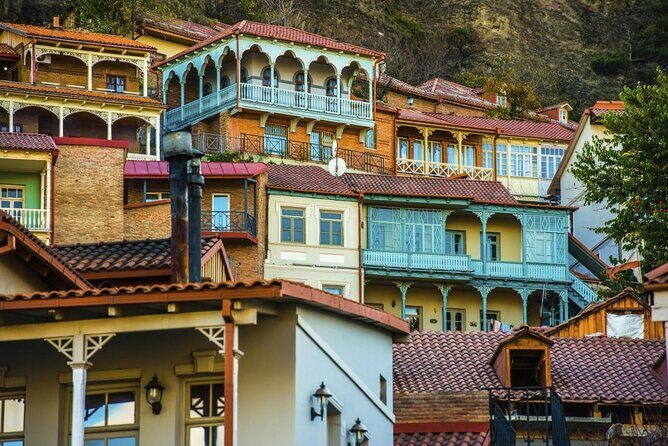
Your first stop is Old Town Tbilisi, the historic core on the banks of the Kura River. This is where the city’s identity becomes obvious: layered architecture, different ruling periods, and a mix of styles that reflect Tbilisi’s position between Europe and Asia. You’ll get that “wow, this city has lived through a lot” feeling early, without needing a museum ticket to make it click.
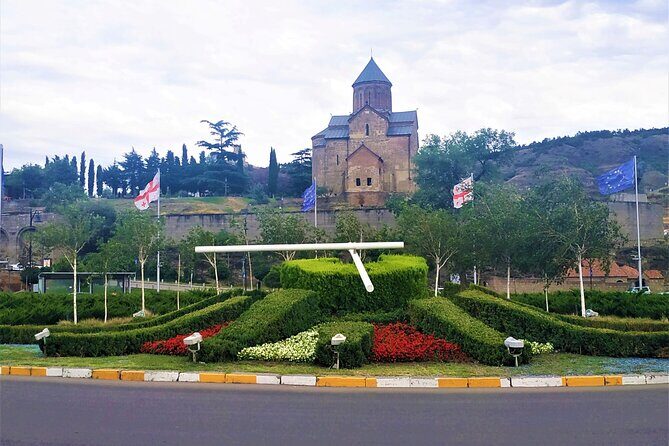
Then you head to Metekhi Cathedral (Church of Assumption). Built under Georgian king St Demetrius II in the late 1200s, it has been damaged and restored multiple times. What makes this church stop more than a pretty building is the shift in use under later rule: after Russian control began in 1801, the church lost its religious purpose and was used as a soldier base. Down the line, the citadel was demolished in 1819 and replaced by a jail structure that lasted into the Soviet era.
Practical tip: this is one of those stops where the site makes more sense if you understand the “why” behind the rebuilding and reuse. A good guide will connect the timeline to what you see in front of you, not just recite dates.
Cable car to Mother of Kartli: the panoramic payoff
At some point, every Tbilisi walk needs a height boost. That’s where the Aerial Tramway fits perfectly.
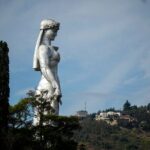
You ride the cable car up to the Mother of Kartli monument. The statue was erected in 1958 for Tbilisi’s 1500th anniversary. It’s a 20 meter aluminum figure designed by sculptor Elguja Amashukeli. The symbolism is simple and memorable: in her left hand she holds a bowl of wine to greet friends, and in her right hand is a sword for enemies.
Yes, it’s a view stop—but it’s also a story stop. You’ll enjoy panoramic views of Tbilisi, with the Old Town area laid out below in a way that makes the city feel understandable. If you’ve ever struggled to picture where everything is in a hilly city, this is the moment that usually fixes that.
Time note: expect around 20 minutes for the cable car portion and monument area.
Narikala Fortress: old walls, bigger views
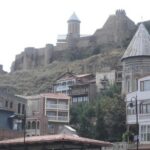
Next up: Narikala Fortress. This is the classic Tbilisi viewpoint zone for a reason. The fortress dates back to the 4th century as a Sasanian citadel called Shuris-tsikhe. Later, King David the Builder expanded it in the late 1000s, and the Mongols renamed it Narin Qala, meaning Little Fortress.
Most of what you can see today traces to fortifications from the 16th and 17th centuries. And then there’s the earthquake note from 1827, which is a reminder that nature has also shaped Tbilisi’s built environment.
You’ll get around 20 minutes here, which is enough to walk the edges, take photos, and let the view do its job. If your feet are tired, this is one of the spots where a quick sit and breathe can help you finish the rest of the day better.
Other Tbilisi walking tours we've reviewed in Tbilisi




Sulfur bath area and Leghvtakhevi Waterfall: thermal roots and a cool break
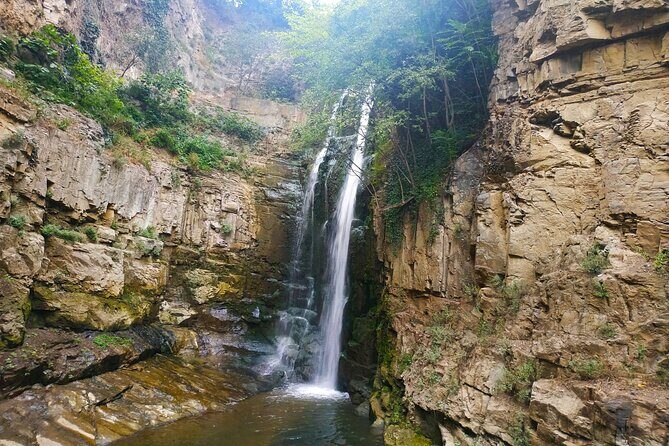
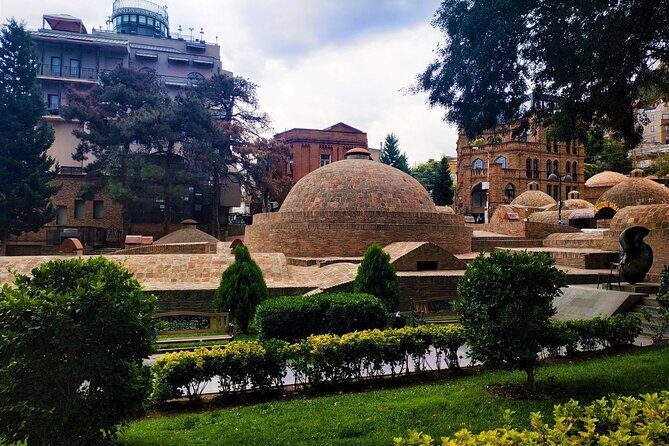
After Narikala, the route shifts into the lower gorge area for the sulfur bath zone and a nearby waterfall. The stop is listed as Dzveli Tbilisi Sulphur Waterfall, and it includes the sulfur baths and Leghvtakhevi Waterfall.
Sulfur baths come from thermal springs below ground with sulfur-rich water at about 40–50°C. The tour info notes that sulfur baths are used for skin issues, dry scalp, arthritic joints, digestion problems, and insomnia. Even if you’re not planning to do a treatment session (the tour timing suggests it’s more about the area experience), learning what these waters are used for changes how you perceive the place.
Then you’ll visit Love Lock Bridge and Leghvtakhevi Waterfall, which flows from a botanical garden setting in Tbilisi. This is a helpful “downshift” after fortress views: more air movement, a different sensory feel, and a chance to reset before more churches and historic landmarks.
Jvaris Mama and Sioni Cathedral: a church route with distinct personalities
Church hopping can sound repetitive on paper. Here, it doesn’t feel that way because each church stop reflects a different slice of Tbilisi’s religious story.
Jvaris Mama (Father of the Cross)
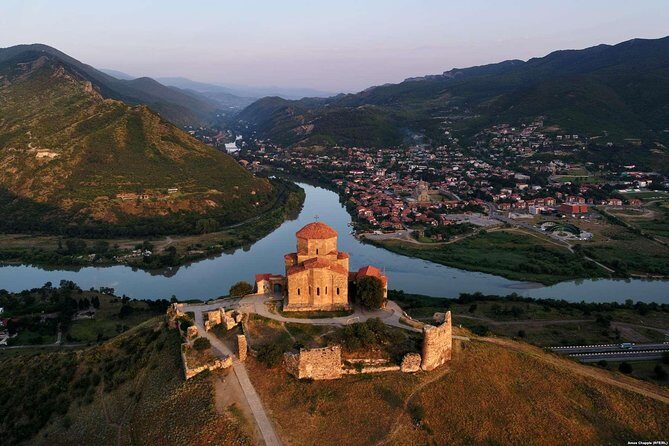
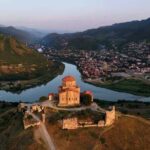
Jvaris Mama is associated with a saint cross church that tradition links back to the 5th century under King Vakhtang Gorgasali. The legend also connects St Nino to the area. The present building dates to the 16th century and was restored in the 1990s. It’s described as an example of a done-church type called Chapelhall.
There’s a distinctive detail about the “Father of Cross” name: it mentions the Father of Cross church belonged to the Jerusalem patriarchy until 1921, and that its connection led to funding over centuries. The tour notes it is cold—an odd little fact that makes the site feel human, not just monumental.
Sioni Cathedral Church
Sioni Cathedral Church has a Mount Zion connection through name and tradition. The current church structure is based on a 13th-century version, and then reconstructed in parts and rebuilt again over time. The core structure elements date back to King David the Builder’s 1112 rebuilding.
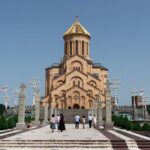
A key moment in the story: it was heavily damaged in 1226 when its dome was ruined on order of Jalal ad Din. Later, the cathedral served as the main seat of the Catholicos-Patriarch of All Georgia until the Holy Trinity Cathedral was consecrated in 2004.
If you care about how places change roles, Sioni is a good stop. You’ll see how a “main cathedral” status can shift without erasing importance.
Anchiskhati Basilica and the marionette theater: old faith plus quirky art
After Sioni, you’ll keep moving through Tbilisi’s layered cultural mix.
Anchiskhati Basilica: Tbilisi’s oldest church in active memory
Anchiskhati Basilica of St Mary is noted as the oldest surviving church in Tbilisi, dating to the 6th century. It was built by King Dachi and originally dedicated to the Virgin Mary. The name Anchiskhati came in 1675, when a treasured icon created by goldsmith Beka Opizari was moved to Tbilisi to protect it from an Ottoman invasion. That icon is said to be at the Art Museum of Georgia now.
You’ll also hear about the building’s rebuilding cycles: damaged and rebuilt multiple times, with a brick belfry added in 1675 and a dome in the 1870s. During Soviet times it was used as an art studio, and restoration began in the 1950s.
This stop also connects architecture to music. The Anchiskhati Choir is identified as the world’s leading exponent of Georgian polyphonic music. Even if you don’t attend a performance, knowing that the site connects to a living tradition helps the visit feel more present-day.
Rezo Gabriadze Marionette Theater: fun culture with built-in timing
Then comes one of the most entertaining breaks on the route: Rezo Gabriadze Marionette Theater. Rezo Gabriadze is described as a director, writer, painter, and sculptor, and the theater was founded in 1981.
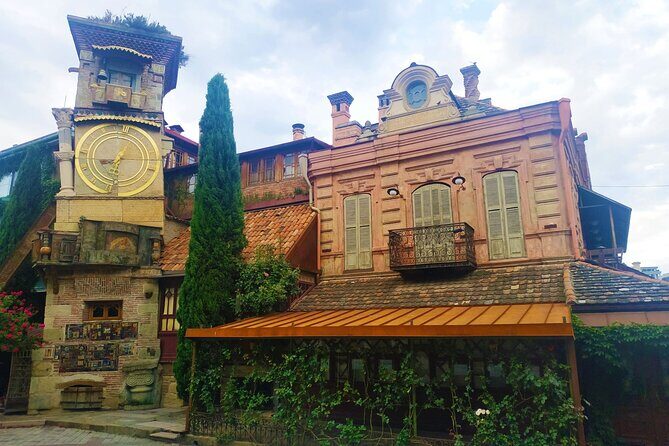
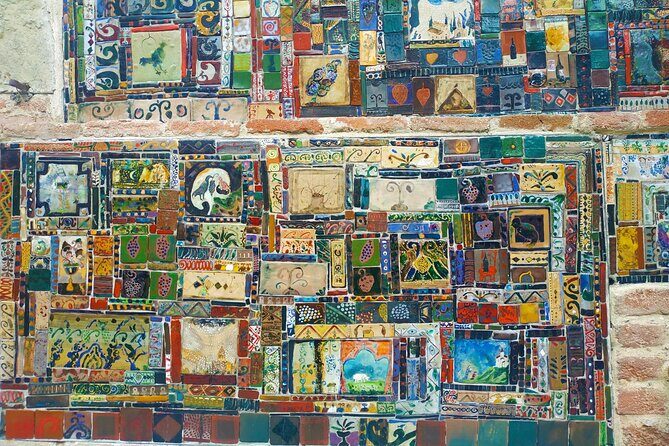
The signature feature: a clock tower added in 2011. On the hour, a window opens and a mannequin of an angel strikes a bell. Below that, a screen shows the circle of life—boy meets girl, marriage, childbirth, and funeral.
This stop works even if you’re not a “marionette theater” person. It’s a quick, visual moment of storytelling, and it also gives you a breather from walking.
Bridge of Peace and optional boat time on the Mtkvari
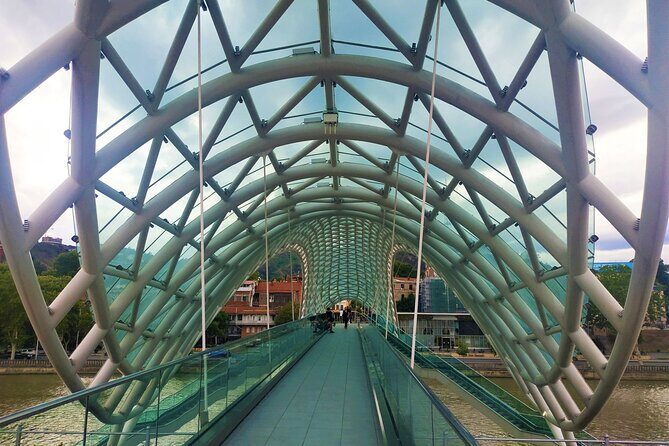
To wrap, you’ll visit the Bridge of Peace. It opened in 2010 and is about 150 meters long. The design includes a marine animal motif, and it’s credited to Italian architect Michele De Lucchi.
It’s a fitting end point because it ties the walking route back to Tbilisi’s river setting and gives you a clean visual finish after hills and churches.
At the end, you can add a boat tour on the river Mtkvari for an additional charge. If your legs are still fine, it’s a great way to keep the day feeling like more than just standing in viewpoints.
What to wear, what to expect walking, and how to pace yourself
This is a walking tour, even with transfers. The route in the Old Town includes stairs and varied terrain. Plan for uneven ground and short climbs.
For shoes: wear comfortable ones you trust on stone and cobbles. This is the kind of day where the wrong footwear turns a fun route into foot-checking misery.
Now the big one: church attire. Georgian Orthodox churches require ladies to wear head scarves and dresses. For men, short trousers are forbidden. The tour info also says scarves and dresses are available near church entrances for men and women, so you’re not doomed if you didn’t pack something.
If you want one practical strategy, it’s this: treat dress code as part of your travel time, not a last-minute scramble. When you show up ready, the tour stays smooth.
Alcohol note: Georgia’s legal drinking age is 18. Since wine tasting is included, keep your timing and ID readiness in mind.
Should you book this Tbilisi tour? My take
I’d book it if you want a guided Old Town plan that hits the biggest “I get this city” moments without turning into a long museum day. The mix is smart: churches with changing roles, the Narikala viewpoint zone, the Mother of Kartli panorama, and then a real cultural snack moment with wine tasting and bread.
It may not be your best fit if you hate stairs or you need a very low-step itinerary. Also, if church attire rules feel like a hassle, you’ll want to plan for scarves and the right pants or dress before you arrive.
If the weather cooperates and you’re okay walking a few uneven stretches, this is the kind of half-day tour that helps Tbilisi stop feeling like a map and start feeling like a place.
FAQ
How long is the tour?
It’s about 4 hours.
Is this tour private?
Yes. It’s private, and only your group participates.
Does the tour include pickup and transportation?
Pickup is offered, and you’ll travel in an air-conditioned vehicle between stops.
What’s included with the cable car?
The cable car takes you to the Mother of Kartli monument, and the stop is included in the tour.
Is wine tasting included?
Yes. Georgian wine tasting is included at no extra cost, and Georgia’s legal drinking age is 18.
What should I wear for churches?
Ladies need head scarves and dresses. Men cannot wear short trousers. Scarves and dresses can be found near church entrances.
What happens if the weather is bad?
This experience requires good weather. If it’s canceled due to poor weather, you’ll be offered a different date or a full refund.