REVIEW · TBILISI
Full Day Tbilisi City Tour with Wine Tasting & Cable Car Ride
Book on Viator →Operated by SelectGeorgia-For Holiday · Bookable on Viator
Tbilisi is built for a big day. This full-day city tour threads together major sights, hilltop panoramas, and a classic Georgian lunch with wine tasting—all with a private driver handling the “how do we get there?” problem. I especially like how the route mixes landmarks you’ve heard of (Holy Trinity Cathedral, Old Town) with smaller stops that help the city feel human.
Two things I really liked: the views. You get them from multiple angles, including the Narikala area after the aerial tramway and the Mountatsminda area by funicular/cable options. And the cultural pacing is strong—cathedrals early, Old Town walking mid-day, then fortress viewpoints and a finale with food, wine, and traditional performance.
One consideration: this is a lot of walking on uneven streets, plus stairs in the old city, so if you want a fully relaxed day, you might find the pace tiring. Also, one review flagged that guide quality can be hit or miss on private tours, so I’d make sure you’re the type who benefits from active explanations (not just photo stops).
In This Review
- Key highlights at a glance
- Why This 9-Hour Tbilisi Tour Works So Well
- Private Transportation: What You Gain (and Why It Matters in Tbilisi)
- Chronicles of Georgia and Holy Trinity Cathedral: Big Statements, Clear Photo Moments
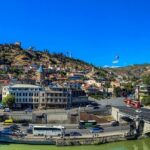
- Old Town Tbilisi: Where the City Feels Like a Living Place
- Metekhi Cathedral and the Hill-Edge Views
- Aerial Tramway to Mother of Kartli: The View Stop You’ll Remember
- Funicular vs. Cable Car: How to Think About the Included Views
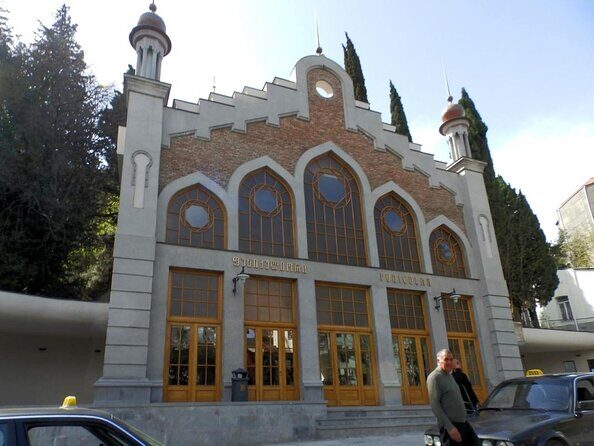
- Sulphur Bath and Leghvtakhevi Waterfall: A Different Kind of Georgian Stop
- Sioni Cathedral, Jvaris Mama, and the Small-Church Details
- Rezo Gabriadze Puppet Theater and Anchiskhati Basilica: Art Meets Icons
- Bridge of Peace and the River Walk Finale: Then Dinner, Wine, and Folk Shows
- Price and Value: Is $147.50 a Fair Deal for This Much City Time?
- Who This Tour Fits Best (and Who Might Skip It)
- Final Thoughts: Should You Book This 1-Day Tbilisi Circuit?
- FAQ
- How long is the Tbilisi City Tour with wine tasting and cable car ride?
- Is pickup included?
- What’s included in the price?
- Are tickets for the funicular included?
- Do I need special clothing for churches?
- Is wine tasting included?
- What if weather is bad?
Key highlights at a glance
- Multiple viewpoint stops: Mtatsminda area, aerial tramway to Mother of Kartli, then Narikala Fortress.
- Big religious landmarks in sequence: Holy Trinity Cathedral, Metekhi Cathedral, Sioni Cathedral, and more.
- Old Town walking that actually feels like Tbilisi: streets, churches, and iconic photo points.
- Worth-it food and drink: Georgian lunch plus wine tasting included, and alcoholic beverages with the group.
- A memorable finale: Bridge of Peace, plus a restaurant and museum with traditional dancing and singing shows.
- Clear cost add-on: the funicular ride is not included (around $7 per person).
Why This 9-Hour Tbilisi Tour Works So Well

This tour is built like a full-day “greatest hits” circuit, but it’s not just a drive-by checklist. You spend real time at key places—often 20 to 40 minutes—so you can look, photograph, and catch the vibe instead of feeling rushed through every stop.
The route also makes practical sense. You start with central monuments and major churches, then shift into the Old Town walking segment. After that, you head toward the higher viewpoints (with cable fun), then finish with the river walk area and a cultural food stop.
At $147.50 per person for a roughly 9-hour day, the value comes from the combination: private transport, multiple paid/major sites done efficiently, and included lunch plus wine.
Other wine tasting tours we've reviewed in Tbilisi


Private Transportation: What You Gain (and Why It Matters in Tbilisi)
You get private transportation in an air-conditioned vehicle, plus pickup is offered. That’s not a luxury add-on here—it changes the whole experience. Tbilisi has hills, winding streets, and neighborhoods that feel spread out when you’re on your own. With a driver doing the logistics, you can focus on stopping where you want.
It’s also a true private tour/activity, meaning only your group participates. That matters if you travel with friends or family and want the day to feel coordinated rather than tied to a fixed group rhythm.
One more useful detail: bottled water is included, and the tour includes alcoholic beverages. Georgia’s legal drinking age is 18, so plan on that if anyone in your group is underage.
Chronicles of Georgia and Holy Trinity Cathedral: Big Statements, Clear Photo Moments
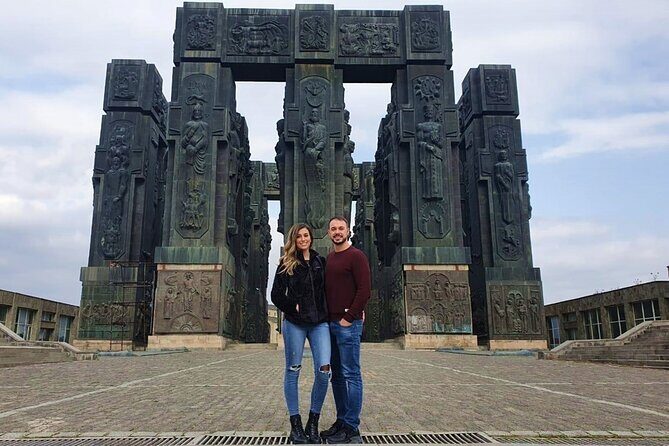
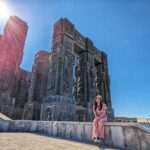
You begin at Chronicles Of Georgia, the massive memorial history monument with 16 tall pillars (about 30–35 meters). The design mixes sacred Christian storytelling—especially in the lower sections—with Georgian historical figures higher up, and it includes features like a grapevine cross of St. Nino and a chapel.
What I like about this stop is how it frames Georgia’s identity without turning the day into pure museum time. You get a broad visual lesson, then you’re out, photos done, views in hand. Even the timing helps: about 30 minutes gives you enough space to read the idea, not just stand in front of the stone.
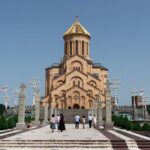
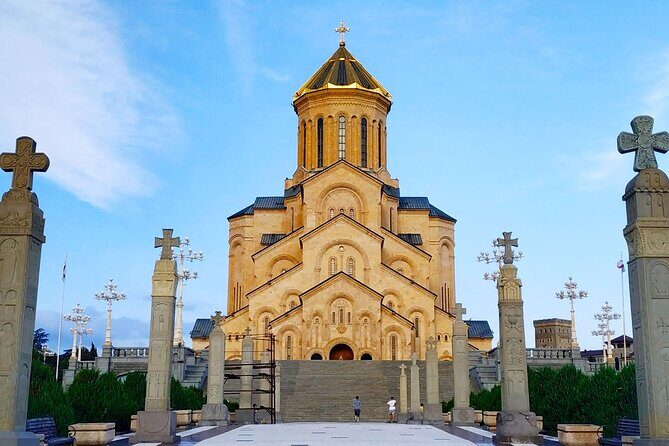
From there you go to Tbilisi Holy Trinity Cathedral. It’s the main Georgian Orthodox Church cathedral (1995–2004). It was built to mark 1500 years of autocephaly for the Georgian Orthodox Church and 2000 years from Jesus’ birth. The cathedral’s size and setting make it a strong contrast after the memorial monument—less timeline-heavy, more present-day “arrival energy.”
Both stops are ticket-free, which helps your budget. Expect good photo angles but keep a respectful pace inside places of worship.
Old Town Tbilisi: Where the City Feels Like a Living Place
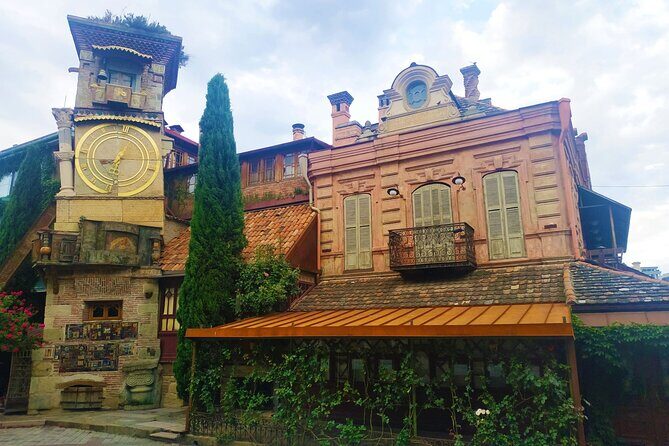
The Old Town segment is one of the most important pieces of this itinerary, because it turns the day from landmark viewing into actual city-feeling.
You’ll spend about 3 hours exploring the historic core area around the Kura River. Tbilisi’s architecture reflects centuries of influences—medieval to modern—because the city sat at a crossroads between Europe and Asia and changed hands many times. That’s why the streets don’t feel uniform. One corner looks older, another looks newer, then you hit a church and the whole mood shifts.
This is also where the tour asks a bit of you. Old Town includes uneven terrain and stairs, and you’ll walk. Comfortable shoes are a must.
If you like wandering with a plan—like getting dropped off with a route and context—this part delivers. If you prefer a very light day, you might find Old Town to be the hardest segment physically.
Metekhi Cathedral and the Hill-Edge Views
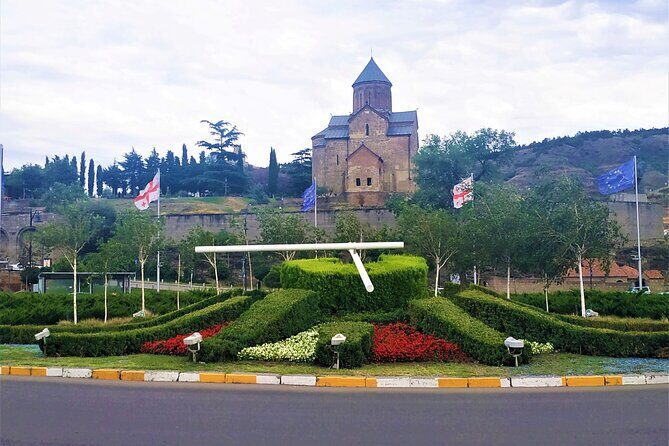
Metekhi Cathedral (Church of Assumption) is next, with about 30 minutes. It was originally built by St. Demetrius II in the late 1200s, then damaged and restored multiple times. Under Russian rule it lost its religious purpose and was used as a soldier base. Later, in Soviet-era time it was repurposed again, even including a jail history.
Why this works in a city tour: you can see how buildings in Tbilisi hold different meanings across eras. This stop is also positioned so it pairs well with the hilltop viewpoints that come later. Even when you only get a short visit, you get a sense of where the city lifts upward.
Spend that time looking at the area around the church, not just the church doors. The context is part of the story.
Other Tbilisi city tours we've reviewed in Tbilisi




Aerial Tramway to Mother of Kartli: The View Stop You’ll Remember
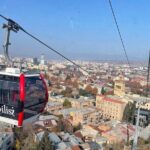
Then you get to the “cable ride” portion that people plan their whole trip for: the Aerial Tramway in Tbilisi.
First, you ride up to Mother of Kartli, a monument erected in 1958 for the 1500th anniversary celebration. Designed by Elguja Amashukeli, it shows a woman in traditional national dress. The symbolism is literal: she holds a bowl of wine in her left hand (greeting friends) and a sword in her right hand (for enemies). It’s dramatic, and it’s meant to be seen from above.
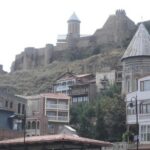
After the tramway stop, you continue to Narikala Fortress. The fortress has roots in the 4th century (Sasanian citadel) and was expanded by King David the Builder in the medieval period. Mongols later renamed it Narin Qala. Many existing fortifications date to the 16th–17th centuries, and the site suffered earthquake damage in 1827.
You get great panorama time, and the ticket for this part is included. It’s one of the best “pay once, see a lot” moments in the day.
Funicular vs. Cable Car: How to Think About the Included Views
This tour gives you options for Mtatsminda’s higher point via a funicular/cable railway stop at about 770 meters above sea level. The funicular road is 501 meters long. Your time there is about an hour, but the funicular ride itself is not included—plan roughly $7 per person.
Later, the aerial tramway segment to Mother of Kartli and Narikala is included.
So how should you decide? If you want the classic Mtatsminda ride feeling, budget for the funicular add-on. If you’d rather prioritize the included Narikala fortress viewpoint (which is often the more “wow” moment for many people), you still get plenty of elevation and city views without stressing over the extra cost.
Either way, bring patience. These are popular view routes, and you’ll want to move at a steady pace to keep the day flowing.
Sulphur Bath and Leghvtakhevi Waterfall: A Different Kind of Georgian Stop
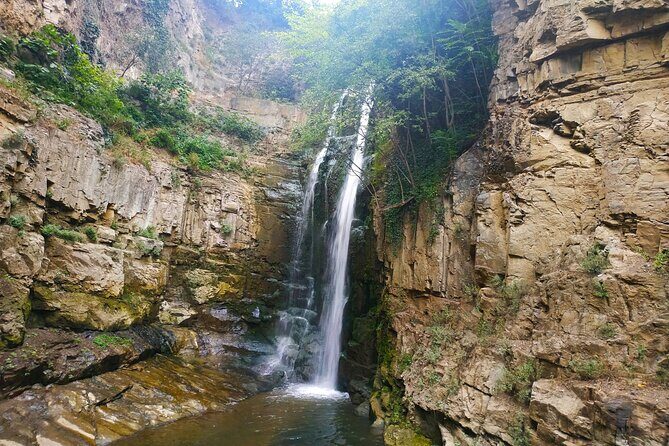
After Narikala, you head to Dzveli Tbilisi Sulphur Waterfall, with a combined stop that includes the Sulphur Bath and Leghvtakhevi Waterfall.
The sulphur baths come from thermal springs under the ground, running around 40–50°C. The guide narrative is that sulphur baths can help with things like skin issues, dry scalp, arthritic joints, digestion problems, and insomnia. Whether you’re interested in the health angle or just the novelty, it’s a refreshing break from churches and monuments.
Then you’ll see Leghvtakhevi Waterfall flowing from a botanical garden, plus the Love Lock Bridge area. This section is shorter (about 20 minutes), so don’t expect a long soak. Think of it as a quick, memorable taste of a very Tbilisi experience.
Sioni Cathedral, Jvaris Mama, and the Small-Church Details
You’ll visit Sioni Cathedral Church next, linked to Mount Zion in Jerusalem. The original church dates back to the 6th–7th centuries but was destroyed and rebuilt over time. The current structure is based on a 13th-century version, with changes later from the 17th–19th centuries. It was also rebuilt by King David the Builder in 1112.
After that, you go to Jvaris Mama Church (also tied to Golgotha in legend) where St. Nino is associated with the site. The present building is dated to the 16th century, but it had periods of destruction and restoration, including in the 1990s. The tour notes the “Father of Cross” church history linked to the Jerusalem patriarchate, which helps explain why details here can feel slightly different from other local churches.
These stops are ticket-free and relatively short (about 20 minutes each). That makes them good “breather points” between longer viewpoint segments.
One practical note: Georgia Orthodox churches require dress standards. Ladies need head scarves and dresses, and short trousers for men are forbidden. Scarves and dresses are available near church entrances, so you won’t be stranded if you arrive unprepared.
Rezo Gabriadze Puppet Theater and Anchiskhati Basilica: Art Meets Icons
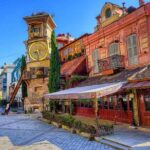
Next is a more playful cultural stop: Leselidze street, the Tamada statue, and Rezo Gabriadze Puppet Theater. Gabriadze is a Georgian theater and film director, writer, painter, and sculptor. The theater opened in 1981, and the clock tower addition came in 2011.
The clock show is described as: on the hour, a window opens and a mannequin of an angel strikes the bell, then a screen shows a quick series of life moments (boy meets girl, marriage, childbirth, and funeral). It’s the kind of detail that makes a city feel alive rather than staged.
After the puppet theater, you visit Anchiskhati Basilica of St Mary, the oldest surviving church in Tbilisi (6th century). Originally dedicated to the Virgin Mary, it was renamed Anchiskhati in 1675 when a treasured icon created by the 12th-century goldsmith Beka Opizari was moved to Tbilisi to protect it from Ottoman invasion. The icon is now at the Art Museum of Georgia.
This pair balances moods: whimsical performance next to an ancient church. It’s short on time (about 20 minutes), but it’s memorable because it hits both senses—story and symbolism.
Bridge of Peace and the River Walk Finale: Then Dinner, Wine, and Folk Shows
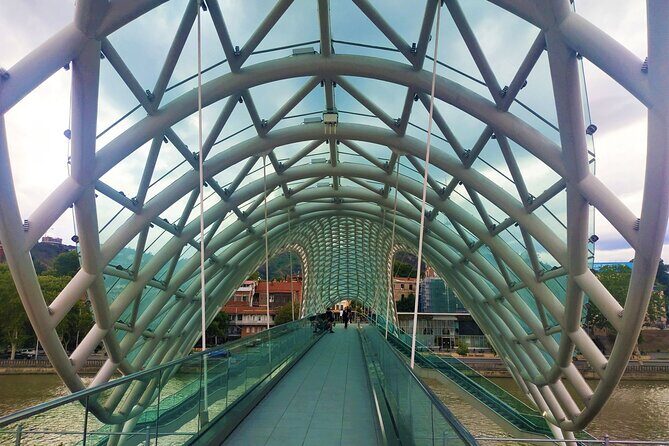
To end the day, you go to Bridge of Peace and Rike Park. The Bridge of Peace opened in 2010 and is about 150 meters long. It has a marine animal design and was designed by Italian architect Michele De Lucchi.
You’ll also have the option of a boat tour on the Mtkvari River, but that’s an additional charge. Even without the boat, this area is a good “reset” moment after hours of walking and viewpoints.
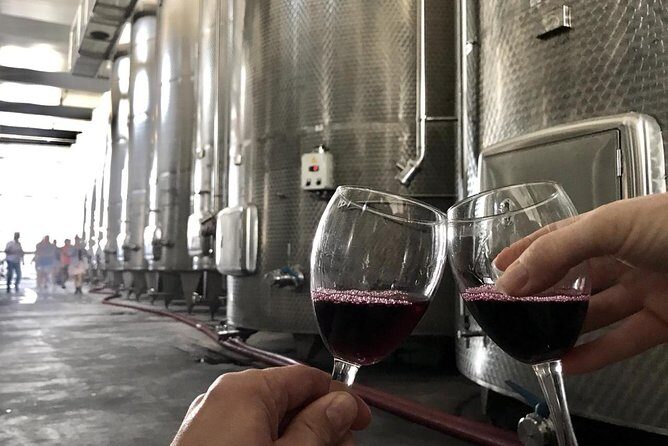
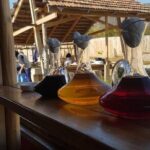
Then the tour shifts into Georgian food and performance mode. You’ll transfer to a luxury Georgian restaurant and museum for traditional dancing and singing shows. Lunch is part of the day, and wine tasting is included.
The best reason this works: you get a structured cultural payoff after you’ve spent the whole day seeing churches, monuments, and city identity. By the time the folk music starts, you’ll actually understand the pride behind it—because earlier stops gave you context.
And yes, alcoholic beverages are included. Keep it responsible; Georgia’s drinking age is 18.
Price and Value: Is $147.50 a Fair Deal for This Much City Time?
At $147.50 per person for an about 9-hour day, the math looks fair because you’re paying for multiple things at once:
- Private, air-conditioned transport (not just a group bus)
- Pickup is offered
- A full route through major attractions spread across the city
- Included Georgian lunch, plus wine tasting
- Bottled water and alcoholic beverages included
- Admission included for parts like Narikala via the aerial tramway segment
- Multiple ticket-free stops for key churches and monuments
What you pay extra for is straightforward: the funicular ride is not included (around $7 per person). That’s the one “budget” item you should plan for if you want Mtatsminda’s ride experience.
Where value can wobble: the day depends on the flow of the guide explanations. The overall rating is strong—4.9 with a recommended rate of 94% based on 18 reviews—but one criticism was about a private tour guide feeling hit or miss. If you’re the type who loves commentary and context, you might want to confirm your guide style with the operator before you go.
Who This Tour Fits Best (and Who Might Skip It)
This tour fits best if you want a structured day with a clear plan: landmarks, Old Town walking, cable/funicular viewpoints, and a cultural food-and-performance finale.
It’s especially good for:
- First-time visitors who want to cover a lot without mapping chaos
- People who want included wine tasting and a Georgian lunch
- Anyone who likes churches and monuments but also enjoys art and street-level cultural moments (like the puppet theater clock show)
It might be less ideal if:
- You have limited mobility or hate stairs and uneven pavement
- You want a very relaxed pace with minimal walking
- You’d rather book fewer stops and spend more time in one neighborhood (this itinerary is designed for variety, not long lingering)
Final Thoughts: Should You Book This 1-Day Tbilisi Circuit?
If you want one day that makes Tbilisi feel understandable—where monuments, cathedrals, hilltop views, Old Town streets, and Georgian food connect—you’ll likely love this format. The included lunch and wine tasting, plus the cable/tramway viewpoint timing, make it feel like more than just transportation.
If you do book it, go in with the right mindset: wear comfortable shoes, expect walking and stairs, and be ready for churches’ dress rules (scarves and dresses are available near entrances). Also, treat the funicular as an optional bonus you can pay for if you want the Mtatsminda ride feeling.
Overall, for $147.50, this is a strong “see a lot with less stress” day—just make sure you’re comfortable with a packed schedule and that you’ll enjoy learning as you go.
FAQ
How long is the Tbilisi City Tour with wine tasting and cable car ride?
It runs for about 9 hours.
Is pickup included?
Pickup is offered, and you’ll be in a private group with a private driver.
What’s included in the price?
Private transportation, an air-conditioned vehicle, bottled water, alcoholic beverages, and wine tasting are included, along with lunch.
Are tickets for the funicular included?
No. The funicular ride is not included, and it’s around $7 per person.
Do I need special clothing for churches?
Yes. Ladies need head scarves and dresses in Georgian Orthodox churches. Short trousers for men are forbidden. Scarves and dresses can be found near church entrances.
Is wine tasting included?
Yes, the tour includes wine tasting as part of the day’s food and drink.
What if weather is bad?
The experience requires good weather. If it’s canceled due to poor weather, you’ll be offered a different date or a full refund.