REVIEW · TBILISI
Private Adorable City Tour of Tbilisi
Book on Viator →Operated by MARIA · Bookable on Viator
Church bells and river views in one calm ride. This private tour with Maria mixes Tbilisi’s top sights with the Bridge of Peace, and the storytelling is what makes it feel special. I really like how Maria explains Georgian tradition and culture through history and religion, and I also like the relaxed rhythm with hotel pickup and drop-off that saves you from haggling with taxis. One thing to plan for: Narikala Fortress access depends on the cable car, which is not ensured, and it adds a small extra cost.
You also get a compact best-of route that covers both sides of Tbilisi and then heads to nearby Mtskheta for major Orthodox landmarks. You’ll move through Old Town viewpoints, cross the Kura River area, then switch gears to UNESCO-listed churches—an easy way to understand why this region’s faith and identity are so intertwined with place.
In This Review
- Key Highlights You Will Actually Feel
- A Half-Day That Starts With Old Town, Not a Checklist
- Pickup, Driver, and the Right Kind of Pace
- Stop 1: Metekhi and the Kura River Church That Started Early
- Stop 2: The Bridge of Peace and Why Tbilisi Looks New Here
- Stop 3: Narikala Fortress Views (and the Cable Car Reality)
- Stop 4: Jvari Church Near Mtskheta and the UNESCO Context
- Stop 5: Svetitskhoveli Cathedral and the Life-Giving Pillar
- Price and What You’re Really Paying For
- What Makes Maria’s Guiding Style Worth the Day
- Who This Tour Fits Best
- Quick Tips So Your Day Feels Smooth
- Should You Book This Private Adorable City Tour?
- FAQ
- What time does the tour start?
- How long is the tour?
- What is included in the price?
- Is dinner included?
- Is the cable car included for Narikala Fortress?
- What is the cancellation policy?
Key Highlights You Will Actually Feel
- Maria’s history and religion explanations: You’re not just looking at buildings; you’re getting the meaning behind them.
- Hotel pickup and drop-off: It’s private, so you spend less time figuring out logistics and more time looking out the window.
- Peace Bridge photos without rushing: A quick stop with great views over the Kura.
- Narikala Fortress with a real-world cable car note: Plan for the chance the cable car may not run as expected.
- Two big Mtskheta UNESCO stops: Jvari and Svetitskhoveli Cathedral both land with included admission.
A Half-Day That Starts With Old Town, Not a Checklist
This tour is built for people who want a clear sense of Tbilisi without turning their day into a nonstop sprint. You’ll start at 10:00 am, and the whole route runs about 4 to 5 hours, which is a smart length if you’re also doing dinners, museum time, or a relaxed afternoon in the same week.
The private setup matters more than it sounds. With just your group, you can ask questions as you go, and Maria can pace explanations based on what you care about—church history, Georgian customs, or just how the city’s different eras connect. If you’re the type who likes to understand what you’re seeing, this tour clicks fast.
I also appreciate that bottled water is included. It sounds small, but it helps keep the tour feeling comfortable, especially if the weather turns warm.
Other Tbilisi city tours we've reviewed in Tbilisi


Pickup, Driver, and the Right Kind of Pace
The logistics are refreshingly simple: pickup from your hotel and drop-off back to where you started. That means less time in the city’s traffic, and more time in the viewpoints and historic streets where the actual atmosphere lives.
You also get a professional English-speaking guide and an experienced driver. In practice, that usually means fewer moments where you’re left to guess what matters most. Maria’s style is especially noticeable at the churches—she ties the buildings to how Georgians think about survival, identity, and faith, not just dates and names.
The tour also uses a mobile ticket, which can save you time at entry points if you prefer not to fuss with paperwork. And because the experience requires good weather, it’s the kind of plan that works best when the sky cooperates. If weather is rough, you’ll be offered another date or a full refund.
Stop 1: Metekhi and the Kura River Church That Started Early
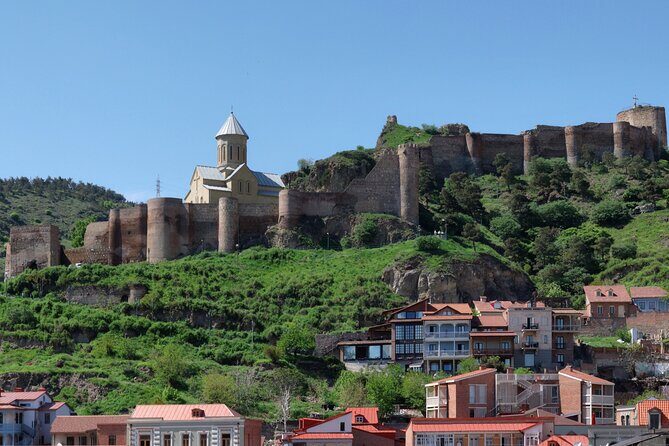
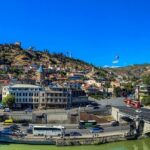
Your first major stop is Old Town Tbilisi, beginning at the Virgin Mary Assumption Church of Metekhi. This is a Georgian Orthodox church on the left bank of the Kura River. The timeline matters here: researchers confirm the temple was built in the 6th century.
What I like about starting here is that it immediately gives you a sense of depth. Maria can connect the church to the larger story of the area, including King Vakhtang I Gorgasali, who erected a church, a castle, and a palace on this site that served as his residence.
The stop is listed as about 30 minutes, and admission at this point is free. That makes it a good entry into the day: you get the setting, you get the key background, and you still have energy for the more view-heavy portions later.
A small practical note: since this is an early foundation church area, plan on standing and looking around at a few angles rather than expecting a long museum-like visit.
Stop 2: The Bridge of Peace and Why Tbilisi Looks New Here
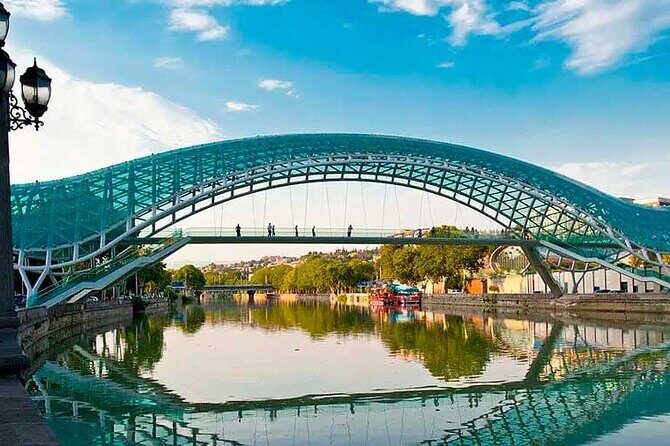
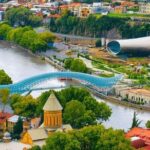
Next you move to the Bridge of Peace, a bow-shaped pedestrian bridge over the Kura River. It’s a steel and glass structure, illuminated with lots of LEDs, and it links Rike Park with Old Town in central Tbilisi.
This stop is only about 30 minutes, and admission is included. That short timing is intentional. The bridge is a visual experience first: you walk, you angle your camera, you get the river view, and you move on.
Here’s the value for your day: you’re watching Tbilisi switch gears. The bridge is modern, lit at night, and designed for pedestrians. It helps you feel how the city blends centuries-old religious landmarks with newer architecture and public space.
If you’re worried about spending too long in one place, this is the kind of stop that keeps the tour flowing.
Stop 3: Narikala Fortress Views (and the Cable Car Reality)
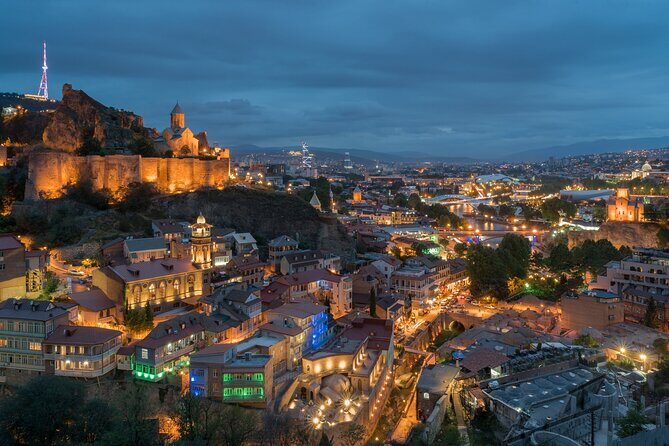
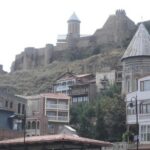
Then comes Narikala Fortress, the ancient overlook above Tbilisi and the Mtkvari River. The fortress sits on a steep hill and includes two walled sections. It’s located between the sulfur baths area and the botanical gardens, so you’re seeing a mix of city life at the base while the fort sits above like a lookout.
Access here is where you should keep expectations flexible. You’ll catch the cable car to reach the fortress, but the cable car amount is not ensured in this place. Also, the cable car is not included in the tour price, and it costs $2 per person.
Admission for Narikala Fortress is also listed as not included. So even if you handle the cable car cost, there could be a small additional fee on top for the fortress entrance itself. The tour is still worth it for the views, but I’d budget a little extra rather than assuming everything is fully covered.
The time on this stop is about 1 hour. That’s a good amount for soaking in the panorama without feeling like you have to sprint through every wall and viewpoint.
If you want the “big city from above” moment, this is the part that usually delivers it fastest.
Other city tours we've reviewed in Tbilisi

Stop 4: Jvari Church Near Mtskheta and the UNESCO Context
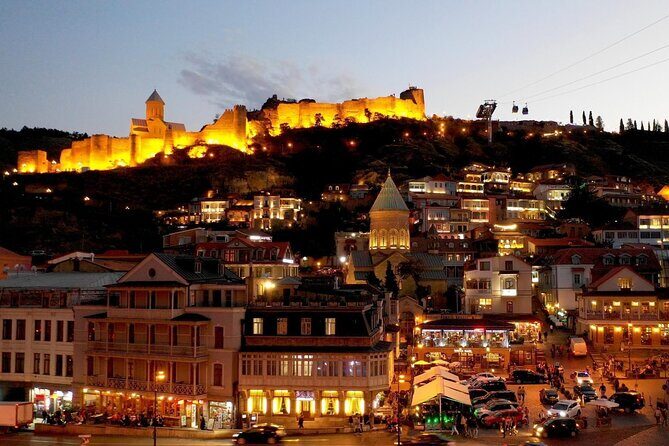
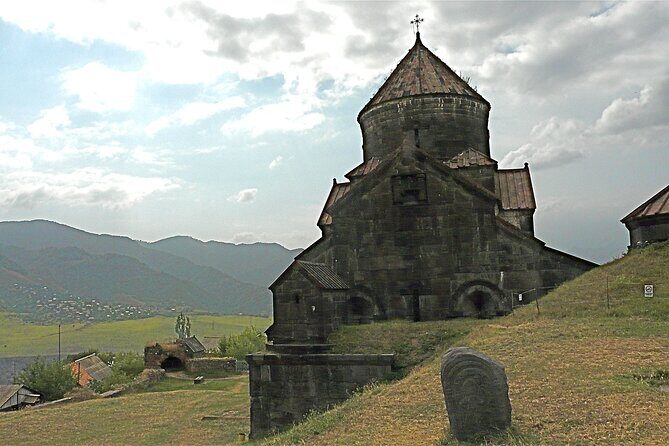
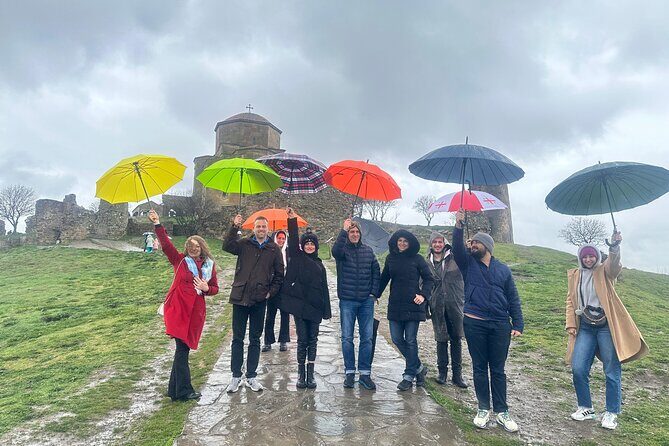
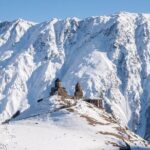
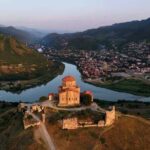
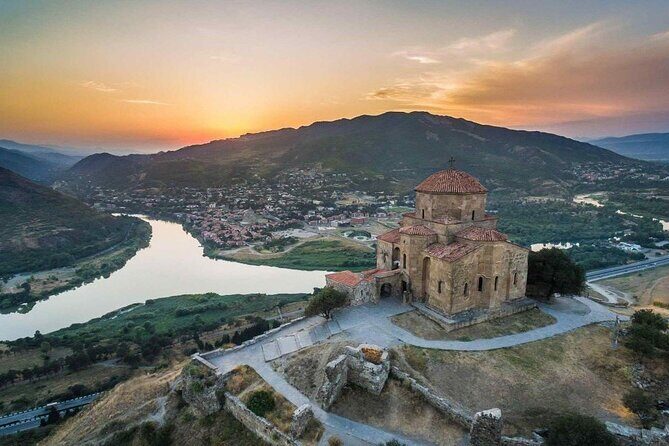
After Narikala, the tour shifts toward Mtskheta for two major Orthodox landmarks. The first is Jvari Church (Jvari monastery area), a Georgian Orthodox monastery near Mtskheta in eastern Georgia.
Jvari is a sixth century site, and it stands out because it’s a rare case of an early medieval Georgian church that has survived almost unchanged to the present day. It’s also listed as a World Heritage site by UNESCO in 1994, which helps explain why people make the trip beyond Tbilisi.
This stop runs about 1 hour, and admission is included. That combination is a plus if you want real cultural weight without paying extra on the day.
I like Jvari for one specific reason: it helps you understand that the region’s faith isn’t just in city centers. It’s tied to geography, crossroads, and the way Mtskheta sits in relation to everything around it. Maria’s explanations about tradition and religion make this stop land with meaning rather than just “another old church.”
If you’re interested in how architecture survives political changes and still communicates identity, Jvari is the lesson you didn’t know you needed.
Stop 5: Svetitskhoveli Cathedral and the Life-Giving Pillar
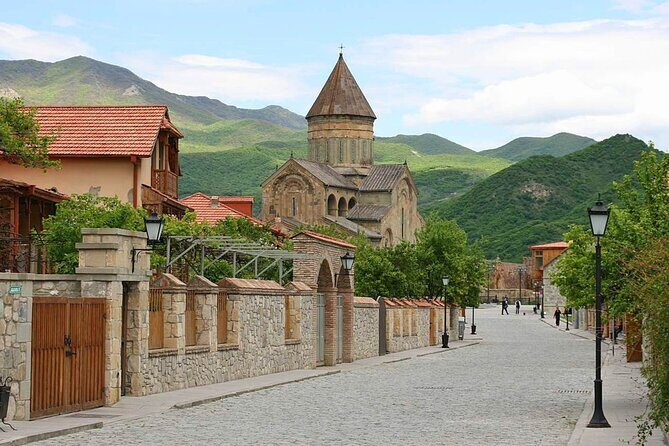
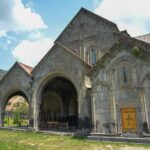
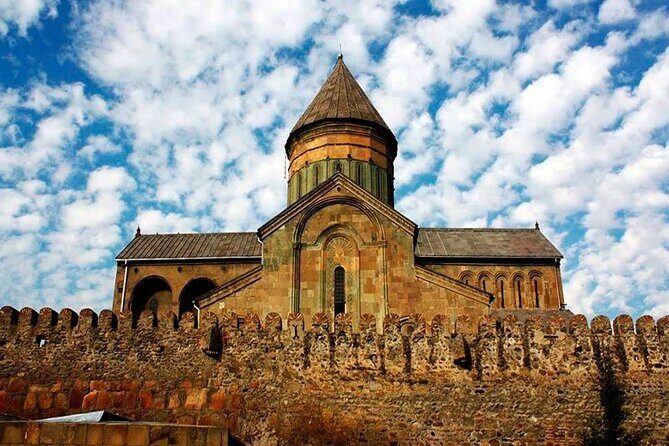
The final big landmark is Svetitskhoveli Cathedral, located in historic town Mtskheta northwest of Tbilisi. The cathedral’s name is often connected to the Life-Giving Pillar, and that phrase hints at the spiritual reputation behind the site.
This is described as a masterpiece of the early and high middle ages. The stop is about 1 hour, and admission is included.
What makes this cathedral stand out in a tour like this isn’t only the age. It’s the way the guide can translate what you’re seeing into how it connects to Georgian Christianity as a lived tradition. Maria is especially strong at tying together details like architecture and religious art, which means you’re less likely to treat the building as a photo background.
If you’re the kind of person who cares about murals, icon-like religious artwork, or how churches use space to create reverence, Svetitskhoveli is a satisfying ending.
And because you’re finished right after, you don’t spend the rest of the day dragging yourself through the same kind of stop.
Price and What You’re Really Paying For
At $34.00 per person, this tour is priced for solid value if you want a guide-led route that covers several major sites in a short time.
Here’s what that price includes:
- Bottled water
- Professional English-speaking guide and experienced driver
- Hotel pickup and drop-off
- Mobile ticket
- Admission is included for some key stops (Bridge of Peace, Jvari, and Svetitskhoveli), while others are free or not included
What’s not included:
- Dinner
- Cable car at Narikala ($2 per person)
In plain terms, you’re paying for two things: transportation plus an expert interpreter of the sites. You’re not just booking entry points; you’re booking context. For many people, that’s the difference between seeing five locations and understanding why they matter.
Dinner isn’t included, so if you want to keep lunch simple and save time, you can. If you want a full Georgian food and wine moment, you’ll need to add cost.
Also, the Narikala costs are easy to underestimate. The tour makes it clear that the cable car isn’t fully guaranteed in that spot and that it costs $2. Plan for a small extra amount and you’ll feel calm instead of annoyed.
What Makes Maria’s Guiding Style Worth the Day
The strongest signal from the experience is Maria’s way of explaining Georgia. She’s praised for being kind and responsible, and her explanations focus on Georgian tradition and culture through history and religion.
What you’ll likely notice is that Maria doesn’t treat the stops like separate facts. She connects them. For example, she can talk about wall paintings and architecture, not just the name of a church. She also connects the region’s identity to how people survived through time—then ties it back to the places you’re standing in.
One review also highlights that she explains Georgian wine-making. Even if you don’t turn that into a tasting today, it helps you understand why wine culture fits so naturally with Georgian history and daily life.
If your vacation style is “show me the why,” this kind of guiding makes the difference.
Who This Tour Fits Best
This is a great match if:
- You want a private, low-stress half-day with hotel pickup
- You like churches, history, and religion explained clearly
- You want Tbilisi highlights and a side trip to Mtskheta UNESCO sites in one go
- You prefer a guide who can answer questions while you’re walking
It might be less ideal if:
- You only want modern city sights and don’t care much about Orthodox landmarks
- You’re very strict about costs being fully included, since Narikala can add cable car and potential entrance fees
- You hate uncertainty around cable car operations, since Narikala access may depend on it
The good news: even with the cable car note, the tour is structured to keep the day moving and meaningful.
Quick Tips So Your Day Feels Smooth
A few practical ideas based on how this route works:
- Wear comfortable shoes for Old Town walking and viewpoint areas.
- Bring a little extra money or card flexibility for the cable car at Narikala ($2 per person), since it’s not included.
- Watch the weather. This experience requires good weather, and if conditions are poor, you’ll be moved to another date or refunded.
- If you care about photography, bring a camera strap and plan to take a few shots during the bridge and fortress sections rather than trying to photograph everything nonstop.
Should You Book This Private Adorable City Tour?
I’d book it if you want the most efficient way to understand Tbilisi and Mtskheta without getting lost in transit decisions. At $34 per person, the value is strongest when you’ll actually use the guide: Maria’s ability to connect Georgian tradition, history, religion, and details in the churches is the core reason this tour feels memorable.
I wouldn’t book it if your goal is a long, flexible day with lots of free time to wander on your own, or if you’re unwilling to plan for a small extra cost and possible cable car hiccups at Narikala.
If you’re aiming for a calm morning with real context, this tour is a strong choice.
FAQ
What time does the tour start?
It starts at 10:00 am.
How long is the tour?
The tour lasts about 4 to 5 hours.
What is included in the price?
It includes bottled water, pickup from your hotel and drop-off, and a professional English-speaking guide and experienced driver.
Is dinner included?
No. Dinner is not included, and Georgian food and wine would be an extra cost.
Is the cable car included for Narikala Fortress?
No. The cable car costs $2 per person, and access is not fully ensured in this place.
What is the cancellation policy?
You can cancel for free up to 24 hours in advance for a full refund. Weather can affect operation, and if it’s canceled due to poor weather you’ll be offered a different date or a full refund.