REVIEW · TBILISI
Mtskheta-Jvari-Gori-Uplistsikhe-Stalins Museum All inclusive tour
Book on Viator →Operated by Travel To Georgia · Bookable on Viator
Caves, cathedrals, and one very complicated man. This Mtskheta–Jvari–Gori–Uplistsikhe–Stalin day tour strings together two UNESCO power stops plus the rock-hewn world of Uplistsikhe, so you get Georgia’s Christian story and its older layers in the same outing. I especially love how the Uplistsikhe Cave Town feels close to daily life long ago, then you shift to the hilltop awe of Jvari and Svetitskhoveli without wasting time.
My second favorite part is the Stalin Museum. It is not just a statue-and-soundbites museum either; it includes the memorial house believed to be his birthplace and even Stalin’s personal train car, plus a big collection of artifacts. The one drawback to consider is that this is a full 8 to 10 hour schedule, and a packed day can mean a less-than-early lunch; one visitor noted their lunch ran late, so plan your day with flexibility.
In This Review
- Key things to know before you go
- A full day from Tbilisi: the 9:30 start and how it feels
- Uplistsikhe Cave Town: Georgia carved into stone
- Goristsikhe Fortress ruins: a hill that explains the name
- Stalin Museum in Gori: artifacts, stories, and a personal train
- Jvari Church: UNESCO architecture and a hilltop story
- Svetitskhoveli Cathedral: relics, royal tombs, and a whole complex
- Lunch in Gori and how to handle a packed schedule
- Price and value: why $155 can work (or not)
- Who this tour suits best
- Should you book this Mtskheta–Jvari–Gori–Uplistsikhe–Stalin day tour?
- FAQ
- How long is the Mtskheta–Jvari–Gori–Uplistsikhe–Stalin all-inclusive tour?
- What time does the tour start?
- Is pickup included?
- What admissions are included?
- Is lunch included?
- Is bottled water provided?
- Is alcohol included?
- What fitness level do I need?
- Is there free cancellation?
Key things to know before you go
- Uplistsikhe is rock-hewn and ancient, first mentioned centuries ago, with monuments reaching back to the Bronze Age era.
- Stalin Museum runs on scale, with 60,000 exhibits and several major parts including a memorial house and his train car.
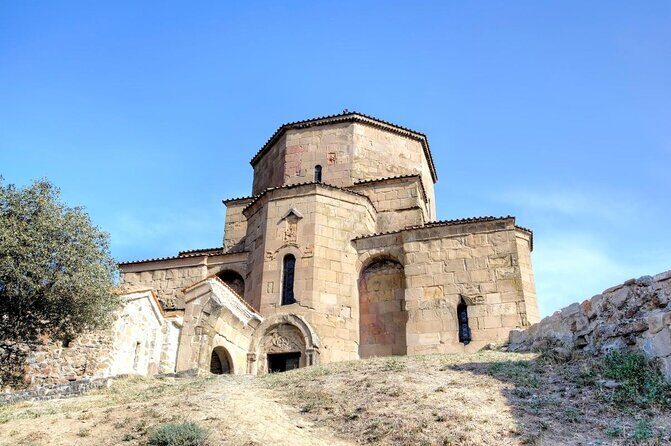
- Jvari is a UNESCO World Heritage site, linked to early Georgian Christianity right at the confluence of the Aragvi and Mtkvari rivers.
- Svetitskhoveli is more than one church, a whole cathedral complex with a bell tower, gate, and preserved religious relics.
- You get a private, air-conditioned ride, plus bottled water, and tickets for the two big paid entries.
A full day from Tbilisi: the 9:30 start and how it feels
This is the kind of tour that works best when you like structure. Pickup is offered, and the schedule is built around a steady chain of sites: cave city, fortress ruins, a museum, then two major church stops. The day runs about 8 to 10 hours, so you will want comfortable shoes and a calm pace mindset.
Because it is private and just your group, you are not stuck with random timing. Your guide can generally adapt within reason, and that matters when you are trying to actually see things instead of just passing through. You also get the convenience of private transportation in an air-conditioned vehicle, plus bottled water, so the logistics feel lighter than doing this route on your own.
One small reality check: the longer your day, the more you should treat lunch as a “when it happens” moment. The tour includes lunch in a Gori restaurant, and at least one booking reported that lunch arrived later than expected. If you are sensitive to timing, you may want a light breakfast and water early so you do not start the day hungry.
Other Mtskheta tours we've reviewed in Tbilisi

Uplistsikhe Cave Town: Georgia carved into stone
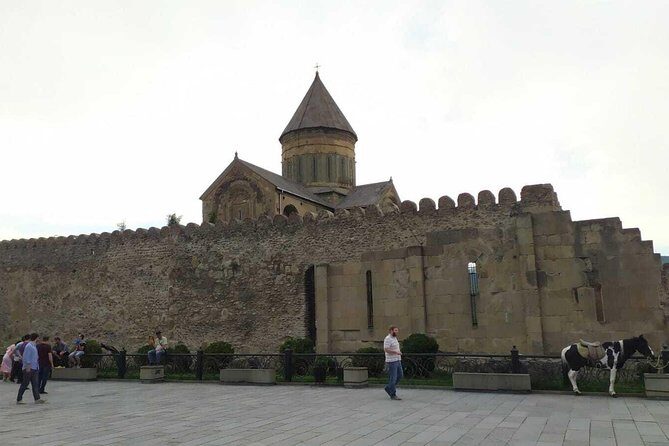
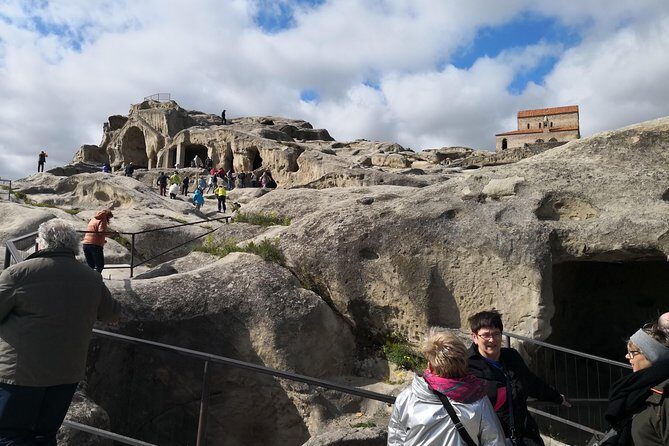
Uplistsikhe is one of those places where the setting teaches you history. You are visiting a rock-hewn city east of Gori on the left bank of the Mtkvari River, and you get the sense that people built, lived, and adapted around the stone itself. The site’s timeline stretches far back: monuments date to the early Bronze Age era tied to the Kura-Araxes culture, and the settlement is first mentioned within historical records centuries ago.
What I like about starting here is that it gives you context before the more modern 20th-century story of Stalin. In Uplistsikhe, you are looking at a “city made of caves,” once known as the Fortress of the Lord. Even if you are not a geology person, the sheer physical reality helps you understand why this place lasted.
You get about 2 hours here, and that is a good amount of time if you plan to stop and look up as much as you look forward. The terrain is uneven in places because it is built into rock, so moderate physical fitness helps. If your day is planned around big museum interiors only, you might find the cave-town walking a little more demanding than you expected, even with a guide.
Also, remember that the paid admission is included. That means you can focus on exploring without budgeting for each stop at the last second.
Goristsikhe Fortress ruins: a hill that explains the name
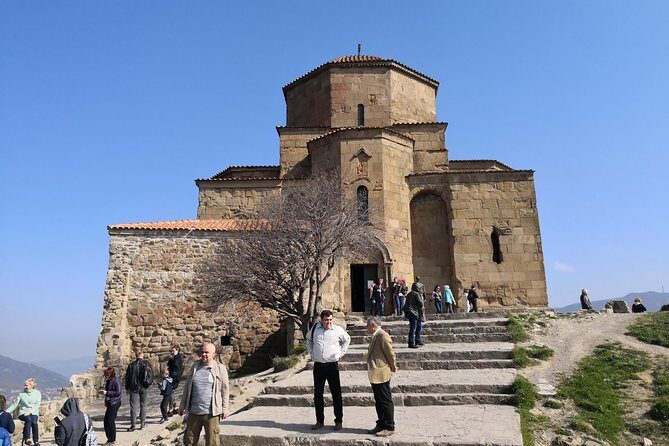
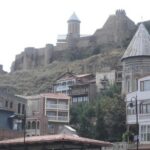
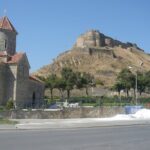
After the caves, the day shifts to Gori and the rocky hill of Goristsikhe. This fortress sits in the center of Gori, and the ruins plus archaeological findings point to earlier fortifications going back to around the 1st century BC. Later, in the 13th century, it appears in manuscripts as Gori Prison, which gives the hill a heavy, historical edge.
This stop is shorter, around 40 minutes, and it works best as a “picture this” moment. You do not need to be a hardcore history student. Just take a few minutes to trace how a fortress would control movement, how a rocky position helps defense, and how names can stick to places through centuries.
The good part: entrance here is free, and the time block is reasonable. The trade-off: with only 40 minutes, you are not going to get a slow, full archaeological education. If you love details, ask your guide questions like what the visible ruins suggest compared to older layers.
Stalin Museum in Gori: artifacts, stories, and a personal train
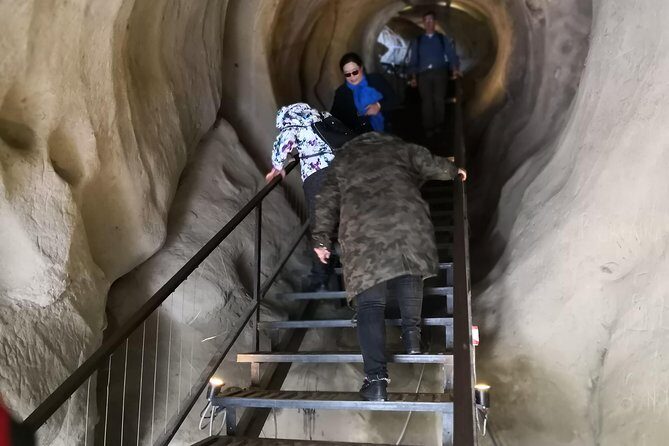
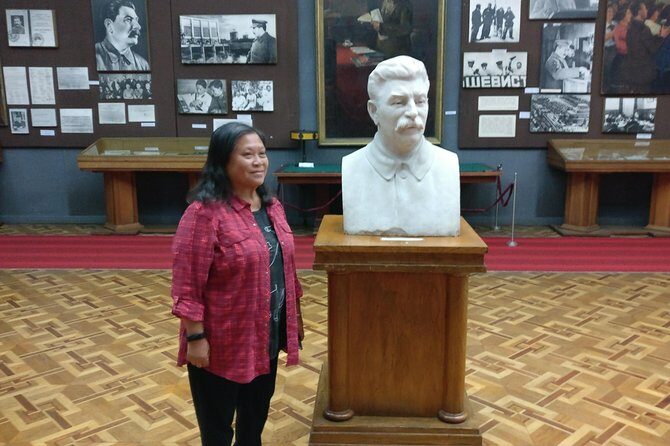
Then the program makes a hard turn, and it is the reason this tour feels different from a normal “church and views” day. The Stalin Museum was founded in 1937 and holds 60,000 exhibits across multiple spaces. You also get entry included.
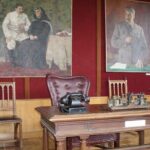
You will see three main components: an exhibition building, the memorial house believed to be Stalin’s birthplace, and Stalin’s personal train car—the same train used for trips to Tehran, Yalta, and Potsdam. In addition, the museum houses his personal belongings.
I think the museum is most interesting when you treat it as a window into how the Soviet era wanted people to remember power. You do not just see objects; you see what was selected, displayed, and emphasized. One visitor specifically praised the guide experience as relaxed and unhurried, and mentioned a guide named David who let them take the time they needed. That kind of pacing can make a huge difference in a museum like this, where the volume of material can otherwise feel overwhelming.
Plan for about 1 hour. That is enough for a focused pass, but it is not enough to read everything if you stop for every label. If you are the type who wants to fully absorb every artifact story, you may find yourself skimming—so pick what you want most: the train car details, the personal objects, or the memorial house setting.
Jvari Church: UNESCO architecture and a hilltop story
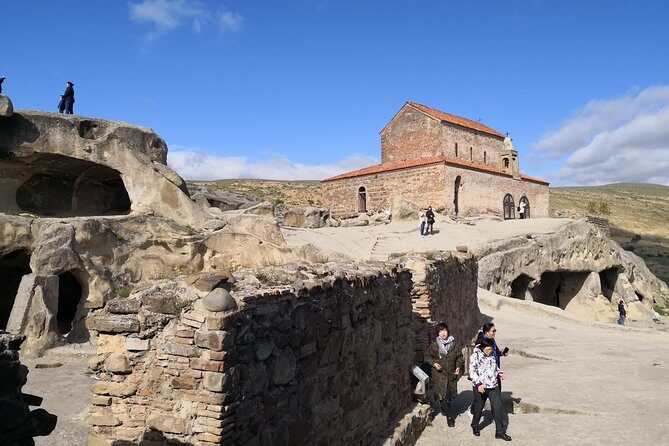
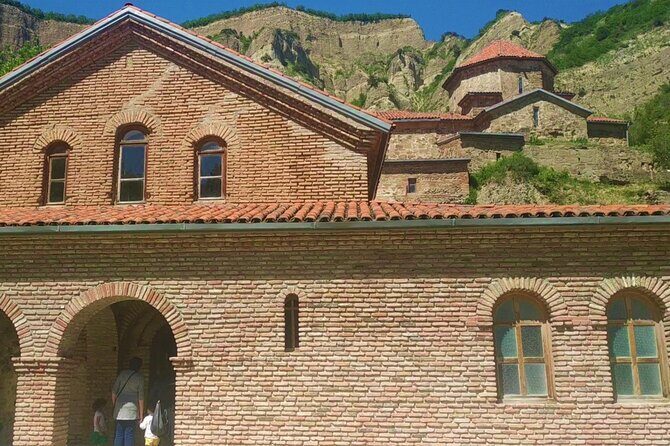
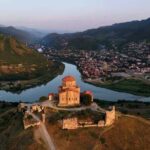
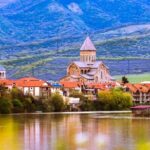
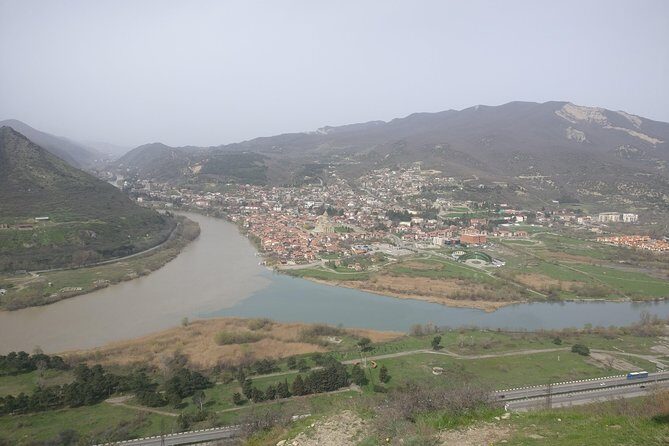
After Gori, you head toward Mtskheta for Jvari Church, a UNESCO World Heritage site tied to early Georgian Christianity. Jvari sits on a hill opposite Mtskheta at the confluence of the Aragvi and Mtkvari rivers. That geography matters, because the church location is part of its meaning.
The story starts right after Christianity was adopted. King Mirian III erected an enormous wooden cross on the site, and later, in the second half of the 6th century, Guaram built a small church beside the Holy Cross. The result is a layered religious landmark with a specific time stamp: the monastery is from the 6th century, and it anchors the early architecture of Georgia.
Your time here is about 40 minutes, and admission is free. That makes Jvari feel like a “don’t rush it, but don’t overthink it” stop. You can see the essentials, appreciate the setting, and still keep the day moving.
Practical tip: bring a camera you can handle on a hill. Jvari’s value is partly in the structure, and partly in how the site sits above the river meeting point. If you are sensitive to walking on uneven ground, take your time on approaches. Moderate fitness is enough for this.
Other Uplistsikhe cave tours we've reviewed in Tbilisi
Svetitskhoveli Cathedral: relics, royal tombs, and a whole complex
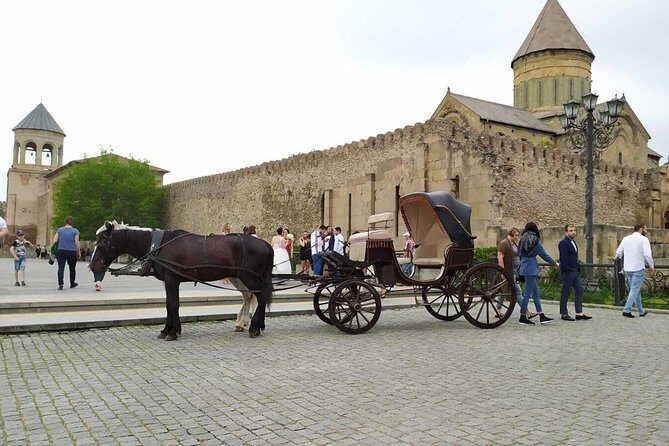
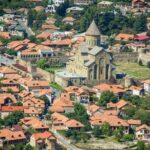
Svetitskhoveli is where the day becomes “cathedral serious.” This 11th-century complex has served as Georgia’s religious center for hundreds of years, and it is not just a single church building. The complex includes the church itself plus a gate, a bell tower, castles, and clerical residences, so you get a sense of an entire religious power center rather than one lone structure.
One reason people love it is the relic story. The cathedral preserves the mantle of Christ and the mantle of the Prophet Elijah. It also holds the tombs of Tbilisi’s founder, King Vakhtang Gorgasali, inside the building.
You get about 1 hour here, and admission is free. That free entry is a nice value kicker, especially because many churches and complexes can charge separate fees at similar stops. The time is also enough to walk the complex layout, look at the key architecture points, and let the scale sink in.
The only consideration: because the tour day is already full, you might feel slightly “church-ed out” by the time you arrive. If that happens, shift your focus to one thing at Svetitskhoveli: either the relic significance, the royal tomb story, or the layout of the whole complex. Pick your anchor and the stop becomes more rewarding.
Lunch in Gori and how to handle a packed schedule
Lunch is included, served at a Gori restaurant, and it is part of what makes the tour feel all-inclusive. You do not need to hunt for food or negotiate transport to and from a café. You also get bottled water with the day.
But here is the honest planning advice: this schedule is built to visit multiple major sites in a single day, and that can move lunch later than you expect. One visitor noted their lunch was quite late. So treat lunch as part of the itinerary rhythm, not a guaranteed early sit-down.
Alcohol is not included, so if you want wine with lunch, you might need to pay separately. The good news is that one booking mentioned the guide arranging a nice wine-tasting on top of the tour. That sounds like a helpful extra when it happens, but it is not something I would count on as a guaranteed add-on.
If you are prone to low-energy afternoons, bring a small snack for between stops. Nothing in the provided info says snacks are prohibited, and keeping a little buffer can make the later museum and cathedral feel less of a sprint.
Price and value: why $155 can work (or not)
At $155 per person for a private, all-day program, the big question is what you get beyond basic sightseeing. You get a bundle of practical items: private transportation in an air-conditioned vehicle, bottled water, lunch in Gori, and admission tickets for the two paid highlights (Uplistsikhe and Stalin Museum). You also get tickets handled for you, which saves time and friction.
On top of that, the day includes several free UNESCO-category and heritage stops (Jvari and Svetitskhoveli), plus Goristsikhe at no charge. That mix matters: paid admissions focus your money where it usually counts, and free sites help keep the overall value strong.
The private format is the other value driver. This route is easier when your group has its own vehicle and pacing. If you were to do it on your own, you would still spend on transport time, entrance planning, and the stress of connecting everything. Here, it is handled.
Who might feel this price is too much? If you already know you only care about one or two stops (say only churches, or only Stalin), the all-in-one structure could feel like paying for time you do not use. It might also feel long if you dislike full-day tours. But if you want one day that hits caves, Soviet history, and UNESCO Christian architecture, the price feels more reasonable.
Who this tour suits best
This is a smart choice for you if you want a single-day sweep of key sites around Mtskheta and Gori without spending your morning plotting routes. It also works well if you like a balance of Georgia’s ancient layers and its 20th-century history, because the schedule intentionally switches gears from cave city to Stalin’s personal world.
You should be comfortable with a day that involves walking and moving between hilltop and rock-hewn areas. The tour notes moderate physical fitness, so if you have mobility limitations, this might be harder than a purely flat city stroll.
I also think it suits people who like guided context. A museum like Stalin’s can feel like information overload without someone helping you prioritize. One booking praised a guide named David for giving enough time while keeping things relaxed, which is exactly what you want when the program is full.
Should you book this Mtskheta–Jvari–Gori–Uplistsikhe–Stalin day tour?
Book it if you want a one-day, high-coverage experience with real variety: Uplistsikhe’s ancient rock city, Goristsikhe’s fortress remnants, Stalin Museum’s major artifacts, and two UNESCO-linked church stops that show early Georgian Christianity in a big way. The all-inclusive setup (transport, lunch, water, and the key tickets) makes it low-stress.
Skip or reconsider if you hate long days, want very early lunch timing, or only care about one type of stop. If you want slow, deep museum reading or you prefer totally flexible pacing, a different style of tour could fit better.
If you do book, show up ready for a full day: comfortable shoes, a light breakfast, and a flexible lunch mindset. You will get a lot more out of the day when you treat it as a focused route, not a quick checklist.
FAQ
How long is the Mtskheta–Jvari–Gori–Uplistsikhe–Stalin all-inclusive tour?
It runs about 8 to 10 hours.
What time does the tour start?
The start time is 9:30 am.
Is pickup included?
Pickup is offered, and the tour uses private transportation.
What admissions are included?
Entrance tickets are included for Stalin’s Museum and Uplistsikhe Cave City. Goristsikhe, Jvari Church, and Svetitskhoveli Cathedral are listed as admission free.
Is lunch included?
Yes. Lunch is included in a Gori restaurant.
Is bottled water provided?
Yes, bottled water is included.
Is alcohol included?
No, alcoholic beverages are not included.
What fitness level do I need?
The tour says a moderate physical fitness level is recommended due to the sites involved.
Is there free cancellation?
Yes, you can cancel for a full refund up to 24 hours in advance of the experience start time.