REVIEW · TBILISI
Private Walking Tbilisi City Tour (Day Trip)
Book on Viator →Operated by Individual Entrepreneur Vazha Gakharia · Bookable on Viator
Tbilisi teaches you fast, on foot. This full-day shared walking tour is interesting because it ties multi-faith landmarks (from the Jumah Mosque area to the Great Synagogue) to what you can actually see in the streets, and it keeps the day easier with complimentary bottled water. The one drawback to plan around: transportation isn’t included, so you need to get yourself to the start point and back afterward.
What I like most is how the route mixes major sights with quick orientation points. Guides such as Teimuraz and Temo are specifically praised for being informative and helpful, which matters on a day packed with churches, cathedrals, synagogues, and viewpoints.
In This Review
- Quick Hits: What Makes This Tbilisi Walk Work
- Walking Tbilisi Like a Local: 6–7 Hours, Many Turns, Minimal Waiting
- Narikala Fortress and the Old Wall Zone: Views Plus Faith Layers
- What you’ll learn in this zone
- Sulfur Baths Area: Where the City’s Name Gets Explained
- Rustaveli Avenue and the New City Edge: Big Buildings, Clear Orientation
- Abanotubani: The Hot Springs Story You’ll Actually Remember
- The Great Synagogue of Tbilisi: An Eclectic Welcome in 19th-Century Style
- Metekhi Cathedral and the Fortress-Residence Connection
- Bridge of Peace: Modern Design on a Historic Route
- Rike Park and Tbilisoba: Festival Ground in Old Town’s Shadow
- Kartlis Deda: A Symbol That Uses Storytelling as a Warning
- Anchiskhati Basilica: Georgia’s Oldest Surviving Church Feeling
- Sioni Cathedral: Reconstruction Layers You Can Feel
- Leselidze Street: Where Old Meets New in One Walk
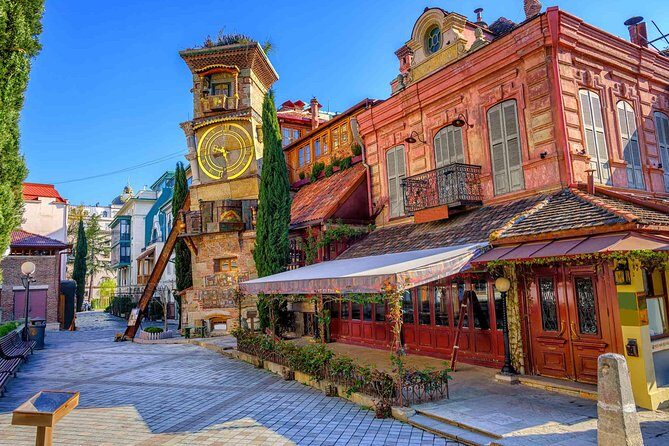
- Rezo Gabriadze Marionette Theater: Puppet Theater With Real Emotion
- Dzveli Tbilisi Sulphur Waterfall (Leghvtakhevi): A 22-Meter Legend in Motion
- Price and Value: Why $59 Might Be a Smart Buy
- Who This Tbilisi Tour Fits Best
- Should You Book This Walking Tour?
- FAQ
- How long is the Private Walking Tbilisi City Tour?
- Is this tour private or shared?
- What’s included in the price?
- What language is the tour offered in?
- Are any entrance tickets included?
- What if weather is bad or I need to cancel?
Quick Hits: What Makes This Tbilisi Walk Work
- A multi-faith route in one sweep: mosque, synagogue, and older Christian sites all in the same Old Tbilisi orbit
- Narikala Fortress time with an included admission ticket gives you a proper overview, not just photos
- Short stops, smart pacing: many sights get about 10–20 minutes, so you see more than one district
- Sulfur theme, explained: you’ll connect Tbilisi’s warm-water legend to the sulfur baths area
- Modern landmarks included: the Bridge of Peace and Kartlis Deda show how Tbilisi thinks about identity now
Walking Tbilisi Like a Local: 6–7 Hours, Many Turns, Minimal Waiting
This tour is built for walking and for context. You’re not bouncing between far-apart neighborhoods with a bus—so you get a real feel for how Tbilisi’s different layers sit side by side. The total time is listed as 6 to 7 hours (approx.), with each stop timed fairly tightly, from 10 minutes for certain landmarks up to 50 minutes for Narikala Fortress.
At $59 per person, the value comes from three things you actually get: a professional guide service, a packed itinerary, and bottled water. Since transportation is not included, your money is largely going toward interpretation and route planning rather than logistics.
One practical note: because it’s a shared tour with a maximum of 100 travelers, it can feel like a group day rather than a quiet private stroll. Still, the structure is short-stop friendly—good if you want highlights without spending the whole day in one museum.
Other Tbilisi walking tours we've reviewed in Tbilisi


Narikala Fortress and the Old Wall Zone: Views Plus Faith Layers

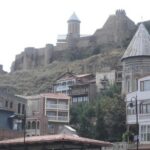
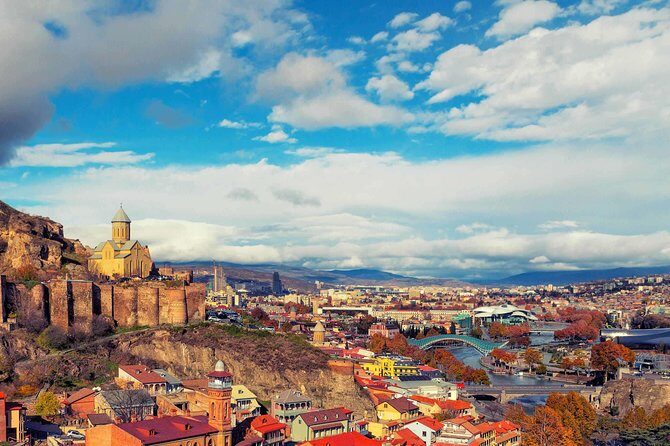
You start in the Narikala Fortress area, and this is the point where Tbilisi starts to make sense. The stop isn’t just about one building; it’s about the whole skyline and the cluster of landmarks around Old Tbilisi. You’ll get to see typical Tbilisi houses with balconies, the Narikala Fortress itself, and nearby spiritual sites including Anchiskhati Church (6th century), Holy Trinity Cathedral, and various Catholic and Gregorian churches. The area also connects to the Muslim Mosque, the synagogue presence, and Ateshga, the temple associated with pagans (fire temple tradition).
Admission is listed as included for this stop, which is a big deal here. It turns Narikala from a quick glance into a real, paid-for viewing moment—so you’re not just standing outside wondering if you should spend the time. Expect a good chunk of your morning or early afternoon here (50 minutes).
Potential consideration: Narikala is the kind of spot where footing matters. If you’re prone to knee pain or you hate slopes, take it slow. The tour is designed for walking, and this is one of the more “active” areas on the route.
What you’ll learn in this zone
Tbilisi’s story isn’t linear. In one view you’re looking at centuries of Christian architecture, and you’re also seeing reminders that other communities lived here and left marks too. That multi-layer feel is a theme you’ll keep noticing as the route goes on.
Sulfur Baths Area: Where the City’s Name Gets Explained
Next you move to the Sulfur Bath 5 area, with about 30 minutes on the stop. This is where the tour connects legend to street reality. You’ll hear how the name Tbilisi is tied to the legend of King Vakhtang Gorgasali, and how tbili relates to warm water. Even better, you’ll connect the dots visually: the king’s sculpture is said to look from the Metekhi plateau toward the famous sulfur baths in the heart of Old Tbilisi.
The itinerary lists the admission ticket here as free, which makes this stop feel low-pressure. You can focus on atmosphere and context rather than hunting down ticket rules.
Potential consideration: sulfur steam and heat can feel intense. If you’re sensitive to strong smells or warm air, I’d pace yourself and plan to rest your senses after this stop.
Rustaveli Avenue and the New City Edge: Big Buildings, Clear Orientation
Then you shift from Old Tbilisi energy to the broader, more modern-feeling city with Rustaveli Avenue. This is where grand institutions line up, and the tour uses that contrast well. You’ll pass the Rustaveli Drama Theater, the State Academic Theater of Opera and Ballet named after Zakaria Paliashvili, and you’ll get your bearings near places like the 1st gymnasium and various art salons.
This stop is about 1 hour and it’s marked as free admission. The real value here is orientation. After a morning of fortress views and sacred sites, Rustaveli Avenue helps you understand how Tbilisi grew outward after the 20th century, and why you feel a different pace once you hit the wider boulevards.
What to watch for: even if you’re not going inside theaters, the façades and street rhythm tell you a lot about how the city performs culture publicly.
Other Tbilisi city tours we've reviewed in Tbilisi






Abanotubani: The Hot Springs Story You’ll Actually Remember
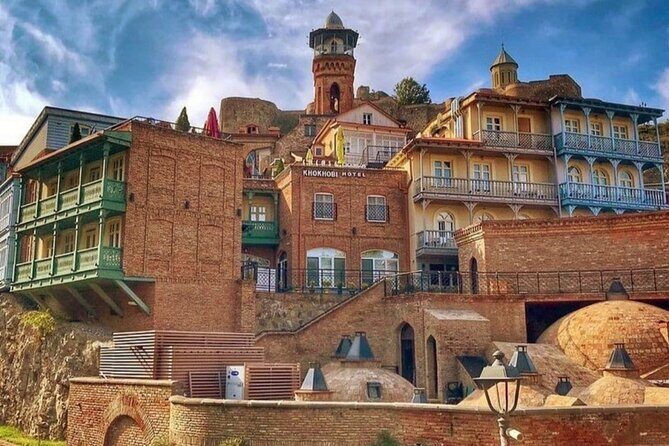
Abanotubani is short—about 15 minutes—but it lands. This is an important historic part of the city and is tied to the legend of Vakhtang Gorgasali’s falcon. The falcon falling into warm waters becomes the story for discovering hot springs and, in the legend, founding the new capital.
Since this tour is walking-focused, the payoff is simple: you’ll see the hot springs area as more than a tourist label. You’ll see how it sits inside Old Tbilisi, near other faith sites and historic landmarks.
Admission here is listed as free. So you get the story without needing an extra ticket.
The Great Synagogue of Tbilisi: An Eclectic Welcome in 19th-Century Style
You’ll stop at the Great Synagogue of Tbilisi, also known as the Georgian Synagogue. You spend about 15 minutes here, and admission is listed as free. The building was built from 1895 to 1903 in an eclectic style, created by Georgian Jews from Akhaltsikhe who migrated to Tbilisi in the late 19th century—so the synagogue is also called the synagogue of the people of Akhaltsikhe.
This is a powerful stop for one key reason: the tour doesn’t treat this as a checkbox. It’s part of the larger idea that Tbilisi has multiple faith histories, and they all shaped the city’s look and identity.
Potential consideration: synagogue visits can have quiet, respectful expectations. Dress and behavior should be considerate, and if the schedule is tight, you may spend more time looking than wandering.
Metekhi Cathedral and the Fortress-Residence Connection
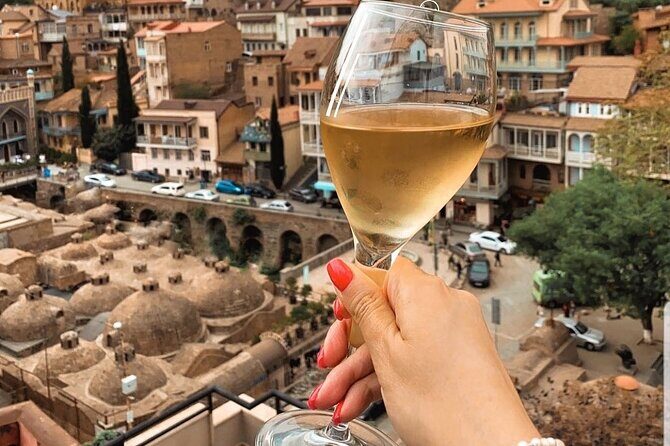
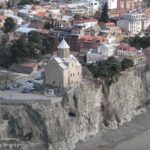
Metekhi Cathedral is another 15-minute stop, with admission listed as free. This is where the tour explains a naming clue that makes the site easier to picture. King Vakhtang I Gorgasali erected a church and a fort here, and it served as a royal residence. The name Metekhi is tied to the 12th century and literally relates to the area around the palace.
So when you’re standing here, you’re not only seeing a church. You’re seeing the shape of power—religion and governance sitting close together.
Bridge of Peace: Modern Design on a Historic Route
The Bridge of Peace is quick—about 15 minutes—and all about contrast. It was constructed in 2009–2010 and is designed by Italian architect Michele De Luci. The lighting system is by French Philip Martino.
This stop is useful even if your photos come out shaky, because it shows you how Tbilisi talks to the future while staying connected to the old city grid. After centuries of churches and fortresses, the bridge feels like a decision: we’re still building, and we’re doing it in a way that’s meant to be seen at night too.
Rike Park and Tbilisoba: Festival Ground in Old Town’s Shadow
From the bridge you head to Rike Park, another 15-minute stop, with admission free. The key detail here is what happens on this ground: festivals like Tbilisoba. You’re getting a “what it feels like now” moment, not just what it looked like centuries ago.
If you travel at the right time, you’ll likely remember this as the place where the city steps out socially. Even without a festival day, the park area helps you understand why Tbilisi works as a living city, not just a sightseeing circuit.
Kartlis Deda: A Symbol That Uses Storytelling as a Warning
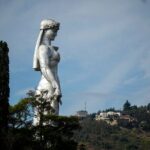
Kartlis Deda is about 15 minutes and is admission free. It’s described as the symbol of Georgia, a figure who meets friends with wine and enemies with a sword. That short line is enough to understand why it’s included on this route.
It’s not just a photo stop. It’s a cultural message—how strength and hospitality get mixed into a single image. In a day full of sacred architecture, it’s a reminder that symbols also live in the streets.
Anchiskhati Basilica: Georgia’s Oldest Surviving Church Feeling
Next is Anchiskhati Basilica, also about 15 minutes and free to enter as listed. This church is described as the oldest of the survived churches in Georgia and belongs to the 6th century.
You also encountered Anchiskhati earlier in the Narikala Fortress zone, which makes this stop feel like a second look. That’s actually helpful. First you see it as part of the wider Old Tbilisi cluster; later you get the full meaning of why it’s singled out as an old survival.
There’s also a specific creative detail that makes this stop more than dates: it says that in this church was the art studio of famous Georgian sculptor Elguja Amashukeli, the creator of Kartlis Deda.
Sioni Cathedral: Reconstruction Layers You Can Feel
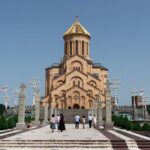
Sioni Cathedral Church is another 15-minute stop, admission free. The tour frames it as a site with repeated destruction and rebuilding. It was built in the 6th and 7th centuries, destroyed by foreign invaders, and reconstructed multiple times. The current church is based on a 13th-century version, with changes from the 17th to 19th centuries.
This is where you start thinking like a preservation-minded traveler. Even if you can’t name every architectural feature, you can sense the idea: the present building is a layered outcome, not a single moment in time.
The tour also connects it to power again: Sioni Cathedral was the main Georgian Orthodox Cathedral and seat of the Catholicos-Patriarch of All Georgia until the Holy Trinity Cathedral was consecrated.
Leselidze Street: Where Old Meets New in One Walk
Leselidze is a street stop (about 15 minutes) described as combining old and new parts of the city. This one is easy to overlook because it’s not a famous standalone monument—yet it matters. This is how you notice the “in-between” spaces where Tbilisi keeps living.
It’s a good pause in the day’s spiritual-heavy rhythm. You’re getting to see how the city actually transitions from historic cores into later development.
Rezo Gabriadze Marionette Theater: Puppet Theater With Real Emotion
The Rezo Gabriadze Marionette Theater is about 10 minutes. It’s one of the most recognizable sights in Tbilisi, and the show is said to run daily. The performances are described as full of depth and soul, and the theater is world-popular.
With only 10 minutes, you might not get more than a quick look and maybe timing awareness. Still, it’s a valuable cultural stop, especially because it breaks the pattern of religious architecture and landmark monuments.
Practical tip for your day: if your schedule lines up, check show times in advance so you can make the theater part of your trip rather than just a photo.
Dzveli Tbilisi Sulphur Waterfall (Leghvtakhevi): A 22-Meter Legend in Motion
You end with a memorable nature-meets-city stop: the Dzveli Tbilisi Sulphur Waterfall, also known as Leghvtakhevi. It’s about 20 minutes, and admission is free as listed. The waterfall is 22 meters tall, which is impressive enough on its own. The name Leghvtakhevi comes from a Georgian word leghvi, meaning fig, linked to fig trees that were reportedly around the place.
This final stop ties the day together. You started with the city’s name and sulfur-bath connection. Now you end with water doing the work—hot, falling, and undeniably physical.
Price and Value: Why $59 Might Be a Smart Buy
At $59 per person for a 6–7 hour guided walking day, the value is mostly in what you get without extra costs:
- Professional guide service (the whole point of a city tour is interpretation)
- Bottled water included for each participant
- A route that hits major neighborhoods and monuments in a single day
You also get a clear split in sight costs: Narikala Fortress has an included admission ticket, while many other stops are listed as free admission. That means fewer surprise expenses as you go.
The main reason you’d hesitate isn’t the price. It’s the “no transportation” part. If you’re far from the start area, you’ll pay for getting there anyway. Also, because it’s a shared tour, your time might feel more group-paced than private-paced.
Who This Tbilisi Tour Fits Best
This is a strong match if you:
- Want a first-timer orientation to Tbilisi’s key historic zones
- Like cultural contrast: fortress views, sulfur baths, cathedrals, synagogue architecture, and modern landmarks
- Prefer short guided explanations rather than long museum sessions
It might be less ideal if you:
- Want a strictly private one-on-one experience (this is shared, with a maximum of 100 travelers)
- Dislike walking for extended periods
- Have trouble with older streets where the ground can be uneven
One more note: the experience is described as requiring good weather. So plan for a day when rain won’t ruin your walking comfort.
Should You Book This Walking Tour?
I’d book it if you want Tbilisi’s story told where it happened: on the streets, between faith sites, and across both Old Tbilisi and the newer city edges. The itinerary is packed, but it’s also structured with enough time at major stops—especially Narikala Fortress—to make the day feel earned, not rushed.
If you’re the kind of traveler who likes quick “see it, understand it, move on” sightseeing, this tour fits your style. If you’re hoping for zero walking, or you need transport handled end-to-end, you might look for a tour that includes transportation. Otherwise, $59 plus bottled water plus a guide-led route is a fair deal for a full day of Tbilisi highlights.
FAQ
How long is the Private Walking Tbilisi City Tour?
The tour lasts about 6 to 7 hours.
Is this tour private or shared?
It’s described as a shared city tour, with a maximum of 100 travelers.
What’s included in the price?
You get a professional guide service and complimentary bottled water. Mobile ticket is also mentioned.
What language is the tour offered in?
The tour is offered in English.
Are any entrance tickets included?
Yes. Narikala Fortress includes an admission ticket, and other stops are listed as free admission (including Sulfur Bath 5, the Great Synagogue, Metekhi Cathedral, and others).
What if weather is bad or I need to cancel?
The experience requires good weather. If it’s canceled due to poor weather, you’ll be offered a different date or a full refund. You can cancel up to 24 hours in advance for a full refund.