REVIEW · TBILISI
Private Walking Tbilisi City Tour
Book on Viator →Operated by Gamarjoba Georgia Tours · Bookable on Viator
Tbilisi makes more sense on foot. This private 4-hour walk strings together the city’s big symbols and classic old-town corners, with hotel pickup, a cable car ride, and a guide who explains what you’re actually seeing. You cover everything from cliffside churches to the Mtkvari riverfront, then end with a cool-down at Leghvtakhevi waterfall.
I especially like the way the route balances Georgian heritage with everyday city life. First, you get the Narikala/Kartlis Deda views via cable car, not just photos from street level. Second, you slow down for places like Metekhi, Sioni, and the Abanotubani sulfur bath district, so the history feels tied to neighborhoods, not a checklist.
One possible drawback: this is a walking-focused itinerary. If you’re trying to cover the maximum number of sights by car, you may feel the route is too compact for the price, and the cable car won’t run during windy weather.
In This Review
- Key highlights you’ll feel on this tour
- A First-Time Tbilisi Walk With Pickup and Narikala Views
- Price and Logistics: What $45 Means for 4 Hours
- How the Route Flows: From Metekhi to Shardeni Street
- The Cable Car Moment: Mother of Georgia and Sololaki Views
- The Mtkvari Riverfront That Feels Modern: Europe Square to Bridge of Peace
- Anchiskhati and Sioni: Churches You’ll Actually Understand
- Dress code for churches (plan this early)
- Toast Culture and the Old-Town Walk: Tamada, Shardeni Street, and Baths
- The Best Kind of Traveler for This Tour
- Should You Book This Tbilisi Private Walking Tour?
- FAQ
- What does the tour include?
- Is this a private tour or a shared group?
- How long is the walking tour in Tbilisi?
- What is the price?
- Where do we meet the guide?
- Is the cable car always guaranteed to run?
- What’s the church dress code?
Key highlights you’ll feel on this tour
- Hotel pickup and drop-off: you start clean and easy, no transit puzzles.
- Cable car included to the Mother of Georgia area for strong viewpoints.
- Major churches in a single afternoon: Metekhi, Anchiskhati, and Sioni, with practical dress advice.
- Riverfront “wow” stops: Bridge of Peace LEDs, Rike Park atmosphere, and Europe Square context.
- Old town texture: Shardeni Street, toast culture, and the Abanotubani bathhouses.
- A break from monuments: Leghvtakhevi waterfall is an actual reset on a hot day.
A First-Time Tbilisi Walk With Pickup and Narikala Views
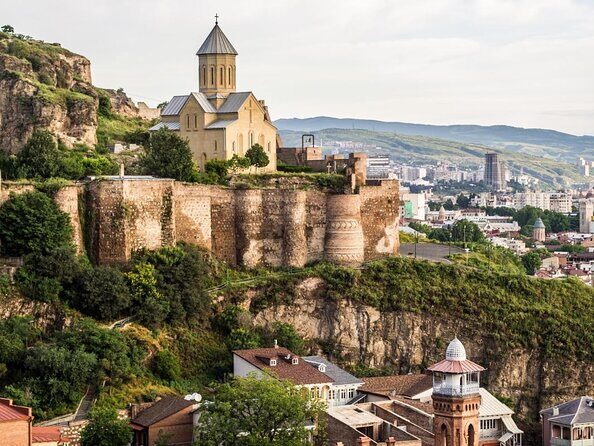
If you only have a day or two in Tbilisi, this tour is built for the moment when you want your bearings. You’re not cramming random stops. You’re moving through distinct parts of the city—church on a cliff, river promenade, old-town lanes—so the layout starts to click.
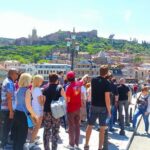
And because it’s private, the rhythm tends to work better than a big group march. Your guide sets pace, explains as you go, and you can ask questions without shouting over everyone else. I also like that the tour stays practical: a mix of walk time and quick stops lets you see a lot without turning the day into a marathon.
You’ll also get a couple of very Tbilisi details that don’t show up on generic guidebook pages. The Bridge of Peace runs lights on a schedule, the Rike area has family-friendly energy, and the Abanotubani baths sit right where the city’s old sulfur tradition still shapes the neighborhood.
Other Tbilisi walking tours we've reviewed in Tbilisi


Price and Logistics: What $45 Means for 4 Hours
$45 per person for about four hours is not “cheap,” but it doesn’t try to be. What you’re paying for is a guide plus convenience: pickup and drop-off from your hotel and a cable car ride. In practice, that combination saves you time and stress. You also get a tight route where many major sights are clustered, so you aren’t spending the day commuting between far-flung neighborhoods.
A useful way to think about value: this isn’t a long drive tour. You’re buying a focused walk with a few iconic vertical moments (especially the cable car). If you enjoy history stories while strolling, it’s a strong fit. If you want broad geographic coverage with lots of transit by taxi/van, you may prefer something that spreads farther across the wider metro area.
Also keep in mind the one weather snag that’s explicitly noted: cable cars won’t operate during windy weather. The rest of the tour operates in all weather conditions, so your day still moves, but you may miss that particular ride if conditions are rough.
How the Route Flows: From Metekhi to Shardeni Street

This walk is paced like a story, moving from the river’s dramatic edges up into Tbilisi’s older layers.
Stop 1: Traveler’s meeting point (free, with a social vibe).
You start at a meeting area where the mood is friendly and local. The idea is simple: you’re not just “waiting for a guide.” It’s set up for meeting people, playing board games, listening to music, and having a glass of wine. Even if you’re solo, it helps you transition into the city instead of dropping you into pure sightseeing mode.
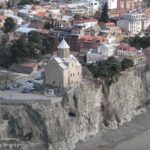
Stop 2: Metekhi Cathedral (Virgin Mary, cliffside on the Mtkvari).
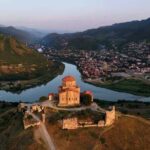
Metekhi sits on the left bank of the river Mtkvari, on a cliff plateau. Your guide connects the site to early Christian-era legends and the Georgian Orthodox tradition. The practical benefit here is perspective: from this type of viewpoint, you can understand why Tbilisi’s major early landmarks cling to elevated spots.
Stop 3: Monument of King Vakhtang Gorgasali.
This is a short stop but a meaningful one. You’ll hear who Vakhtang I Gorgasali was and how his era is tied to stories like the founding of Tbilisi and church organization. The dates are debated, which is a nice reminder that history isn’t always neat. It makes the conversation feel real, not rehearsed.
Stop 4: Europe Square (Georgia and the EU).
This is your reality check in the middle of all the old stone. Europe Square is where you get an explanation of Georgia’s relationship with the European Union—helpful if you want to understand what matters in Georgia today, not just what happened centuries ago.
Stop 5: Rike Park (and why it matters for the view).
Rike Park is a modern recreational area on the river’s left bank, with a very “Tbilisi now” feel. You’ll pass features like singing and dancing fountains, artificial climbing walls, children’s maze, and mega-chess boards. It’s also where the start point of the cable car up to Narikala fortress lives. So this is more than a park stop—you’re staging the big view moment.
The Cable Car Moment: Mother of Georgia and Sololaki Views
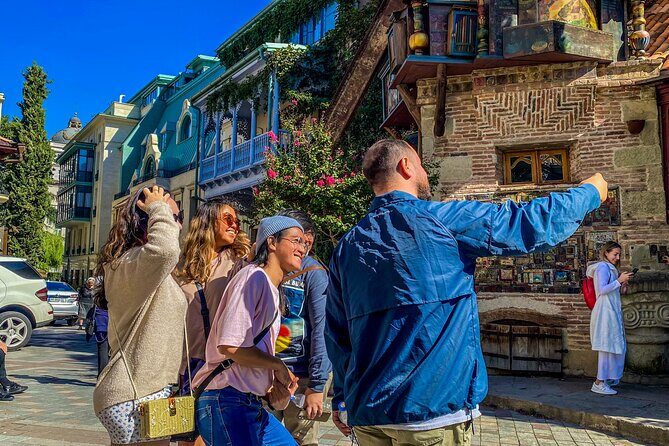
Stop 6: Rike–Narikala Cable Car (upper station) and views.
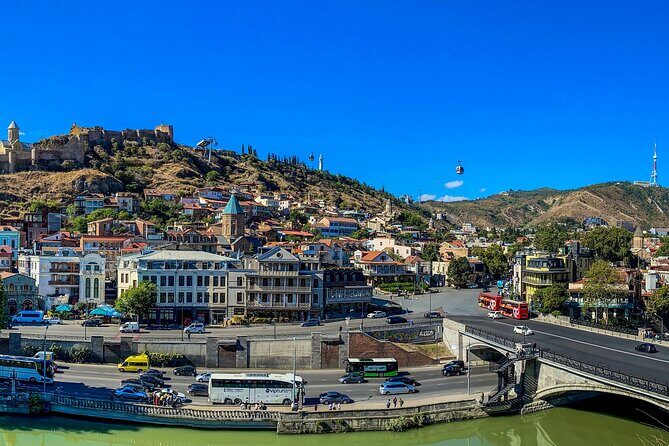
The cable car is included, and it’s one of the main reasons this tour feels like a proper “Tbilisi highlights” introduction. From the Mother of Georgia area, you get a wider sense of how the city spreads along and around the river.
Even if you love walking, this short ride is worth it. It changes your angle. It also makes the big statue feel like a landmark, not just something you’ve seen online.
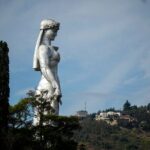
Stop 7: Kartlis Deda (Mother of a Georgian).
This is where the symbolism gets specific. The 20-meter aluminum statue on Sololaki Hill—created for the 1500th anniversary—shows Georgian national character in two gestures: a bowl of wine for friends in her left hand and a sword for enemies in her right. It’s not a vague monument. It’s an instruction in identity, right there in bronze-aluminum form.
The Mtkvari Riverfront That Feels Modern: Europe Square to Bridge of Peace

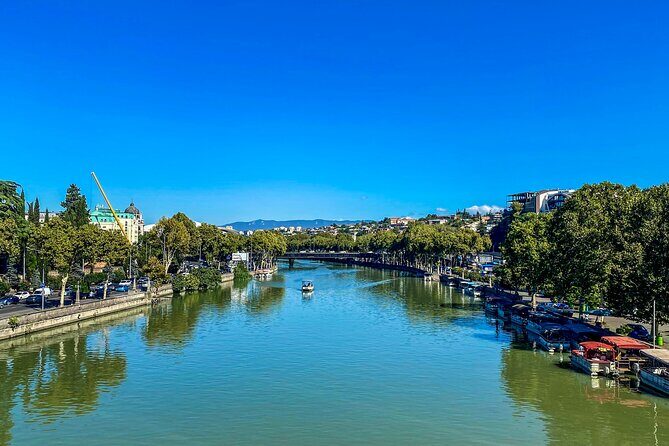
Tbilisi doesn’t just look old. The riverfront shows how the city modernized without losing its personality.
Stop 8: Bridge of Peace.
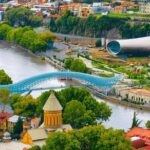
This is the stop you can’t skip. The bridge is a pedestrian glass-and-steel bow-shaped design over the Mtkvari (Kura). It was opened in May 2010, brought from Italy as 200 unassembled components. The fun detail that matters: it has more than 10,000 built-in LED bulbs, and they’re switched on daily 90 minutes before sunset. If you time it well, this becomes one of your best “walk-and-look” moments of the trip.
Stop 9: Patriarchate of Georgia (seminary area).
You pause at the Patriarchate and get interesting facts about the place. This is a good moment to slow down and understand the church’s presence in everyday life, not just on postcards.
Other Tbilisi city tours we've reviewed in Tbilisi



Anchiskhati and Sioni: Churches You’ll Actually Understand
Here’s where the tour earns its cultural credibility. The church stops are close enough together that you can compare them and start noticing patterns.
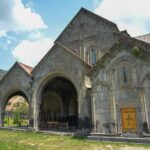
Stop 10: Anchiskhati Basilica (6th century origins).
Anchiskhati sits in upper Kala on Shavteli Street. You’ll hear that it dates back to the 6th century and was constructed by Dachi Ujarmeli, with the original name connected to the Virgin Mary’s Birth. The name Anchiskhati comes later, tied to an image movement in 1675. You’ll also hear how church roles passed through families tied to later caretakers. The result: the basilica feels like a living chain of people and stories.
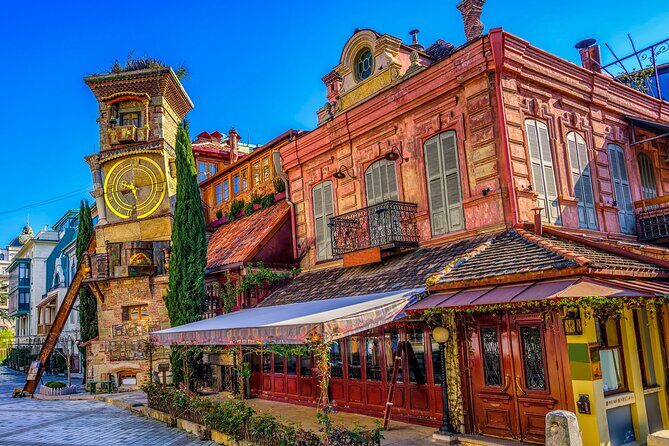
Stop 11: Rezo Gabriadze Marionette Theater (clock tower with an angel).
This is one of those stops that makes you smile and then learn something. Next to the marionette theater, the clock tower is covered in hundreds of tiles designed by Rezo himself. Every hour, an angel comes out with a small hammer to ring the bell. There’s a small puppet theater inside, and shows happen twice a day at 12:00 and 19:00 for The Circle of Life. If you hit one of those times, it’s a playful contrast to the church and monument stops.
Stop 12: Sioni Cathedral Church.
Sioni is in one of the oldest districts, upper Kala, on the street with the same name. The guide connects it to legend and early origins tied to Vakhtang Gorgasali in the 5th century. Practically, this stop helps you see Tbilisi’s sacred sites as part of the same neighborhood story rather than isolated points.
Dress code for churches (plan this early)
If you want to step inside, note the rule: it’s not allowed to enter churches in shorts, and women need to cover their heads. A light scarf you can carry in your day bag is an easy fix.
Toast Culture and the Old-Town Walk: Tamada, Shardeni Street, and Baths
After the monuments and churches, the route turns into neighborhood walking—where you learn how Tbilisi actually passes time.
Stop 13: Tamada (toastmaster) Statue.
Tamada means toastmaster in Georgian. You’ll hear stories about the tradition of toast-giving, which is a perfect bridge between formal heritage (church, kings) and social life (wine, toasts, hospitality). Even if you don’t drink much, you’ll understand why wine culture is a language here.
Stop 14: Jan Shardeni Street.
Shardeni is one of the most popular pedestrian streets in Tbilisi old town. You’ll get a sense of why people treat it as a must-visit: it’s made for slow strolling, people-watching, and looking at details instead of rushing between big landmarks.
Stop 15: Abanotubani (sulfur bath district).
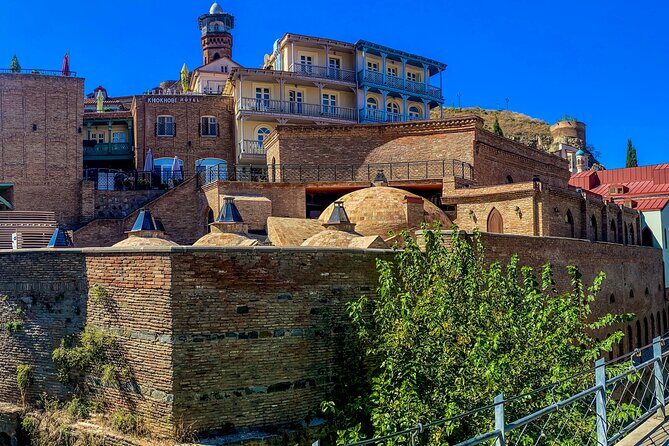
This neighborhood is where public bathhouses line up along Abanos Kucha, using sulfurous hot spring waters. It’s a big part of Tbilisi’s identity, because the bath tradition is older than the modern city’s “look.” Even if you don’t book a bath session during the tour, seeing the district helps you understand why this city is famous for soaking culture.
Stop 16: Leghvtakhevi Waterfall.
You end with a cooling-off moment. Leghvtakhevi is popular among Georgians and foreigners when it’s hot, and the tour keeps the stop short and easy to absorb. It’s also a nice change of pace after stone churches and streets—your feet get a break while your eyes still get something dramatic.
The Best Kind of Traveler for This Tour
This tour is a great match if you:
- Want a first introduction to Tbilisi’s major areas without spending half your time getting around
- Like learning how symbols connect: kings, churches, wine hospitality, and modern riverfront design
- Prefer a steady walk with guided context over a stoplight-to-stoplight “drive-by” schedule
It may feel less ideal if:
- You want a wide geographic sweep by car and minimal walking
- You’re strongly focused on high-volume attraction counts, like you’d get from a longer multi-zone day
Also, this type of tour tends to shine when you have a friend, partner, or small group who wants to talk. You’ll likely get more out of it if you enjoy asking questions and slowing down at the religious and cultural stops.
Should You Book This Tbilisi Private Walking Tour?
Book it if you want a guided, sensible introduction to Tbilisi that includes the cable car and hits the city’s most recognizable contrasts: cliffside churches, old-town lanes, and the modern riverfront mood. At $45 per person, the pickup/drop-off and cable car help justify the price, especially if you value convenience and storytelling over pure sightseeing quantity.
Skip it (or consider another option) if you’re expecting an area that’s wider than this walking-focused route. In other words: go for it if you want the city’s core identity. Don’t go for it if your main goal is maximum distance covered with minimal walking.
If you book, pack for churches (no shorts; plan for head covering) and dress for weather—since the tour runs in all conditions, you’ll want layers. And if it’s windy the day you go, be ready that the cable car may not operate.
FAQ
What does the tour include?
The tour includes a private, professional guide, hotel pickup and drop-off, a cable car ride, and online support.
Is this a private tour or a shared group?
It’s a private tour/activity. Only your group will participate.
How long is the walking tour in Tbilisi?
The duration is about 4 hours.
What is the price?
The price is $45.00 per person.
Where do we meet the guide?
The guide meets you at the reception of your hotel.
Is the cable car always guaranteed to run?
No. Cable cars won’t be operating during windy weather.
What’s the church dress code?
Shorts aren’t allowed for entering churches, and women need to cover their heads.