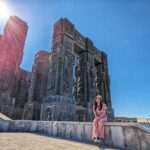
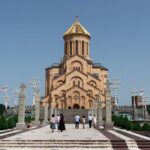
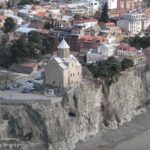
Soviet Georgia reads like a road movie. I love how this route strings together brutalist sights you can actually walk through, not just peek at from the road, and I also like that key museum stops have admission included so you don’t burn time on planning. One thing to consider: the tour is built around architecture and Soviet industry, so if you’re hunting for beach scenery or wine-country vibes, this may feel a bit heavy on concrete.
The pace is practical and guided by a driver who keeps moving things along, but an English-speaking guide isn’t part of the package by default. That means you’ll get the basics smoothly, and if you want more context, you’ll likely want to arrange guidance in advance so the stories land the way you want.
In This Review
- Key highlights you’ll feel right away
- Soviet Georgia on the clock: what the tour format means for you
- Starting in Tbilisi: Soviet districts, the built environment, and why it sets the tone
- Gori and the Stalin Museum: how Soviet power gets put on a human timeline
- Chiatura: the mining town feel and why it’s such a strong Soviet contrast
- Tskaltubo sanatoriums: abandoned Soviet health care and the power of ruins
- Enguri Hydropower Station: Soviet engineering at dome-scale
- Schedule reality: how long each part lasts and how to plan your day
- Price and value: is $850 per person fair for this route?
- The bigger operator description: Svaneti hikes you should confirm
- Who should book this Soviet route?
- Final call: should you book it?
- FAQ
- FAQ
- Is pickup included?
- Where does the tour start and end?
- What parts of the trip include admission tickets?
- Is an English-speaking guide included?
- How long is the tour?
- What meals are included?
- Is this tour private?
- Can I cancel if weather is bad?
- Is the experience suitable for most people?
Key highlights you’ll feel right away
- A tight Soviet loop across four major stops (Tbilisi, Gori, Chiatura, Tskaltubo, plus Enguri)
- Museum and hydropower admissions handled on the parts that matter most for your time
- Tskaltubo sanatorium ruins with real atmosphere where nature is taking its share back
- Enguri Hydropower Station and its scale—very Soviet big-idea engineering
- Driver-included logistics with you mostly focused on seeing, not routing
Soviet Georgia on the clock: what the tour format means for you
This experience is designed like a focused theme trip. Instead of trying to cover all of Georgia, you move along a Soviet-history thread: cities, monuments, industry, and the grand design language of the USSR. The result is that every stop has a job, and you’re not constantly asking yourself why you’re somewhere.
You also get a simple structure. Pickup is offered, the meeting point is set at Rose Revolution Square in Tbilisi, and you start early (8:00 am). That matters because Soviet architecture sites often work best when you can see big forms clearly in daylight, and you don’t want to hit the best façades after dark.
Another plus for your comfort: meals are included on a few parts of the trip—breakfast twice, lunch twice, and dinner. That reduces the daily “what do we eat?” stress, especially when your schedule is running from one site to another.
Finally, it’s a private tour. That’s more than a marketing detail: it helps keep the timing realistic, because you’re not negotiating your viewing pace with strangers. If you like a slower look at building details, or you want to move fast, it tends to be easier to match your group’s rhythm.
Other Gori and Stalin Museum tours we've reviewed in Tbilisi
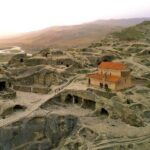
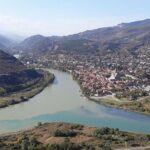
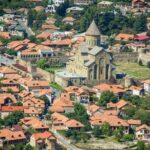
Starting in Tbilisi: Soviet districts, the built environment, and why it sets the tone
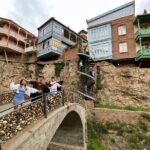
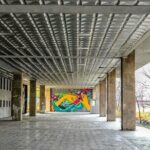
Your day begins back in Tbilisi, with time to look at Soviet-era buildings in Tbilisi and Rustavi. Even if you’ve only seen Soviet architecture in movies or on photos, this is where it stops being abstract. You start noticing patterns: monumental blocks, broad planning ideas, and the way whole neighborhoods were shaped for mass living.
This is also a smart way to start because it trains your eye. When you later reach places like Chiatura and Tskaltubo, you’ll already be looking for the same visual language—scale, repetition, and function written into the concrete.
One practical note: the time you get here is listed as about six hours, so it’s not an endless museum crawl. Think of it as orientation plus first impressions. If you’re the type who likes to photograph streets and façades, bring a little patience—you’ll probably want to pause often.
Gori and the Stalin Museum: how Soviet power gets put on a human timeline
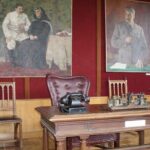
Gori is where the tour shifts from architecture to ideology. The Stalin Museum in Gori is the kind of stop that can feel either fascinating or tense, depending on what you’re comfortable seeing. Either way, it has one advantage over generic history walls: it’s physically tied to a specific place, and that makes the story feel grounded.
The visit is built into a longer day that also includes Chiatura and an overnight in Tskaltubo. That means you’re not just doing a museum and sprinting off. You’re stacking experiences so your understanding keeps evolving: first the worldview, then the industrial machine, then the leftover architecture.
If you’re sensitive to heavy political content, go in with your expectations clear. This is not a soft-focus cultural stop. It’s a direct look at how Soviet authority was packaged and presented.
Chiatura: the mining town feel and why it’s such a strong Soviet contrast
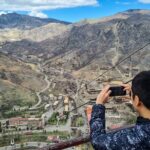
Chiatura is the tour’s “industrial drama” chapter. You’re heading to a former Soviet mining town, and that word matters. Places built around extraction often have a distinct character: working-town planning, practical infrastructure, and architecture shaped by labor rather than tourism.
The good news for you is that Chiatura can be visually rewarding even if you don’t know the technical details. The scale of what humans built, and the strange beauty of working spaces adapted over time, tends to hit quickly. It also connects back to Tbilisi and Gori: this is the next step in the Soviet story, where ideology becomes jobs, transit, and concrete.
The schedule here is a long one—about twelve hours total for the day’s main elements. That means you’ll want to manage energy carefully. If you tend to get tired after sustained walking, plan on taking short breaks without trying to “power through” everything.
Chiatura also sets you up perfectly for the next stop, Tskaltubo. You move from a town shaped by work to a place shaped by rest—at least on paper.
Tskaltubo sanatoriums: abandoned Soviet health care and the power of ruins
Tskaltubo is the stop most people remember for mood. You’ll explore the abandoned buildings and sanatoriums left from Soviet-era health culture. This is where Soviet architecture stops feeling like a school subject and starts feeling like a living setting.
Why this works so well: sanatorium buildings were designed for permanence—big rooms, long corridors, and facilities meant to run for decades. When that system stops, the structures don’t vanish. They change. You get a mix of concrete lines and nature doing what nature does. Even if you’re not an architecture obsessive, you’ll probably find your attention shifting to textures, entrances, and how the buildings hold light.
The schedule also helps. After being in the middle of Chiatura’s industrial energy, Tskaltubo gives you time in two ways: you arrive for an overnight after that long day, and then you return for more exploration later. The later Tskaltubo slot is shorter—about four hours—which feels more manageable if you want to photograph quietly and move slowly.
One consideration: because this is an abandoned setting, you’ll want to watch your footing and pay attention to where you step. The tour format keeps you moving, but it doesn’t turn ruins into an amusement park.
Other Kutaisi and western Georgia tours we've reviewed in Tbilisi
Enguri Hydropower Station: Soviet engineering at dome-scale
Then you shift from buildings to infrastructure. You’ll head toward Zugdidi and visit the Enguri hydropower station, a Soviet-time hydropower site with one of the tallest dome-shaped dams. This stop is special because it’s Soviet design language used for energy, not ideology.
The practical value is simple: a dam and hydropower site gives you a different kind of scale. You start thinking in terms of logistics—how people powered industry, how power was planned, and what massive construction projects look like in real life.
It’s also an “outside your theme comfort zone” stop, which I like. Even if Soviet history sometimes feels repetitive, engineering sites refresh the story. They show the physical consequences of grand planning.
The time here is listed as about six hours, and admission is included. That’s great for you because it means less friction and more time watching how the facility functions.
Schedule reality: how long each part lasts and how to plan your day
The overall trip timing in the info can look a little confusing at first. One place lists the experience as around four days, while another description frames it as a six-day (five-night) private tour. What I take from that, as a practical traveler, is to treat the plan as a multi-day route and confirm exactly what you’re booking for the final day structure.
What stays clear is the start point and the main movement:
- Start in Tbilisi at Rose Revolution Square at 8:00 am
- Then you stack Gori/Chiatura, Tskaltubo, and Enguri with a mix of longer and shorter sightseeing windows
- You get some meals baked in, which helps daily stress
Comfort tips that matter on this route:
- Wear shoes that handle uneven or worn surfaces, especially around abandoned buildings
- Bring a layer. Even in Georgia, temperature can shift across morning starts and outdoor viewpoints
- If you care about photos, charge your battery early—this tour rewards stopping often
Price and value: is $850 per person fair for this route?
At $850 per person, the value comes from what’s handled for you. You’re paying for a private format, pickup is offered, and a driver is included throughout the Soviet-focused portion. Add in that key admission tickets are included on the relevant parts, and you’re not funding every single site fee yourself.
You’re also getting some meals included (breakfast, lunch, and dinner across the route). Meals don’t sound exciting, but on a tight schedule they save time and keep you from losing momentum to “where do we eat?”
What’s not included is important to read clearly: an English-speaking guide isn’t included by default. If you want deeper context—especially around Soviet ideology and the specific meaning behind architecture—your experience can improve a lot if you add guiding service. That doesn’t mean you can’t enjoy it without; it just means your impressions might lean more visual than interpretive unless you arrange extra language support.
So here’s my value take: if your priority is a structured Soviet architecture and industry route with minimal planning and most big-ticket logistics already sorted, the price can feel fair. If you want a heavy guided narrative at every stop, budget extra time and cost for the guide component.
The bigger operator description: Svaneti hikes you should confirm
One part of the tour description mentions a longer, more nature-heavy setup in the Svaneti region, including hikes (like a gorge hike to see Ushba waterfalls) and a glacier-related trek (Chalaadi glacier). It also mentions a visit to Ushguli with views of the Shkhara mountain range, plus a horse riding option to Qoruldi lakes (with transportation changes to a car if needed). There’s even a note about a hotel called Old House in Mestia (or equivalent) with dinner and breakfast.
Here’s the practical caution: that Svaneti material isn’t reflected in the compact Soviet loop focusing on Gori, Chiatura, Tskaltubo, and Enguri Dam. If you’re deciding whether this is the right trip, I strongly suggest you confirm what exact route you’re booked for. Ask what day structure you’re getting and whether the Svaneti hike content is part of your package or an optional add-on.
Who should book this Soviet route?
This tour makes the most sense if you:
- Enjoy architecture more than “guided script” history
- Like Soviet-era places where time and weather have changed the buildings
- Want a single themed route that doesn’t scatter you all over Georgia
It also fits well if you’re traveling with a group that wants the same type of photos: façades, industrial scale, and the quiet drama of abandoned sanatoriums.
If, on the other hand, you’re mainly after soft nature walks, wine tastings, or classic sightseeing highlights, you might find the Soviet focus more intense than you expected.
Final call: should you book it?
Yes, I’d book this if your dream Georgia trip is about seeing Soviet-era design in real settings—Tbilisi’s built form, Gori’s political museum focus, Chiatura’s mining town energy, Tskaltubo’s sanatorium ruins, and then Enguri’s big engineering scale.
I’d book with one extra step: confirm what language support you’ll have. If you don’t add an English-speaking guide, your experience will be more visual and less interpretive at some stops. If that’s your preference, great. If you want stories behind every building, arrange guidance before you go.
Also, double-check whether the route you’re paying for includes any Svaneti extension beyond the Soviet cities and Enguri. The info you provided includes both styles, and your enjoyment will depend on getting the version you actually want.
FAQ
FAQ
Is pickup included?
Pickup is offered, and the tour starts at Rose Revolution Square in Tbilisi at 8:00 am.
Where does the tour start and end?
It starts at Rose Revolution Square, Tbilisi, Georgia, and ends back at the same meeting point.
What parts of the trip include admission tickets?
Stalin Museum in Gori and the Enguri hydropower station have admission included. The Tbilisi Soviet buildings portion is listed as free admission. The Tskaltubo exploration is also listed as free admission.
Is an English-speaking guide included?
An English-speaking guide is not included. Guiding service can be organised upon request.
How long is the tour?
The duration is listed as approximately 4 days, while the broader description also mentions a six-day (five-night) private tour. Confirm the exact structure when booking.
What meals are included?
Dinner and breakfast are included (breakfast is listed as 2 times), plus lunch (listed as 2 times).
Is this tour private?
Yes. It’s a private tour/activity, and only your group participates.
Can I cancel if weather is bad?
Yes. It requires good weather. If it’s canceled due to poor weather, you’ll be offered a different date or a full refund.
Is the experience suitable for most people?
Most travelers can participate. Service animals are allowed.