REVIEW · TBILISI
Tbilisi by Night Walking Tour
Book on Viator →Operated by Taste of Georgia · Bookable on Viator
Tbilisi looks different after dark. This night walking tour stitches together Old Town landmarks, LED-lit bridges, and hilltop viewpoints with a local guide’s take on culture and history. I like that the route mixes big sights (clock tower, fortress views) with small, story-driven details you’d miss on your own, and I also like the practical pace for a mostly on-foot evening. The main drawback is simple: you’re walking, so comfortable shoes matter, and some stops are quick photo moments rather than long hangs.
If you’re lucky, you’ll get a guide like Anya or Zora, the kind who can answer questions and keep the group moving without rushing. Even when you’re alone in a group of strangers, it feels like a guided way to enjoy the city safely and confidently at night. One thing to consider: the timing of the puppet theater moment is set, so plan to arrive promptly for the 7:00 pm area highlight.
In This Review
- Key things that make this Tbilisi night tour worth it
- A 7:00 pm route that links Old Town stories to hilltop lights
- Price: what $72.25 gets you (and what you’ll still pay for)
- Meeting at Berikaoba: starting with folk theater origins
- Rezo Gabriadze Marionette Theater and the clock tower bell
- Anchiskhati Basilica after dark: a 6th-century anchor
- Baratashvili Bridge viewpoint photos and the story of a replacement bridge
- Bridge of Peace: steel, glass, and LEDs over the Kura River
- Narikala Fortress on Metekhi Hill: a light show with the right setting
- Cable car to the hilltop: the included shortcut to big views
- Jumah Mosque, Leghvtakhevi Waterfall, and Chreli Abano: the middle of the route gets weird—in a good way
- Liberty Square and the St George monument: a clean night pause
- Tbilisi Funicular Lower Station: video-friendly and convenient, but not included
- Mtatsminda Park observation deck: finishing with the night skyline
- Walking at night: the practical stuff that keeps this enjoyable
- Guides make the difference: Anya and Zora as the example
- Who should book this, and who should choose something else
- Should you book this Tbilisi by Night walking tour?
- FAQ
- What time does the Tbilisi by Night Walking Tour start?
- How long is the tour?
- How much does it cost?
- What is included in the ticket price?
- What is not included?
- Where does the tour start and end?
- Is the tour offered in English?
- Can I get a full refund if I need to cancel?
- What group size should I expect?
Key things that make this Tbilisi night tour worth it
- Real stories tied to specific places, from folk theater origins to the meaning behind illuminated landmarks
- Clock tower + puppet theater timing, including a small show around 7:00 pm if it lines up with your group
- Photo-first stops on bridges, Metekhi hill, and sulfur-bath streets, with viewpoints built into the route
- One-way cable car included to reach hilltop views without extra logistics
- Limited group size (max 15), which usually means you can ask questions and keep a steady pace
- Ends near the Tbilisi Funicular, handy if you want to keep exploring afterward
A 7:00 pm route that links Old Town stories to hilltop lights
This is a classic Tbilisi night formula: start in the Old Town, move through the best-lit downtown sights, and then finish with big panoramic views from the hills. It runs about 3 to 3.5 hours, starting at 7:00 pm, and it’s built for an evening atmosphere rather than museum time. You’ll get a mix of walking, short stops, and lookouts—enough time to see a lot, but not so much that your feet hate you.
The guide is part of what you’re paying for. The tour is designed around explanations at each stop, plus cultural context and suggestions for where to eat and drink when you’re done. The best part is how the route keeps moving: you’re not stuck waiting around, and you’re not sprinting either.
Other Tbilisi walking tours we've reviewed in Tbilisi


Price: what $72.25 gets you (and what you’ll still pay for)
At $72.25 per person, this isn’t the cheapest way to see Tbilisi at night—but the value is in the combination: a guided route, all taxes and fees, and a one-way cable car ride. If you’ve ever tried to stitch together bridges, viewpoints, and transportation by yourself in the dark, you know how time-consuming it gets.
What’s not included is also clear:
- Food and drinks (you’ll plan your own)
- Hotel pickup/drop-off and transportation
- Tbilisi Funicular round-trip (you’ll be near it, but it’s separate)
- Anything outside the stated one-way cable car
So think of the price as covering “a guided, well-lit evening route plus one transport shortcut.” If you want to add snacks afterward, that’s on you—and that’s normal.
Meeting at Berikaoba: starting with folk theater origins
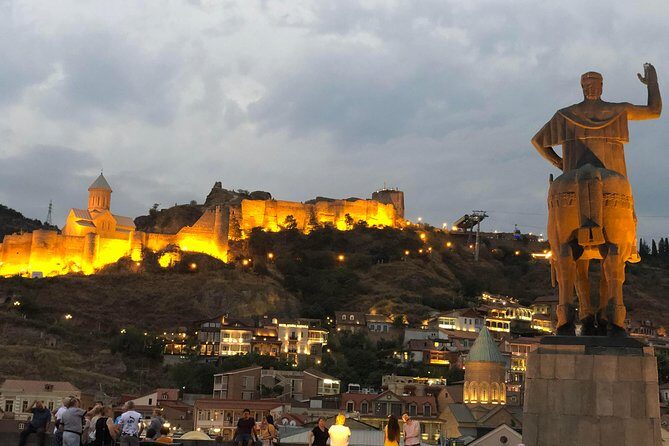
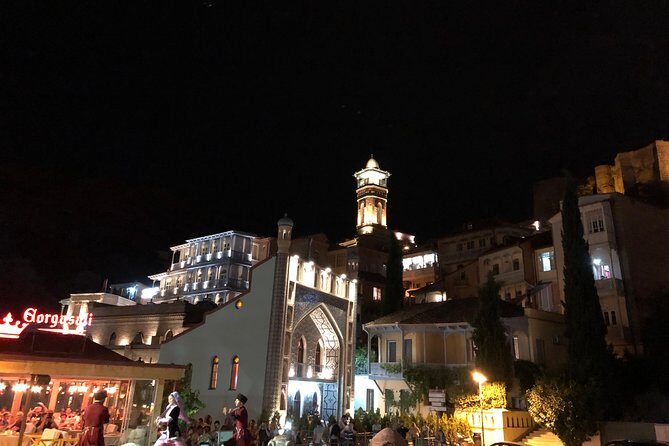
You meet at Berikaoba, near the Berikaoba location in Tbilisi’s city center. The tour begins by setting the tone: Georgia’s improvised masqueraded folk theater tradition, linked to pagan ideas of fertility and rebirth. It’s an unusual opener, which I actually like—because it gets you thinking about how Tbilisi’s culture layers meanings over time.
This stop is brief (around 10 minutes) and free, so it’s more about grounding you than ticking a box. If your interest is cultural context, this is a good start. If you’d rather jump straight into landmarks, don’t worry—the next stop is where things start to feel very Tbilisi.
Rezo Gabriadze Marionette Theater and the clock tower bell
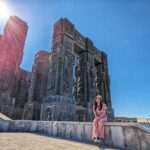
Next comes the Rezo Gabriadze Marionette Theater area. Here’s a standout detail: next to the theater is a clock tower where, every hour, an angel comes out to ring the bell. That’s the kind of place you notice in daylight; at night, it becomes a mini landmark you can photograph and point to from memory.
There’s also a special timing note: a small show called The Circle of Life is mentioned around 7:00 pm at the puppet theater & clock tower. If your group overlaps that, you’ll want to be ready to pause and watch for a bit. Even if it doesn’t line up perfectly, the guide’s explanation of the theater and the clock mechanism is still the point of the stop.
Afterward, you walk toward the Old Town core. The transfer is part of the experience—Tbilisi looks calmer at night, and the streets feel more human-scale when you’re not dodging midday traffic.
Anchiskhati Basilica after dark: a 6th-century anchor
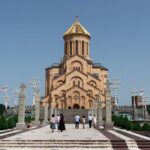
You’ll pass Anchiskhati Basilica of St Mary, described as the oldest surviving church in Tbilisi, dating to the sixth century. You won’t likely stop for long here, but that’s the charm: it’s a quick way to connect the evening’s lights to a much older timeline.
When you’re walking, these brief passes do two things:
1) They keep the pace moving
2) They help you understand why the city’s architecture feels layered instead of random
Other walking tours we've reviewed in Tbilisi




Baratashvili Bridge viewpoint photos and the story of a replacement bridge
Cross over to Baratashvili Bridge, built in 1966 in place of the earlier Mukhrani Bridge, and tied to a tribute to Princess Mukhrani. This is a fun kind of stop because it gives you both a fact and a purpose: you cross, then you pause at a viewpoint for photos of the Old Town.
This segment is about taking in the view while the city lights do their work. It’s also a reminder that Tbilisi’s skyline changes across eras. Bridges aren’t just crossings here—they’re part of the city’s evolving map.
Bridge of Peace: steel, glass, and LEDs over the Kura River
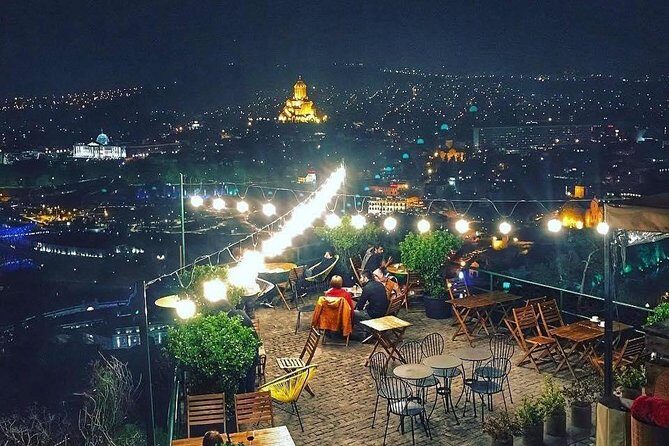
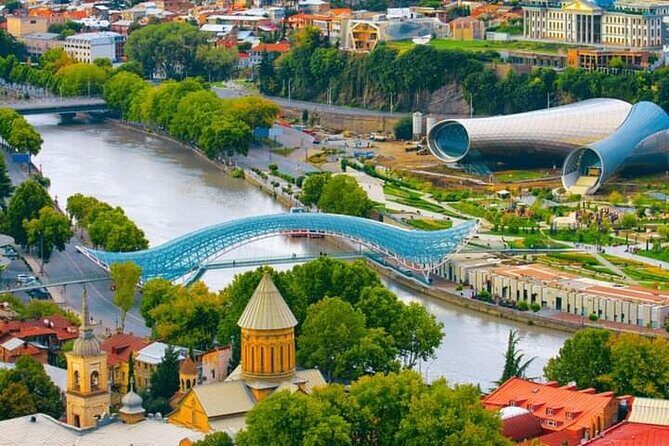
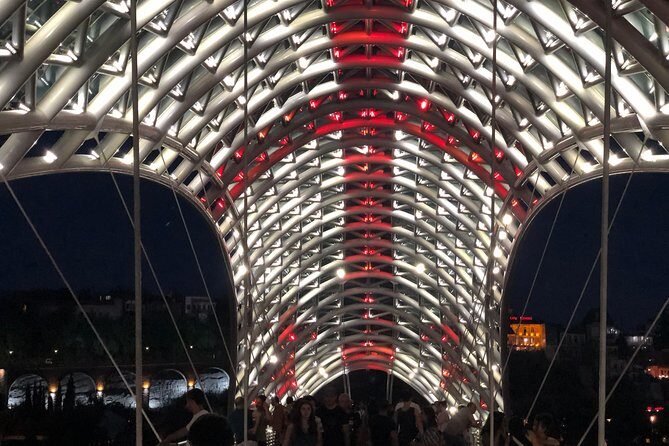
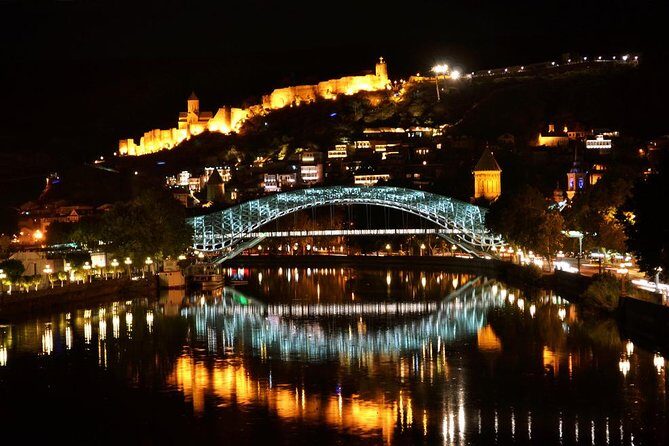
Then comes one of the most visually obvious landmarks on the walk: the Bridge of Peace. It’s described as a steel and glass structure illuminated with numerous LEDs, stretching over the Kura River in downtown Tbilisi.
You’ll have time to walk on it and look around (about 20 minutes). The value isn’t only in the view—it’s in experiencing the modern side of the city while you’re already in a night-time rhythm. If you like photography, this is one of your best chances to get clean angles without climbing anywhere.
Narikala Fortress on Metekhi Hill: a light show with the right setting
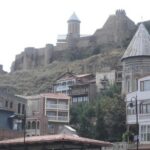
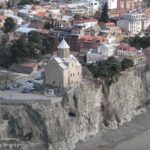
Next up is Narikala Fortress, lightened up on Metekhi hill. The plan includes a “light show” feeling tied to the evening setup, plus explanations about the fortress’s historical significance and architecture.
This is also where the walk starts to feel like a proper skyline moment. You’re higher up, the buildings look more dramatic, and the city’s layers become easier to imagine. You’ll have around 20 to 30 minutes here, which is enough time to look up, take photos, and ask questions without feeling like you’re being rushed.
Cable car to the hilltop: the included shortcut to big views
A key included element arrives with the Rike-Narikala Cable Car (Lower Station). You take the aerial tramway up, and from there you enjoy views of the Old Town. The cable car one way is included, which matters because it saves time and energy in a walking-heavy evening.
After you reach the top, you’ll have time to wander (about 50 minutes mentioned). While you’re up there, the guide also shares extra info about the National Botanical Garden of Georgia, located in Tsavkisis-Tskali Gorge on the southern foothills of the Sololaki Range. Even if you don’t plan to visit the garden the next day, this gives you a geographic sense of how Tbilisi sits against its surrounding terrain.
This part is also where your evening becomes more about panoramic satisfaction than checklist sightseeing.
Jumah Mosque, Leghvtakhevi Waterfall, and Chreli Abano: the middle of the route gets weird—in a good way
Back in the downtown stretch, the walk includes passing Jumah Mosque, described as illuminated at night where Sunni and Shia Muslims pray side by side. That’s a quick cultural marker, but it helps you understand that the lighting you’re seeing has real community meaning behind it.
Then you move toward Leghvtakhevi Waterfall, located in the center of Tbilisi. The stop notes that evening time makes it especially impressive with lights. This is a satisfying shift from architectural sights to a more atmospheric, almost storybook setting.
From there, you head to Chreli Abano, described as a secret viewpoint for photos. The idea is that you can shoot images and put them together with a single-screen effect showing Tbilisi houses with balconies, a mosque, a church, the fortress, and sulfur baths. Even if the photo setup isn’t something you fully replicate, the purpose is clear: you’re shown a vantage point where multiple parts of the city line up for night views.
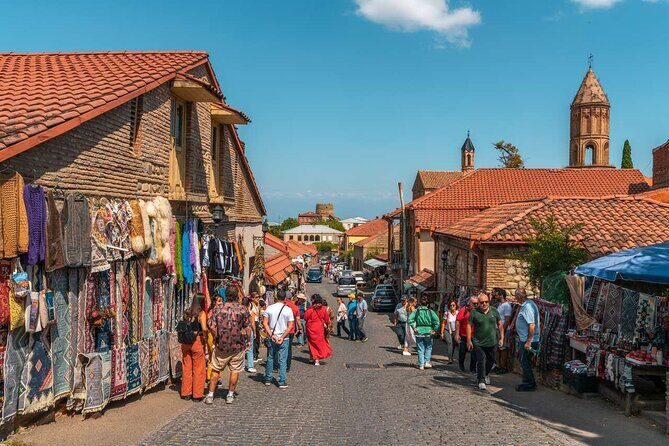
A few minutes later, you’ll enjoy views of tiny streets around Abanotubani and take photos. Abanotubani is closely tied to Tbilisi’s famous sulfur baths, and seeing that neighborhood at night feels like stepping into the city’s older rhythm while the modern lighting still wraps around everything.
Liberty Square and the St George monument: a clean night pause
You walk along Liberty (Freedom) Square and view the Monument of St. George, lit up at night. The stop is short (around 7 minutes), but it works as a reset. After waterfalls, sulfur-bath streets, and viewpoint stops, a wide open square gives your eyes a break.
If you like night photography, this is also the kind of space where you can grab a few “city overview” shots without weaving between alleys.
Tbilisi Funicular Lower Station: video-friendly and convenient, but not included
From there, you reach Tbilisi Funicular (Lower Station). The plan includes time to capture video and a guide explanation about the place. The funicular round-trip is not included, so if you want to ride it, you’ll pay separately.
Still, this is useful even without taking the ride because it sets you up for a smoother final segment. You’ll be exactly where you need to be for the last big viewpoint push.
Mtatsminda Park observation deck: finishing with the night skyline
The tour ends at Mtatsminda Park, where you admire glowing modern and older buildings from the Mtatsminda observation deck. This is the payoff. From up here, the city lights stop looking like random dots and start making sense as a whole.
You’ll finish next to the main entrance of the Lower Station of the Tbilisi Funicular, so you’re not stranded. You can head back toward dinner, or keep exploring nearby if you still have energy.
Walking at night: the practical stuff that keeps this enjoyable
This tour is described as a walking route with multiple short transitions. Expect:
- Comfort shoes (the walking is real, even if the sightseeing is fun)
- You’ll likely do some stairs and hill-related paths, especially toward the elevated viewpoints
- A mix of longer lookouts and shorter photo passes
The upside is that the pace usually keeps your attention sharp—you’re not sitting still for long. And because the group is limited to 15 travelers, the experience tends to stay manageable, with room to ask questions.
Guides make the difference: Anya and Zora as the example
From the experiences shared, what stands out is how guides handle questions and pace. One guide named Anya is praised for being especially knowledgeable about Tbilisi and for showing the main places clearly, then answering follow-ups patiently. Another guide named Zora is praised for a strong first-timer introduction covering both old and modern sides.
So if you’re someone who likes to ask why a place matters (not just what it is), this tour has the structure to support that. Bring curiosity. Your guide is built for it.
Who should book this, and who should choose something else
This tour is a great fit if you:
- Are in Tbilisi for a short time and want a structured night route
- Like walking between neighborhoods and viewpoints rather than doing one big attraction
- Want cultural context alongside photo stops
- Prefer guidance when walking around after dark
It might be less ideal if you:
- Want a slow, sit-down experience with minimal walking
- Hate photo-heavy segments and quick passes
- Are hoping for a full transportation plan back to your hotel (that part isn’t included)
Should you book this Tbilisi by Night walking tour?
If you want a guided introduction to Tbilisi’s night personality, I’d say yes. You get a solid mix of Old Town landmarks, LED-lit modern sights, and hilltop views, with the convenience of an included one-way cable car. The route also makes it easier to feel confident walking after dark, especially if you prefer not to figure out everything on your own.
Book it if you’re ready to walk for a few hours and you like stories tied to specific places. Skip it only if your ideal evening is more about relaxing than moving.
FAQ
What time does the Tbilisi by Night Walking Tour start?
The tour starts at 7:00 pm.
How long is the tour?
It runs about 3 hours to 3 hours 30 minutes.
How much does it cost?
The price is $72.25 per person.
What is included in the ticket price?
Included are all taxes and fees, a tour guide, and the one-way cable car.
What is not included?
Not included are food and drinks, hotel pickup and drop-off, transportation to/from attractions, and Tbilisi funicular round-trip.
Where does the tour start and end?
It starts at Berikaoba (BerikaobaMRW4+HPC, Tbilisi) and ends next to the main entrance of the Lower Station of the Tbilisi Funicular (22 Daniel Chonqadze St, Tbilisi).
Is the tour offered in English?
Yes, the tour is offered in English.
Can I get a full refund if I need to cancel?
Yes. You can cancel for free up to 24 hours in advance for a full refund.
What group size should I expect?
The tour has a maximum group size of 15 travelers.