REVIEW · TBILISI
Tbilisi Explorer: Essential Walking Tour for First-Timers
Book on Viator →Operated by Friendly.ge: Transfers & Tours in Georgia · Bookable on Viator
Tbilisi clicks into focus fast on foot. This Tbilisi Explorer tour is built for first-timers who want the city’s big sights in about 2 hours, with a guide who keeps things organized and gives you context as you walk. You also get a one-way cable car ride that makes the whole route feel easier and more fun.
I really like the way it balances must-see landmarks with small, memorable details. Two highlights for me are the church stops, like Anchiskhati and Sioni, and the Old Town wandering time that actually lets you slow down instead of rushing past everything.
One thing to plan for: you’ll cover a lot of ground in a short window, and places of worship have a strict dress code (no shorts or sleeveless tops, and knees/shoulders covered). If you show up under-dressed, you can get turned away.
In This Review
- Key Highlights I’d Prioritize
- How This Tbilisi Walking Tour Works in 90 Minutes
- Freedom Square to the Wall Ruins: Where the City’s Story Starts
- Anchiskhati Basilica and Sioni Cathedral: Two Churches, One Big Context
- Bridge of Peace Plus Old Town Time: Modern Views, Real Streets
- Sayat-Nova, Marionettes, and Sergey Parajanov: Culture You Can Point To
- Shardeni Street and the Toaster Sculpture: The Fun Stops That Make Photos Better
- Rike Park and the Narikala Angle: Cable Car Payoff Views
- Jumah Mosque, Kartlis Deda, and Metekhi: Big Landmarks in a Tight Walk
- Sulphur Waterfall in the Center: A Tbilisi Detail You’ll Laugh About
- Meidan Bazaar and the Falcon-Fairy-Tale Monument: Last Stops, Best Momentum
- Price and What You Get for $41
- Should You Book This Tour for Your First Days in Tbilisi?
- FAQ
- Is this tour private?
- Where does the tour start?
- How long does the Tbilisi Explorer tour take?
- What’s the price?
- What language is the tour offered in?
- What’s included in the tour price?
- Is hotel pick-up included?
- Are there any paid entrances during the stops?
- What should I wear for church and mosque visits?
- Is the tour good for someone with moderate fitness?
- What happens if the weather is bad?
Key Highlights I’d Prioritize
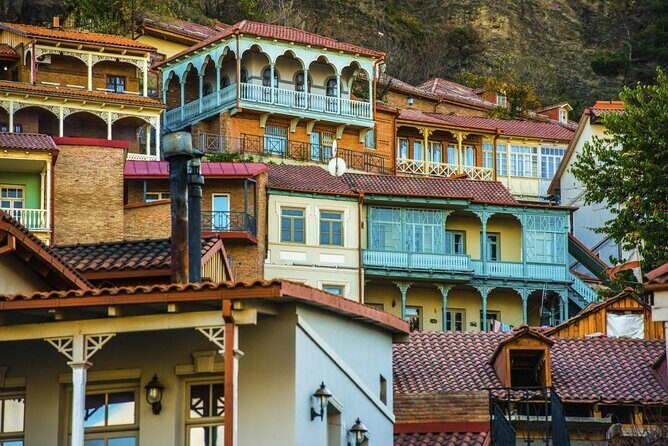
- Freedom Square: a quick lesson in how Tbilisi’s story changed names over centuries
- Anchiskhati Basilica: the oldest surviving church in Tbilisi, from the 6th century
- Bridge of Peace + Old Town time: modern landmark views, then real walking streets for about an hour
- Culture stops you can picture later: Rezo Gabriadze Marionette Theater and monuments to Sayat-Nova and Sergey Parajanov
- Jumah Mosque inside Old Town: an architectural surprise, plus a practical dress-code reminder
- Cable car angle on Narikala and the river: a payoff viewpoint built into the route
How This Tbilisi Walking Tour Works in 90 Minutes
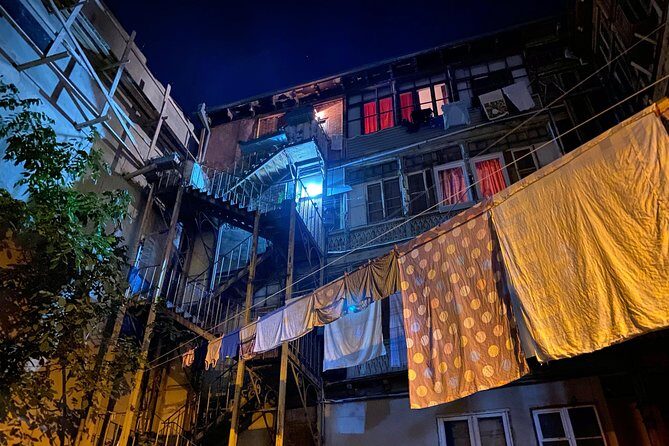
This is a private walking tour in Tbilisi for your group only, priced at $41 per person. Expect about 1 hour 30 minutes to 2 hours, starting and ending at 2 Freedom Square. You’ll get a local guide, and you’ll move on foot through the central neighborhoods without needing to figure out transport on your own.
The biggest practical win is that most stops are quick, and many don’t charge admission. That means you’re paying for someone to steer you through the right places, explain what you’re looking at, and keep you moving at a reasonable pace. It’s also offered in English, and you’ll use a mobile ticket.
Pace matters here. The tour is designed to work for different walking speeds, and guides have been praised for matching their group’s energy. If you want someone steady and fast, Gio comes up as a good example. If your day is more flexible and you want the route adjusted to your timeline, Jonah is known for customization. If you’re traveling with kids and want patience built in, Aleksi has been highlighted for handling a toddler-friendly pace without losing the highlights.
Before you go, pack for moderate physical fitness. This isn’t a long hike, but there are enough steps and hills in central Tbilisi that comfortable shoes are worth it. And yes, you should read the dress code closely.
Other Tbilisi walking tours we've reviewed in Tbilisi



Freedom Square to the Wall Ruins: Where the City’s Story Starts
You begin at Freedom Square, right at the eastern end of Rustaveli Avenue. This spot matters because it’s not just a pretty square—it’s a timeline. The square has been known by several names under different regimes, including Erivansky/Paskevich-Erivansky Square in Imperial Russia, and Beria Square and Lenin Square under the Soviet Union. Your guide’s job is to turn that into something you can actually remember, not just dates on a sign.
From there, you head toward Tbilisi Wall Ruins, a look at the older part of the city. Even if the ruins feel small at first glance, they help you understand how the modern city grew around older defenses and settlements. It’s a good warm-up: quick, visual, and low-stress.
This is also the part where you’ll see the difference between Tbilisi’s energy levels. Freedom Square is open and busy; the wall ruins feel more tucked in. If you’re jet-lagged, this segment is a solid start because it gives you meaning fast without demanding attention every second.
Anchiskhati Basilica and Sioni Cathedral: Two Churches, One Big Context
Stop two focuses on age and survival: Anchiskhati Basilica of St Mary. It’s the oldest surviving church in Tbilisi, dating to the 6th century, and it belongs to the Georgian Orthodox Church. You’re not just looking at an old building—you’re seeing why religion and architecture have been shaping the city’s identity for centuries.
A key practical note: this is a religious site, so plan your outfit early. The dress code is clear across churches and selected museums: no shorts or sleeveless tops, and knees and shoulders must be covered for both men and women. If you’re unsure, bring a light layer you can put on quickly.
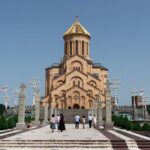
Later, you’ll also visit Sioni Cathedral Church, formally the Cathedral of the Dormition. It follows a medieval Georgian tradition of naming churches after places in the Holy Land, which is why it carries the name Mount Zion (Sioni) connected to Jerusalem. In other words, you’ll get two different kinds of meaning: one tied to age and survival, and one tied to tradition and symbolism.
The value of these two church stops is that they give you a framework. Once you understand what you’re looking for—Orthodox tradition, symbolism, the way names carry history—you start spotting meaning everywhere else.
Bridge of Peace Plus Old Town Time: Modern Views, Real Streets

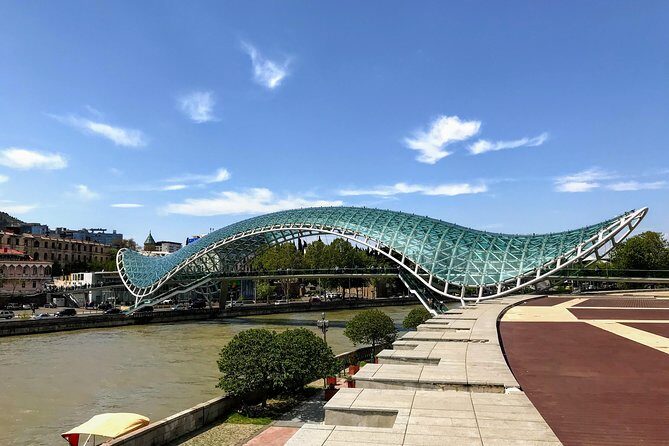
Then comes the Bridge of Peace, opened in 2010 over the Mtkvari River (also known as the Kura). It’s newer than most of the city, which is exactly why it works in a first-timer tour. You see that Tbilisi isn’t stuck in the past; it keeps building and re-centering itself.
After the bridge, you get a longer Old Town Tbilisi segment—about 1 hour of walking time. This is where you stop being a tourist who collects stops and start being a person who actually moves through the place. You’ll pass restaurants and eateries, plus older buildings and a theatrical feel in the streets. It’s also a chance to ask your guide practical questions: where locals eat, what neighborhoods to prioritize, and what’s worth your time today versus later.
If you’re trying to decide how to structure your first day, this portion helps. It shows you the texture of Old Town so you can return later on your own. And because you’re with a guide, you can get quick directions for what to do next.
Sayat-Nova, Marionettes, and Sergey Parajanov: Culture You Can Point To
Tbilisi has a strong tradition of honoring artists, and this tour squeezes several major cultural markers into a short walk.
You’ll visit a Monument to Sayat-Nova, the celebrated Armenian poet and musician (Harutyun Sayadian). The monument ties into a specific local story connected to the Armenian church of St Kevork and the poet’s hiding and death there. Even if you only catch part of the story, it gives you a concrete way to understand Tbilisi as a crossroads of cultures.
Next is the Rezo Gabriadze Marionette Theater, opened in 1981. It’s a beloved part of the city’s cultural scene, and it’s one of those places that makes Tbilisi feel playful and human. If you like cities with strong theater and street-level culture, this stop lands well.
You’ll also see a Sergey Paradzhanov Monument. Parajanov’s film masterpieces—like Shadows of Forgotten Ancestors and The Colour of Pomegranates—are part of his global reputation. The guide’s explanation usually helps you connect his poetic film language to Tbilisi’s broader artistic spirit, so the monument doesn’t feel like a random statue.
These stops are all quick, but they’re memorable because the tour links each one to a real person and a real story.
Other Tbilisi city tours we've reviewed in Tbilisi





Shardeni Street and the Toaster Sculpture: The Fun Stops That Make Photos Better
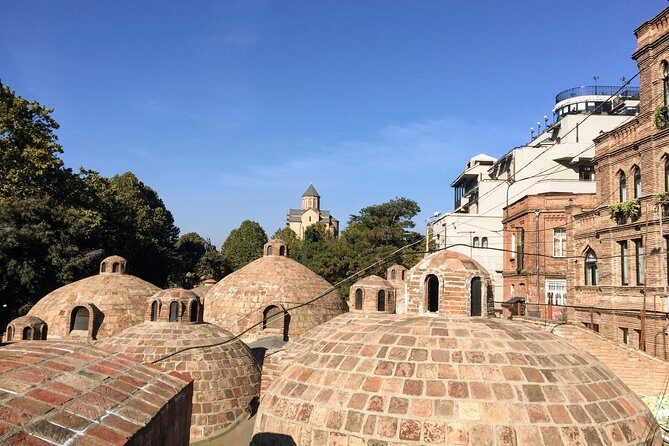
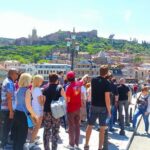
After the cultural monuments, you hit Jan Shardeni Street, one of the city’s most popular pedestrian streets. It’s famous enough that people often plan a separate evening around it, and here you get a focused 30-minute window. This is where you slow down and let your senses do the work: street life, storefronts, and that easy-to-walk Old Town rhythm.
Then you’ll also see the Sculpture of the Toaster. It’s modeled on an ancient Colchian statuette and tied to the Georgian concept of the tamada. It’s weird in the best way—exactly the kind of stop that turns a “checklist tour” into a day you remember.
If you’re the type who likes street art, quirky monuments, and places that feel like Georgia instead of just Georgia-themed décor, this is a strong section.
Rike Park and the Narikala Angle: Cable Car Payoff Views
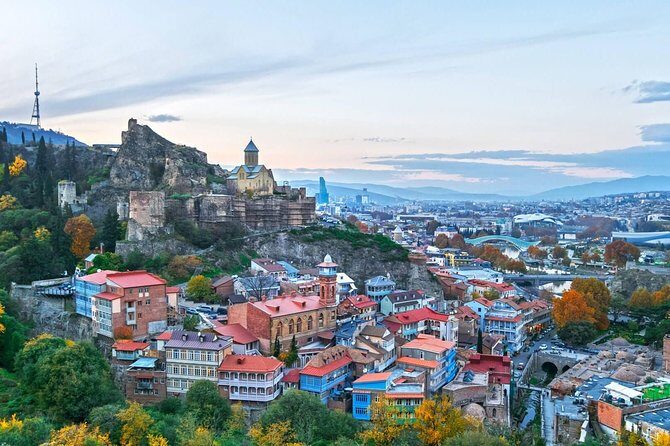
You get Rike Park in the mix, a public recreation area used by families, tourists, and locals taking walks. It’s a good reset point. After dense Old Town scenes, you get open space and a river-adjacent view that helps you orient yourself.
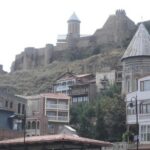
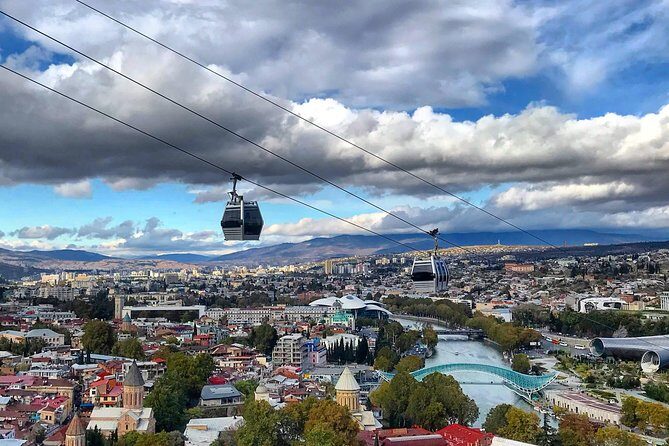
The tour also includes an aerial-cable experience area: Aerial Tramway in Tbilisi connects Rike Park with the Narikala fortress area overlooking the city. Here’s the key practical point: the aerial tramway admission is listed as not included, even though a one-way cable car is included. On the day, your guide can point you to the ride option that matches what’s covered. If you’re trying to plan tightly, ask before you line up so you don’t get surprised by extra cost.
Either way, the big benefit is timing. You get the city’s top-down angle while you’re already in the center of it, so you don’t have to add a whole separate trip later.
Jumah Mosque, Kartlis Deda, and Metekhi: Big Landmarks in a Tight Walk
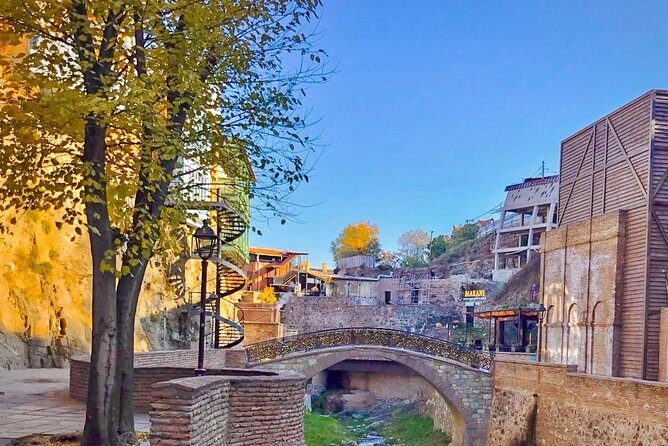
Back in Old Town, you’ll visit Jumah Mosque, also called the Friday Mosque. The architecture is said to be unusual enough that you might not recognize it as a mosque right away. More importantly for first-timers, this mosque is open for visitors of all religions or beliefs. It’s also noted as one of the places where Shias and Sunnis pray together.
Again, the dress code matters. For worship sites, keep that knees/shoulders rule front and center, and you’ll avoid the uncomfortable moment of figuring it out at the door.
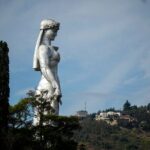
Then you’ll see Kartlis Deda, a monument on top of Sololaki hill. It was built in 1958 for Tbilisi’s 1500th anniversary, and the statue is a 20-meter aluminum figure in Georgian national dress designed by sculptor Elguja Amashukeli. This one helps you understand local symbolism—Georgia as a character, not just a country.
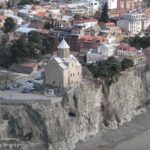
You’ll also reach Metekhi Cathedral, a 12th-century church near the rocky bank of the Kura. It’s the kind of spot where the building and the river edge create a strong visual. Even if you don’t spend long inside, you’ll get the “this place is old for a reason” feeling.
Sulphur Waterfall in the Center: A Tbilisi Detail You’ll Laugh About
One of the most memorable quick stops on the route is Dzveli Tbilisi Sulphur Waterfall—a real waterfall right in the city center. You’ll spend about 15 minutes here, and it’s the perfect punctuation between churches, monuments, and streets.
This is also a practical reminder: central Tbilisi has micro-climates. If it’s warm, you’ll like the sound and cool mist. If it’s rainy, wear shoes that can handle wet stone. Your guide can time the walk so you’re not stuck too long in bad weather, but the tour does require good weather, and poor conditions can cause a change of date or refund.
Meidan Bazaar and the Falcon-Fairy-Tale Monument: Last Stops, Best Momentum
If shopping is part of your plan, you’ll appreciate the Meidan Bazaar stop. It’s made for people who want souvenirs and don’t want to wander for hours hunting for them. The stop is around 20 minutes, so it’s enough time to check prices and pick a few items without derailing the day.
You’ll also see the Monument Fountain Falcon and Pheasant, tied to a legend about the founding of Tbilisi in the 5th century by King Vakhtang Gorgasal. These types of legends can sound abstract until you connect them to a visible marker. Here, you get that connection in a quick, photo-friendly stop.
By the time you reach the final stretch, you’ll be heading back toward Freedom Square. The route is designed so that you start central, see the key areas, and end where you began—useful if you’re planning dinner or want to catch a later reservation.
Price and What You Get for $41
At $41 per person, this is strong value for a first-timer route that covers a lot of distinct Tbilisi experiences in about 2 hours.
Here’s what you’re paying for, beyond walking:
- A local guide who explains what you’re looking at, from old church origins to the meaning behind monuments
- A route that strings together major sights efficiently, without requiring you to coordinate transport
- A one-way cable car ride included (with the aerial tramway option noted as not included)
- Most listed entry points are free during the stops, which keeps your day from turning into a stack of fees
A fair expectation: you won’t linger for long at every site. That’s not a downside—it’s the point. This tour is for orientation, shortcuts, and building a mental map so your remaining days in Tbilisi feel easier.
Should You Book This Tour for Your First Days in Tbilisi?
Yes, you should book this if you want a smart first-timer plan that mixes big landmarks with street-level Tbilisi flavor. It’s especially worth it if you only have a few hours to get your bearings, or if you’d rather pay for guidance than spend your day guessing which corners matter.
Book it now if:
- You want to see Freedom Square, Old Town streets, major churches, and a cable car angle without juggling tickets and transport
- You care about having someone help you navigate the city’s cultural signals, like Sayat-Nova, Parajanov, and the theater scene
- You need a route that works at your pace, since guides are known for matching group energy
Skip it (or plan another option) if:
- You strongly prefer slow, long stays at one or two sites. This one moves, and it’s built for variety.
- You can’t meet the dress code for worship stops. Bring a cover-up so you don’t lose time at the door.
FAQ
Is this tour private?
Yes. It’s a private tour/activity, so only your group participates.
Where does the tour start?
It starts at 2 Freedom Square, Tbilisi, Georgia and ends back at the meeting point.
How long does the Tbilisi Explorer tour take?
It runs about 1 hour 30 minutes to 2 hours.
What’s the price?
The price is $41.00 per person.
What language is the tour offered in?
It’s offered in English.
What’s included in the tour price?
Included items are a local guide, private tour, and a cable car (one way).
Is hotel pick-up included?
No, hotel pick-up is not included.
Are there any paid entrances during the stops?
Most stops list admission free. The Aerial Tramway in Tbilisi is listed as not included.
What should I wear for church and mosque visits?
You need to cover knees and shoulders. No shorts or sleeveless tops are allowed for men and women, or you may be refused entry.
Is the tour good for someone with moderate fitness?
Yes. It’s suitable for travelers with moderate physical fitness.
What happens if the weather is bad?
The experience requires good weather. If it’s canceled due to poor weather, you’ll be offered a different date or a full refund.