Soviet Tbilisi has a different pulse. This tour mixes architecture and stories in a small-group format, with Soviet-era sites you probably would not find on your own. I especially liked the guided context that links each building to how people lived, worked, and staged propaganda during Soviet rule.
Two things I really liked: the max-6 group size (so questions don’t get lost) and the comfort of an air-conditioned vehicle for moving around. It also helps that some stops include tickets while others are free, so you’re not constantly checking what costs extra.
One consideration: this is history with politics baked in. If you want only light, feel-good sights, the Soviet theme and propaganda-era museum content may feel heavy.
In This Review
- Quick reasons this tour works
- A Soviet city tour that doesn’t feel like a lecture
- Starting at Rose Revolution Square: easy to reach, easy to repeat your day
- The Real Georgia Tours segment: where the Soviet story gains context
- Bank of Georgia: Soviet architecture in a shape with a reason
- Chronicles of Georgia: the Stonehenge moment with a suburban view
- J. Stalin’s Underground Printing House Museum: propaganda work below ground
- Guides make or break this kind of tour, and the guides here shine
- What’s included: the parts you should care about
- How long it takes, and how to prepare for 3 to 4 hours
- Price and value: $99 per person is reasonable if you like guided context
- An optional extra: Soviet car museum energy
- Should you book Soviet Tour – Hidden Tbilisi?
- FAQ
- How long is the Soviet Tour – Hidden Tbilisi?
- How much does the tour cost?
- How big is the group?
- Is the tour offered in English?
- Where do I meet, and where does the tour end?
- Are entrance tickets included?
- Is there free cancellation?
- Is a mobile ticket provided?
Quick reasons this tour works
- Max-6 group means you get real back-and-forth, not just headsets and hurry-up timing
- Air-conditioned vehicle keeps the city-hopping comfortable, even when the day runs warm
- Giorgi, Irakli, David, and George style tours combine architecture talk with live explanations you can ask about
- Paid and free entry blend helps you experience more without feeling nickeled-and-dimed
- Underground printing house visit adds something genuinely unusual under Tbilisi’s surface
- Panoramic stop at Chronicles of Georgia gives you a visual map of the suburbs
A Soviet city tour that doesn’t feel like a lecture
Tbilisi wears many layers at once. What this tour does well is give you a way to read those layers like clues. You’re not just looking at buildings; you’re learning why they look the way they do and what they were meant to do.
I love when a guide can connect style to purpose. Here, that happens again and again, from office architecture to monumental sites to the dark practicality of underground propaganda work.
Also, the small group matters. When I’m in a group that size, it’s easier to ask the obvious questions. You leave with your own clearer picture, not just someone else’s timeline.
Other Tbilisi city tours we've reviewed in Tbilisi



Starting at Rose Revolution Square: easy to reach, easy to repeat your day
The tour begins at 2 Rose Revolution Square and finishes back there. That’s a practical win. You can keep your plans simple afterward, rather than figuring out a complicated end point and hoping taxis are friendly.
The meeting area is also near public transportation, so you can get there without drama. And with a mobile ticket, you’re not hunting for printed vouchers mid-day.
Expect a start-to-finish rhythm that moves through multiple areas of the city. Even if you know Tbilisi well, the Soviet-era sites on this route tend to be the kind you’d skip unless a guide pointed them out first.
The Real Georgia Tours segment: where the Soviet story gains context
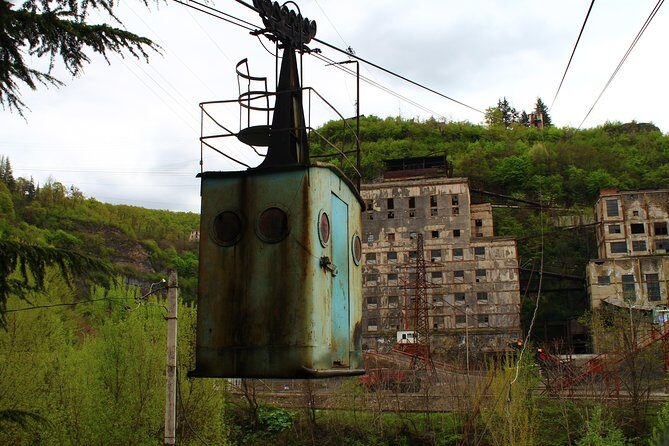
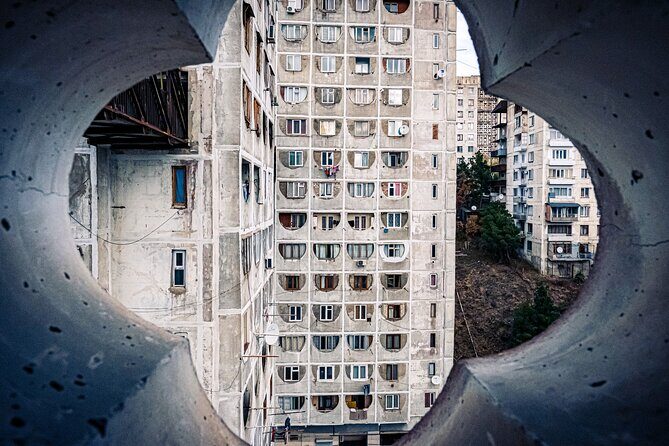
Your first big block is focused on the non-touristic part of Tbilisi, with Soviet-era monuments and buildings spread across the city. This is the part where the tour’s tone locks in. You get the overview of how Soviet times shaped what got built and how space was used.
Here’s what makes this segment worth your time: it’s not only about seeing. It’s about noticing patterns. Your guide helps you connect architecture, function, and symbolism, so later stops land with more meaning instead of feeling like separate photo ops.
There’s also a sense of variety. You’re led to a range of historic and architectural sights, rather than sticking to a single neighborhood theme. If you like tours that help you understand how a city actually grew and adapted, this opening sets you up well.
One practical note: you’ll want to stay alert early, because the guide’s explanations are doing a lot of work to make the rest of the route make sense.
Bank of Georgia: Soviet architecture in a shape with a reason
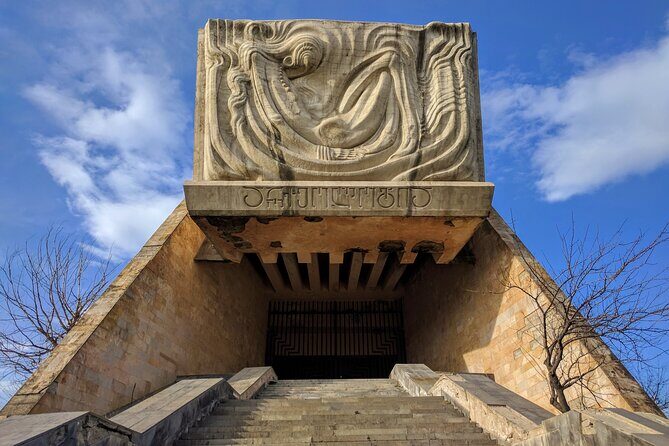
Next comes a standout: the Bank of Georgia headquarters. It’s often listed among the top Soviet architecture examples, and the building’s unusual shape has a pragmatic reason that your guide will explain.
I like this stop because it breaks a common misconception. Soviet architecture can look purely ideological from a distance, but this one gets tied back to practical design choices. You start thinking about buildings as tools, not just monuments.
The stop is short, about 15 minutes, and entrance is free. That timing is helpful. You get the key idea without the tour turning into a long, sit-and-stare session.
If you enjoy analyzing facades and forms—how the geometry affects how people use a space—you’ll likely appreciate this one a lot.
Chronicles of Georgia: the Stonehenge moment with a suburban view
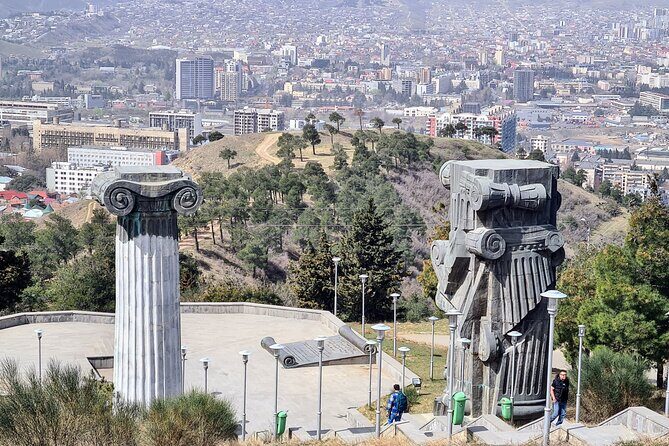
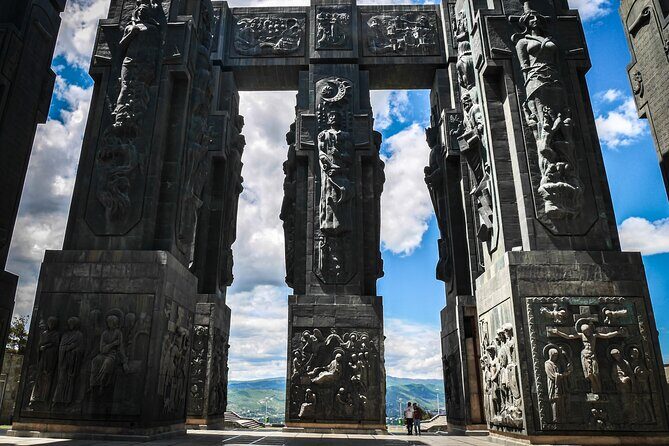
Then you hit Chronicles of Georgia, described as the Stonehenge of Tbilisi. That nickname is useful because it sets expectations: it’s monumental, symbolic, and meant to be seen as a statement in space.
This stop also rewards you visually. You get a panorama over Tbilisi’s suburbs, which means your understanding of Soviet monumentalism shifts from close-up details to city-scale impact. You’re not only reading stone and structure anymore; you’re seeing how the city is framed around them.
The time here is about 30 minutes, with free entry. That’s a good balance for a viewpoint-style stop. You’ll have enough time to take photos, but you’re not trapped there while your guide waits for the perfect cloud.
Tip: if you’re the type who likes to photograph architecture, bring a little patience. This kind of monument tends to look best when you catch the light at an angle, not when you rush.
Other Soviet and brutalist Tbilisi tours we've reviewed in Tbilisi





J. Stalin’s Underground Printing House Museum: propaganda work below ground

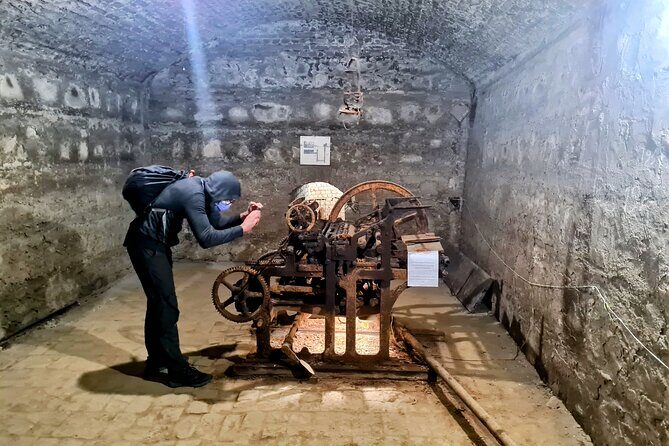
The route ends with one of the most unusual visits in the city: J. Stalin’s Underground Printing House Museum. This isn’t a casual stop. You go underground to see the setting where Stalin and supporters planned and created propaganda leaflets.
What I found valuable here is the contrast. You’ve been seeing Soviet-era messages in stone and institutional buildings. Here, you see how messaging was produced in a practical, secretive environment. It gives the whole Soviet story a more human and operational side.
You’ll have about 40 minutes, and entrance is included. That built-in ticket time is great because it means you can focus on the museum itself instead of checking schedules or paying extra at the counter.
If you prefer your history with atmosphere, this is where the tour earns its keep. Just remember it’s not just about design anymore. It’s about the machinery of influence.
Guides make or break this kind of tour, and the guides here shine
The best part of this experience is how the guide connects dots for you. Names that show up in guide-led experiences include Giorgi, Irakli, David, and George, and the common thread is strong explanations paired with room for questions.
One thing I really like is how the guide’s talk doesn’t stay trapped inside the plan. If something catches your eye along the way, a good guide can flex and explain what you’re seeing. That’s exactly the vibe these tours seem to offer.
You also get passion for history, not just facts. In a Soviet-history context, that matters, because the architecture can feel cold until someone gives it a lived-in explanation.
And there’s an extra layer sometimes: in at least one experience, the guide connected the group with local historians who share how they interpret Soviet life and its everyday effect. Even when that extra happens, the core value stays the same: you leave with a clearer mental map of why these places look the way they do.
What’s included: the parts you should care about
This tour includes an air-conditioned vehicle, which is more than comfort. It makes the routing smarter, so you spend more time on sites and less time fighting traffic or figuring out where the next stop is.
You also get a professional local guide with a clear interest in history. The guide’s role is the main value driver here. The sites are interesting, but the explanations are what turn them into understanding.
The tour also includes exclusive access. The data doesn’t spell out every detail of that access, but in practice it usually means you’re not just doing the generic walk-by version of a site. You get a more guided way of experiencing it.
For entrance fees: Real Georgia Tours and Stalin’s Underground Printing House Museum have admission ticket included, while the Bank of Georgia and Chronicles of Georgia are listed as free entry stops. So your money is being used where the paid entrances matter.
How long it takes, and how to prepare for 3 to 4 hours
The duration is 3 to 4 hours. That’s a sweet spot for this theme. Soviet-era architecture often takes more than quick glances, and the tour gives you enough time to actually absorb each moment.
Because you’re moving by vehicle between multiple areas, I recommend wearing comfortable walking shoes anyway. Even a short stop like 15 minutes can still involve standing for views or walking a bit to find the best angles.
If you’re traveling in warm weather, that AC between stops is genuinely useful. If you’re traveling in cooler months, bring a light layer. Monument areas can get windy, especially near viewpoints.
Also, if you’re the type to ask a lot of questions, this group size helps. You’ll likely use most of your time talking, not waiting.
Price and value: $99 per person is reasonable if you like guided context
At $99 per person, you’re paying for three main things: guide time, the vehicle, and selected included admissions. Even though two of the stops are free entry, the tour isn’t priced like a free-entry sightseeing route. It’s priced like a curated guided experience.
If you were to do this on your own, you’d run into two problems. One, you’d probably miss some of the less obvious Soviet-era points. Two, you’d spend a lot of effort Googling and piecing together why each building matters. Here, the guide does that connecting for you.
The max group size of 6 also tilts the value. That’s typically where you stop feeling like a number and start feeling like you have a conversation.
So if you enjoy architecture, history, and the story behind what you see, the price makes sense. If you only want general sightseeing and don’t care about Soviet-era context, you might find it overpriced. This one rewards curiosity.
An optional extra: Soviet car museum energy
One experience you can sometimes add is a visit related to Soviet vehicles. In one case, the group chose an additional stop at a Soviet car museum, and the highlight was the restored cars and bikes.
If that kind of material culture grabs you, it’s worth asking whether the option is available on your date. It fits the tour’s theme nicely: Soviet life wasn’t only politics and monuments. It was also technology, design, and daily machines.
Should you book Soviet Tour – Hidden Tbilisi?
I think you should book this tour if you want a small-group guided look at Tbilisi through a Soviet lens. The mix of architecture stops, a major viewpoint at Chronicles of Georgia, and the unusual visit to Stalin’s Underground Printing House Museum makes it feel complete without dragging.
You should skip it if you’re mainly looking for classic postcard sights and don’t want history with a heavier tone. Also skip it if you hate structured time limits and want total freedom to wander with no schedule at all.
If you like clear explanations, ask lots of questions, and enjoy learning how buildings reflect politics and daily life, this one is a strong match for your Tbilisi day.
FAQ
How long is the Soviet Tour – Hidden Tbilisi?
It lasts about 3 to 4 hours.
How much does the tour cost?
The price is $99.00 per person.
How big is the group?
The tour has a maximum of 6 travelers.
Is the tour offered in English?
Yes, it’s offered in English.
Where do I meet, and where does the tour end?
You meet at 2 Rose Revolution Square, T’bilisi 0108, Georgia, and the activity ends back at the same meeting point.
Are entrance tickets included?
Entrance tickets are included for Real Georgia Tours and J. Stalin’s Underground Printing House Museum. Entry to the Bank of Georgia and Chronicles of Georgia is listed as free.
Is there free cancellation?
Yes. You can cancel for a full refund up to 24 hours in advance.
Is a mobile ticket provided?
Yes. The tour includes a mobile ticket.