REVIEW · TBILISI
Taste of Georgia. Cooking-Class Khinkali, Khachapuri and more
Book on Viator →Operated by Georgian Promenade · Bookable on Viator
Cooking dough into dinner is oddly satisfying.
This hands-on master class pairs a cozy family kitchen in Tbilisi with two crowd-pleasers: khinkali and Adjarian khachapuri. I like that it focuses on practical technique (not just watching), and you finish by tasting what you cooked with Georgian wine. One watch-out: it lasts about two hours, so you’ll learn a lot fast, but it’s not enough time to turn it into a full at-home multi-day production.
I especially liked the way the session breaks khinkali into steps: making elastic, soft dough; preparing the filling with the broth that matters for eating; and learning how to turn the dumplings so they don’t fall apart. I also appreciated the khachapuri lesson in Ajarian style, including tender dough and choosing cheese meant to stretch and melt, then serving it with an egg yolk.
The main consideration is pacing. If you’re the kind of person who likes to linger and do everything slowly, the class will feel brisk, and you may want to take extra notes or photos so you can recreate it later.
In This Review
- Key things to know before you go
- A family-style kitchen in Chakandrila (and why that matters)
- Khinkali master class: dough, filling broth, and the turning test
- Adjarian khachapuri lesson: tender dough, stretchy cheese, egg yolk
- How the meal fits together: starter, main, and a glass of Georgian wine
- Group size and English instruction: learning without pressure
- Price and value: what $98 buys you in real terms
- Practical details that help you enjoy it more
- Who should book this class (and who might not love it)
- Should you book Taste of Georgia: Khinkali and Khachapuri master class?
- FAQ
- Where is the class meeting point?
- How long is this experience?
- Is the class offered in English?
- How many people are in the group?
- What dishes will you cook?
- Is food included, or do you just watch?
- Are alcoholic beverages included?
- Do you get private transportation?
- What is the cancellation window?
Key things to know before you go
- A small group (max 8) keeps the cooking hands-on and the questions easy.
- Step-by-step khinkali technique covers dough, filling, and the turning step.
- Adjarian khachapuri is taught as a process, not just an end result.
- Wine and tasting make the meal feel like the reward, not the lecture.
- Grisha at the table was a highlight in at least one friendly experience, with thorough communication.
A family-style kitchen in Chakandrila (and why that matters)
This class happens in the Chakandrila area, at Georgian Cooking Classes Chakandrila, 8 Merab Kostava St, in Tbilisi. You’ll meet there and finish back at the same spot, so you’re not spending your evening zigzagging across town. It’s offered in English and capped at 8 people, which is a big deal for learning cooking basics without feeling rushed or invisible.
The setting is described as a homey, cozy environment hosted by a Georgian family. That matters because Georgian cooking is very hands-on: you’re not only memorizing a recipe, you’re learning what the dough should feel like and how the shaping step changes the outcome. In a normal kitchen classroom, that tactile feedback can be missing. Here, it’s part of the rhythm.
Also, you get a mobile ticket, and confirmation happens at booking. Add that the meeting point is near public transportation and it’s easier to plan without needing a private car.
Other Georgian cooking classes we've reviewed in Tbilisi

Khinkali master class: dough, filling broth, and the turning test
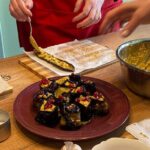
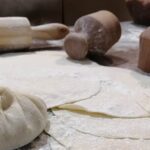
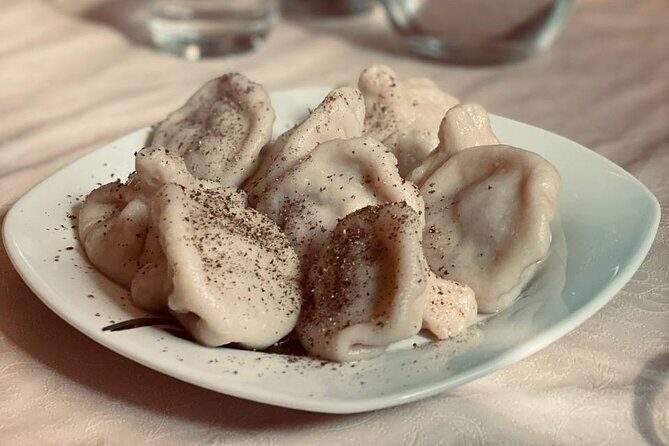
Khinkali is the pride of Georgian cuisine in this class, and it’s also the first thing you make. Expect the workshop to start with dough, because dough behavior is the base of everything else. The instruction focuses on selecting quantities correctly and mixing dough until it turns elastic and soft. That sounds simple, but it’s the kind of skill you only get by doing it, not by reading about it.
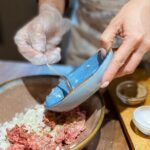
Next comes the fixing: what you put inside your khinkali and how it relates to the famous broth. You’re taught what ingredients make up the filling, with that “healing broth” idea taking a main place in the eating experience. Even if you’ve eaten khinkali before, learning how the filling is built gives you a new respect for why people chase the perfect mouthful instead of just chewing dumpling after dumpling.
Then comes the shaping step—the one that decides whether your khinkali survives cooking. You learn how to turn them correctly so they don’t fall apart in the pot. This is one of those quiet techniques that can make or break the dish, and the class treats it like it’s worth real practice, not just a quick demo.
The payoff is the starter course: Georgian khinkali served as the first part of the meal. You’ll be eating something you worked on, and that makes the tasting more useful. You can connect what you see on the plate to the exact steps you performed: dough feel, filling balance, and whether your turning held up.
Adjarian khachapuri lesson: tender dough, stretchy cheese, egg yolk
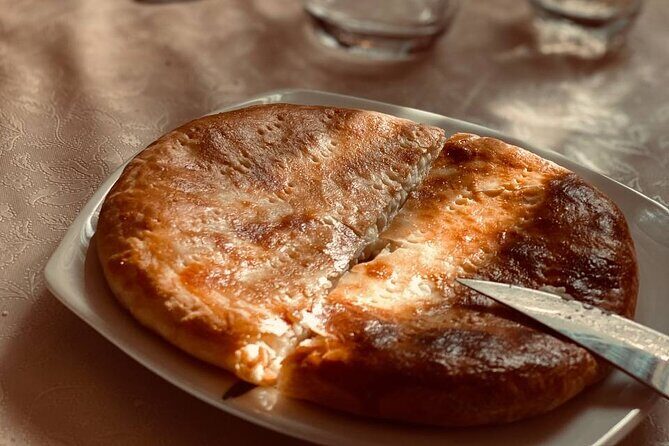
After khinkali, the class moves to the second big Georgian comfort food: Ajarian khachapuri. This is the one with that signature look—cheese in dough with an egg yolk, where the cheese is expected to be sticky and stretchy.
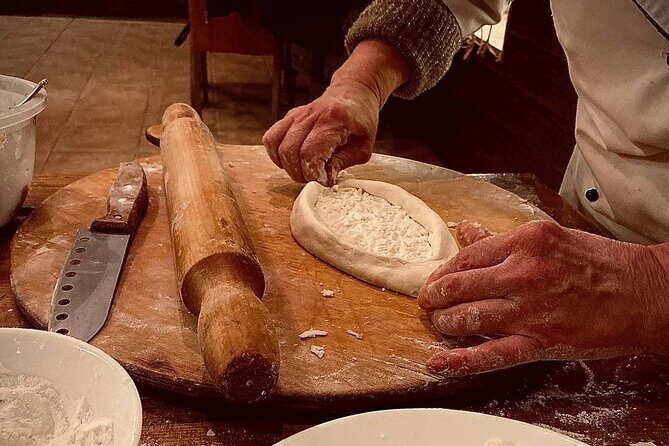
You’ll start again with dough, and the technique here is about getting it tender. The class explains how to prepare the khachapuri dough so the texture lands right. Then you get guidance on which cheese to use for the stretchy, melting effect—the point isn’t just flavor, it’s the texture that defines Adjarian style.
You’ll also learn about different ways of arranging the dish. That’s practical: even when cooks agree on ingredients, the form changes the experience, and you’ll likely notice how the cheese distribution affects how it behaves at serving time.
The sample menu calls out the main dish clearly: Georgian Adjarian khachapuri with sticky cheese in dough and an egg yolk. This is where the technique turns visible. If the dough is tender enough and the cheese behaves properly, the dish is a real show at the table—not because it’s fancy, but because it’s playful and interactive.
How the meal fits together: starter, main, and a glass of Georgian wine
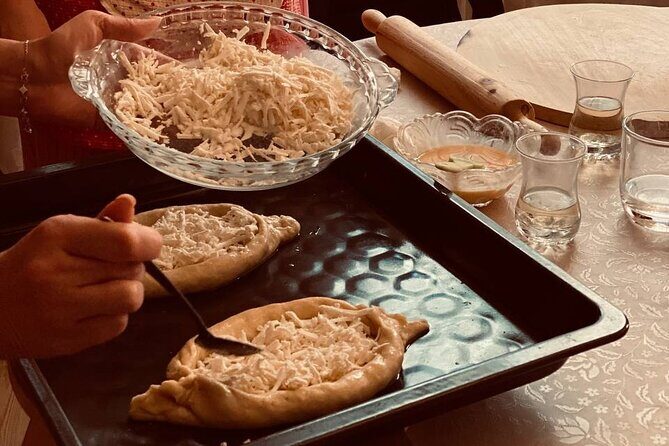
This is listed as a lunch-style master class with tastings, and you feel that structure as you go. Your first taste is the khinkali starter. Your second taste is the khachapuri main. In between, you’re cooking the whole time, so the tasting doesn’t feel like a separate event—it feels like the logical finish to the work.
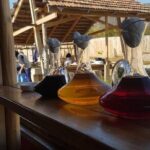
Alcoholic beverages are included. That makes it more than a skills workshop; it’s also a social meal. You’re not stuck eating in a hurry or watching someone else’s presentation while you wait. Instead, you’re in the middle of the experience, and the wine helps turn it into an evening you’ll remember.
In one shared experience, the host went table-side during cooking and made the evening feel perfect with friends. The same theme shows up here: when the guidance is clear and the pace is friendly, the meal feels like yours.
Group size and English instruction: learning without pressure
With a maximum of 8 travelers, you’re likely to get more direct attention than you would in a larger class. That helps especially with shaping steps like the khinkali turning technique. If you’ve ever tried to learn something hands-on where the teacher is trying to cover 20 people, you know how quickly details get lost. Here, the smaller group size makes it easier to correct mistakes in real time.
The class is offered in English. The goal isn’t to turn you into a chef; it’s to make you confident doing the key steps back home. Clear English instruction is huge for cooking classes because cooking isn’t just information—it’s timing, texture, and feel.
And if you’re worried about communication, there’s a reassuring pattern from real feedback: the booking communication was described as thorough, and the cooking experience was guided closely. Names matter when you’re comfortable—one memorable host was Grisha, and his table-side assistance helped turn the class into a smooth evening.
Other Tbilisi food tours we've reviewed in Tbilisi



Price and value: what $98 buys you in real terms
At $98 per person for about two hours, you’re paying for a lot more than a meal. You’re paying for ingredient handling, step-by-step instruction in English, and the tasting of homemade dishes you cooked yourself. You’re also getting alcoholic beverages included, which adds real value if you’d otherwise buy wine or beer with dinner.
You should compare this cost to two separate plans:
1) A regular Georgian dinner in Tbilisi, and
2) A hands-on cooking class elsewhere.
This experience stacks both into one, and the format matters: you aren’t just sampling—your hands are working the dough, shaping, and learning texture cues. If you want a souvenir, this is a better one than a magnet. You leave with skills you can reuse.
What isn’t included is private transportation. So if you’re far from Chakandrila, plan to use public transit or keep walking/taxi time reasonable.
Practical details that help you enjoy it more
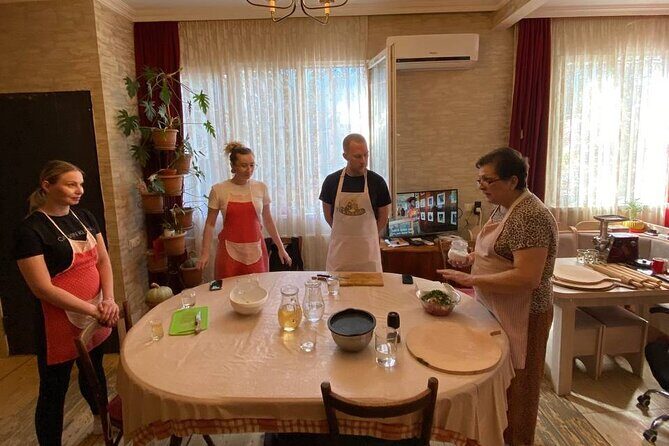
A cooking class goes smoother when you arrive ready. You’ll want to:
- Wear clothes you don’t mind getting a little dough on.
- Come with a hungry mindset. The menu is built around starter khinkali and main Adjarian khachapuri, plus tastings of what you make.
- Use the time to ask questions about the steps that matter most for your results: dough feel, how to handle the filling, and how to avoid khinkali falling apart.
Also, because the class includes alcoholic beverages, it’s worth deciding in advance how much you want to drink. You’ll be standing and cooking, so keeping a clear head helps you remember what the teacher says about texture and turning technique.
Who should book this class (and who might not love it)
I’d recommend this for you if:
- You want a hands-on Georgian food experience in Tbilisi, not just a tasting tour.
- You like learning specific techniques you can repeat at home.
- You enjoy social meals and don’t mind a guided evening rather than an independent activity.
You might skip it if:
- You want a long, slow cooking session with lots of extra variations. This one is structured and timeboxed.
- You’re strictly avoiding alcohol. Wine or other alcoholic beverages are included, even though the exact options aren’t specified.
Should you book Taste of Georgia: Khinkali and Khachapuri master class?
Yes, I think you should book it if you want real technique plus a satisfying Georgian meal. For the price, you’re getting instruction in English, a small-group setting, and two signature dishes where the class teaches you the steps that actually affect success at home. The learning points—elastic dough, filling tied to that broth experience, and the turning step for khinkali—are exactly the kind of details that make cooking feel doable after you leave.
If you’re coming to Tbilisi for food and want something more memorable than another dinner table, this class does the job.
FAQ
Where is the class meeting point?
You’ll meet at Georgian Cooking Classes Chakandrila, 8 Merab Kostava St, Tbilisi, Georgia, and the activity ends back at the same meeting point.
How long is this experience?
It runs about 2 hours.
Is the class offered in English?
Yes, it’s offered in English.
How many people are in the group?
The group size has a maximum of 8 travelers.
What dishes will you cook?
You’ll learn to prepare Georgian khinkali and Ajarian khachapuri.
Is food included, or do you just watch?
Lunch master class includes cooking and tasting of homemade dishes.
Are alcoholic beverages included?
Yes, alcoholic beverages are included.
Do you get private transportation?
No, private transportation is not included.
What is the cancellation window?
Free cancellation is available if you cancel up to 24 hours in advance of the experience’s start time (local time rules apply).
If you tell me your travel dates and whether you prefer wine or would rather keep it light, I can help you pick a good time slot for this so it fits smoothly with the rest of your Tbilisi day.