REVIEW · TBILISI
Tbilisi with all its glory and originality. (group walking tour)
Book on Viator →Operated by ushba travel · Bookable on Viator
Tbilisi reveals itself fast on this walk. In just about four hours, this small-group tour threads through Metekhi Cathedral, Sulfur Bath No 5, and the Old Town streets, with included site entries and a free wine tasting in a 17th-century cellar. I especially like the intimacy (max 15 people) and the way the guide connects each stop to real Georgian life, not just postcards. One catch: the route includes a few viewpoints and the cable car is extra, so plan for a bit of walking and the cost of the rides.
You start at a central address on Vakhtang Gorgasali Street at 10:00am, and you end back where you began. The whole thing is offered in English, uses a mobile ticket, and is designed for a smooth flow—cathedral views now, bath legends next, then Old Town stories that build toward the wine.
At $20 per person, it’s one of those deals that works best if you want both sights and context. It also runs only in good weather, and if it has to shift for that reason, you should get an alternate date or a refund.
In This Review
- Key highlights you’ll actually care about
- Tbilisi on Foot: How a 4-Hour Small-Group Walk Works
- Meeting Point, Start Time, and What to Wear
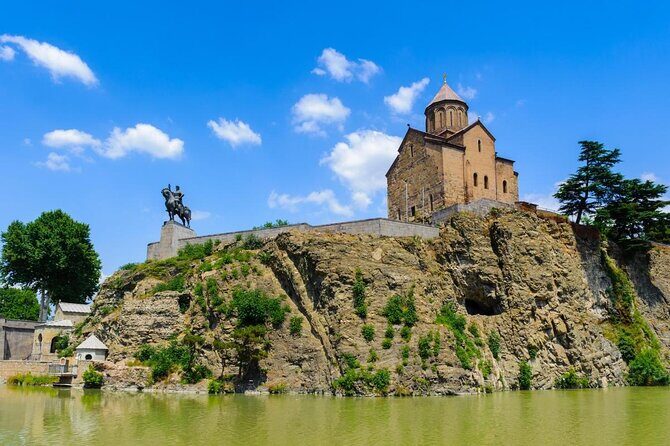
- Metekhi Cathedral and the Metekhi Plateau Panorama
- Kartlis Deda: The Mother of Georgia View From the Cable Car
- Sulfur Bath No 5: Marco Polo, Bathhouse Names, and Survival
- Old Town Tbilisi: Balconies, a Fig Valley Waterfall, and Street-Level Details
- The Bridge of Peace and Rike Park’s Modern Oddities
- Georgian Feast Stories, the Tamada Monument, and a Free Wine Tasting
- Price and Value: Why $20 Feels Like a Deal in Tbilisi
- Who Should Book This Tbilisi Tour (and Who Might Skip It)
- Should You Book This Tbilisi Walking Tour?
- FAQ
- How long is the Tbilisi group walking tour?
- What language is the tour offered in?
- What is included in the $20 price?
- Is the cable car included?
- What is the maximum group size?
- Where does the tour start and end?
Key highlights you’ll actually care about
- Max 15 people means fewer bottlenecks and more time for questions.
- Panoramic views from the Metekhi Plateau and the cable-car viewpoints help you orient fast.
- Sulfur Bath No 5 includes entry, plus explanations about why certain bathhouses survived and how they’re named.
- Old Town details like matching balcony styles are explained, not just pointed at.
- Peace Bridge + Rike Park brings symbolism and modern details into the same walk.
- A free 17th-century cellar wine tasting runs for about an hour, with the winemaker’s comments.
Tbilisi on Foot: How a 4-Hour Small-Group Walk Works
This is the kind of tour that helps you get your bearings quickly. In a place like Tbilisi—built across hills and along waterways—you’ll appreciate anything that turns the city layout from confusing to logical.
The pacing is built around short stops that still feel meaningful. You’ll spend roughly 20–30 minutes at each major highlight, with the walking between them staying manageable. With a cap of 15 people, the group doesn’t stretch out, so you’re not stuck waiting at every corner.
And the focus isn’t only on what you see. It’s on what you’re supposed to notice while you’re looking—balconies, bathhouse naming quirks, why certain landmarks exist, and how Georgian food culture works.
Other Tbilisi walking tours we've reviewed in Tbilisi



Meeting Point, Start Time, and What to Wear
The tour starts at Alani1 Vakhtang Gorgasali St, T’bilisi, Georgia, at 10:00am. You’ll return to the same meeting point at the end, which makes it easy to plan lunch or your next stop without a “now what?” scramble.
Wear shoes you trust. Even if the group stays compact, you’ll move through uneven sidewalks and old-street slopes, plus you’ll likely do some short climbs for viewpoints. If you’re sensitive to stairs or hill-walking, keep that in mind before you commit.
Also plan for the cable car add-on. The tour includes multiple viewpoints accessed by cable-car, but the cable car fee (listed as $2) isn’t included. If you want the best views without rushing, build a little extra time into your morning mindset.
Metekhi Cathedral and the Metekhi Plateau Panorama

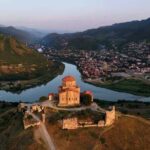
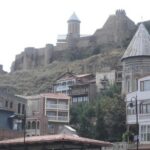
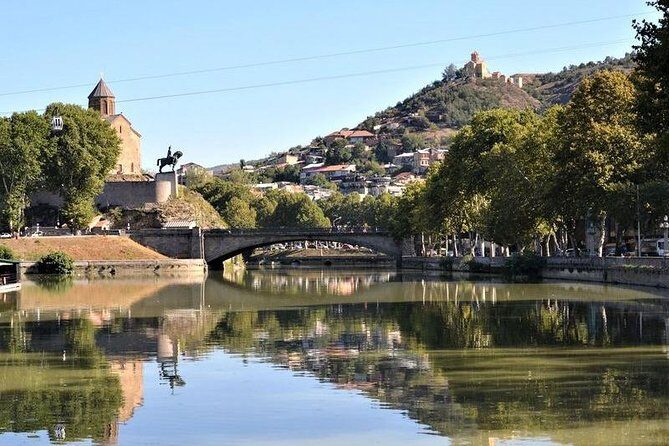
The day kicks off at Metekhi Cathedral, but the real opening act is the viewpoint from the Metekhi Plateau. You get an overview of the Old Town and Narikala Fortress, so you can see where you’re headed later instead of guessing.
This stop is timed at about 30 minutes with admission included. You’ll connect the modern skyline to older layers of settlement, including the story of the first settlement before Vakhtang Gorgasali arrived. It’s the kind of context that makes later streets and ruins make more sense.
The Cathedral area also works well for photos, but you’ll get more than a pretty frame. The guide’s angle is that origins matter here—temples, city beginnings, and local legends that help you understand how Tbilisi imagines itself.
Kartlis Deda: The Mother of Georgia View From the Cable Car
Next comes Kartlis Deda, the Mother of Georgia statue. She’s easy to spot once you’re up there, and the symbolism is the whole point: in one hand she holds a cup of wine for lovers, and in the other a sword for enemies.
You’ll reach this viewpoint using the cable car, with entry included as part of the stop. Expect about 30 minutes here, enough time to take in the view and also absorb what the statue represents in Georgian identity.
I like how this stop teaches you to read the city visually. From this angle you can start mapping neighborhoods in your head—where streets drop away, where the river sits, and how the Old Town clings to the hill.
One practical note: if you get motion-sensitive on rides, don’t treat the cable car as a minor detail. It’s part of the experience design here, so plan accordingly.
Sulfur Bath No 5: Marco Polo, Bathhouse Names, and Survival
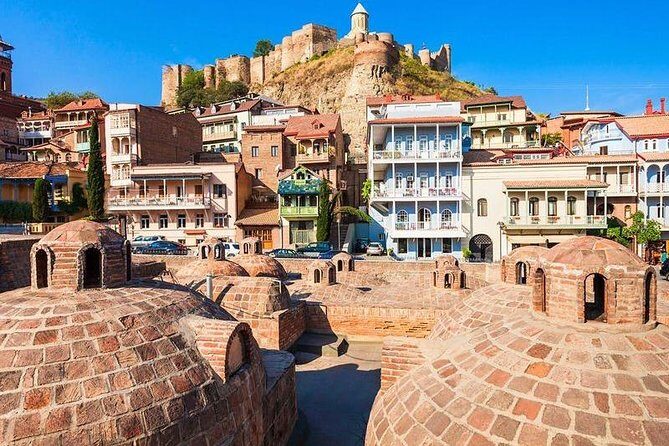
At Sulfur Bath No 5, you step into one of Tbilisi’s most distinctive traditions. The tour frames it through legend as well as history—yes, the baths are linked to stories like the one about Marco Polo.
This stop includes admission and runs around 30 minutes. What I find useful is that the guide doesn’t just say sulfur baths are famous; they explain how the bathhouses are organized and why only certain ones survived. You’ll hear why 15 out of 65 baths remained and how bath names range from basic numbering to more elaborate styles like Royal and variegated.
That naming bit matters more than it sounds. It turns the baths from a single “tourist stop” into a system—something Georgian culture shaped over time. Even if you don’t soak (the tour emphasizes the storytelling and entry more than a full spa session), you’ll understand why these places are social and practical, not just scenic.
Other walking tours we've reviewed in Tbilisi





Old Town Tbilisi: Balconies, a Fig Valley Waterfall, and Street-Level Details
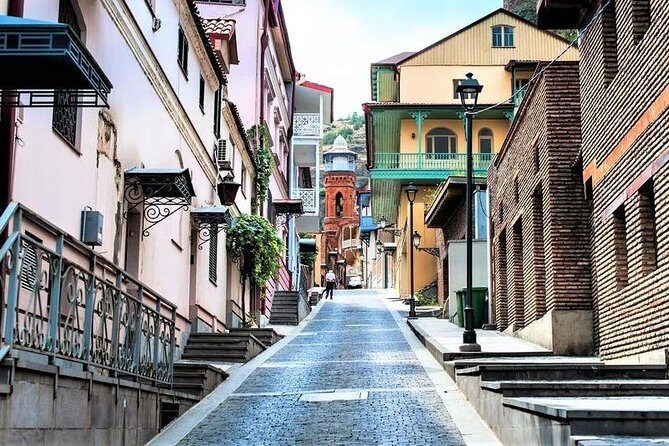
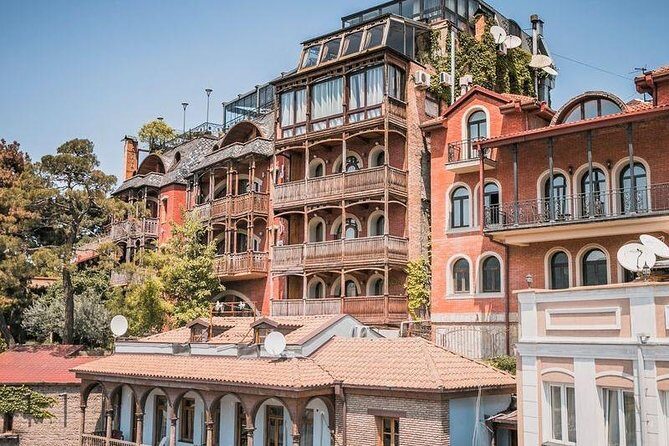
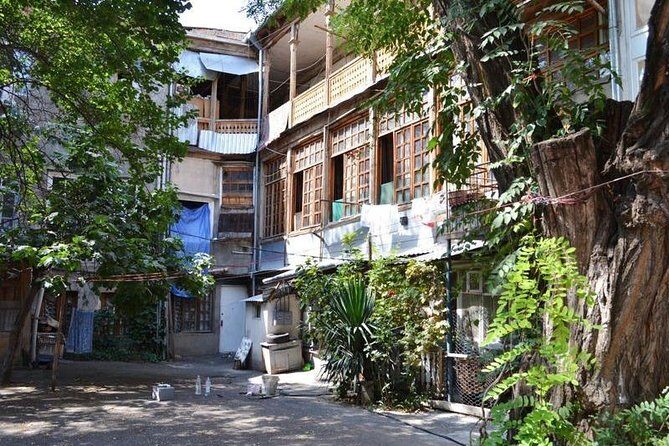
Old Town is where Tbilisi can feel like a living puzzle. The tour takes you through the areas where the city’s small-scale architecture tells you eras apart.
In this stretch, you’ll move toward a waterfall along the Fig Valley and you’ll study the graceful balconies. Admission is included for the stop, and the time here is about 20 minutes—enough to see what makes Tbilisi’s balconies distinctive without dragging out.
The guide’s take is that balconies are not random decoration. You’ll hear why they served in different periods and why it’s basically impossible to find two identical ones. That’s the difference between walking through a pretty neighborhood and actually noticing what you’re looking at.
If you’re the kind of person who likes architecture but gets bored with generic descriptions, this is a strong part of the tour. It gives you criteria, so your eyes know what to hunt for.
The Bridge of Peace and Rike Park’s Modern Oddities
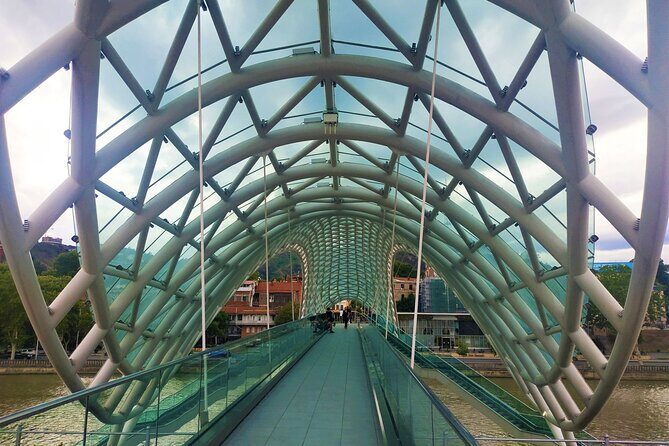
Then you cross The Bridge of Peace, where symbolism is the lesson, not just the photo op. You’ll hear about what the bridge represents and what locals think about the glass skyscraper and unusual pipes in Rike Park.
After that, the tour shifts upward with another cable-car ride to Tbilisi Fortress. From there, you get a view back down over the small houses of Old Tbilisi and the historic narrow streets that define the area.
This pairing is smart. Bridges and parks are easy to skip when you’re trying to chase the “old stuff,” but here they’re used to show how Tbilisi balances modern projects with older urban texture.
If you hate looking at glass-and-steel development, you might feel a little out of place at this segment—but the guide’s explanations give you a lens for interpreting the city today.
Georgian Feast Stories, the Tamada Monument, and a Free Wine Tasting
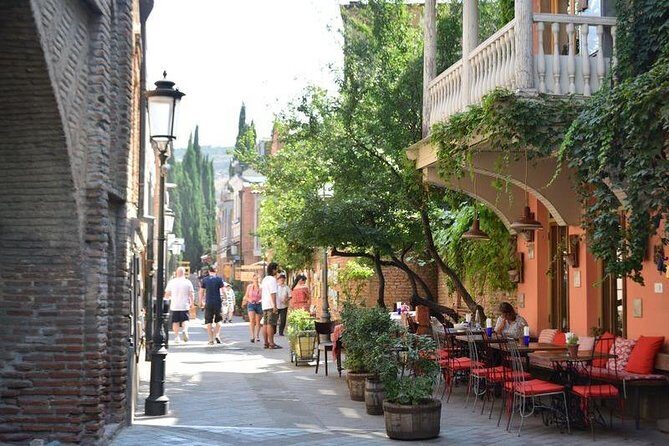
The final Old Town segment is built around people, food, and social rituals. It’s the part that makes the city feel warm, even when the streets are cool in the shade.
You’ll learn about Georgian mentality and cuisine, plus you’ll get references to local events like Tbilisoba, the city day celebration. You’ll also hear about jokes written on the turret of the Rezo Gabriadze theater, and you’ll visit the famous Italian courtyards, which add a surprising flavor twist to the walk.
At the Tamada monument, the tour turns toward the Georgian feast—described as a kind of science. This isn’t just poetic talk; it’s practical cultural context about how feasting works as a social performance.
Then comes the payoff: a wine tasting in a cellar of the 17th century. The tasting runs for about an hour, with no restrictions for the participants on this tour. You’ll taste exclusive wines stored in the cellar, and you’ll get comments from the winemaker, which is usually where tastings stop being “sip-and-smile” and start being educational.
A small practical thought: if you’re planning to drive after the tour, or you’re sensitive to alcohol, treat this hour carefully. The tour clearly positions wine as a highlight, and you’ll want to be ready for that.
Price and Value: Why $20 Feels Like a Deal in Tbilisi
Let’s talk value in plain terms. At $20 per person for about four hours, you’re not just paying for walking and views. You’re paying for guided context plus included admissions at multiple stops.
You get entry included at places like Metekhi Cathedral, Kartlis Deda, Sulfur Bath No 5, parts of the Old Town segment, and the stops tied to those areas. On top of that, the tour provides a free wine tasting, which is the biggest “this is why it costs what it costs” piece of the whole experience.
The only clear extra cost called out is the cable car fee (listed as $2). So your budget stays mostly under control, and you still get the panoramic viewpoints that make a city like Tbilisi click into place.
It also helps that the group size is capped at 15. That reduces time-wasting and keeps the guide’s attention on you, which is a real cost-saving effect in the end—you spend your time watching and learning, not waiting.
Who Should Book This Tbilisi Tour (and Who Might Skip It)
This tour fits best if you want a guided plan that doesn’t feel rushed. You’ll like it if you enjoy explanations tied to real places: cathedral origins, statue symbolism, bathhouse legends, and street-level details like balcony styles.
It’s also a good choice if you like food culture. The winemaker-led tasting and the Tamada feast segment put Georgian hospitality at the center, not as an afterthought.
You might choose a different style if you hate wine tastings or if you need a fully low-walking day. The tour includes enough hills and viewpoint time that comfortable footwear is not optional, and the wine hour is clearly part of the design.
And one more consideration: the tour requires good weather. If the day looks stormy, don’t assume it will run unchanged—plan to adapt if you’re offered an alternate date or refund.
Should You Book This Tbilisi Walking Tour?
I’d book it if you want the best version of Tbilisi in one morning: views, legends, Old Town architecture, and a real taste of Georgian wine culture. The price-to-content ratio is strong, especially because the wine tasting is included and the group stays small.
I’d think twice only if you’re not comfortable paying a small extra for the cable car, or if you dislike walking through hillier historic streets. If you’re okay with that trade, this tour gives you something more useful than a long list of stops: it gives you reasons to look closely while you’re there.
If you’re serious about seeing Old Town plus the city’s viewpoints without spending hours figuring logistics out yourself, this is a solid call.
FAQ
How long is the Tbilisi group walking tour?
It runs for about 4 hours.
What language is the tour offered in?
The tour is offered in English.
What is included in the $20 price?
Admission tickets are included for the listed stops, and the wine tasting is free for participants.
Is the cable car included?
No. The cable car costs extra (listed as $2) and is not included.
What is the maximum group size?
The tour has a maximum of 15 travelers.
Where does the tour start and end?
It starts at Alani1 Vakhtang Gorgasali St, T’bilisi, Georgia, and ends back at the same meeting point.